The first Ian McEwan novel that I’ve read in two decades . . . . . . and what did I think of it? Well, you’ll just have to scroll down to find out! Fear not, Gentle Readers, I’ve inserted lots of subheadings to make it easy for you to skip the boring bits ….
I. Preliminary Remarks: What’s Not Been Happening With the Blog
I’ve been so inactive with my blog last year, and so very disinclined to write posts, that I’ve seriously considered giving the enterprise a merciful death. After all, it’s sooooo much easier to leave comments on other bloggers’ well thought out opinions than to write my own posts! Although I’m all about the easy solution, however, I do find that I’ve been a little dissatisfied since I’ve stopped posting, particularly when I’ve just finished a marvelous book (I read several last year), or I read one of your posts on a book I’ve previously read and loved, or read and hated, or even merely thought about reading. I have the strong but supremely irrational feeling that, if I’ve even thought about it, it’s my book! At such times, my adrenaline flows, ideas rush in and I find myself thinking, “I really should have written about that!” It’s not that I think my insights are particularly insightful; I simply have more fun when I share my opinions on what I’ve read. After all, the excitement of discovering new books and the joy of sharing our discoveries is really why most of us blog, innit? I’ve also found that writing, and the organizing and analysis that it demands, always helps me to understand better whatever I’ve just read and, equally important, to appreciate what a particular writer is (or is not) trying to accomplish. Posting also serves a very practical domestic function in the Janakay household, as it gives a welcome break to poor Mr. J., who’d otherwise have to listen to my yammering about books that he, a committed reader of serious non-fiction, has absolutely no interest in reading! All in all, I do think I’ll pay a bit more attention to the blog in 2026 (my first New Year’s resolution perhaps?), although I doubt that I’ll ever be one of your methodical “post on a schedule” types.
And what better time to start than now? My last post occurred in January, 2025; a nice piece of symmetry, don’t you think, for my next one to occur almost precisely a year later? A pair of symbolic bookends, so to speak, with absolutely nothing blog-wise occurring in-between. Last year was a mixed year for my reading, which began quite slowly (hard to concentrate given the dreadful political events in the U.S. and with a mild case of PTSD brought on by surviving two major hurricanes in one month). After the first few months of 2025, however, I eventually recovered my bookish mojo and went on to have a fairly satisfying year. Along with some bookless spaces here and there and a few duds over the months (I had a higher percentage than usual of abandoned books last year) my 2025 list eventually included several memorable novels, ranging from very good (e.g. Pamela Hansford Johnson’s Helena Trilogy); to wonderful (Desai’s Sonya and Sunny & Ęca de Queirós’ The Maias) to really, really fabulous (Leopoldo Alas’ La Regenta — thanks again, Silvia, for suggesting this project!). As with the past, I also read several things for sheer distraction and fun. I didn’t alas, make it to Lottie Hazell’s Piglet but I’d definitely recommend Harriet Lane’s Other People’s Problems, a wonderfully nasty tale of envy & revenge and a most welcome distraction during that dreary afternoon in Chicago’s Midway when my plane was late.
II. A Fan and a Pan: How I Fell In and Out of Love
So why go now with McEwan, a writer I’ve actively avoided for two decades or more, when I’ve read so many other wonderful books this year? Practicality, as always, carries considerable weight in these types of decisions. Because What We Can Know (WWCK) is my most recent “big” book, its impact is fresher than that of the complex novels I read earlier in the year, making it easier (remember — I’m all about the short cuts) to yammer on about. Equally important, I wanted to test my reaction at returning to an old love. For you see, Gentle Readers, back in the early days of “Ian Macabre” I was one of this writer’s biggest fans. Although my memory of The Cement Garden (1978) is now a bit hazy, I still retain fond recollections of The Comfort of Strangers (1981), and, to a lesser extent, of Black Dogs (1992); Enduring Love (1997); and Amsterdam (1998).
But then, towering above even these very interesting gems, came Atonement (2001), my very, very favorite McEwan novel and one of my most memorable books from that era of my life. What a transcendent few days I spent, reading that masterpiece! However did it not win the Booker that year? Atonement was one of my early experiences with meta fiction, which was exhilarating in itself. This, combined with lyrical writing, a clever plot and great characters (I still haven’t forgiven that nasty little Briony) made it one of those transcendent reading experiences that so seldom comes one’s way (I am not embarrassed to say, dear Readers, that one of Atonement’s plot twists reduced me literally to tears). In addition to all this surface shine, Atonement raised some very provoking questions regarding time, memory and artistic morality: when an artist transmutes his/her great sin into a beautiful work of art, has s/he atoned for their transgression or merely rationalized their moral failure? (Readers, this is a question I’m still pondering in the odd moment or two, particularly when I’m listening to Wagner.) I was already a confirmed admirer prior to Atonement; with its publication I became a worshiper at the Shrine of McEwan!
My adulation lasted until 2005 and the publication of Saturday, when I concluded that my literary god had feet of clay. With advance apologies to any fan of the novel, I really, really hated Saturday. I was baffled by its glowing reviews from critics and prize committees (it made the Booker short list & won the James Tait Black Memorial Prize for fiction, etc), as I wholeheartedly agreed with John Banville’s opinion that Saturday was “ill-conceived,” smug and “a dismayingly bad book.” (If its website is in a generous mood, you may read the entirety of Banville’s entertaining & highly critical review in the May 26, 2005 edition of the New York Times Book Review.) Perhaps it was class consciousness (although we both favor the same recording of the Goldberg Variations, Saturday’s privileged protagonist & I occupy opposite ends of the social spectrum) or perhaps an almost laughable plot twist (reciting “Dover Beach” repelled the thugs invading your home? Really?). Perhaps it was simply the wrong book for me at the wrong time, but Saturday parted the ways for me and my hitherto beloved Ian Mc. In the following years, I barely glanced at reviews of McEwan’s subsequent novels and wasn’t at all tempted to read any of them.
So what made me risk fifteen U.S. dollars (the current sales price on that platform we all love to hate) and two days of my time on WWCK? True, the novel has received glowing reviews but then, so did Saturday. WWCK’s plot, centering on a search for a lost literary work, seemed intriguing; almost enough to overshadow my cringing memory of Saturday’s smugly rarefied & privileged world. WWCK’s futuristic setting was also a strong draw; I love sci-fi, especially when it nods towards dystopia. Timing, as always, certainly helped, as I’d just finished a marvelous book right before Christmas (Margaret Kennedy’s Troy Chimneys, if you’re curious) and found myself in one of those awkward “whatever do I read now” holes that urgently demanded a new book. At this crucial point, I stumbled upon yet another laudatory review (this one in the New York Times, where WWCK apparently gave the reviewer “so much pleasure” he “laughed with delight” etc etc). Reading this effusion with some skepticism, my eye caught the sentence that tipped the scales, i.e., WWCK is “the best thing McEwan has written in ages.” Gentle Readers, it had been over twenty years since my disillusionment. I decided to risk all (well, fifteen bucks and an afternoon) to give my former love another chance.
III. Back Again: So What About The Novel Itself?
WWCK is a chameleon of a novel, deceptively simple in structure and surprisingly complex in content. Opening in the 22nd century and extending back into our own times, at its simplest level WWCK is a literary mystery centered on the fate of the only extant copy of a legendary poem, “Corona for Vivien.” Composed in 2014 by the great (fictional) poet Francis Blundy as a birthday present for his wife, the poem was subsequently lost in the climate disasters and political upheaval that destroyed the world as we know it. In pursuing the mystery of the poem’s fate, McEwan’s protagonists encounter some very melodramatic events (murder! insanity! attempted kidnapping! betrayal! revenge!) and the reader gets to enjoy some very nicely done satire as McEwan skewers (among other things) academia, the literary world and current pop culture. Lurking beneath the brio of the literary treasure hunt, however, are some very serious questions regarding the nature of history (as well as who gets to tell the story); the relationship between biographer and subject and the detritus (both physical & metaphorical) we of the present day are leaving for future generations.
I hope I’m not making WWCK sound overwhelming and pompous, because it’s nothing of the sort. Although serious themes are definitely present, they are treated very lightly and can be happily ignored by readers who prefer focusing on a treasure hunt and a sci-fi setting rather than pondering the big questions. Regardless of a reader’s chosen approach, WWCK is equally enjoyable; it’s tightly plotted, with complex and well-drawn characters and the prose is among McEwan’s best. What can I say, Readers, except the obvious — I absolutely adored this novel!
I particularly enjoyed McEwan’s depiction of life in the 22nd century setting. Like Margaret Atwood, McEwan has an definite knack for world building and is equally skillful in extrapolating from current trends to construct an all too plausible future. While both writers concern themselves with environmental issues, Atwood IMO focuses more on scientific and social aspects (e.g., the MaddAddamTrilogy’s genetic engineering or TheHandmaid’s Tale & Testament’s female repression) while McEwan concentrates more on the geopolitical. WWCK’s world is a product in part of the Derangement, a late 20th century phenomenon in which society collectively acknowledged, but refused to address, the catastrophic effects of climate change. In 2042, amidst rising sea levels and conflicts over dwindling resources (the mid-21st century is marked by several “climate wars” for instance), came the Inundation, a global flooding event triggered when a Russian hydrogen bomb aimed at the U.S. misfired over the Atlantic Ocean. The resulting seventy meter waves (combined with record high sea levels) obliterated three-quarters of the Atlantic-facing population of North America, Europe and West Africa:
There were only a few hours of warning. The survivors were those who trusted their governments sufficiently to act, had transport and were not trapped in traffic jams and knew the routes to higher ground. * * * Lagos, London, Rotterdam, Hamburg and most of Paris did not emerge from under the counter-surges that raced up estuaries or from the savage storms that followed. In revenge assaults, Russia lost St. Petersburg * * * More than 200 million died. Britain became an archipelago, its population halved (pages 105-106).
The world portrayed in WWCK, however, is far from the blood soaked, cannibalistic scenarios so common in today’s dystopian fiction (think Cormac McCarthy’s novel The Road or a movie like The Day). Despite its best efforts to self-destruct, humanity not only survived but managed to preserve a sizable chunk of its cultural past. The survivors and their descendants adapted surprisingly well to a world that was now without heavy metals, fossil fuels or much dry land. Life is peaceful, with stable communities existing on the small archipelago islands that survived the Inundation and nature (albeit much diminished in species diversity) has begun to recover. New technologies (such as retrieving metal from wrecked & drowned vehicles and making “protein bars” from bacteria & atmospheric carbon dioxide) have developed to replace those of our own time. Major libraries and museums have been relocated to the highest of elevations and are relatively safe & reasonably accessible to those willing to travel by boat. Take comfort in this fictional future, dear Readers with academic inclinations! Universities and literature departments very much remain a feature of life, along with their associated & perennial problems of bureaucracy, inadequate funding and students who’d rather be elsewhere.
Just as quotidian life has changed, so also has geopolitical hegemony. Global power has shifted from the West to Nigeria (Britain has been reduced to a string of small, isolated islands while the United States has devolved into warring territories ruled by rival warlords, much like its current situation). A controlled and regulated AI plays an important role in ordinary life and, in a point that’s very important for plot purposes, the pre-Inundation internet with all its contents has been preserved and maintained by Nigerian scientists. As Tom Metcalf, the novel’s protagonist who leads the quest to recover the lost “Corona for Vivien,” explains (p 58):
Everything that has ever flowed through the internet is now held centrally in New Lagos and has been well-catalogued. Advances in quantum computing and mathematics have cracked open all that was once encrypted. I’d like to shout down through a hole in the ceiling of time and advise the people of a hundred years ago: if you want your secrets kept, whisper them into the ears of your dearest, most trusted friend. Do not trust the keyboard and screen. If you do, we’ll know everything.
The idea of “robb[ing] the past of its privacy” (page 17) plays an important role in WWCK. Aside from being a clever twist on the omniscient narrator (it’s the data bank that now knows everything and makes it available to a diligent researcher), it underscores one of the novel’s main themes, so amply demonstrated in Tom’s all-consuming quest to discover the fate of the lost poem, i.e., that one may possess a massive amount of data about an object (including a poem!) or person, without really knowing anything at all about either it or her. Echoing McEwan’s previous great novel Atonement, WWCK is very much concerned with that liminal space between reality and fiction, between the objective “truth” the artist/writer observes and that which s/he invents.
WWCK begins in 2119 with Tom Metcalf, a literature professor at the University of the South Downs, traveling by boat to the Bodleian library, now located on a mountain peak in Wales. Specializing in fiction from the 1990-2030 period, Tom is obsessed with the poet Francis Blundy, one of the major poets of his era (eclipsed only by Seamus Heaney) and his lost masterpiece “Corona for Vivien.” (I’ll spare you the wiki click dear Readers, as well as most of the technical details. It’s enough to know that a “corona” is a complex sequence of sonnets linked by their internal structure and exploring different aspects of the same theme.) The poem, which exalted the beauty of nature and the mutual love between Blundy and his wife, was handwritten by Blundy on vellum and presented to Vivien at a dinner party in honor of her birthday in October 2014. To mark the unique value of Vivien’s gift, Blundy made no copies; the fate of the poem, in other words, lay entirely (and literally) in Vivien’s hands. Although Blundy read the poem for the couple’s dinner guests, his reading was not recorded nor, surprisingly given the poet’s fame, was the work subsequently ever published. As a result, “Corona for Vivien” is known to the 22nd century only through the imperfect memories of the Blundys’ dinner guests, whose emails, social media posts and memoirs suggest that the poem was the culminating masterpiece of Blundy’s career. With the passing of the years, the dinner party (known as “the Second Immortal Dinner,” the first being an 1817 event attended by Wordsworth, Lamb & Keats) became legendary and the mystery and allure of the missing poem grew. Because it so lovingly catalogued the glories of the natural world, it even became an anthem of the environmental movement, with many believing that the oil industry had bribed Blundy to suppress the poem’s publication. “Like the play of light and shadow on Plato’s cave,” “Corona for Vivien” became for posterity the ideal for all poetry, “all the more beautiful for not being known.” (page 107)
Aside from the dinner party itself, the first and longer portion of WWCK concerns Tom’s obsessive search for the poem, which, he is convinced, has been hidden by Vivien in some now inaccessible spot. I won’t repeat the details of either Tom’s detective work or physical quest, conducted with the aid of Rose, his colleague and on-again, off-again lover. I’m afraid you’ll have to read those for yourself, although I will say that both were quite entertaining. Equally so, IMO, were the glimpses into the pair’s teaching grind (“In the two weeks allotted, almost half the kids had done some of the reading, well above the norm, though none had managed the full ninety-six pages” (page 154)). Because it would be impossible to avoid spoilers, I’ve also decided not to discuss Part Two of the novel except to say that McEwan uses it to switch both narrator and time period. This tricksy maneuver gives a whole different perspective on the Corona’s creation and meaning; equally important, it heightens many of the serious themes the novel evokes.
Given how much I enjoyed WWCC, do I regret my long boycott of McEwan’s work? Not really, although I’m open to suggestions if any McEwan fan cares to offer a recommendation regarding the novels I’ve skipped. While I’m not terribly eager to make up lost ground, I am actually considering a 2026 re-read of The Comfort of Strangers!
IV.If You’ve Made It This Far, Here’s Your Visual Reward
A little untimely, but I always think that it’s really the first full week of January that marks the end of the holidays, don’t you? Formally christened “Katy,” that name was lost to her forever on her first visit to the Vet; he took one look & exclaimed “she doesn’t look like a cat at all! She’s more like a little bear!” Not exactly a “people cat,” Pooh-Bear prefers to spend her time solo in closets & under the coffee table.My Second New Year’s resolution: get those books off the floor and onto some shelves! Two of my feline overlords (the third is in the next photo), unfortunately, offer only supervisory assistance . . . .Yeah! She’s finally stopped yammering! Nap is next (assuming she hasn’t already put you to sleep)!
This pile contains many of the books I read, dipped into or (gasp!) abandoned during the early months of 2023. I rely quite heavily on my kindle, however, when I’m traveling, so I’ve also been reading quite a few e-books this year, mostly beloved old things that are now scarce or out of print.
My heavens, dear readers! Can it possibly be early July? Is the year half-way over already? And me without a single review to my name for 2023? However could such a shameful state of affairs happen? Well . . .
The year did not begin for me on an auspicious note. Nothing wrong in a major way, but the New Year found me feeling a certain ennui that is generally rather foreign to my nature, especially when it comes to books. Have you ever had a period in which you struggled to read? That despite having piles and piles of lovely unread books, chosen with great excitement (and, in many cases, considerable expense), you just didn’t feel like reading any of them? This was precisely my mood as the new year rolled around. Despite an enormous TBR list that offered endless possibilities for new discoveries (not to mention fun), I’m afraid the beginning of 2023 found me in zombie mode as far as reading was concerned. Usually I love January, with its buzz of bookish Challenges; typically I spend several intensely pleasurable days pawing through my treasures and making totally unrealistic reading plans for the upcoming year. Not so this January! The arrival of 2023 saw me twiddling my thumbs, bored (actually bored) with my books and not even beginning a single new novel. Quelle horreur!
Despite this, I did manage to read a few things simply by powering through my malaise (not to be trendy, but I suppose you could say I leaned into it) — not reading much, by my standards; but reading. Like nursing an illness, I made reading easy on myself by picking only a few things by authors I had previously enjoyed. I also re-read several books or novellas I had liked or admired in the past and picked fiction heavy on character and stylistic elegance, the main features that attract me in novels. In short, I marked time until my reading mojo chose to reappear! By February, and the discovery of some truly great novels things were definitely looking up. Although I still didn’t feel like reviewing anything myself, I did resume reading some of your lovely blog posts and leaving a comment here and there. All in all, it was an incredible relief to find my bookish life ever so slowly returning to normal.
As far as posting was concerned, however, I’m afraid my recovery’s remained incomplete. As I suspect some of you know, it’s hard to get back into blogging after a break, particularly when other, very enjoyable activities are calling your name! Chief among these has been travel, as Mr. J. and I have slowly emerged from our covid cocoon, dusted off our passports and resumed our (very) mild wanderings on the earth. I’ve also been spending much more energy & time on art history and nature , centering the travel when possible on these long-time hobbies of mine (Bernini’s David! The Ghent altarpiece!The Iiwi!) Loads of fun, but definitely not conductive to keeping the blog current! (When I do Part II of this Post, hopefully in a few days, I may throw in some of Mr. J’s excellent photos. Other than that, I won’t bore you with details).
But enough of the mea culpa — time to talk about books! Even in low energy times I generally keep a sort of running list of the books I’ve read. This year, contrary to my usual practice, my list has actually morphed into a hybrid between a list and a journal, as it frequently included my brief impressions/assessments of what I was reading as well as how it slotted into my life at the time I was reading it. Working from this, I decided to post an overview of my 2023 reading as this seemed the least painful way to ease myself back into blogging. While I’ve retained my journal’s chronological format & style, I’ve done some mild editing & expanded several entries to reflect additional thoughts about certain books that I found particularly interesting. TBH, dear readers, the whole thing is a bit of a hodgepodge, but I’ve thrown in some photos & headings that should make it easier for you to navigate to particular items you might find interesting, or to click away from those that you don’t. I’ve also resisted the temptation to leave out some of my (ahem!) “lighter” choices. After all, I can’t be the only one out there who loves Georgette Heyer, pulp sci-fi of a certain vintage and the occasional chick lit best seller, can I?
JANUARY 2023: STRUGGLING THROUGH SLUMP MONTH
Don’t you love Melville House novellas? Aside from their convenient size (so handy to pop into a purse or backpack) the colors alone are enough to jolt one out of a slump! My overflowing TBR pile includes almost all of Melville’s “art of the novella” series, so it was natural enough I’d go to my stash to read Kate Chopin’s best known work. Did you know that few, if any, of Chopin’s contemporaries had anything good to say about Awakening, with even Willa Cather criticizing it as immoral? The backlash was so heavy, in fact, that it ended poor Kate’s hitherto successful writing career. Even in zombie mode, I adored Awakening and am now eager to read some of Chopin’s other works. Any recommendations? I’m inclined to begin with this little book of short stories (issued by Counterpoint Press) but I’m open to other suggestions.
I began the New Year with a re-read of Kate Chopin’s The Awakening, whose novella length and status as a re-read made it a perfect beginning for my apathetic, low energy month. Chopin’s Louisiana setting was an additional attraction; I lived in New Orleans many years ago, loved the place and felt in the mood to revisit the city through the eyes of Edna Pontellier, Chopin’s protagonist. I was also interested in comparing my present reaction to the novel to that when I first encountered it many years ago. The first time around (before I lived in New Orleans, I might add) I’d literally raced through Awakening; to my shame, I was mostly relieved to cross it off my list and move on to the next newly discovered feminist classic. In other words, I’d liked it in a rather mild kind of way but wasn’t particularly impressed. What a difference a second reading can make, particularly when it comes so much later in life! This time I savored practically every phrase, awed by Chopin’s skill with the language and her boldness in depicting the limitations of the world inhabited by her protagonist, trapped in her beautiful doll house and meaningless life. Chopin’s beautiful style, her ability to create atmosphere and her sheer honesty about, and insight into, her Edna’s psychology are leagues beyond what so many of her contemporaries were churning out. How could such a marvelous writer have been so thoroughly forgotten for so long?
WILL ONE OF MY FAVORITE AUTHORS BREAK THROUGH MY JANUARY ENNUI?
I’ve loved William Trevor’s fiction since I first read Felicia’s Journey, back in the 1990s. As you can see I have a little Trevor Trove (groan) of his work, minus several novels I very reluctantly discarded (I had read them) during my long distance move a few years ago. Did resorting to a beloved master shake me out of my reading malaise? Well . . .
I Was delighted when Cathy746 announced a year of “Reading William Trevor,” as it reminded me of how very much I love his work. Surely reading something, anything, from such an old favorite, a master of style and psychology, would restore my reading enthusiasm! Sad to say, my remedy failed. No reflection on William, he remains as great as ever in my estimation, but even his considerable literary power wasn’t enough to break through my apathy, particularly when the latter was combined with a truly nasty, late January sinus infection. I wanted to save Felicia’s Journey and After Rain, two of my all time favorites, for happier times, wasn’t in the mood for short stories (so difficult to decide which to read first, n’est-ce pas?) and didn’t have the energy to embark on a totally new novel. After a certain amount of apathetic dithering about, I returned to two Trevor works that I’d first read decades ago. I picked these two because I’d liked both very much but remembered very little about the plot of either.
I began with Two Lives, which contains two separate and seemingly unrelated novellas under one cover. The novellas are a study in contrast — as each explores two very different protagonists — are set in wildly different locales and strike very different emotional chords. My House In Umbria begins with the reminiscences of Mrs. Emily Delahunty, now retired from her career as a lady of pleasure in colonial Africa to the serenity of the Italian countryside (as Mrs. Delahunty explains early on, she’s used many different names over the years and the “Mrs.” is a courtesy title; “strictly speaking” she’s never been married). Ensconced in a charming Umbrian villa, and ably assisted by her rather sinister factotum Quinty (one of Trevor’s great minor characters) she occasionally assists the local hotels when they’re overbooked by taking guests at her villa. Mostly, however, Mrs. Delahunty spends her days writing florid and very successful romance novels. All goes reasonably well until, suffering from writer’s block (she’s unable to flesh out her new novel, tentatively titled “Ceaseless Tears”) & looking for inspiration, Mrs. Delahunty boards the wrong train at the wrong time. After surviving the ensuing terrorist attack that kills many of her fellow passengers, she impulsively and generously offers accommodation at her villa to the survivors (Quinty, less generous, ensures that the lodging isn’t free). The heart of the novella concerns both the complex relationships that develop among the survivors as well as Mrs. Delahunty’s past, which Trevor gives to us in funny, heart-breaking and oh-so-realistic fragments, in a way that only he can do.
In contrast to the exotic Mrs. Delahunty and her Umbrian menagerie, Mary Louise Dallon of Reading Turgenev is a much less colorful and seemingly more tragic protagonist. Mary Louise is the younger daughter of poor farmers who “struggled * * * to keep their heads above water” (page 4) in the dwindling Protestant community of a small Irish hamlet in the mid-1950s. Realizing that her dream of being a shop assistant in town is unobtainable, Mary Louise makes a marriage of convenience to a much older man (a naive thirty-five to her naive twenty-one) who’s one of the few Protestant bachelors in her community. After enduring years of a loveless and miserable-to-both-parties marriage, Mary Louise secretly begins to visit her invalid cousin Robert, whom she had not seen since childhood. During these surreptitious visits, Robert exposes Mary Louise to the literature and poetry, particularly the works of Turgenev, which had been the solace and comfort of his restricted and lonely life. As the two bond, Mary Louise becomes aware through the fiction they read of a world that transcends her own grim existence and experiences, for the first time, the comfort of having another human being who listens and understands her as no one else has ever done. After Robert dies unexpectedly, Mary Louise fashions his memory into an image of the great love that she believes they were destined to share. Her iron determination to own this memory, to keep and shape it for herself, insulates her from the assaults of her quotidian life and leads to tragic results. Or — does it? It’s part of Trevor’s greatness that he doesn’t leave the reader with an easy answer to this question.
When I first encountered Mrs. Delahunty and Mary Louise oh, so many years ago, it didn’t occur to me to ask the the obvious question of why Trevor paired these two novellas (Readers, I was quite young at the time!). Particularly with a novelist to whom character is so important, their juxtaposition suggests linkages between the two very different protagonists and their worlds. Using contrasts to heighten differences is an obvious and very old trick; it also seems an insufficient reason to pair these two novellas for a writer as subtle as Trevor. To me, the two lives, so very different on the surface, are actually quite alike in a very fundamental way. Despite their obvious differences, the paths taken by both women demonstrate the power of fiction and of the imagination in enabling us to transcend the mundane and often painful “realities” of our lives. Mrs. Delahunty, the product of a sordid past and unspeakable abuse, very consciously fashions sentimental stories with happy endings that allow her and her readers to escape, if only briefly, from their own lives into a reality that’s been shaped more to their likening. Mary Louise uses the literature she shared with Robert as a gateway to a world far removed from the horror of her daily life and as the foundation for fashioning her ideal of an eternal, transcendent love that she was destined to experience. Is the way these two very dissimilar women use art/literature a positive or negative thing? Trevor seems to suggest that it’s both.
It’s always interesting to re-read a work after a being away from it for many years; re-reading exposes lapses in memory, changes in sympathy and, occasionally, a greater appreciation of the writer’s craft. When I first read Two Lives, I preferred Umbria for its black humor and the clever way Trevor had Mrs. Delahunty unknowingly reveal so much about herself that she would have clearly preferred to keep private. I actually thought, first time around, that Turgenev was a bit boring, in a well written kind of way. My reaction on re-reading, however, was wildly different. Although I still enjoyed Umbria’s mix of irony, pathos & dark humor (it is very funny at times), this time around it was Turgenev that blew me away (irrelevant aside: Trevor was nominated for the Booker for this work but lost; how could that possibly be?). Last year (or was it the year before? too lazy, I’m afraid, to look it up), I read and very much enjoyed Claire Keegan’s Foster & Small Things Like These. Re-reading Turgenev reminded me very much of the tradition Claire Keegan is working in; her work is almost the equal of Trevor’s in its subtlety, psychological insight and craft. For me, there’s no greater praise.
Despite my renewed appreciation of Trevor, however, Two Lives failed to restore my joie de livre. Operating on the theory that, if one Trevor didn’t work, I might as well double down on a second, I went for a re-read of The Silence In The Garden. Again, I remembered little from my earlier encounter with this tale of decaying Anglo-Irish aristocrats in 1930s Ireland, haunted by something akin to blood guilt. Rich (perhaps a little too much so) in metaphors, Garden isn’t one of my favorite Trevor novels. Nevertheless, it’s a good story, beautifully written, and has some amazingly well-drawn characters (check out “Holy” Mullihan, a sadistic goon who’s a master in using religion to cloak his bullying). Second time through, I found Garden definitely worth the time, although I’d not place it at the top of my personal list of Trevor favorites.
WHERE DO I GO AFTER WILLIAM TREVOR?
Three more of my “just powering through the slump” reads (the Trollope novels in the background date from a more energetic & ambitious period) . . . .
I first encountered Laura van den Berg almost a decade ago, when I read her short story “Opa-locka” in one of those “best of the year” anthologies. LVDB’s elegiac melancholy, combined with her ability to depict a reality that was just a bit off-kilter quite haunted me; she immediately won a spot on my reading radar and I resolved to check out more of her work. But — we all know what happens to those good intentions about our TBR list, don’t we? I would probably never have gotten to I Hold A Wolf By The Ears without the enthusiasm of my good friend Silvia, who read and loved this collection (thank you, Silvia!) As with any collection of short stories, I liked some more than others, but none was a dud. How to resist a writer who begins a story (“Last Night”) with the words “I want to tell you about the night I got hit by a train and I died”?
Still operating on reading autopilot, I cast about rather desperately for something short and undemanding to read. I settled on J.L. Carr’s A Month In The Country, which had been tempting me for a very, very long time. Did it live up to expectations? Well, yes and no. Despite my grumpy, listless mood I found it to be a lovely read. It was tinged with a most appealing nostalgia, with its protagonist’s remembrance, many years later, of events that would have altered his life had he acted differently. Carr is a wonderfully descriptive novelist; he made it very easy for me to visualize an English countryside in spring that I’ve never seen in reality. One aspect of the novel that I didn’t expect and that I found totally captivating was its underlying theme about the transcendent value of art and art’s endurance, despite its fragility, to the ravages of time. Despite all these good things, however, my attention did occasionally wander and I had to force myself just a teeny bit at times to continue reading. Although I could blame “the Slump” for my reservations, I don’t think I quite succumbed to the novella’s charms. Unfairly or not, I found Country perhaps just a bit too twee, its nostalgia a little too manipulatively pulling at the heart strings. Have any of you read it? If so, what did you think? Am I being a heartless curmudgeon or what?
January’s Discovery & Its February Continuation: I don’t read much poetry any more, so you can imagine my surprise when I unexpectedly became quite obsessed with Eliot’s The Wasteland. Could it be that sometimes only poetry will do? I was barely familiar with the poem, having read only a small portion of it several years back (and then only because it was required reading in a class I was taking) and had pretty much forgotten about it. For some reason, however, during a time when I was struggling to read even a novella, I became fascinated by Wasteland, which I read at least four or five times during my slump (assisted needless to say, by various cribs & guides as well as Eliot’s own very entertaining and idiosyncratic notes).
January’s “I Just Couldn’t Do It” Book:
Although I’ve very much enjoyed Wilson’s work in the past (loved The Family Fang & found his Nothing To See Here a very enjoyable skim) I put his latest aside after only seven chapters. This may have simply been a case of “wrong book at the wrong time;” perhaps I’ll give it another try later on. Or not.
FEBRUARY 2023: A FALSE START THEN — BREAK THROUGH!
Despite reading some wonderful things the previous month, February saw my reading enthusiasm at its same tepid level. Clearly time to try a nuclear option, which in my case is the “Heyer (Georgette, that is) Cure.” Georgette has gotten me though many dismal times involving airports, long flights, minor illnesses and an unspeakably horrible camping trip (culminating in an unsuccessful attempt to see a Golden Backed Mountain Tanager ). If you’re a fan of Heyer’s work, you’ll understand my passionate devotion. If not, all I can say is you’re missing some of the best comedic dialogue since Bertie Wooster met Jeeves. I decided to skip some of my very favorite Heyers (Black Sheep; The Unknown Ajax and Bath Tangle) to focus on a couple of her (IMO at least) lesser Regency Romances. Still feeling rather dismal after a quick back-to-back of these minor gems (Sprig Muslin & Friday’s Child), I quickly added The Grand Sophy, one of Heyer’s very best, to my little binge read.
The result was disappointing; despite some temporary relief, the Heyer Cure failed to jolt my reading enthusiasm back to life. At this point, having nothing to lose, I decided to try something outside my comfort zone, which does not encompass works relating to 1930s Germany. Despite my general avoidance of the WWII era, however, I’d actually been quite excited a few months previously to discover McNally Editions’ reissuance of Lion Feuchtwanger’s TheOppermanns. Although I had put it aside for other things (at the time I hadn’t felt like beginning such a lengthy novel), its wonderful cover art and glowing reviews kept it on my reading radar. In a “what do I have to lose” mode (after all, I was already pretty bored), and with re-reads and gentle choices having failed me, I decided to give it a go. And the result? Bingo! Have you ever had that special feeling, when you know, just know, right from the opening pages, that the book you’re reading is just right for you at that moment in your life? Gentle readers, my mojo was back!
Has anyone read Lion Feuchtwanger’s The Oppermanns? The little tchotchkes on either side are based on details from paintings by Hieronymus Bosch; quite appropriate, don’t you think, for a novel set during the rise of the Nazi party in Germany? I love the cover art (a removable half-flap that can do double duty as a bookmark) but haven’t been able to discover whether it’s based on an actual painting. If anyone recognizes it, do share your information.
On its most superficial level, The Oppermanns recounts the destruction of a wealthy, assimilated family of German Jewish businessmen who have been loyal and patriotic citizens of the German state since the early 19th century. Among the mementos displayed in the family’s business office is one of their proudest treasures, a framed letter from Field Marshall von Moltke thanking Emmanuel, the founder of the family business, for his services during the Franco-Prussian War of the 1870s. When the novel opens, Emmanuel’s grandson Martin runs the family’s furniture business, known in Berlin for its quality goods and reasonable prices; his brother Edgar is a famous and successful doctor and Gustav, the third brother and the novel’s main POV character, is a devotee of the arts and a would-be literary biographer (a fourth brother, we learn late in the novel, perished fighting for Germany during WWI). Without reading too much into the text, it seems to me that the Oppermann brothers rather subtly embody the foundations of the German culture of their time, i.e., business, science and the arts, and their fates illustrate the decay of 1930s Germany and its vulnerability to the increasingly powerful Nazi movement. Rounding out the family picture is an Oppermann sister, who makes an occasional appearance, along with her astute & far-sighted husband, who’s regarded as not quite one of the family, being a native of eastern Europe rather than Berlin. The younger Oppermann generation is represented by Martin’s idealistic teenage son; Edgar’s daughter, who’s an increasingly passionate exponent of the Zionist movement; and Heinrich, the Oppermann brothers’ cautious and pragmatic nephew.
One of the things I particularly loved about the novel is its inclusion of characters outside the upper reaches of the wealthy and cultured haute bourgeois world in which the Oppermanns move. This opens out the story and conveys that what was happening affected an entire society and not just a rarefied and prosperous segment. Some of Feuchtwanger’s most interesting chapters (IMO at least) center on a clerk in the Oppermanns’ employment who lives in humble but contented circumstances; this ends when he runs afoul of an “Aryan” neighbor who covets his apartment. For all its length (my McNally edition clocks in at 368 pages, not counting a very helpful section of notes and a great intro by Joshua Cohen) the novel’s time frame is brief. It begins on Gustav’s fiftieth birthday in late 1932 and ends less than a year later, with the near-total destruction of the Oppermanns’ world.
Although it excels as a family saga, as well as a very realistic snapshot of a particular time and place, there’s a moral dimension to The Oppermanns that elevates it far beyond the story of individuals caught in the terrifying grip of history. Although I fear I’m mangling Joshua Cohen’s insights (his essay, if you’re interested, is available in the New York Times book review, link provided below), the novel in many ways is a meditation on identity and the testing of an individual’s character; the inhabitants of Feuchtwanger’s world, especially Gustav, question the purpose of their life and/or their duty to resist the evils of the time in which they live. In effect, Feuchtwanger asks whether one’s “work” is the completion of a literary biography (and by extension, participation in the arts); political involvement/resistance to the forces shaping one’s times; the perpetuation and survival of Jewish identity or, perhaps, self-reinvention and healing? At various times throughout his great work, Feuchtwanger suggests it is all of these things. It’s worth noting that Feuchtwanger himself had chosen to use his literary talents to serve his political beliefs, a decision for which he paid a high personal price. He wrote his novel in “real time” and about contemporary events, some of which he’d experienced at first hand (like his character Gustav, for example, Nazi goons ransacked Feuchtwanger’s house and destroyed valuable personal papers and drafts of his work). During the time in which he wrote Oppermanns, Feuchtwanger had fled Germany for life as an exile in England, been stripped of his German citizenship and seen his works banned by the Nazi party.
Although I’ve rattled on too long, I can’t leave this novel without a few words about the McNally edition shown in my photo (thanks again, Jacquiwine, for putting this publisher on my radar!). The publishing arm of the McNally Jackson bookstores in New York, McNally editions has a small but exciting list of “hidden gems” (quote & info, BTW, taken from the publisher’s website) which it reissues in beautifully produced paperback editions. Although I’m unsure of McNally’s distribution and availability, particularly outside the U.S., those of you in the U.K. with a yearning for Feuchtwanger need not despair, as Persephone has also published The Oppermanns (Book No. 136). I believe both publishers are using the same 1930 translation by James Cleugh; Joshua Cohen, however, has updated it and written a great introduction for McNally (note, however, that his NYT review is adapted from his introduction and is only a click away).
MY STREAK CONTINUES:
The only downside to reading a really great book is greed; having read something really, really good, you naturally want your next selection to be just as wonderful. And really, dear readers, how often does that happen? As if to counter balance those horrible reading weeks of early 2023, however, my next February selection was (almost) the equal of The Oppermanns.
Any Jane Gardam fans out there? If so, I’d be most interested in learning your reaction to her Old Filth Trilogy or, indeed, to any of her novels. After years of being largely indifferent to Gardam’s work, I’m now a most avid member of her fan club!
Although I’d read and (mildly) enjoyed a Jane Gardam novel several years ago, I must admit that I had trouble understanding all the fuss about her work (the novel I’d read, in fact, left so little impression on me I’ve forgotten its title). I mean, her novel was o.k., I liked it, but I certainly didn’t rush out to read more. I did try Old Filth, supposedly one of her best, but didn’t get very far. Ditto for my second attempt; in fact, I may even have tried it a third time. Having ditched the Challenges this year, I decided 2023 was my “now or never” year for Gardam and I’m so glad I did! Where has this writer been my entire life? I not only raced through Old Filth, I quickly followed it with The Man In The Wooden Hatand Last Friends. Although I think there are some weaknesses, particularly in Last Friends, the trilogy is a wonderful achievement and easily one of the best things I’ve read in ages. Gardam, was, thankfully, a fairly prolific author so I’ve lots of catching up to do regarding her back list. Any recommendations?
February’s Orphan, Abandoned For No Good Reason:
O’Donnell’s poetic style and mysterious setting hooked me in, but I’m afraid I stopped reading when the orphan cygnets showed up. I just knew something bad was going to happen to them and couldn’t face it! Has anyone read this one? Can you reassure me that the baby swans are all right at the end? If so, I’ll probably return & finish!
MARCH 2023: Back To My Usual (If Slightly More Frantic) Pace
March was another travel month, with lots of airport time. Although I sometimes read serious stuff when I travel (I once finished Joseph Roth’s The Radetzky March during a single marathon flight), on the whole I tend to stick to mysteries or to more popular contemporary works. I’m a long time fan of Ruth Rendell’s dark psychological novels (originally published under her “Barbara Vine” pseudonym) and the presence of her work on my kindle dominated March, as I read four of her twisty, clever and psychologically acute novels at various points during the month (Judgment In Stone; A Dark-Adapted Eye; House of Stairs; & King Solomon’s Carpet). In a psychologically much lighter vein, I also read and enjoyed Jenny Jackson’s much ballyhooed Pineapple Street (so reassuring, dear readers, to discover that folks with thirty-seven million dollar trust funds need love too). Last, but far from least, was Deanna Raybourne’s tale of a squad of retired female assassins, Killers of a Certain Age; perfection itself for those with five-hour layovers in Kansas City.
One of my rare forays into non-fiction:
Although I’d no intention of reading it at the time, one look at its marvelous photos and I quickly became absorbed in Seymour’s biography of Jean Rhys, I Used To Live Here Once. (Has anyone read Athill’s account of her relationship with Rhys in Stet.? It’s a marvelous picture of this most difficult artist.) Aside from including great photos and much fascinating background about the Rhys family, Seymour provides a sensitive and very readable account of Rhys’ life. Most valuable for me, however, was Seymour’s very convincing argument that Rhys, both as a woman and an artist, was much more than the protagonists she portrayed. Like many readers, I first came to Rhys via The Wide Sargasso Sea and was a little disappointed in reading her other novels to discover they were quite unlike that work! After reading this biography, I’d now like to return to Rhys’ fiction, particularly her short stories, none of which I’ve previously read.
Some Of My Other March Reads:
One Old, one new; both very enjoyable diversions! If you’ve read either of these, do share your reactions . . .
Although I’m not rabid about it, I do tend to like Emma Donoghue’s work & have read several of her novels. She’s an eclectic writer; one of those rare artists who produces something different with each book. I purchased this one impulsively, on one of my milder book buying binges, and had no immediate plan to read it. By early March, however, my bookish mojo was up! Looking for something easy and contemporary, I started Haven pretty much on a whim and found it (surprise!) quite absorbing. It really helped to get into the mood by recalling a bleak arctic island or two I’d seen on some past birding trips, all rocky cliffs, wild ocean and seabird nesting colonies. Although I don’t think this was a great novel (or even one of Donoghue’s best), it was a quick and enjoyable read that, surprisingly, speaks directly to some very pressing contemporary issues.
After repeated and unsuccessful attempts to read Margaret Kennedy’sThe Constant Nymph (unfairly or not, I just couldn’t get into the older man/nymphet thing), I decided to approach Kennedy through a different novel, The Feast (although it’s hard to tell from the photo, this is another of those adorable McNally editions). To my surprise, I loved it! So clever, to have the novel begin with an Anglican minister writing a funeral sermon, thereby ensuring the reader is hooked into guessing for whom the sermon is intended! Clever, well written and very funny at times, I’m now up for exploring more of Kennedy’s work. Who knows? perhaps I’ll even make it through The Constant Nymph!
This was my second novel by Johnson, a writer to whom I’ve become ever-so-slightly addicted. Fortunately for me, her work seems to be enjoying a mild renaissance these days, with reissuances making her novels far easier to obtain than before (I must say, however, that I hate the cover art). Although I’m still not sure that Friend’s plot entirely worked for me, I loved Johnson’s setting, a small seaside town in Belgium, as well as her very believable depiction of a middle-aged English couple on holiday with their young son. In May, I read another Johnson novel, The Last Resort, but I’m saving my discussion of that one for Part II of my catch-up post!
March’s New Discovery:
Although curious, I’ve been hesitant to tackle Dazui’s novels. New Directions Storybook Editions, however, provides a very approachable (if rather pricey) way to try a new novelist with a minimum commitment of time. This collection includes three of Dazui’s short stories (“Early Light;” One Hundred Views of Mount Fuji” and “Villon’s Wife”), all of which I found quite interesting. I can’t say the collection converted me into an instant fan, but it did confirm my opinion hat Dazui is an author whose work I’d like to pursue.
March’s Trip Down Memory Lane:
If you’ve previously dipped into my blog, you probably know that I’ve a deep and abiding fondness for the horror genre (comes, no doubt, from reading Dracula at a highly impressionable age). I’m particularly addicted to folk horror, involving secret rituals in remote, forgotten villages . . .
I’d read, and enjoyed, Harvest Home when it was first published aeons ago (in the 1970s, I think) but had largely forgotten it in the years since. During a recent browse through the NYRB Classics’ website (those flash sales! totally irresistible!), I came across The Other, perhaps Tryon’s best known novel, which I’d also read shortly after encountering Harvest, but not liked as much. Acting on sheer whim, I tracked down a replacement copy of Harvest (my original having been long since discarded) and settled in for a trip down memory lane. I must admit that, second time around, I found the writing rather clunky, the descriptions sometimes just a teeny bit hackneyed (there’s been a lot of literary fiction under my bridge in the intervening years) and the story at times rather gratuitously gruesome. But — Tryon can tell a story! With no intention of reading the whole thing, I quickly became immersed in his tale of rural dark doings and didn’t come up for air until I’d finished. The years, however, have definitely affected my opinion and not particularly for the better. In addition to noticing the stylistic defects that I’ve already mentioned, I also became a little uncomfortable at the sometimes not-so-latent misogyny that pervades the story. I’d have to know you personally, dear reader, to recommend this one, but for someone such as moi, with a taste for melodramatic trash horror and no demands for subtlety, this could prove a richly rewarding reading experience!
DIPPING INTO:
Unbeknownst to me, Saltz is a very prominent art critic indeed, writing for New York magazine for many years & winning a Pultizer in 2018. This collection of essays, obits & reviews is perfect for tiny bite sized reading. His material ranges from Caravaggio to Kara Walker, so the collection has something for every artistic taste!
March’s “Just Couldn’t Do It” Books:
Isn’t it sad, when bad things happen to good books (which both of these are)? March was just the wrong time for the Murdoch. I will return! As for Arthur Philips, well, not so sure. I’ve occasionally enjoyed his work in the past, but after a hundred pages or so I just lost interest in this one.
FINALLY (PAST TIME, DON’T YOU THINK?)
If you’re still with me at this point, you deserve (1) a medal for patience and (2) a little visual treat. I hope to be returning in a few days with Part II of my 2023 reading; meanwhile, I recommend you accept this advice from Zen Master Percy:
The zen lord of Beach Towel Mountain says “it’s time to sack out!”
Some of my choices for my hurricane evacuation reading — hastily assembled but a little haste is warranted, don’t you think, when a Category 4/5 storm is headed your way? How many of these did I actually read? Well . . . .
You know what they say about being late, don’t you? That it’s better than “never”? I’m certainly putting that adage to the test, dear readers, by offering a September/October update as November is breathing down my neck. I’m starting off slowly here, as the next few paragraphs are about non-bookish matters, accompanied by a few of Mr. Janakay’s photographs. If you’re not interested, just skim on by to the portion of the post where I briefly discuss a novel or two.
That delightfully ambiguous word “interesting” best describes my September, which was quite “interesting” in ways both good and bad. The “good interesting” occurred early in the month, when I traveled internationally for the first time since the pandemic. I’m a nervous traveler at the best of times (in my defense, I’ve been on many trips that have gone spectacularly awry) and I had halfway talked myself into staying home but — the fees were paid, the refund period was past, the cat sitter was booked so — off I, Mr. J and Mr. J’s camera went to the Asturias region of northern Spain, to hook up with a birding tour. What can I say, dear readers, except that my misgivings were totally misplaced and that my trip, so dreaded in advance, was absolutely wonderful? Lovely scenery, fascinating 9th century churches (none of that newfangled Gothic & Romanesque architecture) nestled in mountain valleys, wonderful food, and pretty good birds. Not to mention the sheer wonder of viewing paleolithic wall paintings in a cave complex that sheltered humans as early as 33,000 years ago. Since I don’t want to burden you with a travelogue, I’ll limit myself to perhaps my favorite of Mr. J’s photos:
Cabo Peñas (about as far north as you can get & still be in Spain) was one of my favorite stops. Aside from being a good place to see migrating birds, it also has a great old lighthouse (that Mr. J, alas, couldn’t get into his photo).
Oh, well, just one more, again courtesy of Mr. J:
The Picos de Europa, a large national park extending over several regions in northern Spain. We didn’t see too many birds when I was there (too windy) but with scenery like this, who cares?
Like all good things, my trip ended and it was home again, home again, to the (U.S.) Florida coast, with the biggest concern being unpacking the bags, doing the laundry and coaxing our feline masters back into a good mood (well, as good as it gets with cats. That is to say — not very). As I was doing the laundry, only half listening to the news in the trance state I use to get through such tasks, I did notice some weather person droning on about a hurricane causing considerable damage in Cuba but — hey, Florida’s gulf coast hasn’t had a major storm in . . . . Oh, dear. Times do change, don’t they, particularly in our era of heavy carbon emissions!
Have you ever, dear readers, prepared a house to weather a hurricane? If so, you have a good idea of the physical and psychological strain of our day and a half before my county’s mandatory evacuation order kicked in and we departed for higher ground. (Unlike many of my neighbors who stayed put, I ran. This was my first real hurricane & I wasn’t taking any chances.) Everything outside that could be moved — patio furniture, plants, flower pots, tools, you name it — went inside (my living room became a combination jungle and storage shed). We did that anxious last minute check, before you lock the front door, departing for — who knows what and for how long? Roof was new, nothing to do; ditto for lanai cage (these are screen & metal structures that cover an outdoor living area, useful for keeping slithery things with scales from becoming part of the household); windows have double panes, so no need (probably) to board them up (too late anyway to get plywood). That pile of bricks, remnants of a summer project, stacked in the driveway? The mental image of each one flying through the air in a 90 mph (144 kmh) wind gave me the energy to make the (considerable) effort to move them into the garage!
Finally, all was done that could be done; Hurricane Ian was projected to make landfall about 10 miles (16 km) from my front door; time to leave and hope for the best. Mr. J and I scuttled away, accompanied by three furious cats and several hurriedly assembled bags of books (some of which are in my first photo). In one of those twists of fate that work well for you and very ill for others, Hurricane Ian shifted course and ultimately made landfall further south, resulting in a far milder impact on my area than the devastation experienced by Naples or Ft. Myers. My area did take considerable damage, mostly from wind rather than water. My beloved butterfly tree was uprooted, along with a few other things, and the yard was a mess (did you know that hurricane winds literally strip all the leaves from deciduous trees?) but my house survived unscathed. My neighborhood itself experienced no flooding and, unlike many others, only relatively brief outages of power and internet. My relatives a little further south, where Ian first made landfall, weren’t so lucky. While I was sitting in a nice dry hotel room, albeit one with no electricity (thanks to the storm), they were clearing out attic space “just in case” the rising storm surge made it into their house (thankfully the waters stopped just short of the door, but they & their neighbors are still cleaning up flood damage). So that was my “bad interesting” September!
This photo of a street a few miles from my house was taken a couple of weeks after the hurricane, when clean-up efforts were well underway. As you can see, these rather large trees didn’t make it through the storm.
If you’re still reading, I can sense your impatience (I do rattle on, don’t I?) through the ether; whenever will I start discussing the the only thing we all (passionately) care about, i.e., books! So enough of birding trips and hurricanes and on to the book piles! To begin with the question posed in my first photograph, i.e., just how many of those books did I manage to read? Well . . . not many, and TBH, not really during the hurricane itself. In my defense, dear readers, it IS difficult to read in a strange hotel room, located in a building with no electricity, and one, moreover, whose walls are shaking in gale force winds (I wasted valuable reading time gazing out the window, wondering how many of those palm trees were going to be snapped in two!) Still, I did manage a page or two of Bernhardt’s Extinction between gusts, and dipped into Cavafy (one of my favorite poets) a bit. Not much more than that, I’m afraid, for the last few days of September and early October, which was a rather exhausting “clean up the damage” time.
Before nature interfered, however, I did manage to get through four or five books in September, albeit things on the lighter side, for the most part, and read primarily during my trip in the earlier part of the month. The standout among these was The Weekend, by the Australian author Charlotte Wood, which I found via a (highly deserved) glowing recommendation from Cathy at 746books (thanks, Cathy! I would have missed this one otherwise). In Weekend, three women who have known each other for the better part of their lifetimes come together for a few days to tidy up the belongings and clear out a beach house belonging to their recently deceased friend, the fourth member of their group. During the course of their weekend, the reader learns their back stories and sees their complicated and sometimes problematical relationship with each other; among many other things the novel’s an interesting portrayal of group dynamics, of how survivors adjust (or don’t) to the loss of a vital member of their set.
Although there are some outstanding novels of female friendship floating around the bookish world (Simon has an interesting discussion of a few at stuckinabook), I can’t think of any that focus on women in the latter stages of their life and few that display Wood’s psychological acuity and realism. As with any halfway realistic novel revolving around characters of a certain age, Weekend does have some bleak moments. These are balanced, however, by a wonderful sense that despite their looming mortality these three won’t go gently, that they will continue to struggle, to enjoy, to face difficulties and that their lives still contain possibilities, even if their choices must be recalibrated. Wood is a very skillful writer and keen observer; her setting, a trendy Australian beach town, is lovely (and for this U.S. reader enticingly exotic) and there are some very, very funny moments. While I do have a few minor quibbles (there’s some rather obvious symbolism and, perhaps, an overly dramatic situation or two) these are very minor blemishes on a really great read. If you love character driven novels and aren’t very demanding vis-á-vis action sequences (no shootouts or high speed car chases in this one, I’m afraid) you may very well want to give The Weekend a try.
In addition to The Weekend, I spent what could have been a tedious airport layover pleasantly absorbed in Evgenia Citkowitz’s The Shades, thanks to a recommendation from Tony’s Book World:
Do you like creepy Gothic novels with a psychological twist? A hint of the strange, underlying the rational world? If so, you might enjoy this elegantly written novel, in which a mother grieving the loss of her teenage daughter becomes enthralled by a young stranger who shows up at her door. If you’ve ever listened to Gluck’s Orfeo (in one of the novel’s key scenes, two of the main characters attend a performance) you know the basic plot, but it’s still fun to follow the twists.
Since I adore horror fiction (the “Shirley Jackson Haunting of Hill House variety,” not the “chop up the body parts” kind) I quickly downloaded Lauren Owen’s Small Angels for a travel read as soon as I read the New York Times’ very favorable review. The novel was well written, atmospheric and employed some of my favorite horror tropes, i.e., the ancestral curse, the magical forest and stubborn village folk in deep denial regarding their complicity in the evil surrounding them. Action is sparked when Chloe, an outsider to the village & unaware of its history, decides to hold her wedding at Small Angels, a deserted chapel closely tied to the evil haunting the forest. Using multiple points of view, Owens gives a neat spin to the traditional ghost story, creating some strong female characters along the way. So I liked this novel, didn’t I? Well . . . yes and no. The first half really held me enthralled as I soaked in that wonderful spooky atmosphere and teased out the story line. When the action moved into contemporary times, however (Chloe’s perilous wedding; the sibling tension between her village boyfriend & his sister, the modern love stories, etc), my interest diminished, my reading speed picked up and I was quite content for the whole thing to end. Still, unless you share my perhaps unrealistic & overly stringent expectations for horror fiction (after all, there’s only one Shirley Jackson), this could be quite a satisfying read, as the days darken and the spirits return for their visits!
Beware, beware of Mockbeggar Woods, particularly if you’re a member of the Gonne family, whose fate is ruled by an ancestral curse tied to this sentient forest. Although it was beautifully done in many respects, my overall reaction to Small Angels was a bit tepid.
I’ve been a big fan of Emily St. John Mandel’s work since reading Station Eleven several years ago. Her next novel, The Glass Hotel, was (IMO at least) even better. (If you’ve read either or both of these books, I’d love to hear your thoughts on this.) It goes without saying that I took the unusual (for me) step of pre-ordering her latest, as soon as I learned it was coming out last spring:
Like the two novels that immediately preceded it, Tranquility involves multiple story arcs and weaves backwards and forwards in time. What is the link between a British aristocrat, exiled in 1917 by his family to the Canadian wilderness; a contemporary teenager with a video cam; and a 23rd century writer born and reared in one of the lunar colonies, who’s flogging her latest book during a visit to earth? Two centuries after the writer’s time, an investigator named after a character in one of the writer’s books attempts to put the puzzle together, adding yet another layer to Mandel’s complex structure. Mandel deftly uses the tools of speculative fiction to focus on the real subject of the novel (IMO at least), i.e., the seemingly random events that link lives and the patterns that connect human existence over the centuries. All this is done in Mandel’s beautifully lyrical prose and with the added bonus of cameos from a couple of the characters I first met in The Glass Hotel (although these appearances add a sparkle, you need not have read Hotel beforehand to enjoy Tranquility). Although I enjoyed Tranquility a great deal, I was just the teeniest bit disappointed, for no reason that I’m able to articulate very clearly. Perhaps it was because that, like many novels told from a multiple point of view, some plot strands are inevitably more to one’s taste than others. In this case I found many of the events involving the investigator less than compelling; also I felt that, to some extent Mandel was repeating many of the themes from her previous work.
Extinction purports to be a first person account by one Franz-Josef Murau, an expatriate Austrian aristocrat living in Rome in self-imposed exile from his family. Clocking in at 326 pages in my edition (Vintage International), it was a bit long but, really, how much time can it take to read 326 pages when you’d rather read than go out to dinner with your group and there’s a long plane ride home? I assure you, dear readers, that it can actually take quite a bit of time when those three hundred odd pages (no paragraph breaks, mind you!) are an impassioned rant about Austria’s Nazi past; the evils of the Catholic church; opera; German literature (Murau/Bernhard hates Goethe); the corruption of human civilization by the invention of photography; and the fact that Murau’s sisters as young women purposely ruined his green socks by darning them with red wool (or was it the other way around? must check my notes). Oh, and those sisters “hopped” about a lot as children, which was very, very annoying to Murau! Extinction, in short, was a fascinating, exhausting and challenging read; and one that I didn’t actually finish until early October, after I’d completed clearing out the hurricane damage in my yard (I believe the U.K. term for this area is “garden”). Because I haven’t given up all hope of doing some real reviews this year, particularly of my Challenge books, I’ll reserve my thoughts about Extinction, particularly as it provided me with a great deal to think about.
Since I always seem to take forever to post anything (good heavens! Is the first of November actually next week?), I thought I’d give just a quick little glimpse of what I’ve been reading in October:
I’ve only read the books on the right (the ones standing upright), all selected to fit categories in my Challenges. The others are books I’ve been “dipping” into as the mood strikes. The bottom two (Paula Rego & Clouds, Ice and Bounty) are exhibition catalogues; I never read the text of these things, I just look at the pictures!
After a bumpy start, October’s been a pretty good reading month in which I’ve mainly concentrated on finishing a few more Challenge books. I finally got around to Diana Athill’s short story collection, Midsummer Night In The Workhouse (Persephone ed.), part of my Classics Challenge. I also made a bit more progress on my Reading Europe Challenge books, finishing Alina Bronsky’s debut novel, Broken Glass Park; Peter Stamm’s On A Day Like This; and Domenico Starnone’s Trick (with a great intro by Jhumpa Lahiri). Hopefully at least one or two will end up getting a real review in the next two months.
I usually regard these round-up posts as great opportunities to inflict a couple of cute cat photos on any long-suffering readers who’ve hung with me this far. Today, however, I thought I’d do something a little different, by showing you some nice photos (thanks again, my beloved Mr. J) of a Painted Bunting, a shy little bird that’s one of the most colorful North American songbirds imaginable. Although Painted Buntings are plentiful right now, as they winter in Florida, they like to hide and they’re hard to see. Luckily for us, there’s a nice nature reserve (located close to our thankfully undamaged home) where the local chapter of the Audubon Society maintains a blind and bird feeders the birds find most attractive:
It’s a little hard to see in this photo, but even his (it’s a male painted bunting) eye ring is bright red!
This gives a good view of his back. Again, the light isn’t great, or you’d see that the green is actually very bright.
That’s all for now (and aren’t you glad?); I’m off to check out what everyone’s been reading.
A few of the more interesting things I read during my recent road trip. Did I like them? Well . . . .
Do you make New Year’s resolutions? I do, every year; it’s a little ritual I follow, an annual triumph of hope over history. This year I resolved to do the usual things: lose weight; step up the exercise; no more eating potato chips (I even did the farewell ritual recommended by certain therapists: “I love you very much, fried salty things, but I can’t have you in my life anymore”). I did, however, add a new one for 2022, i.e., to post a little more frequently on my blog. There would be no more weeks (or even months), I resolved, when I read wonderful books but didn’t write a word about them! No more holding back the good news from my fellow bloggers about the stunning new works of fiction I was discovering! Weekly posts, it’s true, might be a little too restrictive, but surely I could manage twice a month? I am proud to say, dear readers, that my resolution to increase my number of posts actually survived into February! (By contrast, I’m totally embarrassed to tell you how soon after New Year’s Day I ate my first, utterly delicious potato chip and just how quickly I wolfed it down!) At any rate, receiving some rather upsetting health news (unpleasant but highly treatable), combined with just a teeny bit of travel does give me an excuse for neglecting to post for the past few weeks. The travel, while nothing exotic or international, alas, was a nice little interlude away from the palm trees and unrelenting sunshine of the U.S.’ gulf coast (Florida has earned its moniker of “the Sunshine State.”) My trip was the usual, to Washington, D.C. and, also as usual, combined tedious errands and fun things.
Although I didn’t read quite as much as I usually do on these little jaunts, my trip reading included three wonderful, new-to-me writers. I’ll discuss their respective works, short in page length but deep in content, in the first part of this post. I’ll follow with a few travel photos and comments on the sight-seeing; this was quite satisfying, although I missed a few nice things I didn’t have time to see (I still haven’t made it to the Art Museum of the Americas, for example, or re-visited Baltimore’s stunning Matisse collection). See how easy I make it for you to zero in on what interests you and skip what doesn’t?
A. BOOKS
Because I’m drawn to tales about artists and/or the creative process generally, Aysegül Savas’ White on White has been on my radar since its publication last December. How could I resist a novel with a title invoking, deliberately or not, Kazimir Malevich’s great Suprematist painting? No matter the fact that I already had a copy of Savas’ well-received debut novel, Walking on the Ceiling, which needless to say I haven’t yet read! This one went (almost) to the top of the TBR pile.
Clocking in at a mere 175 pages or so, White On White can be read in an afternoon. Its story lingers, however, and the pleasures of Savas’ elegant prose demand a slow and thoughtful read.
White’s ostensible plot is simple. An unnamed graduate student narrator, the lucky recipient of a grant to finish researching and writing a dissertation on medieval sculpture, has taken up residence in an unidentified European city. The narrator is also lucky (or not) in finding very nice and very affordable lodgings, an apartment belonging to an eminent medieval scholar who makes it available to researchers with the proviso that his wife Agnes, a well-known local painter, will occasionally use the upstairs studio. Our narrator (I presumed a “she” although gender is never specified) diligently does her research; attentively observes the city that is temporarily home and becomes keenly interested in Agnes, who begins to spend more and more time in the upstairs studio. The two settle into an increasingly intimate and claustrophobic relationship, one not always welcome to the narrator (after all, she does have all that research to finish and there’s pressure to begin writing as well). Their roles are seemingly well-defined: the narrator listens and Agnes talks; the narrator receives and Agnes gives — gifts of food, of friendship and of an increasingly detailed portrayal of her marriage; her adult children; her former friends; the beautiful au pair who once worked for her family and her painting. At the end, Savas leaves us questioning the nature of the narrator’s passivity as well as the reliability of Agnes’ revelations and the generosity that prompted her gifts.
Although short on action (a warning to dedicated plot hounds: you’ll need to go elsewhere), White on White is a novel of echos & resonances; of character and connections. Just as the narrator studies the medieval consciousness that created the Gothic sculpture of her dissertation, so Agnes explains her art, “white paintings of the human figure * * * with expressions like those seen * * * from the medieval period.” The two are interested in the same period, but from the different perspectives of an academic interpreter and an artist-creator. Is one way to be preferred over another? At a very deep level the novel is also about change and mutability. Characters and relationships shift and even a painting in the narrator’s apartment appears to mutate as the story progresses. The novel’s structure, a double narration, is equally deceptive. Is the unnamed graduate student who ostensibly relates the tale actually the narrator, or is it Agnes, who speaks to us directly at times and whose life provides the novel’s structure? Can either, neither or both be trusted?
As a former wanna-be medievalist and an adult student of art history, this novel pushed all my buttons. Although I obviously loved it, however, it’s not without flaws. How significant these are depends on your own personal preferences. (I found the ending, for example, rather unsatisfying and a little melodramatic but neither fact detracted from my overall enjoyment.) I’ve already mentioned that the novel isn’t heavy on plot; if this is of paramount importance to you, I’m afraid Savas’ character driven tale won’t be your best choice for an enjoyable afternoon. Keep in mind as well that this is a very visual novel whose characters are closely associated with the arts; certain readers may feel that Savas’ descriptions of art and nature are too digressive. I, on the other hand, was hooked in from the novel’s opening paragraphs (pages 1-2):
Mornings, the apartment expanded with light. Light flitted across the walls and curtains, streaked the wooden floorboards, lay dappled on the sheets, as if a luminous brush had left its mark upon my awakening.
From my bed, I could see out onto the small, trellised balcony, lush with the thick foliage and purple flowers of a clematis climbing up a stone wall. White geraniums lined the railing. There was a single forged iron chair and a round table * * *
On the dressing table beneath a mirror stood a green ceramic bowl; in the hallway, the dark, rounded arms of the coatrack were bare.
Still, everything was marked with life, rich and varied. Each room echoed a story of unknown proportion, appearing and disappearing out of focus. The sparsity gave the place its character, so distinct and so fleeting.
Gentle readers, I wanted to live in that apartment. Do you think it’s the purple clematis?
My first novel by Sarah Moss, Summerwater was a tale of almost unbearable tension. Let’s hope, gentle readers, that we never experience similar vacations . . .
Turning to my second short read (second only in a chronological sense, that is), I’m happy to report I was equally satisfied in an entirely different way. For some time now, I’ve been intending to check out the increasingly well-known British writer, Sarah Moss. We all know, however, what paves that road to hell, don’t we? But then, what are road trips for, if not to haul around a big pile of books, some of which you actually read? I’m happy to report that after a year of gathering dust on the shelf, Summerwater received my long overdue attention. It did not disappoint.
Summerwind takes place in a remote Scottish vacation park, located on a rather menacing loch; it begins before dawn and concludes late the following night. The vacation cabins — some owned, others rented — are occupied by a motley assortment of families and couples whose outdoor activities have been frustrated by the torrential, unnatural, unceasing rain:
Although there’s no distance between cloud and land, nowhere for rain to fall, it is raining; the sounds of water on leaves and bark, on roofs and stones, windows and cars, become as constant as the sounds of blood and air in your own body.
The rain, a character in its own right, reinforces the feeling of nature being out of joint. Moss links the human and natural worlds by interspersing sections dealing with a fawn, an ant hive, a starving falcon and geological time with the sections centered on her human characters. It’s a wonderful touch that lends a great deal of depth to her story.
Cut off from the outside world by the terrible weather and equally terrible internet access, the would-be vacationers become increasingly unmoored in their isolation. Middle class and British (mostly Scottish, with one English couple in the mix), they are united in only one thing, i.e., their distaste and distrust of the “foreign” family occupying one of the cabins. Variously described as Poles, Gypsies or Ukrainians, their music is loud, their manners uncouth and their ways are not the ways of their temporary neighbors.
It’s clear from the beginning of the story that something dreadful is going to occur; the suspense lies in what will it be, when will it happen and who will get the ax. Will it be the obsessive runner who persists in her solitary and grueling runs despite her bad heart or the quietly resentful retired doctor who drives just a little too fast in his “boomer mobile”? The kid who’s taken his kayak too far from land when the storm hits or his bored sister who slips away from her family to meet a stranger in the woods? Or one of the many other characters in this ensemble cast? By switching the point of view from one character to another, Moss gives the reader wonderfully realistic depictions of each (no one does teenagers better) while ratcheting up the suspense to an almost unbearable level. About midway through the novel, I had to stop and read the end simply so I could relax enough to enjoy the rest of the story. Highly recommended, except perhaps for the morbidly timid.
Two works that I’ve recently read by Claire Keegan, a new personal favorite. I’ve just added Walk the Blue Fields, one of her short story collections, to my Mount TBR.
The third in my most excellent trifecta of excellent fiction writers is Claire Keegan, whom I read for the first time earlier this month. As even the most casual visitor to the bookish internet must know by now, Keegan’s Small Things Like These has been widely and very favorably reviewed on numerous blogs. Although I was mildly curious about Keegan, whose work was unfamiliar to me, I initially had no intention of reading her novella; I’ve read a fair amount of reporting on Ireland’s notorious Magdalene Laundries and didn’t feel I could emotionally handle the subject even in a work of fiction. After reading the third (or was it fourth?) highly favorable review of Small Things, however, all written by bloggers whose opinions I respected, I decided to give it a go. After all, I was curious. Was it possible for any writer to be that good, for any short story/novella to be that morally perceptive or for any fictional character like its protagonist to be that sensitively portrayed in all his glorious, fallible humanity? Well, yes. It’s been many years since I’ve read William Trevor, my own personal god of the short story, but I’d rank Small Things as equal to the best of his work.
Since I’ve nothing new to add to the many fine reviews I’ve read of Small Things, however, I’ve decided to limit my comments to Foster, an earlier Keegan work. Originally published as a short story in The New Yorker, Foster was later published in an expanded form by Faber and Faber (a most unusual step in the publishing world). A simpler, less morally complicated tale than Small Things, it’s the story of a neglected child, temporarily abandoned by her family for the summer to grieving foster parents. Despite the notorious difficulty of creating a believable child narrator, Keegan never gets a note wrong in her portrayal of her wary young girl narrator (her age is never specified, but she appears to be around eight years old). In a beautiful, utterly realistic way that depends as much on what’s left out as on what is said, Keegan shows how the child slowly gains a sense of trust and belonging when she is given attention and nurturing in a home “where there is room and time to think.” Although Foster lacks the moral complexity and drama of Small Things, I actually preferred its beautiful but utterly unsentimental depiction of human nature, the petty and malicious as well as the good.
I’ll conclude my short reads section with a word or two about Slightly Foxed, a quarterly periodical to which I’m mildly addicted. If you’re on my side of the Atlantic, it is a bit of an indulgence, but it’s such a perfect way to pass the time between novels, while discovering some half-forgotten treasures from yesteryear, that I justify it as a birthday or Christmas gift, from Janakay to Janakay, so to speak. The articles are short and beautifully written, often by well-known writers; and the format lends itself to dipping and skipping, so it’s perfect for short attention spans. If any of you are current or former readers, I’d love to hear your thoughts on this pricey-but-worth-it gem.
This recent jackpot issue had a number of articles on my favorites, including Trollope’s Barsetshire Novels; Flora Thompson’s Lark Rise; Penelope Fitzgerald’s The Bookshop & Mary Renault’s Last of the Wine. Oh, and a Patricia Highsmith novel I haven’t yet read ….
B. TRAVEL
Because Washington is such a city of museums, my first stop is almost always . . .
Washington’s National Gallery of Art. Not a great photo (drat that truck!), but it nevertheless conveys the scale & size of the entrance to the West Building, the original part of the museum.
Whenever I visit the National Gallery, these two paintings by Giorgio Morandi are mandatory must-sees. While I think they’re sublime, Mr. Janakay considers them a bit dull (but then, there’s no accounting for taste, is there?) This New York street scene (1902) by the American realist painter Robert Henri is one of Mr. J’s favorites. I find it (yawn) somewhat interesting . . . .
The National Gallery’s enormous blue chicken contemplates Washington’s skyline. The Museum’s founder, a very serious robber baron & admirer of traditional European painting, would not have been amused . . . .
I can’t be in the D.C. area without a nature walk in one of my favorite spots. This lovely, if stark, photo is from Maryland’s Little Bennett Regional Park, a short drive from downtown Washington and a nice break from all those museums. The photo was taken a few weeks ago; by now there’ll actually be a little green here and there.It’s equally vital to visit Politics & Prose, one of the leading independent bookstores in the U.S.
Just a smidgen of P&P’s riches; most of the fiction is in an adjacent room. Since I had visited P&P only a few months before, my haul this time was relatively restrained. The two military histories (shudder) are Mr. Janakay’s selections. He’s very picky about his nonfiction and seldom buys from a non-specialist source; I included them in the photo to give you an idea of the selections available in this marvelous bookstore.
For the last bit of sightseeing, it was back to a museum, albeit one I seldom have time to visit. Nestled in the heart of Washington’s estate area, Hillwood Museum & Gardens remains something of an unexplored treasure for most tourists. A former residence belonging to Marjorie Post, the sole heiress of the founder of what later became General Foods (jello, cereal or frozen veggies, anyone?), I think of Hillwood as an American equivalent to a British stately home, albeit one associated with oodles of dollars rather than aristocratic descent. Hillwood is a treasure trove of French antiques and porcelain, as well as Russian imperial relics; Ms. Post was the wife of the U.S. ambassador to the Soviet Union when the Bolsheviks were happily trading Romanov bling for western currency. If you don’t care for Fabergé eggs or the nuptial crowns worn by Russian princesses, Hillwood’s magnificent gardens provide a wonderful respite from the huge and bustling city that seems (but isn’t) a million miles away.
One of Mr. J’s photos of Hillwood’s exterior. Although I don’t often visit, I generally enjoy myself when I do; the museum’s contents are a feast for the eye, the cafe is quite good and the gardens are stunning at any time of the year.
After several days of unseasonably warm weather, the mercurial Washington climate decided that it was winter after all on the day of my Hillwood visit. Although it was too rainy and cold to walk in the gardens, the greenhouses were open and the orchids were almost, if not quite, in full bloom. Since I enjoy gaudy tropical flowers very much, I’ll leave you with several shots of blinding color, courtesy of Mr. J:
After the excitement of the big city, it’s home again, where two of our resident aliens were getting ready to levitate up to their space ship:
That it for now (and I’m still working on that review of Stella Gibbons’ Nightingale Wood . . . .)
Has anyone read Jessica Au’s recent novel, Cold Enough For Snow? If so, I’d be most interested in hearing your reaction . . . .
Are you one of those organized souls who draws up a plan of action and then actually follows it? Or are you, like me, a child of spontaneity, someone who prefers to meet on an ad hoc basis whatever life throws her way? Fear not, gentle reader, that I’m going to ramble off on a comparison of differing life philosophies; rather, I’m merely trying to explain to myself just how my review of Stella Gibbons’ Nightingale Woods morphed into a post about Jessica Au’s Cold Enough For Snow! Blame it on the publisher!
As I’ve probably remarked in the past, part of my bookish self-indulgence during the pandemic included a subscription to the New Classics Club run by New Direction press, which gives me a monthly “surprise” book selected by the editors from the latest additions to their catalogue. February’s selection, Ms. Au’s Snow, arrived just as I was getting ready for a teeny little break from Gibbons’ charming but quite lengthy 1930s period piece. Even before receiving my copy, however, I had noticed Au’s novel on the New Directions website and thought it sounded intriguing. What could I do when fate literally placed in in my hands with last Friday’s mail? Cold Enough For Snow is brief, really more a novella than a novel, clocking in at a mere ninety-five pages; I always prefer reading to writing, so wasn’t it quite natural to just skim a few pages while I took a break from Stella Gibbons? It’s pretty clear where this is going, isn’t it? After my experience with novels by Fleur Jaeggy and Dag Solstad, I suppose that I was a little naive in thinking that a skinny little novel would be more straightforward than one with a heftier page count, for I shortly discovered that Ms Au’s brief novel punches far above its weight. In short, it’s been adieu, Nightingale Woods, at least for a few days while I gather my thoughts on this very interesting piece of avant-garde fiction.
This is my first encounter with Jessica Au, an Australian writer currently based in Melbourne. Snow is her second novel; her debut, Cargo, was published by Picador in 2011 when Au was a mere twenty-five years old. Snow won the Novel Prize, a biennial competition open to writers (published & unpublished) around the world; the prize recognizes works of literary fiction, written in English, “which explore and expand the possibilities of the form, and are innovative and imaginative in style.” I thought it worth quoting from the Prize’s criteria, as it gives you quite an accurate idea of Au’s novel, which was selected from over 1500 entries. Three international publishers, Fitzcarraldo Editions (U.K.), Giramondo Press (Australia) and New Directions (U.S.) jointly sponsor the competition, which gives a cash award ($10,000 U.S.) and ensures the simultaneous publication of the winning entry in the U.K., Ireland, Australia, New Zealand and North America.
The plot of Au’s novel is very simple. It begins in the Tokyo airport, where a woman waits for her mother’s plane to arrive before the two begin a trip that she has carefully orchestrated through Japan. Au never tells us the name of either character. We quickly learn that the trip is important to the daughter “for reasons she could not yet name” and that her mother had initially refused to come, reluctantly succumbing only after being “pushed.” The two no longer live in the same city; we learn later that the daughter in fact has never seen the apartment into which her mother has moved. From the opening paragraphs Au requires the reader to be actively engaged in piecing together her story. Au tells us that the mother’s suitcase seems “almost new,” even though the daughter remembers it from her childhood, when her mother had “brought it down for the few trips she’d made back to Hong Kong, like for when her father died, and then her brother.” (page 2) It is the reader who fleshes out the narrative by inferring that the mother has seldom traveled since her long-ago emigration from Hong Kong to a western country, where her daughters have grown up, and that she had few close relatives or ties strong enough to draw her back to Hong Kong. This is a very simple example of Au’s subtle and ambiguous narrative technique. As the novel progresses, the interactions between the mother and daughter become more opaque and the reader is given fewer, and much more subtle, clues as to their motivation and meaning. Although Au’s style is a world apart from that of Henry James, I find her narrative technique to be reminiscent of James’ in his late novels. For both these very different artists what is unsaid between the characters can be more important than what is verbalized; both writers require the reader to participate actively in their art.
One striking aspect of Snow is that the daughter narrates the entire novel, meaning that we see the characters’ interactions entirely from her point of view. Conversations and the mother’s remarks are recounted solely by the daughter, who speaks directly to the reader:
I had chosen Japan because I had been there before, and although my mother had not, I thought she might be more at ease exploring another part of Asia. And perhaps I felt this would put us on equal footing in some way, to both be made strangers. I had decided on autumn, because it had always been our favorite season. The gardens and parks would be at their most beautiful then; the late season, everything almost gone. I had not anticipated that it might still be a time for typhoons. Already * * * it had been raining steadily since our arrival.
In the days that follow their arrival in Tokyo the two visit museums, temples and art galleries that the daughter has chosen, stay at inns that the daughter has booked and eat at restaurants that the daughter has selected. And all the time she is probing, probing for her mother’s reaction to what they are experiencing or to episodes from the past. She clearly wants something from her interaction with her mother, but what and why is a mystery. The rain, “a light, fine rain, as can sometimes happen in Tokyo in October,” is omnipresent; almost as much of a character as the mother herself, it lends a haunting quality to a novel that is peopled with specters. Weaving backwards and forwards in time, we learn about the narrator’s absent sister and her family; that dead uncle in Hong Kong; the past events that shaped the narrator’s personality; and Laurie, the narrator’s great love (is he her husband? I don’t think this is ever made clear) and her companion on her previous trip to Japan. Sister, uncle, lover — physically absent, their presence haunts the narration. Equally vivid are the absences. The narrator’s father is never mentioned, nor is the reason for this particular trip at this particular time.
It’s possible to enjoy Snow on many levels. At the most superficial, there is the sheer beauty of the language and the spare but gorgeous descriptions of the country through which the two women travel. Au writes with great vividness about the physical aspect of the women’s trip — the museums they visit, the temples they see, the ordinary life that they observe around them. Her unnamed narrator has an incredible feeling for art and the ability to convey what she is experiencing simply and elegantly. Despite the distance created by keeping her characters nameless, Au’s story contains real emotion. There was, here and there, a sentence that stabbed me to the heart, as when the narrator envisions the time when she and her sister will go to their mother’s apartment, the one she has never seen, “with the single task of sorting through a lifetime of possessions, packing everything away,” knowing that “whether out of too much, or too little sentiment,” she would keep nothing (page 78). At another earlier point in the novel, the daughter actually seems to be remembering (page 5), rather than anticipating, a time when she and her sister “were cleaning everything out of” her mother’s flat, an obvious duty that we survivors perform for our dead.
And what of a deeper meaning, beyond these surface levels? Each reader will no doubt draw different conclusions from this subtle and enigmatic story. The novel certainly speaks at least in part to the nature of memory, of how the impressions and sensations that form identity may, or may not, be true or at least factually accurate. In one of the novel’s most beautiful (if sentimental) sections the narrator recalls a story of her dead uncle in Hong Kong, of the great love affair he had as a young man, a story that was repeatedly told to her as a child. When, years later and now an adult questioning her mother about it, her mother denies such a thing ever happened and her sister also has no memory of it.
Even more than the mysteries of memory, however, I think Au is telling us that it’s impossible to know another person through intellectual analysis or objective facts. As a young woman the daughter was fiercely intellectual, consumed by “the need to make every moment pointed, to read meaning into everything.” (page 29). Her mother by contrast (page 57) believed that people were too “hungry to know everything,” mistakenly thinking they “could understand it all, as if enlightenment were just around the corner;” that understanding lessened no pain and that “the best we could do in this life was to pass through it, like smoke through the branches.” As their time together draws to a close, the daughter thinks that “the trip had not done what I wanted it to,” while her mother smiles “as if she were simply happy that we were in each other’s company, and to have no need for words.” (page 88) Perhaps Au is suggesting that this wordless contentment in each other’s company is enough; that in the end we will each remain a mystery to others.
Towards the close of the novel, after the two women have left Tokyo, an incident occurs that casts some doubt on my entire understanding of the daughter’s trip. To discuss it further would be a bit of a spoiler (besides, you might not agree with me!) so I’ll say no more about it here. I can’t resist remarking, however, that it very strongly reminded me of one aspect of A Sunday in Ville-d’Avray, a beautiful French novella (that also takes place in autumn) that was beautifully reviewed last summer by Jacquiwine.
As I noted at the beginning of this post, Cold Enough For Snow was published by New Directions, an independent publisher based in New York City that was founded in 1936 by a twenty-two year old James Laughlin, when he was told by Ezra Pound that his poetry was “hopeless,” and that he should finish Harvard and do something “useful” (publisher’s website). New Directions publishes works in a variety of genres and from countries around the world; its list of authors includes Vladimir Nabokov, Henry Miller, Jorge Luis Borges, William Carlos Williams and many others. As an independent publisher, Au’s novel qualifies for Kaggsy’s and Lizzie’s 2022 #ReadIndies event.
Have any of you yet met Maud? Such a sweet old lady and perfectly safe . . . most of the time . . .
As my post’s heading indicates, I’m covering two topics today: a brief recap of my Nordic reads for January (I did read a few other things but didn’t bother posting about them) and a series of murderously entertaining short stories featuring Maud, a most unusual protagonist. I’ll be covering these in reverse order, so if you’re interested in one but not the other, you may want to skip.
As #NordicFinds month draws to a close, I find that I can’t quite leave Scandinavia without saying a word or two about Maud, an octogenarian resident of Gothenburg, Sweden. If you like twisty tales laced with black humor and mayhem, well, she’s definitely worth checking out. Because I actually read these books last fall (Up To No Good was a re-read to refresh my memory before indulging in Must Not be Crossed) they aren’t eligible for my Reading Europe Challenge. They do, however, fit nicely into the #NordicFinds and #ReadIndies months. Although I read them last year, I couldn’t resist including them on the final lap of this year’s Scandi-journey, particularly as I haven’t previously reviewed them and they provide such a perfect finish for my idiosyncratic little survey of contemporary Scandinavian fiction. Aside from their content, which provided me with some very happy reading hours, you can see that both books are handsome little volumes, with interesting artwork. One has a brief but interesting afterword by the author, the other two recipes, one naughty and one nice, for gingerbread cookies. A word to the wise — if you’re allergic to nuts, don’t eat any of Maud’s baked goods!
Both these little volumes (Marlaine Delargy tr.) are short story collections by the Swedish crime writer Helene Tursten, perhaps best known for her franchise detective Irene Huss, a detective inspector in Gothenburg’s Special Crimes Unit. If you’re a fan of Irene Huss or Embla Nyström (the protagonist in another Tursten series) you’ll be pleased to learn that both make most entertaining appearances in a few of these stories (first and most notably in “The Antique Dealer’s Death” from Up To No Good).
The collection of stories featuring Maud was born when Tursten, facing a deadline for a Christmas story for one of Sweden’s largest publications, began to panic. As she explains in her afterword to Up To No Good:
then, she came to me: Maud. She was 88 years old and looked like most old grannies. But inside she was quite special. Her age was a perfect disguise for a criminal! Even . . . a murderer. I wrote the first story, “An Elderly Lady Seeks Peace at Christmas,” in just three hours, and I enjoyed every minute of her company. But let’s just say I would not like to have her for a neighbor or a relative!”
Although Tursten knows Maud best, I think she’s a little hard on her creation. I’d feel perfectly safe living next door as long as I minded my own business, didn’t make too much noise (particularly at Christmas) and kept my animals under control.
Although the books are independent of each other and the stories are still quite enjoyable if you skip around (my usual method for reading a collection), you’ll get the most out of them by beginning with Up To No Good and reading the stories in the given order, as Tursten discloses Maud’s character and background in bits and pieces as the stories proceed. This slow reveal is in fact a very clever and effective way of tying the collections together. Maud’s habits are another connecting thread. She loves to travel & has been “virtually all over the world” (Up To No Good, page 44); is an avid surfer of the net (she considers her laptop, which she ripped off from a Silver Surfers IT course, “indispensable”) and really, really likes to be left alone. When Maud was eighteen her father died of a sudden heart attack and her once wealthy family discovered the money was gone. Although Maud’s widowed mother was forced to sell the apartment building that was the sole remaining asset, a clause in the contract gave her and her two daughters the right to live rent free in the nicest set of rooms as long as they wished. Seventy years later mother and sister are dead, the building is now an ultra fashionable address and Maud, to the frustration of the housing board (its lawsuit to dislodge her was unsuccessful), continues to enjoy her rent free life style.
Maud’s unusual living arrangement is at the center of the plot in “An Elderly Lady Has Accommodations Problems,” the first of Up To No Good’s five stories. Life has been peaceful for Maud until the advent of Jasmine Schimmerhof, celebrity child of famous parents (the subjects of Jasmine’s tell-all bestseller), a would-be sculptor and the latest new tenant in Maud’s building. As Jasmine explains in her blog, Me, Jasmine:
I despise sovereignty and the patriarchy. I have grown up under that kind of oppression, and I know how terrible it is. I want to give the finger to all oppressors and tell them to go to hell. In October, I will be putting on an exhibition at the Hell Gallery. At the moment I am working on Phallus, Hanging. It’s going to be a kick in the balls for all those bastard men!
When Jasmine begins a sustained campaign to woo Maud and win the seemingly senile old lady’s good will, Maud becomes suspicious and turns to the internet to discover that Jasmine is rather unwisely hinting on her blog that she may soon be moving into a much larger apartment that currently belongs to an elderly neighbor. What’s that elderly lady to do, except protect her home? I won’t say anything more, except to note that Maud helps the patriarchy to strike back in a most unusual way. The book’s other four stories, in which Maud deals most efficiently with noisy neighbors, a thieving antique dealer and a gold-digging soft porn actress with designs on Maud’s former finance (Maud retains fond memories despite being jilted when her family went broke) are equally entertaining. Who could imagine that murder could be so funny?
An Elderly Lady Must Not Be Crossed follows a similar format but is not quite more of the same. Deciding that it’s best to clear out of Gothenburg for a bit after the antique dealer, Maud embarks on a luxury safari to South Africa, financed by the sale of a family heirloom or two. Tursten skillfully uses the exotic setting to broaden the stories, and to deepen and soften Maud’s character as we learn more of her backstory. Although I enjoyed Must Not Be Crossed and would definitely recommend it for an enjoyable afternoon of reading, I preferred Up To No Good. I suspect it doesn’t speak well for my character that I prefer my murders undiluted by humanitarian impulses.
Midnight approaches here in Gulf Coast Florida and that’s enough of Maud. As I noted above, these books are part of my Scandinavian journey, undertaken as part of Annabel’s #NordicFinds month. They are also eligible for Lizzy & Kaggsy’s #ReadIndies month, as they are published by Soho Press, an independent publisher located in Manhattan. Soho Crime specializes in atmospheric international fiction and has an impressive backlist of authors.
Proceeding to the second part of my post, I’d like to do a wrap-up of the books I read for #NordicFinds.
The four additional books I completed for #NordicFinds, one each from Denmark, Norway, Finland and Iceland.
In participating in the read-along, I tried very hard to push my boundaries by reading books that were, to varying degrees, outside my comfort zone either because of genre (memoirs, for example), style or subject. As a result, I think my journey through Scandinavia was enlivened by books that were quite different from each other. I also chose books written by authors from the countries where the books were set, rather than books by English speakers about the various countries, if that makes any sense. By a happy coincidence, #NordicFinds overlapped with the beginning of the Reading Europe Challenge and #ReadIndies, so most of my books were twofers and a couple, oh happy day, qualified for all three events. In addition to Tursten’s Elderly Lady collections, my choices included:
Tove Ditlevsen’s Copenhagen Trilogy, a beautifully written and intense set of memoirs by the noted Danish writer;
Dag Solstad’s Novel 11, Book 18, a piece of avant-garde fiction from Norway in which a very ordinary man experiences an existential crisis and decides that he, rather than chance, will control his fate;
Antti Tuomainen’s Dark As My Heart, where the king of Helsinki Noir tells the dark story of a decades long search for justice;
Oddny Eir’s Land of Love and Ruins, a genre-defying, autobiographical novel set in Iceland and mixing philosophy, eroticism, history, archaeology and bird watching.
And then, of course, there’s the one that got (temporarily) away:
After reading a few pages, I decided to postpone reading Smirnoff’s novel, set in Sweden, until later in the year. Not to worry! It’s part of my Reading Europe Challenge; I’ll finish when I’m next in a noirish mood!
So that’s it for Scandinavia, folks! Now on to the next adventure:
Percy wants to depart the frozen north for warmer climates . . . .
My only previous experience with Icelandic writing was Auour Ava Ólafsdóttir’s Miss Iceland, which I read last year and absolutely loved. For #NordicFinds, however, I resisted the urge to return to the same writer because I wanted to try someone new. Do I regret my decision? Well, you’ll have to read my review to find out!
For the last leg of my Nordic journey I’m again reading slightly outside my comfort zone, having just finished Land of Love and Ruins (tr. Philip Roughton) by the Icelandic author and activist Oddny Eir. I’ve always been a bit fascinated by Iceland (I lived on a treeless, arctic island myself for a brief period, albeit one on the other side of the world), drawn at first by its history and culture, and later by its great natural wonders. For Annabel’s #NordicFinds month, which gave me the perfect opportunity to indulge my interest, I wanted to read a contemporary work addressing current issues, so no Halldór Laxness! Because I had just read a Scandi-Noir by the Finnish writer Antti Tuomainen (and have another lined up for my stopover in Sweden) I also decided to avoid mysteries and thrillers. Land of Love and Ruins seemed to fit the bill perfectly. Eir’s debut novel, written in the form of journal or diary entries, has won both the Icelandic Women’s Literature Prize (2012) and the EU Prize for Literature (2014). It is the only one of her works to date that has been translated into English
Before launching into more details about my very interesting selection, I should note that I read Love and Ruins (LAR) not only for Annabel’s #NordicFinds Month but also for the European Reading Challenge sponsored by Rose City Reader. You can imagine my delight when I realized LAR also tied into the #ReadIndies Month sponsored by Kaggsy and Lizzy, as it’s published by Restless Books, “an independent, nonprofit publisher” (quote taken from publisher’s website). After years of being totally hopeless at choosing books that meet the criteria for multiple challenges and events, I have now managed to do so for the second time in a month. Gentle readers, I am on a streak! Recommendations for lottery numbers, anyone?
Given the strongly autobiographical tilt of her work, knowing a little about Eir’s life is a bit more helpful than usual. Something of a renaissance woman, Eir was born in Iceland in 1972, and educated there and at the Sorbonne, where she received an advanced degree in political philosophy. In addition to writing poetry, essays and four novels (including Love and Ruins), Eir is known for her environmental activism and has also worked at various times as a museum lecturer, a promoter of art events and a gallerist (according to Wiki, she and her archaeologist brother currently run a publishing company). Prominently mentioned in all of Eir’s biographical information is her work as a lyricist for the pop star Bjórk on two of the latter’s albums; the keen-eyed among you may have noticed in the photo beginning my post that the front cover of Love and Ruins displays Björk’s endorsement.
Love and Ruins (LAR), as I previously mentioned, is the journal of an ostensibly unnamed young woman returning to Iceland after some time abroad. Although its publisher refers to LAR as an “autobiographical novel” rather than a memoir, it was hard for me to shake the impression that I was reading an actual journal rather than even a lightly fictionalized account; for this reason and for sheer convenience, I’m going to refer to the first person narrator simply as Eir. The journal begins on notes of personal and national uncertainty — returning home, Eir is tentatively beginning a new romantic relationship against the backdrop of Iceland’s economic crisis created by the collapse of its banking system in 2008. In the course of this quasi-novel, Eir spends time with her birth family, especially her archaeologist brother (nickname “Owlie”); details her developing relationship with her new lover, an ornithologist she refers to as “Birdy;” and travels. And travels some more. From one apartment or house in Reykjavik to another; from Reykjavik to outlying villages, towns and historic spots around Iceland; to and around England (primarily the Lake District but also London, Manchester & Worsley); and to Basel, Strasbourg and Paris. The numerous house moves and journeys, which are largely undetailed, are merely triggers for Eir’s personal memories or the framework on which she hangs her thoughts on questions large and small. These range, for example, from questioning the nature of family structures, to proposing sustainable ways to adapt old traditions to a changing environment, to wondering whether the neighbor she observes shopping at the same time every day is buying all that popcorn for herself “or for everyone else back at her retirement home.” (page 98)
I faced a number of barriers in reading this novel, some due to my own idiosyncrasies and some to Eir’s. Just as I’ve never been a big reader of memoirs and autobiographies (not to mention letter collections), I’ve also largely avoided diaries or journals. Given my prejudice towards the format, it’s obvious that a work of fiction written in the form of a journal was going to be challenging for me. In keeping with its journalistic structure, LAR moved rapidly from thought to thought, incident to incident, place to place, with few transitions or explanations, leaving me a little behind at times or at least wishing for a few notes beyond the scant four-page glossary provided at the end of the book. Eir is obviously a poet and writes with a poet’s sensibility; this can be very beautiful but also a little confusing at times, especially when combined with her penchant for assigning nicknames of animal or ornithological origin to practically everyone in her account (in London, for example, Eir (page 166) goes “to say hello to a porcupine, sharpening its snout in doubts” before visiting the bookshops). Because Eir is interested in how Icelandic traditions can provide a model for a new, environmentally sustainable life she delves into the history of her own family, particularly her grandmother’s; while a pilgrimage to the areas in which they lived and the land they had farmed provided a lovely structure for raising questions about Iceland’s transition from an agrarian culture to a tourist playground, I became lost at times in the welter of Eir’s family relationships. Eir begins each short section of her novel with a heading that is some combination of the Old Icelandic and Church Calendars, a geographic location or indication of the section’s content; for example (page 105):
Hveragerdi,
Woman-Of-The-House Day,
Start of Góa or is it Skerpla?
Being mildly obsessive-compulsive, I experienced a certain amount of stress trying to determine the exact dates of particular “journal” entries and with trying to impose a chronological structure on Eir’s observations and memories.
Between one thing and another, I seriously considered abandoning Love and Ruins somewhere between pages forty and fifty. But then, gentle readers, I just — relaxed. I began to enjoy the humor, whimsy and sometimes history in the chapter headings; and realized it didn’t matter very much if I confused her friends Eyowl & the squirrel or got the grandmothers mixed up. In short, I simply started to listen to what Eir had to say and to appreciate the frequently beautiful way in which she said it. It’s hard to select one example from among the many contained in the novel, but I found the following (page 52) to be profoundly moving, although I’m not at all conventionally religious:
I think that in the housing of the future, there needs to be a little healing nook where you can lie down as if under the grass or down in the ground and let the earth restore you. Then rise up. Christianity is perhaps first and foremost an admonition to ground yourself so well that the light can play around you without burning you up, an admonition to connect with nature, turn to the dust each day and rise up from the dust, transcend the laws of nature with help from the laws of nature. You mustn’t bury yourself alive, forget to rise up, or bind yourself to the dust in melancholy surrender.
Love and Ruins is a physically small book containing big themes, reflected upon by an original mind and expressed in intuitive and poetic language. What constitutes a family? Is it possible to be in a loving relationship while maintaining one’s personal autonomy? If so, how can it be structured? What happens when a country no longer can sustain growth or the earth support the burdens we humans place on it? How do we honor our history while moving to the future? Although Eir raises these questions in the context of an Iceland in transition, they apply universally. If you are a reader who needs a conventional plot and/or character development, or demands clear and unambiguous answers to profound questions, then you should look elsewhere, Love and Ruins is not the book for you. But if you’re willing to bend a little bit with the details and go where the current carries you, it has much to offer.
Before departing, I should say a bit about the publisher, since I also read Love and Ruins in conjunction with #ReadIndies month. Restless Books is a U.S. independent publisher physically located in Gowanus, Brooklyn (a borough of New York City). Beginning in 2013 as a digital only publisher of international literature, by 2014 Restless Books had expanded into print by partnering with Simon & Schuster for international distribution. Dedicated to publishing work that speaks across “linguistic and cultural borders,” its publications include practically every genre from an equally wide array of countries. Although I wasn’t consciously aware of Restless Books before this year, I was a little surprised to discover I actually have a couple of their other publications among my towering stack of unread books.
For a tale as dark as this Finnish mystery, I thought my gargoyle was a suitable accoutrement, n’est-ce pas?
At this point in my bookish journey through Scandinavia, I decided to read a piece of crime fiction. Aside from the sheer pleasure of it, there’s good reason for including something a bit more on the popular side than my two previous selections (i.e., a trilogy of literary memoirs and a short but challenging piece of avant-garde fiction). After all, since it emerged in the 1990s, Nordi noir has been a dominant presence in both film and crime fiction. Although I did read some of the early authors (a fair amount of Henning Mankell’s Wallander series and a Jo Nesbø or two), I drifted away and never quite drifted back. There’s been a lot of bodies left in the snow since that time, so to speak, and the emergence of a correspondingly large number of new and exciting writers to tell their tales. So you can imagine how I jumped at the chance to explore this unfamiliar territory by adding a noir or two to my lists for Annabel’s #NordicFinds month and the European Reading Challenge.
After all, how can you take a literary journey through Scandinavia without including at least one tale of a brooding, angst-ridden protagonist who threads his/her way through murder and mayhem whilst musing dark existential thoughts? Do you, dear readers, have any favorites from this genre? If so, please share, as my TBR list always has room for more entries!
For my stopover in Finland, I chose Dark As My Heart, an early work by Antti Tuomainen, one of his country’s leading crime writers (Lola Rogers did the translation). The story begins in 1993, where in a few brief pages we experience the murder of Sonja Kivi, alone in a car with her killer on a rainy October night. Sonja is young (early thirties), attractive and, except for her thirteen-year-old son Aleksi, alone in the world. As we subsequently learn as the story develops, she was employed by one of the many companies owned by Henrik Saarinen, a ruthless and wealthy Helsinki businessman with an eye for the ladies. Because Sonja’s body is never found, the police regard hers as “a missing person” case. The mystery of her disappearance is never solved and Aleksi goes into foster care.
In the years that follow, Aleksi structures his life around one thing, and one thing only — solving the mystery of his mother’s disappearance. He ages out of foster care (unlike the U.S. system, the Finnish version seems relatively benevolent), declines college in favor of becoming a skilled carpenter and, all the time, he’s seeking the answer to his mother’s fate. Aleksi keeps his human contacts to a minimum, ultimately sacrificing even his relationship with a woman he genuinely loves to his quest for justice for his dead mother. Aleksi is the very epitome of a noir anti-hero; we see the story through his first-person narrative and we learn the facts as he learns them. In 2003, ten years after his mother’s disappearance, a second woman who bears a strong physical resemblance to Sonja is found murdered. She, too, was an employee of Henrik Saarinen. Her killer is never found and the police refuse to listen to Aleksi’s claim that the murder is linked to his mother’s disappearance.
Fast forward to 2013 and Aleksi, now in his early thirties, is convinced that Henrik Saarinen is his mother’s killer. Without disclosing his identity, he goes to work on the Saarinen estate outside Helsinki and sets out to unmask and confront Henrik. The bulk of the novel occurs in this time period and centers on the elaborate cat-and-mouse game between Aleksi and Henrik, who clearly knows more than Aleksi gives him credit for knowing. A cast of secondary players support and complicate the plot, most notably Amanda, Saarinen’s beautiful daughter (doesn’t every good noir need a beautiful heiress?) and Ketomaa, the retired policeman who investigated the disappearance of Aleksi’s mother and who has never given up on the case. Needless to say, digging into the Saarinen family secrets is both difficult and dangerous; as he becomes more involved with the Saarinen family Aleksi’s emotional defenses begin to crumble.
Although I’ve recounted the essentials of the plot in a chronological way, this novel is quite structurally complex, with the action moving back and forth among 1993, 2003 & 2013; Tuomainen uses this device very skillfully to dole out information and maintain suspense. Despite finding some of the secondary characters a bit two dimensional, Aleksi himself was a believable and compelling narrator. The novel conveys a good sense of place, both of Helsinki itself and of Kalmela Manor, Henrik Saarinen’s secluded country estate. The language is terse, as befits a good noir, but with a streak of poetry here and there, as displayed in this passage where Aleksi describes his early impression of the estate:
I closed the door of the manor house and stood on the veranda. Two plump-breasted crows sat on the roof, utterly still. Against the grey sky they were like those black silhouettes cut from cardboard that people used to buy at amusement parks and hang on the wall to show others something that they already knew — what the people memorialised looked like in profile. Autumn wrapped the land in its groping embrace. I listened to the movement of the gusting wind through the tall spruce trees and the birches that bordered the yard. The air was thin and fresh, with a hint of sap in it, a sweet smell.
As much a psychological drama as a straight mystery, Dark As My Heart also raised issues regarding obsession, vengeance and the need sometimes to forget the past and move on with life. I spent a very enjoyable afternoon or two trying to guess who did it and why; that I couldn’t do so speaks volumes for the writer’s skill! With a caveat that none of the characters are warm and fuzzy, I’d definitely recommend Dark to readers with a taste for Scandi noir, damaged protagonists and mysteries with an ambiguous edge.
Novel 11 is one of those skinny works that pack a disproportionate wallop. Skillfully translated into English by Sverre Lyngstad, my copy came from New Directions press, which has also published three other novels with similar themes written by Solstad in the 1990s.
Have you ever finished a novel with a sigh of mingled relief and bafflement (“whatever that was about I’m so very glad that it’s over); puzzled over what you had read for the last day or so; bored your companions enormously by recounting various bits and pieces (well, Mr. J was pretty bored but the cats seemed o.k. with the monologue); found yourself laughing at something you passed over at first and, finally, realized that you’d just finished one of the strangest small masterpieces that was ever likely to come your way? And all this in less than forty-eight hours? An odd reaction, to be sure, but then, this is a very odd book, at least for readers like myself who are unfamiliar with Solstad’s work. If you’ve read any of it, please share your own reactions. Don’t be shy! Are you a fan, who’s devoured everything translated into your own language (or — and I’m in awe if this is the case — were you able to read it in the original Norwegian?). Or were you more in the “one and I’m done” category?
Before going further, I need to point out that I owe my discovery of this very interesting writer to my participation in two fun reading events: Annabel’s #NordicFinds Reading Month and the 2022 European Reading Challenge. Although I already had a copy of Novel 11 as part of my subscription to the New Classics series offered by New Directions press, I’m afraid it would have languished in the TBR pile (probably near the bottom) had I not had an incentive to actually read it. Isn’t self-discipline wonderful? I’ve always wished I had some!
Thanks to Annabel’s #NordicFINDS month and its focus on Scandinavian literature, this wonderful memoir by the Danish writer Tove Ditlevsen actually moved from my TBR to my “Completed in 2022” list. Described by her fellow Dane Dorthe Nors as “the Billie Holiday of poetry, accessible, complex and simple all at the same time,” Ditlevsen was a skilled and incredibly poetic writer. Her story of her tumultuous life made for a fascinating week of reading (the Nors quote is taken from the Paris Review’s Dec 9, 2020 article, “Re-Covered: A Danish Genius of Madness).
Are you a reader (avid or otherwise) of memoirs and autobiographies? I must admit that I seldom choose a book from this category, an omission that’s all the more puzzling because when I have done so it’s turned out to be something remarkable. My lucky streak continues with Tove Ditlevsen’s The Copenhagen Trilogy, a sometimes brutal, frequently poetic and always beautifully written account of her life from early childhood until roughly the age of thirty-five. If you love great books (and I doubt you’d be interested in book blogging if you didn’t), then you owe it to yourself to put this one near the top of your TBR pile.
The anglophone world has had a rather troubled relationship with Ditlevsen’s work. Childhood,Youth andDependency, the three volumes that make up The Copenhagen Trilogy were initially published separately in Denmark; Childhood and Youth in 1967, followed four years later by Dependency (only a few years before Ditlevsen’s suicide in 1976). All three, however, were generally unavailable to English readers for many years. After Tiina Nunnally translated Childhood and Youth for a 1985 U.S. edition (Seal Press) that subsequently went out of print, it was almost a half-century after its 1971 publication before Dependency was translated by Michael Favala Goldman in 2019. In one of those “strokes of genius” that sometimes occur (Goldman’s words, not mine), Penguin for the first time published all three memoirs together in one volume as The Copenhagen Trilogy.
This rather convoluted publishing history may account for what I considered a fairly obvious difference in emotional tone between Nunnally’s translations (more poetic) and Goldman’s work (more terse and melodramatic). This is hardly surprising, with two translators working separately and thirty years apart. Then again, Nunnally’s work concerned Ditlevsen’s outwardly uneventful childhood and early life while Goldman’s Dependency was focused on her adult years. These were melodramatic by anyone’s standards, including as they did her marriages (four; number three to a psychotic doctor); children (one the adopted daughter of a husband’s girlfriend & two biological); professional and commercial success (extensive); surreptitious abortions (two); and drug addiction (life-threatening and life-long). The issue for a reader, of course, is whether this tonal difference between the translators detracts from the volume as a whole, especially when its components are read in quick succession. For me the answer is “no.” If any of you have a different impression, however, please do weigh in on this point.
Many of you no doubt know the basics of Ditlevsen’s background. Born in 1917 to a family that we would now describe as the “working poor,” she spent her childhood and early youth in Vesterbro, a grim and semi-dangerous suburb of Copenhagen. Ditlevsen’s parents were an ill-assorted pair whose differences made for a stormy domestic atmosphere throughout her childhood. Her father Ditlev was a frequently unemployed laborer with strongly socialist views; her mother Alfrida, ten years his junior, was a self-absorbed, vain and sometimes cruel woman who was the center of her young daughter’s almost obsessive attention. The parents’ attention, interest and love were vested in Ditlevsen’s older brother, whom they intended to become a skilled tradesman, the peak of accomplishment for a working-class boy in 1920s Denmark. The parental goal for Ditlevsen herself was far less lofty: she was to leave school at age 14, contribute most of her wages to the family’s support, not get pregnant and, oh joy, ultimately marry a stable, hardworking guy with a trade and without a drinking habit.
Although Ditlevsen is an elegantly terse writer, three volumes of memoirs inevitably encompass a lot of details. In clicking around the internet for background on her life and career, I noticed that reviewers generally seem most drawn to Dependency, the volume in which Ditlevsen describes (among other things) her harrowing descent into opioid addiction (actively encouraged and abetted by her physician husband) and her subsequent stint in a drug rehabilitation center. And there is no doubt at all that much of this volume makes for a gripping, if at times rather stomach churning, read.
Perhaps it’s a sign of perversity that, for all my love of drama, I preferred Childhood, a quieter, more poetic volume that portrays the beginnings of the traits that formed Ditlevsen’s character, i.e., her emotional aloofness and self-containment, her approach to relationships and her fierce determination to become a writer. It was passages such as these that reminded me that Ditlevsen was first and foremost a poet (Farrar, Straus, Giroux edition, 1-6):
In the morning there was hope. It sat like a fleeting gleam of light in my mother’s smooth black hair that I never dared touch; it lay on my tongue with the sugar and the lukewarm oatmeal I was slowly eating while I looked at my mother’s slender, folded hands that lay motionless on the newspaper, on top of the reports of the Spanish flu and the Treaty of Versailles. My father had left for work and my brother was in school. So my mother was alone, even though I was there, and if I was absolutely still and didn’t say a word, the remote calm in her inscrutable heart would last until the morning had grown old and she had to go out to do the shopping in Istedgade like ordinary housewives.
* * *
Beautiful, untouchable, lonely, and full of secret thoughts I would never know. Behind her on the flowered wallpaper, the tatters pasted together by my father with brown tape, hung a picture of a woman staring out the window. On the floor behind her was a cradle with a little child. Below the picture it said, ‘Woman awaiting her husband home from the sea.’ Sometimes my mother would suddenly catch sight of me and follow my glance up to the picture I found so tender and sad. But my mother burst out laughing and it sounded like dozens of paper bags filled with air exploding all at once. My heart pounded with anguish and sorrow because the silence in the world was now broken, but I laughed with her because my mother expected me to, and because I was seized with the same cruel mirth as she was.
* * *
It was my own fault, though, because if I hadn’t looked at the picture, she wouldn’t have noticed me. Then she would have stayed sitting there with calmly folded hands and harsh, beautiful eyes fixed on the no-man’s-land between us. And my heart could have still whispered ‘Mother’ for a long time and known that in a mysterious way she heard it. I would have left her alone for a long time so that without words she would have said my name and know we were connected with each other. Then something like love would have filled the whole world . . ..
Ultimately Tuve uses words to escape her indifferent mother’s hold on her heart:
When these light waves of words streamed through me, I knew that my mother couldn’t do anything else to me because she had stopped being important to me. My mother knew it, too, and her eyes would fill with cold hostility. She never hit me when my soul was moved in this way, but she didn’t talk to me either. From then on, until the following morning, it was only our bodies that were close to each other.
Childhood ends when fourteen-year-old Tuve finishes middle school (this is the end of Ditlevsen’s formal education) and begins working at a series of menial jobs, with the bulk of her wages going to her family.
Like many second volumes, Youth suffers a bit from being the bridge from the beginning of the story to its dramatic conclusion. Nevertheless, it is still a gripping read as well as surprisingly funny in spots. It begins as Ditlevsen describes her brief stints as a highly unskilled maid (she doesn’t know how to use a vacuum cleaner and ultimately sweeps its contents under the living room rug); a worker in a medical supply company (she mostly packs boxes and is fired when she impersonates the prime minister giving a pro union speech); and a bored office worker with nothing much to do except watch her colleagues flirt. And, all the time, she’s writing, writing, writing and always looking for the opportunity to have her work read and noticed. By the conclusion of Youth, Ditlevsen holds her first published book of poetry in her hands and is maneuvering to marry the much older editor who’s given the twenty-something poet her big break. Ditlevsen’s professional trajectory occurs against the backdrop of the darkening political situation in Europe. Nazi Germany is on the move, Hitler is invading Austria and Denmark’s invasion and occupation are on the horizon. Ditlevsen’s reaction? In an endearingly human touch (to me at least), she’s primarily concerned about whether the war will interfere with her book’s publication date and or interupt her maneuvers to ensnare the hapless editor.
In the hope of finishing this post within my lifetime, I’ll try to keep my overview of Dependency brief (remember, however, that in many ways its events are the most dramatic and well-known of Ditlevsen’s life). It opens with Ditlevsen married to her editor (their union proves highly unsatisfactory) and well on her way to phenomenal literary success. It ends with Ditlevsen, now on her fourth marriage, struggling to control her addiction after surviving the six-month hell of a drug rehabilitation program. One of our current self-help gurus would end a comparable story with a charming picture of herself wrapped in serenity and meditating on her hard-won wisdom. It’s a measure of Ditlevsen’s cool objectivity and self-knowledge that her words as she ends her account of her life are:
I started writing again, and whenever reality got under my skin, I bought a bottle of red wine and shared it with Victor [her fourth husband]. I was rescued from my years of addiction, but ever since the shadow of the old longing still returns faintly if I have to have a blood test, or if I pass a pharmacy window. It will never disappear completely for as long as I live.
As was evident from my opening words, I was incredibly impressed and emotionally moved by Ditlevsen’s account of her life. The only thing more amazing than its impact is the fact that it took over a half century for a work of such power to reach an English-speaking audience. But then, we bloggers know why we dedicate August to acknowledging and celebrating translated work authored by women, don’t we?
In closing, one question and a few odds and ends for the interested. As with any memoir or autobiography, I think it’s necessary to question the extent to which its facts are “objectively” accurate. Although I kept this question in mind when reading, my scanty knowledge of Ditlevsen’s life and work prevented me from addressing the issue in this review. Please don’t be shy about adding anything on this point, or, indeed, any other aspect of my review. Turning to the wealth of Ditlevsen material suddenly available online, I thought the Paris Review article I cited under my opening photo contained a very good discussion of Ditlevsen’s Copenhagen Trilogy. The New Yorker has a similarly interesting interview with David Favala Goldman, Dependency’s translator, as well as his translation of a Ditlevsen short story to be published in a collection coming out in March 2022. (The New Yorker has tightened its pay wall in recent years, but I think a casual reader can still get a few free monthly clicks.) If you have twenty-five minutes or so to spare and you’re into the visual aspects of things, you can click over to YouTube and view a “Walk Around Tove Ditlevsen’s Vesterbro,” which gives an overview of the author’s life against the physical surroundings of her childhood and youth.

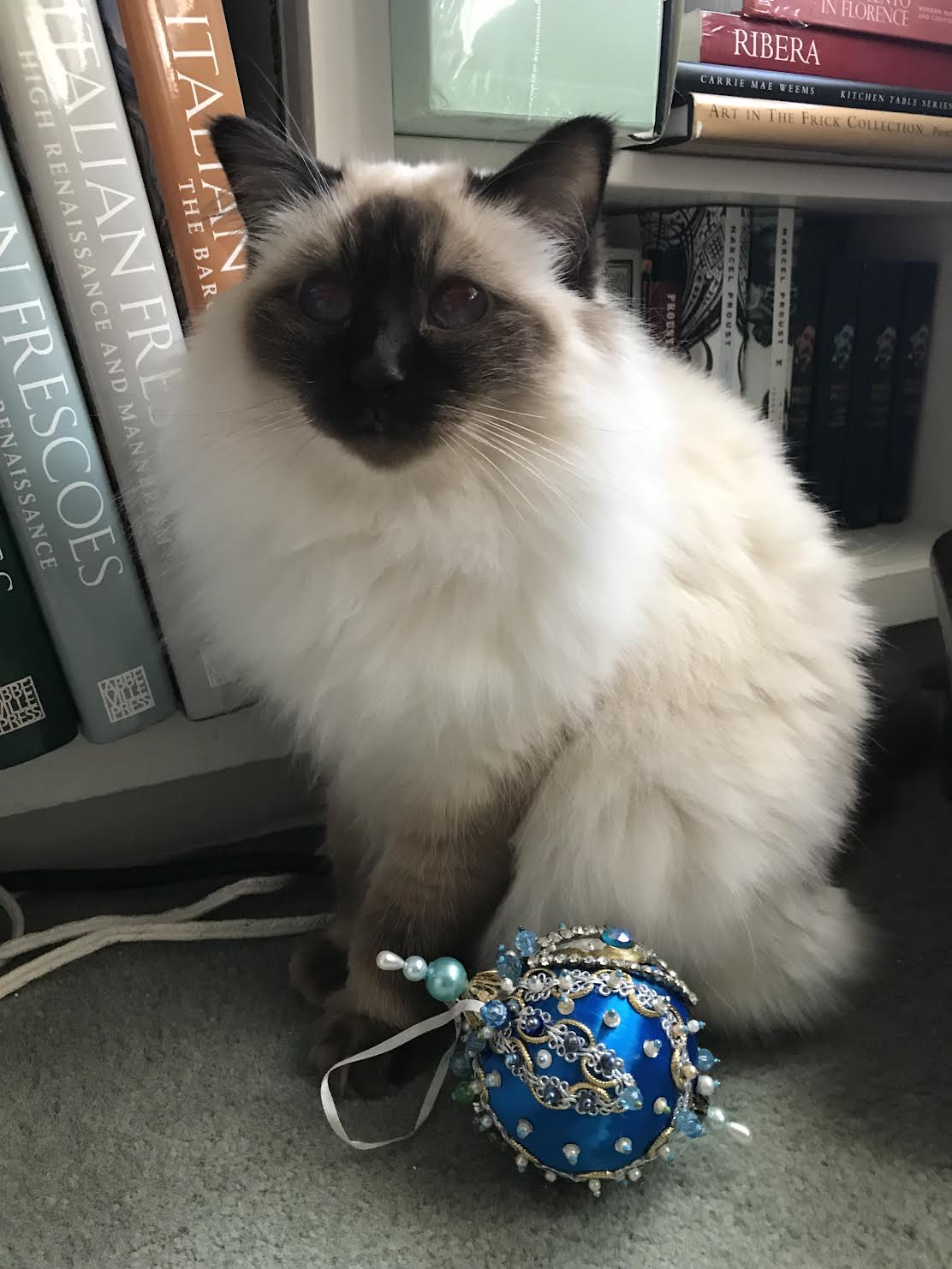


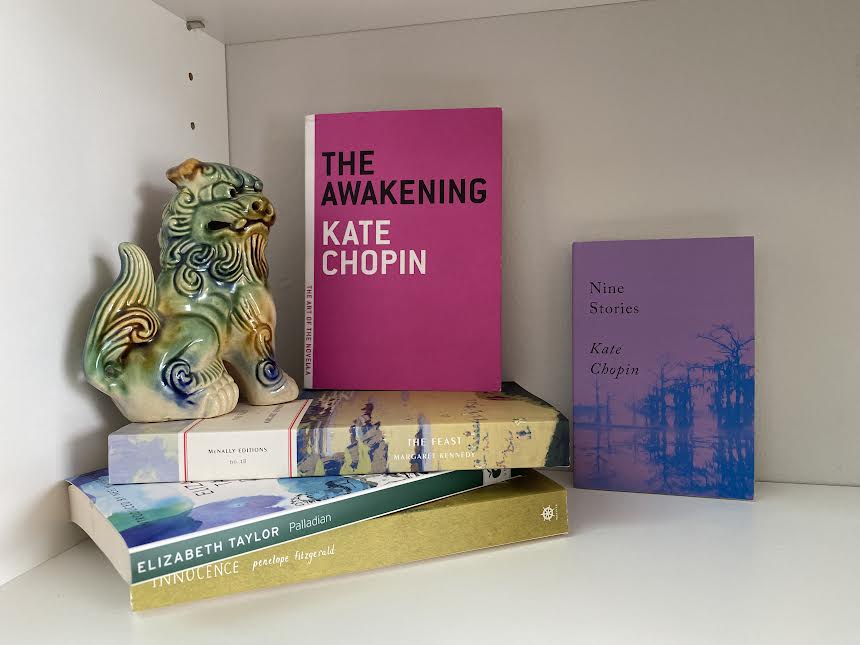


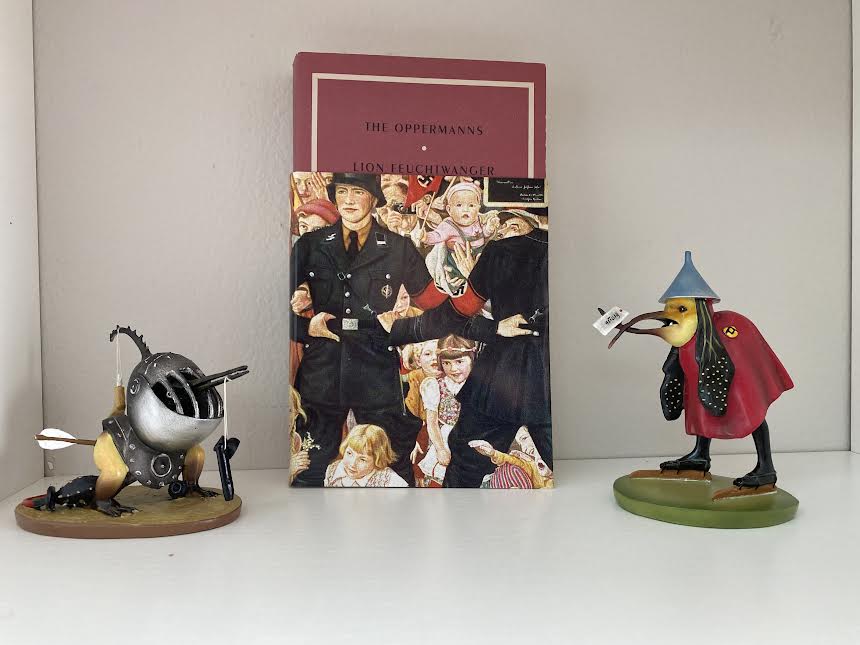

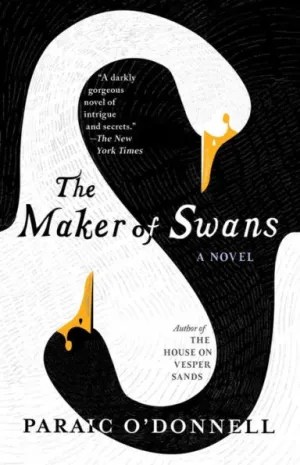
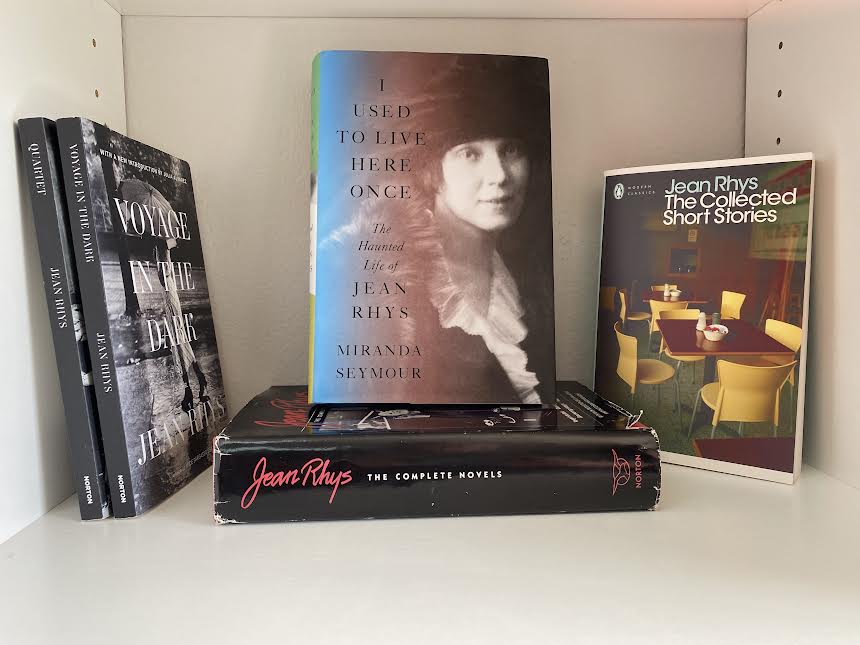
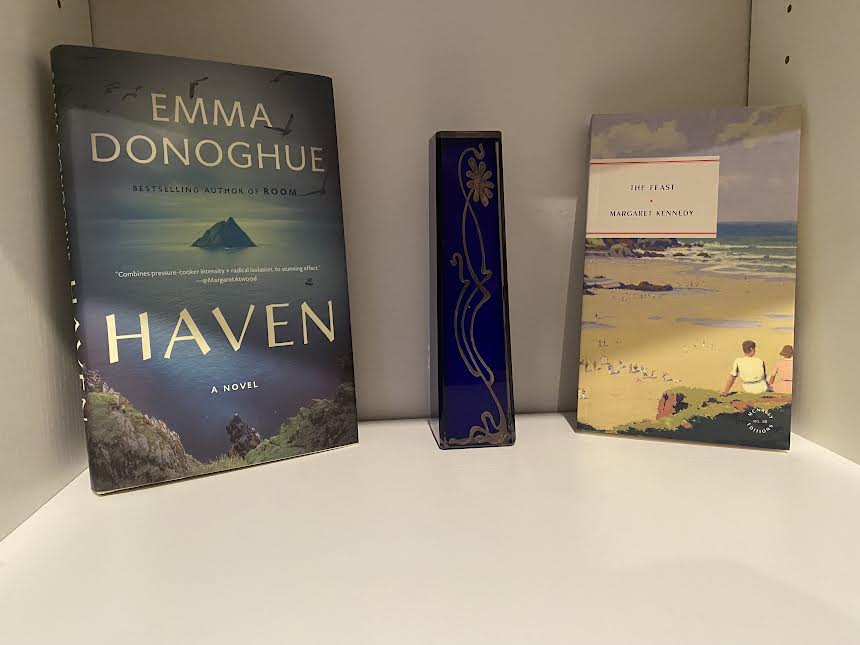
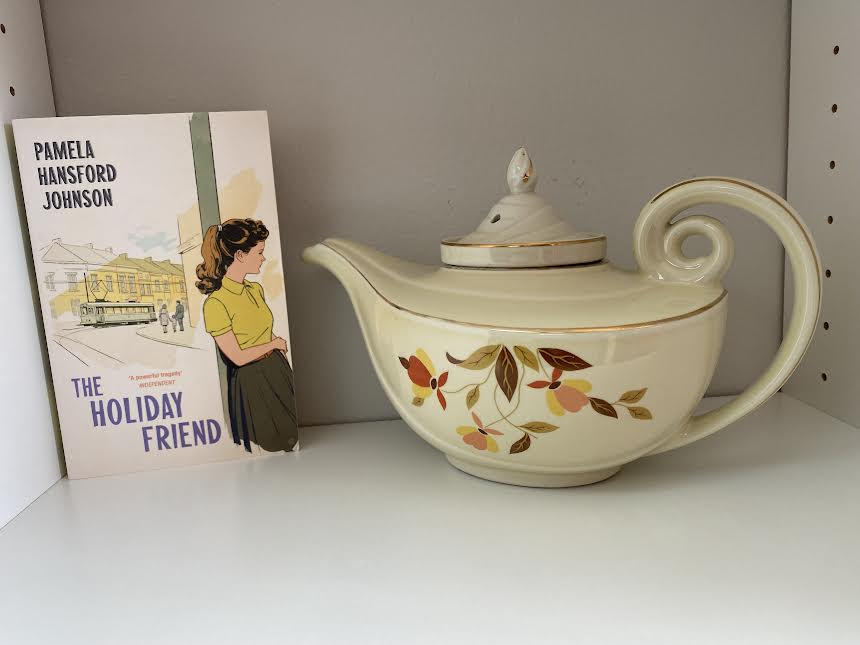

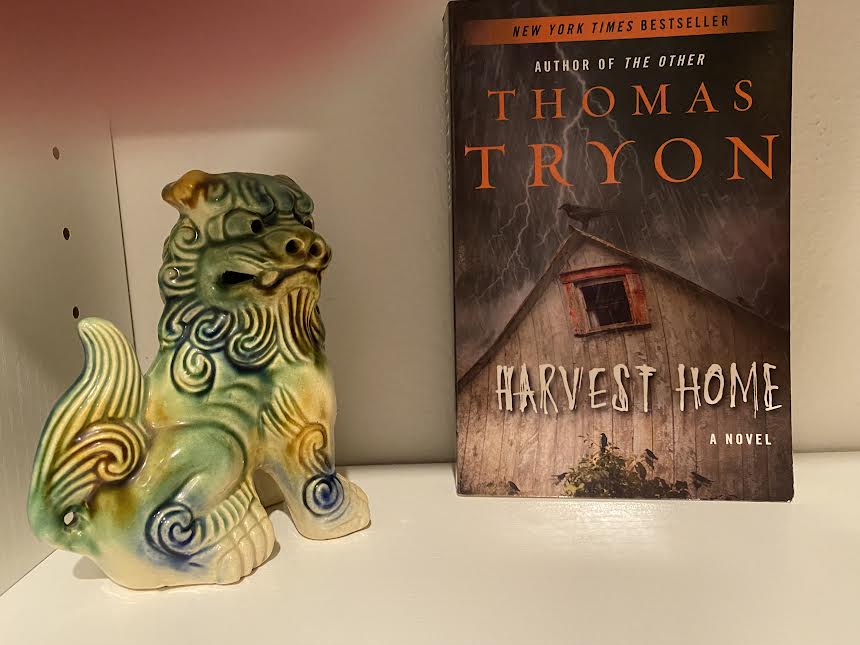


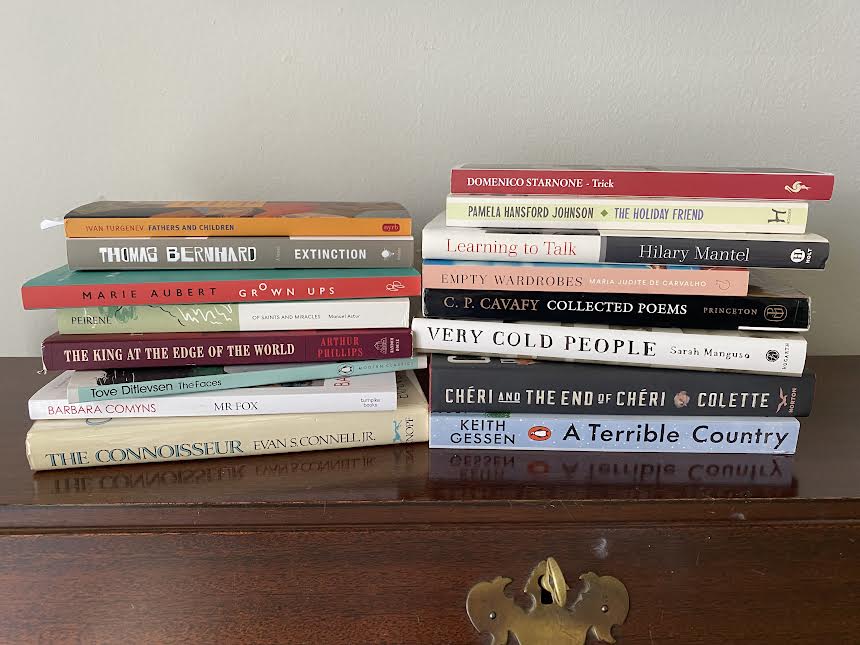


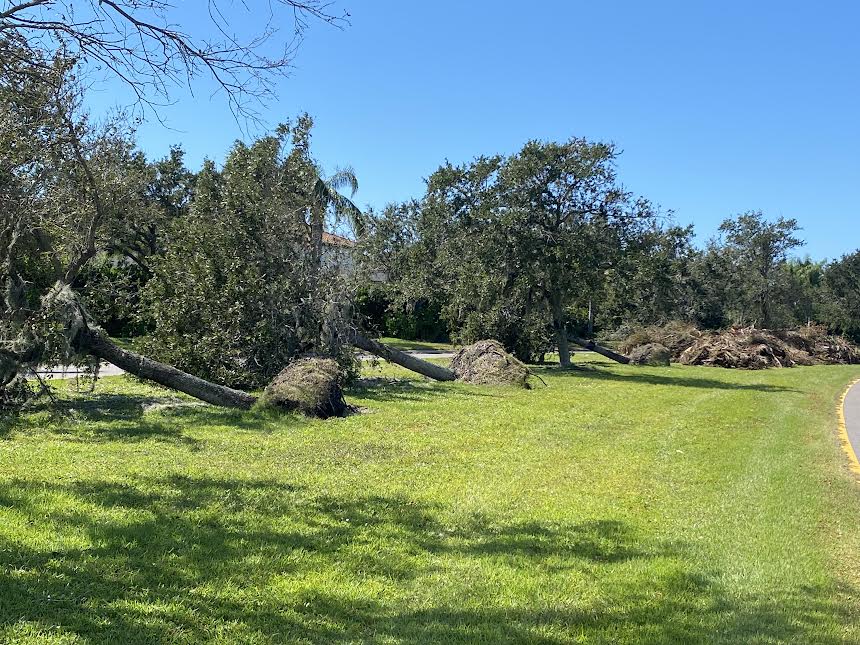
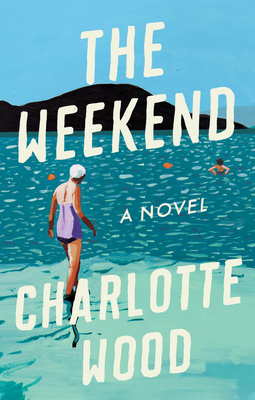
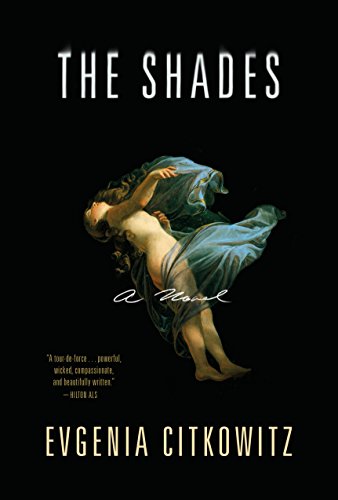
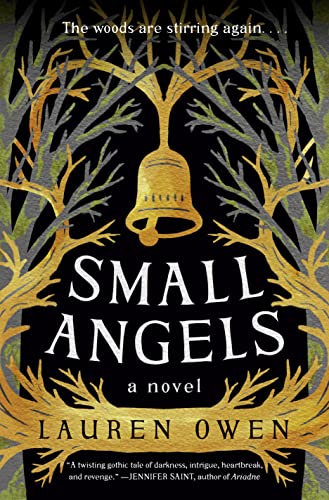
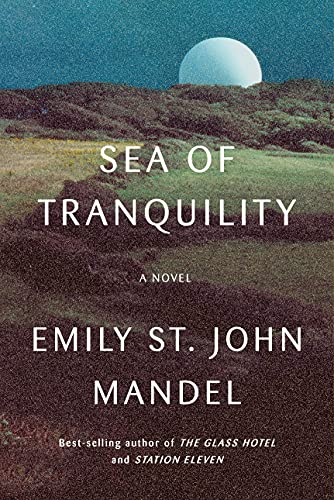
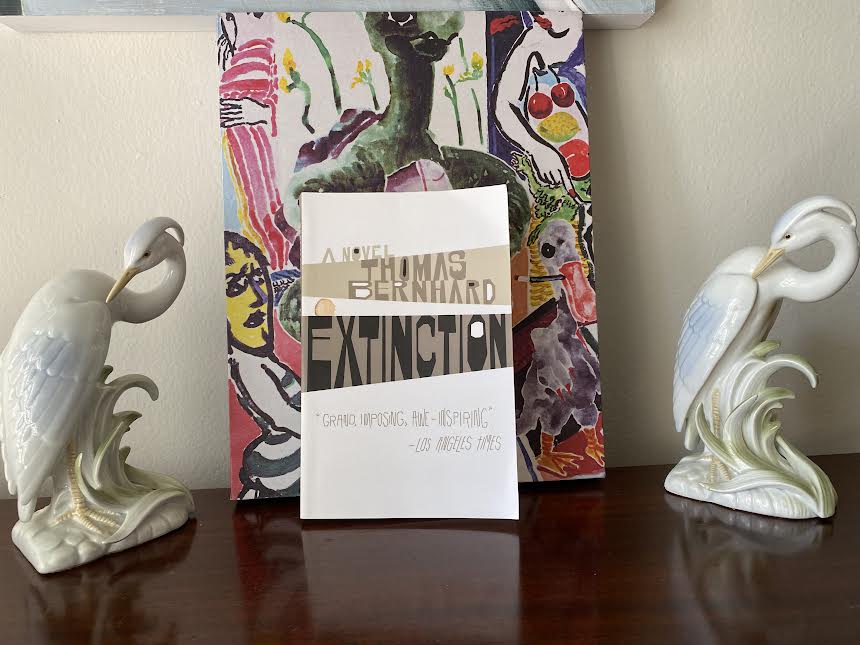
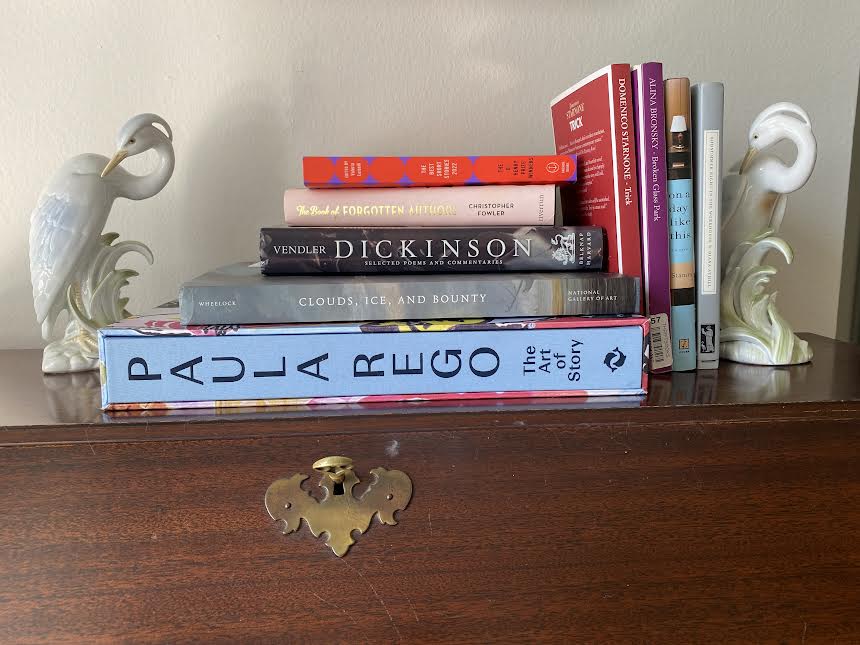
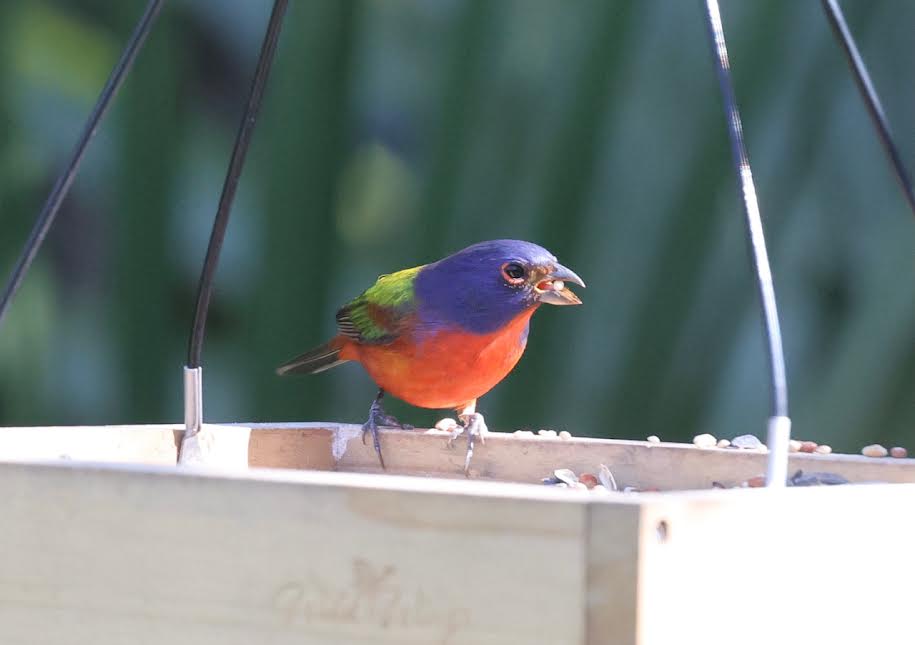

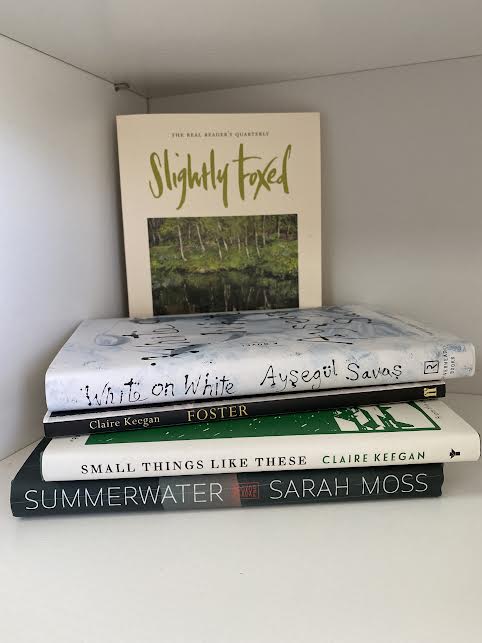
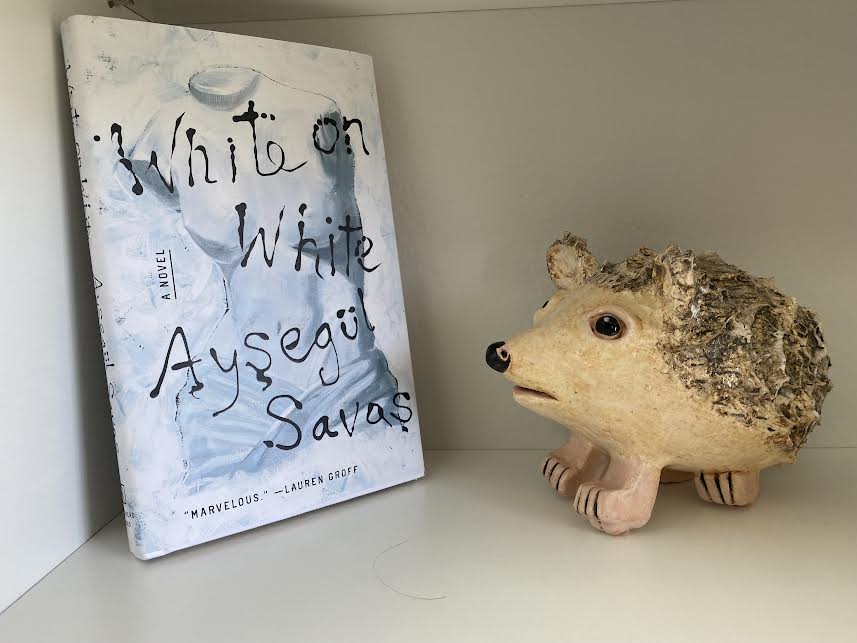


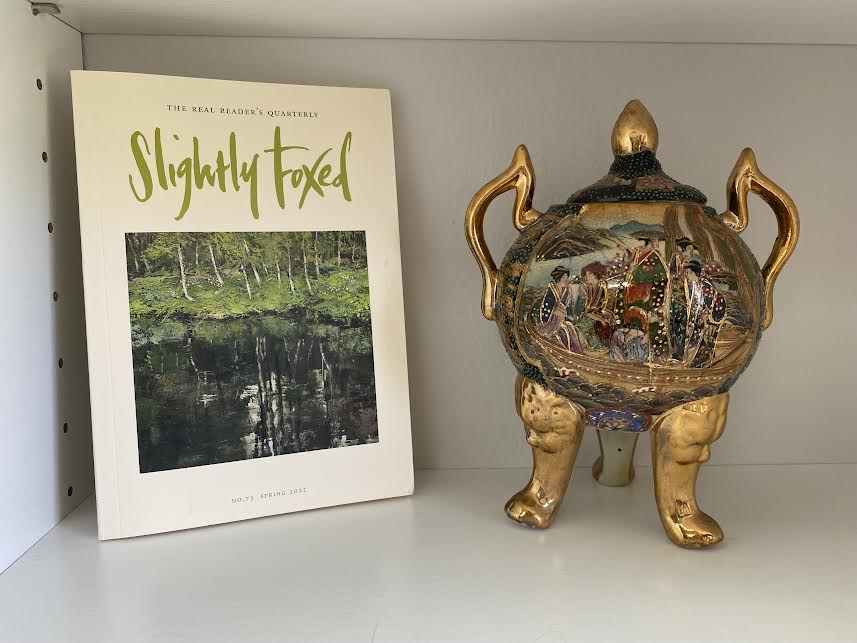
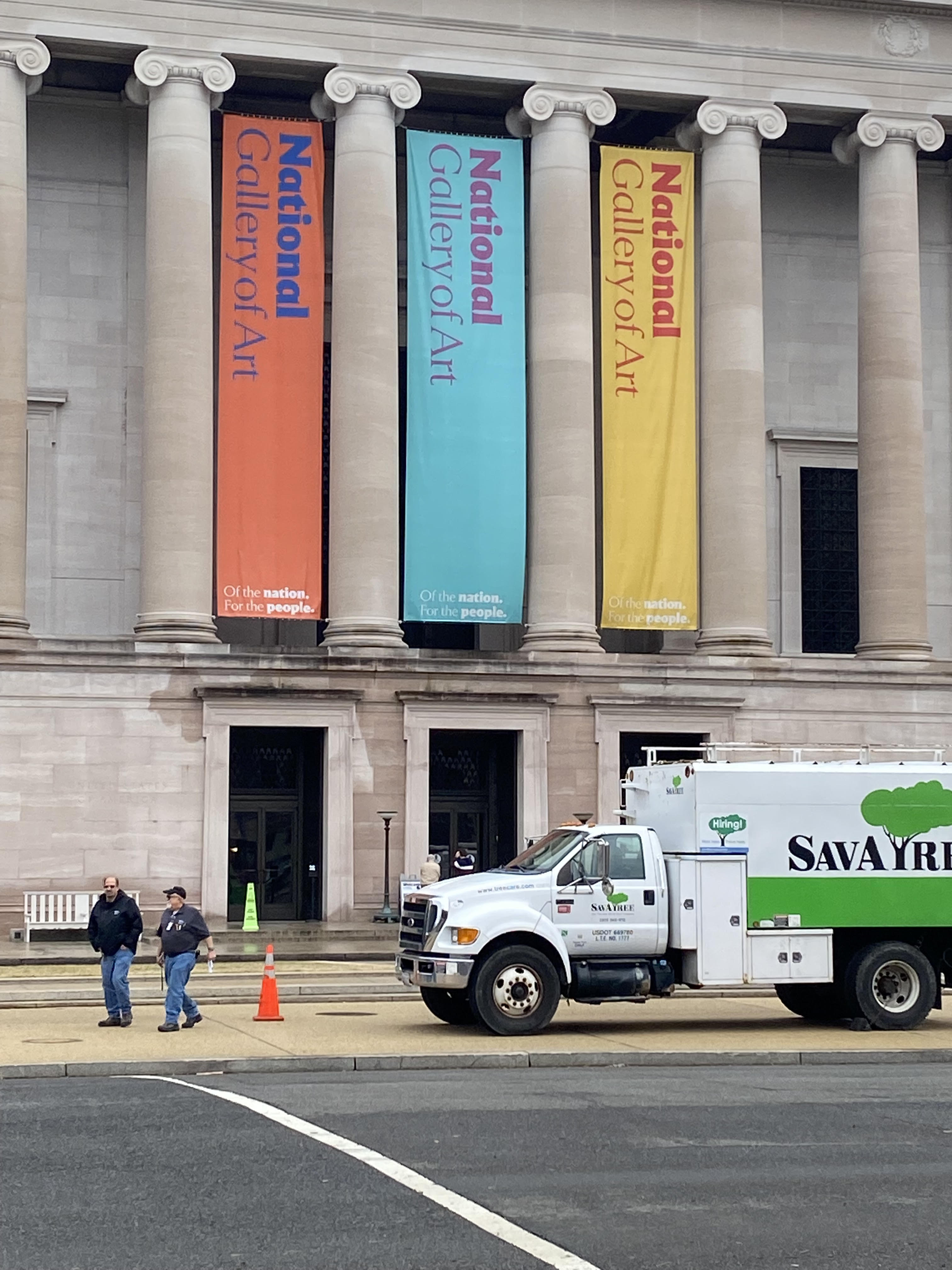


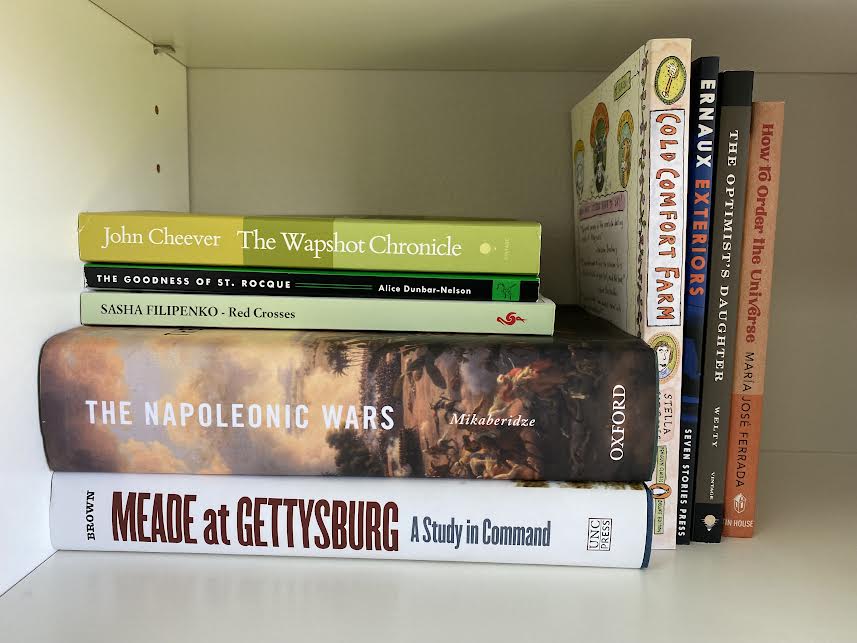
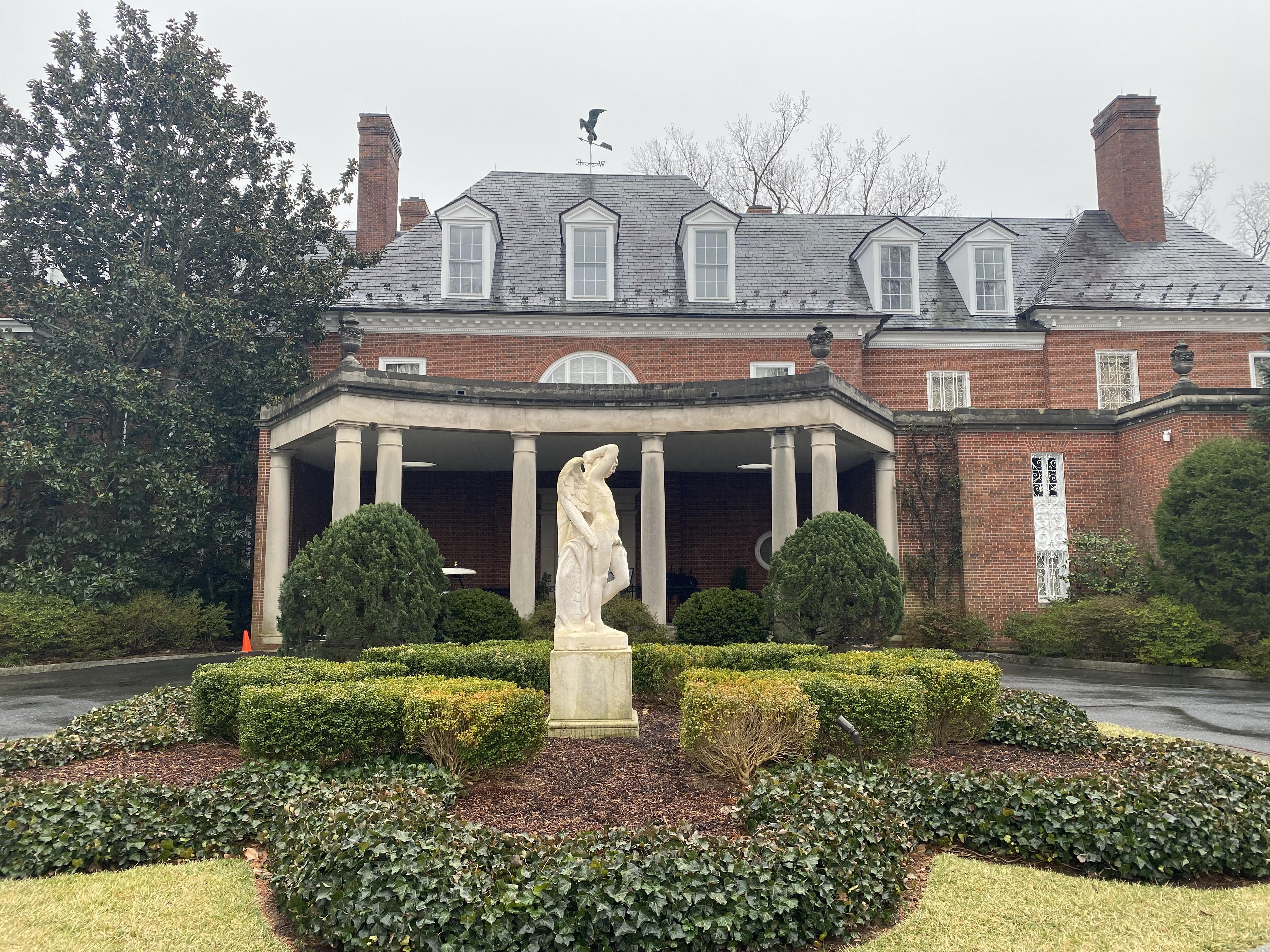






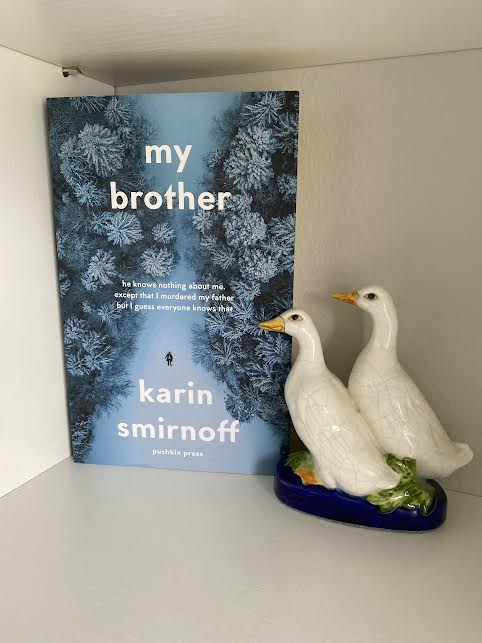


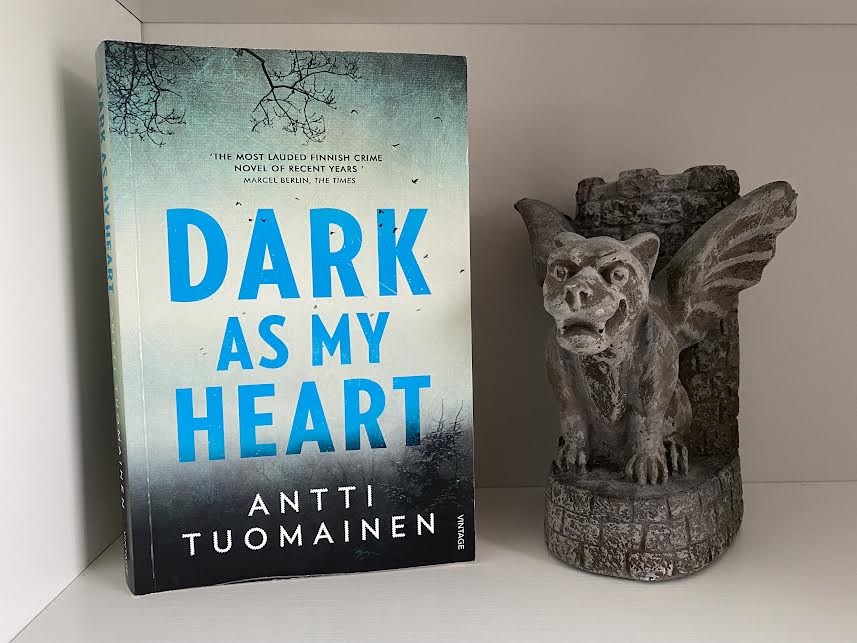


 "You Might as Well Read"