Although it was touch and go to finish those last two novels (Wandering Stars & Headshot, respectively twelfth and thirteenth on my list), for the first time in many years I actually read all the Booker nominees. My thoughts on the novels? Well . . . .
My heavens, dear Readers, can it really have been eighteen months or so since I last posted anything? I can’t imagine that anyone’s still checking the blog, after so prolonged an absence, but if I’m wrong many thanks for your patience/optimism! Despite intending otherwise, my teeny little break from blogging somehow morphed into a very prolonged absence. There were many reasons, positive and not, for this shift in plans. On the plus side, I had an interesting trip or two; on the minus, I suffered through a prolonged & rather aggravating home construction project, followed by the angst & dislocation of three (!!!) hurricanes in little over a year (admittedly, one of these was mostly a bad rain storm by the time it reached my little town; two, unfortunately, were much more). And then, of course, there’s the anxiety and anger that comes from reading the current political news and surviving an election that was something of a nightmare, even by U.S. standards.
And books do help us survive, don’t they? Along with the arts in general, combined, perhaps, with a judicious limitation on internet usage. I recently stumbled upon a very interesting NYRB essay on a phenomenon Russians term “vnutrennaya emigratsia,” defined as “internal immigration” or “internal exile.” (You can read a far more sophisticated explanation at https://www.nybooks.com/online/2019/02/11/a-refuge-from-reality-a-la-russe/ as I believe the paywall allows a free click or two.) This self-exile involves the creation of an internal space facilitating observation and thought; the concept has morphed from describing what was literally a geographic exile into the idea that one mentally relocates by forging an internal space apart from the prevailing cultural norms. The internal exile’s mental relocation facilitates survival and sanity by focusing on the arts & avoiding anything connected to politics or public life. Although cultural self-exile may become nihilistic or counter-productive (too much disengagement may permit real evil to thrive–think Hitler), what other choice is available in times such as these, dominated as they are by political and cultural ideas that one regards as sheer anathema? Rather than tuning in to the latest “bro” podcast or having hateful political screeds raise my blood pressure to dangerous heights, I’ll self-exile to my shelves of fiction, or to the haven of the nearest art museum (well, maybe not the nearest! I find its paintings to be a little dull and I’m willing to travel to see some more interesting stuff). As I’m sure you can surmise, the 2024 Booker long list has also provided a welcome distraction from the current political cycle.
This was particularly true as I found this year’s long list much more interesting than I have for some time. Aside from being a welcome distraction, it solved my paralysis about how to fill my reading schedule and was a handy way to re-acquaint myself with contemporary fiction, which I’ve been somewhat neglecting this year. To be candid (and I’m nothing, if not candid, dear Readers, it’s a professional survival from my legal career) it helped that the list included Harvey’s Orbital, which I’d just finished reading and that several of the nominees looked reasonably short. I quickly discovered, however, that several were actually what my British friends call chunksters (my own term is “doorstops”), at which point I gave myself permission to take breaks at will or to abandon the project altogether if I felt like it. Despite some temptation to stop, I did finally stumble through all thirteen novels, having finished Headshot and Wandering Stars about a week ago. As my title indicates, the remainder of this post is a mosaic of the impressions I gained from my reading. Please do remember that these are impressions rather than reviews; by their nature they’re a bit shallow, quickly formed and highly subjective. Your own judgments may well differ from mine; in fact, I hope they do so and that you’ll share your reaction! I’ve followed my bookish talk with a brief account (accompanied by a few photos) of some of my activities since my last post. Not to worry, however, as I separated it with bold-face type, making it easy for you to skip if you so desire!
My Overall Impression of the List:
I thought on the whole it was a pretty good, if not overwhelming, assortment of novels. (I won’t speak to the mix of gender, ethnicity and nationality, or the number of debut vs. well-established authors, as there’s already been plenty of comment on these subjects.) Necessarily I liked some of the nominees much more than others, but I didn’t regret the time I spent reading any of them. Only one novel, Charlotte Wood’s Stone Yard Devotional, blew me away but, on the other hand, none aroused my active dislike. (This hasn’t always been true in the past. I detested Richard Flanagan’s Narrow Road to the Deep North as well as George Saunders’ Lincoln in the Bardo, winners, respectively, in 2014 & 2017.) Although I don’t go so far as to claim this year’s nominees demonstrated any particular linkages or themes, it did seem to me at least that several of them revolved around characters who were cultural outliers, either by birth (Everette’s enslaved James & Orange’s disinherited indigenous Americans in Wandering Stars); by circumstance (the Libyan exiles of Matar’s My Friends or the prickly doyenne of van der Wouden’s Safekeep) or choice (check out the female rogue intelligence agent in Kushner’s Creation Lake). Sarah Perry’s two protagonists lead fairly mainstream lives but are spiritually estranged from the religious community which has shaped their values (one is a single and very independent woman while the other is a closeted homosexual). Given the number of women authors who made the short list, it’s hardly surprising that so many of the novels contain strong female characters who make unusual or unconventional life choices, such as Bullwinkel’s girl boxers (Headshot); Harvey’s female astronauts (Orbital) or Wood’s contemplative solitaire (Stone Yard Devotion). Respecting stylistic approaches, the list seemed mildly tilted towards experimental or at least non-traditional narration, most notably in Orbital and Anne Michael’s Held.
My Personal Short List (doesn’t coincide with the judges):
I know, I know — I only list five novels (and four of them already rejected!), while the real list has six, all of which are of course still in the running. Fantasy lists, however, are meant to be self indulgent! Besides, this way you get to supply your own nominee! I almost limited my personal short list to four, as Playground survived my scrutiny only by a whisker. I’m not a big Powers’ fan, as I usually find his work a little too cerebral, an opinion that still stood after reading his latest. Playground was also burdened IMO by being a bit too baggy in its plot and a little too prone to preachy information dumps about ecology and artificial intelligence. But Powers’ ideas are fascinating and his descriptions of undersea life sheer magic. Since Matar, like Powers, isn’t one of my favorite novelists, I was surprised to discover how much I liked and respected My Friends. It opened my eyes both to a history that’s been largely ignored and to the practical difficulties of living as a political exile, which has also been largely ignored (my observations in these regards, dear Readers, pertain only to what we in the southern U.S. refer to as “our neck of the woods”). I usually have somewhat mixed feelings regarding Messud’s novels (I’ve read about half of them), but found her saga of lives disrupted by historical forces her best work yet. I almost skipped Rita Bullwinkel’s Headshot, the story of eight teenage girl boxers who are each determined to prove she’s the best, but am so glad I didn’t. It’s funny, it’s compassionate and it’s very, very realistic in depicting a gritty, physical and ruthless competition that isn’t usually associated with teenage girls. Bullwinkel’s innovative technique (a narration structured on the tournament’s rounds, with the girls’ past & future told in brief chronological shifts) serves her unusual subject well. As for her next novel — sign me up already!
My Personal Winner:
This was an absolutely fabulous novel, one of the best I’ve read in a very long time. It’s about forgiveness, both of one’s self and of others; about facing the dreadful consequences of how humankind has treated the earth; and about living a life that’s both unknown and unknowable to others. “Midway in life’s journey” Wood’s unnamed protagonist found herself “in a dark wood;” the story of how she searched for the path out of it will stay with me for a very long time. Who cares if the plot is unconventional (unlike many, I actually think quite a bit happens, but it occurs mostly on an interior plane)? Or that much of the novel’s middle section is dominated by the physical necessity of dealing with a huge mouse infestation? Disgusting though it is, the mouse plague reinforces Wood’s theme of how human depredations have destroyed the earth’s natural balance (the protagonist is an environmental activist who has given up her work in despair, while the mice are trying to escape bad weather & dwindling food supplies). It occurred to me that the mouse plague also serves a symbolic function of providing the protagonist, a modern day hermit, with a desert trial comparable to those faced by the the early eremites. This is a short novel, but its reverberations are huge.
The Novel I’d Least Like to Win (from the real short list):
A tie, for opposite reasons, between Yael van der Wouden’s The Safekeep & Anne Michael’s Held. Although I found Safekeep’s historical background compelling, and its depiction of the prickly and unconventional Isabelle skillfully done (at least in the earlier portions), I thought the novel as a whole became something of a potboiler, with an easy and unconvincing resolution of the central dilemma. If Safekeep struck me as an airport type read, Michaels’ Held was at the opposite end of the spectrum. Admittedly, my preference for traditional narrative structures may have unfairly prejudiced me against Held’s highly fragmented style, which at times I found quite distracting. The author obviously has loads of talent, the writing is poetic and beautiful and some of the individual sections are very moving. But those constant time shifts, combined with extremely tenuous (and sometimes extremely artificial) connections among the characters became too frustrating for me by the end. Perhaps I’d have coped better if Michaels had simply labeled her work a short story collection.
The Novels I’d Be o.k. with Winning (assuming, of course, that Stone Yard doesn’t):
James was my first novel by Percy Everett (about time, wouldn’t you say?). It’s extremely well written and quite tender in spots; it also says things that desperately need to be said. Despite all this good stuff, I didn’t quite warm to James. I’ve always detested the Huckleberry Finn strain in American writing, even when it’s been as cleverly subverted as it’s been done here. Orbital was very beautifully written, an icon of words designed to invite contemplation but . . . although I’m not unduly demanding in this regard, I just needed something in the way of a plot. As for Creation Lake, it was quirky and interesting, and I’m sure I’ll understand what Kushner was doing with it as soon as I finish reading The New Yorker’s very clever review. https://www.newyorker.com/magazine/2024/10/14/creation-lake-rachel-kushner-book-review
My Own Prediction About the Winner:
Who knows? Certainly not the Booker Frog.
Non-Sequiturs & Stray Observations:
Two of these novels (History & Friends) made my own, if not the judges’, short list!
To begin with a total non-sequitur, I found it interesting that both Messud’s Strange History & Matar’s My Friends dealt with the post-colonial effects of European expansion, but from entirely different perspectives. Messud’s Cassar family (strongly modeled on her own grandparents) are French-Algerian settlers who lose their home and cultural identity after that country’s bloody war of independence. Scorned and rejected as Pied-Noirs by their French countrymen, they are forced to forge new lives in cultures whose language & customs are alien to them. Matar’s protagonist Khaled, by contrast, is a Muslim native of a Libya that has ejected its colonial overlords; after doing so, however, it forces its dissidents into an exile that requires them to build lives that are largely the opposite of those they would otherwise have experienced. Different perspectives in the two novels — European colonizers and native colonized — but the lives of both equally twisted and bent by the force of European expansion from the shapes they would otherwise have possessed.
In closing I’d like to offer a few observations on three other novels that didn’t make the short list. From the positive side of the street, I’d like to put in a brief word of praise for Colin Barrett. I wasn’t surprised that his Wild Houses didn’t make the short list, but its believable characters, great dialogue and unsuspected depths put Barrett on my “novelists to watch out for” list. On a negative note, I was a little disappointed by both Orange’s Wandering Stars as well as Perry’s Enlightenment. I love Tommy Orange’s work (I went to a great deal of trouble to get an autographed copy of his debut novel, There, There) but somehow I didn’t connect nearly as well with Stars. I think it covered so much historical ground, along with so very many of the problems created by the historical injustices inflicted on its characters, that I began seeing them less as individuals and more as avatars of various societal ills to be checked off the author’s historical list. That being said, Stars remains a very good novel, with a spot on and touching portrayal of how a family deals with generational trauma, whether it be caused by alcohol, drugs or an unexpected stray bullet. As for Perry, she’s less of a favorite of mine than Orange, although I did enjoy Melmoth, her shivery gothic from a few years back. Enlightenment had some really good stuff, most notably its misfit main characters and its depiction of the outlier religious community that shaped their lives (I believe a few reviewers have hinted that Perry was drawing on her own background for this aspect of her novel). Despite these strengths, however, a number of reasons prevented me from really connecting with the novel. I found the unrequited love to be just a bit too unrequited; the friendship between the main characters a little too unlikely and the reappearing ghost far too prone to provide helpful hints at key points in the plot.
PART II: WHAT I’VE BEEN DOING FOR THE LAST YEAR (See — It’s Easy to Skip This Part)
. . . a little bit (never enough) of interesting travel. I finally made it to Berlin & Dresden, where I spent a lot of time in their fabulous art museums.
. . . a little bit of wildlife viewing, including this bald eagle with its chick (thanks to Mr. J., his camera & a spring birding trip to western Ohio)
. . . a little bit of home remodeling (this is a photo of my once and future bedroom, temporarily converted into a construction site). Fortunately, I could camp out elsewhere in the house.
. . . surviving hurricanes (one last year and two this fall). This tree belongs to my next door neighbor. Although Mr. J & I, along with house and cats, escaped untouched, my area suffered a great deal of damage, particularly on the barrier islands.
. . . staying off Percy’s favorite rug. Despite a truly frightening set of fangs, I wasn’t deceived! Percy was simply yawning after a nice morning nap!
That’s it for 2024’s Booker list and various assorted matters! (and aren’t you glad?) I’m not going to embarrass myself again by predicting the timing of my next post, but I have been reading some very interesting things lately . . .
This pile contains many of the books I read, dipped into or (gasp!) abandoned during the early months of 2023. I rely quite heavily on my kindle, however, when I’m traveling, so I’ve also been reading quite a few e-books this year, mostly beloved old things that are now scarce or out of print.
My heavens, dear readers! Can it possibly be early July? Is the year half-way over already? And me without a single review to my name for 2023? However could such a shameful state of affairs happen? Well . . .
The year did not begin for me on an auspicious note. Nothing wrong in a major way, but the New Year found me feeling a certain ennui that is generally rather foreign to my nature, especially when it comes to books. Have you ever had a period in which you struggled to read? That despite having piles and piles of lovely unread books, chosen with great excitement (and, in many cases, considerable expense), you just didn’t feel like reading any of them? This was precisely my mood as the new year rolled around. Despite an enormous TBR list that offered endless possibilities for new discoveries (not to mention fun), I’m afraid the beginning of 2023 found me in zombie mode as far as reading was concerned. Usually I love January, with its buzz of bookish Challenges; typically I spend several intensely pleasurable days pawing through my treasures and making totally unrealistic reading plans for the upcoming year. Not so this January! The arrival of 2023 saw me twiddling my thumbs, bored (actually bored) with my books and not even beginning a single new novel. Quelle horreur!
Despite this, I did manage to read a few things simply by powering through my malaise (not to be trendy, but I suppose you could say I leaned into it) — not reading much, by my standards; but reading. Like nursing an illness, I made reading easy on myself by picking only a few things by authors I had previously enjoyed. I also re-read several books or novellas I had liked or admired in the past and picked fiction heavy on character and stylistic elegance, the main features that attract me in novels. In short, I marked time until my reading mojo chose to reappear! By February, and the discovery of some truly great novels things were definitely looking up. Although I still didn’t feel like reviewing anything myself, I did resume reading some of your lovely blog posts and leaving a comment here and there. All in all, it was an incredible relief to find my bookish life ever so slowly returning to normal.
As far as posting was concerned, however, I’m afraid my recovery’s remained incomplete. As I suspect some of you know, it’s hard to get back into blogging after a break, particularly when other, very enjoyable activities are calling your name! Chief among these has been travel, as Mr. J. and I have slowly emerged from our covid cocoon, dusted off our passports and resumed our (very) mild wanderings on the earth. I’ve also been spending much more energy & time on art history and nature , centering the travel when possible on these long-time hobbies of mine (Bernini’s David! The Ghent altarpiece!The Iiwi!) Loads of fun, but definitely not conductive to keeping the blog current! (When I do Part II of this Post, hopefully in a few days, I may throw in some of Mr. J’s excellent photos. Other than that, I won’t bore you with details).
But enough of the mea culpa — time to talk about books! Even in low energy times I generally keep a sort of running list of the books I’ve read. This year, contrary to my usual practice, my list has actually morphed into a hybrid between a list and a journal, as it frequently included my brief impressions/assessments of what I was reading as well as how it slotted into my life at the time I was reading it. Working from this, I decided to post an overview of my 2023 reading as this seemed the least painful way to ease myself back into blogging. While I’ve retained my journal’s chronological format & style, I’ve done some mild editing & expanded several entries to reflect additional thoughts about certain books that I found particularly interesting. TBH, dear readers, the whole thing is a bit of a hodgepodge, but I’ve thrown in some photos & headings that should make it easier for you to navigate to particular items you might find interesting, or to click away from those that you don’t. I’ve also resisted the temptation to leave out some of my (ahem!) “lighter” choices. After all, I can’t be the only one out there who loves Georgette Heyer, pulp sci-fi of a certain vintage and the occasional chick lit best seller, can I?
JANUARY 2023: STRUGGLING THROUGH SLUMP MONTH
Don’t you love Melville House novellas? Aside from their convenient size (so handy to pop into a purse or backpack) the colors alone are enough to jolt one out of a slump! My overflowing TBR pile includes almost all of Melville’s “art of the novella” series, so it was natural enough I’d go to my stash to read Kate Chopin’s best known work. Did you know that few, if any, of Chopin’s contemporaries had anything good to say about Awakening, with even Willa Cather criticizing it as immoral? The backlash was so heavy, in fact, that it ended poor Kate’s hitherto successful writing career. Even in zombie mode, I adored Awakening and am now eager to read some of Chopin’s other works. Any recommendations? I’m inclined to begin with this little book of short stories (issued by Counterpoint Press) but I’m open to other suggestions.
I began the New Year with a re-read of Kate Chopin’s The Awakening, whose novella length and status as a re-read made it a perfect beginning for my apathetic, low energy month. Chopin’s Louisiana setting was an additional attraction; I lived in New Orleans many years ago, loved the place and felt in the mood to revisit the city through the eyes of Edna Pontellier, Chopin’s protagonist. I was also interested in comparing my present reaction to the novel to that when I first encountered it many years ago. The first time around (before I lived in New Orleans, I might add) I’d literally raced through Awakening; to my shame, I was mostly relieved to cross it off my list and move on to the next newly discovered feminist classic. In other words, I’d liked it in a rather mild kind of way but wasn’t particularly impressed. What a difference a second reading can make, particularly when it comes so much later in life! This time I savored practically every phrase, awed by Chopin’s skill with the language and her boldness in depicting the limitations of the world inhabited by her protagonist, trapped in her beautiful doll house and meaningless life. Chopin’s beautiful style, her ability to create atmosphere and her sheer honesty about, and insight into, her Edna’s psychology are leagues beyond what so many of her contemporaries were churning out. How could such a marvelous writer have been so thoroughly forgotten for so long?
WILL ONE OF MY FAVORITE AUTHORS BREAK THROUGH MY JANUARY ENNUI?
I’ve loved William Trevor’s fiction since I first read Felicia’s Journey, back in the 1990s. As you can see I have a little Trevor Trove (groan) of his work, minus several novels I very reluctantly discarded (I had read them) during my long distance move a few years ago. Did resorting to a beloved master shake me out of my reading malaise? Well . . .
I Was delighted when Cathy746 announced a year of “Reading William Trevor,” as it reminded me of how very much I love his work. Surely reading something, anything, from such an old favorite, a master of style and psychology, would restore my reading enthusiasm! Sad to say, my remedy failed. No reflection on William, he remains as great as ever in my estimation, but even his considerable literary power wasn’t enough to break through my apathy, particularly when the latter was combined with a truly nasty, late January sinus infection. I wanted to save Felicia’s Journey and After Rain, two of my all time favorites, for happier times, wasn’t in the mood for short stories (so difficult to decide which to read first, n’est-ce pas?) and didn’t have the energy to embark on a totally new novel. After a certain amount of apathetic dithering about, I returned to two Trevor works that I’d first read decades ago. I picked these two because I’d liked both very much but remembered very little about the plot of either.
I began with Two Lives, which contains two separate and seemingly unrelated novellas under one cover. The novellas are a study in contrast — as each explores two very different protagonists — are set in wildly different locales and strike very different emotional chords. My House In Umbria begins with the reminiscences of Mrs. Emily Delahunty, now retired from her career as a lady of pleasure in colonial Africa to the serenity of the Italian countryside (as Mrs. Delahunty explains early on, she’s used many different names over the years and the “Mrs.” is a courtesy title; “strictly speaking” she’s never been married). Ensconced in a charming Umbrian villa, and ably assisted by her rather sinister factotum Quinty (one of Trevor’s great minor characters) she occasionally assists the local hotels when they’re overbooked by taking guests at her villa. Mostly, however, Mrs. Delahunty spends her days writing florid and very successful romance novels. All goes reasonably well until, suffering from writer’s block (she’s unable to flesh out her new novel, tentatively titled “Ceaseless Tears”) & looking for inspiration, Mrs. Delahunty boards the wrong train at the wrong time. After surviving the ensuing terrorist attack that kills many of her fellow passengers, she impulsively and generously offers accommodation at her villa to the survivors (Quinty, less generous, ensures that the lodging isn’t free). The heart of the novella concerns both the complex relationships that develop among the survivors as well as Mrs. Delahunty’s past, which Trevor gives to us in funny, heart-breaking and oh-so-realistic fragments, in a way that only he can do.
In contrast to the exotic Mrs. Delahunty and her Umbrian menagerie, Mary Louise Dallon of Reading Turgenev is a much less colorful and seemingly more tragic protagonist. Mary Louise is the younger daughter of poor farmers who “struggled * * * to keep their heads above water” (page 4) in the dwindling Protestant community of a small Irish hamlet in the mid-1950s. Realizing that her dream of being a shop assistant in town is unobtainable, Mary Louise makes a marriage of convenience to a much older man (a naive thirty-five to her naive twenty-one) who’s one of the few Protestant bachelors in her community. After enduring years of a loveless and miserable-to-both-parties marriage, Mary Louise secretly begins to visit her invalid cousin Robert, whom she had not seen since childhood. During these surreptitious visits, Robert exposes Mary Louise to the literature and poetry, particularly the works of Turgenev, which had been the solace and comfort of his restricted and lonely life. As the two bond, Mary Louise becomes aware through the fiction they read of a world that transcends her own grim existence and experiences, for the first time, the comfort of having another human being who listens and understands her as no one else has ever done. After Robert dies unexpectedly, Mary Louise fashions his memory into an image of the great love that she believes they were destined to share. Her iron determination to own this memory, to keep and shape it for herself, insulates her from the assaults of her quotidian life and leads to tragic results. Or — does it? It’s part of Trevor’s greatness that he doesn’t leave the reader with an easy answer to this question.
When I first encountered Mrs. Delahunty and Mary Louise oh, so many years ago, it didn’t occur to me to ask the the obvious question of why Trevor paired these two novellas (Readers, I was quite young at the time!). Particularly with a novelist to whom character is so important, their juxtaposition suggests linkages between the two very different protagonists and their worlds. Using contrasts to heighten differences is an obvious and very old trick; it also seems an insufficient reason to pair these two novellas for a writer as subtle as Trevor. To me, the two lives, so very different on the surface, are actually quite alike in a very fundamental way. Despite their obvious differences, the paths taken by both women demonstrate the power of fiction and of the imagination in enabling us to transcend the mundane and often painful “realities” of our lives. Mrs. Delahunty, the product of a sordid past and unspeakable abuse, very consciously fashions sentimental stories with happy endings that allow her and her readers to escape, if only briefly, from their own lives into a reality that’s been shaped more to their likening. Mary Louise uses the literature she shared with Robert as a gateway to a world far removed from the horror of her daily life and as the foundation for fashioning her ideal of an eternal, transcendent love that she was destined to experience. Is the way these two very dissimilar women use art/literature a positive or negative thing? Trevor seems to suggest that it’s both.
It’s always interesting to re-read a work after a being away from it for many years; re-reading exposes lapses in memory, changes in sympathy and, occasionally, a greater appreciation of the writer’s craft. When I first read Two Lives, I preferred Umbria for its black humor and the clever way Trevor had Mrs. Delahunty unknowingly reveal so much about herself that she would have clearly preferred to keep private. I actually thought, first time around, that Turgenev was a bit boring, in a well written kind of way. My reaction on re-reading, however, was wildly different. Although I still enjoyed Umbria’s mix of irony, pathos & dark humor (it is very funny at times), this time around it was Turgenev that blew me away (irrelevant aside: Trevor was nominated for the Booker for this work but lost; how could that possibly be?). Last year (or was it the year before? too lazy, I’m afraid, to look it up), I read and very much enjoyed Claire Keegan’s Foster & Small Things Like These. Re-reading Turgenev reminded me very much of the tradition Claire Keegan is working in; her work is almost the equal of Trevor’s in its subtlety, psychological insight and craft. For me, there’s no greater praise.
Despite my renewed appreciation of Trevor, however, Two Lives failed to restore my joie de livre. Operating on the theory that, if one Trevor didn’t work, I might as well double down on a second, I went for a re-read of The Silence In The Garden. Again, I remembered little from my earlier encounter with this tale of decaying Anglo-Irish aristocrats in 1930s Ireland, haunted by something akin to blood guilt. Rich (perhaps a little too much so) in metaphors, Garden isn’t one of my favorite Trevor novels. Nevertheless, it’s a good story, beautifully written, and has some amazingly well-drawn characters (check out “Holy” Mullihan, a sadistic goon who’s a master in using religion to cloak his bullying). Second time through, I found Garden definitely worth the time, although I’d not place it at the top of my personal list of Trevor favorites.
WHERE DO I GO AFTER WILLIAM TREVOR?
Three more of my “just powering through the slump” reads (the Trollope novels in the background date from a more energetic & ambitious period) . . . .
I first encountered Laura van den Berg almost a decade ago, when I read her short story “Opa-locka” in one of those “best of the year” anthologies. LVDB’s elegiac melancholy, combined with her ability to depict a reality that was just a bit off-kilter quite haunted me; she immediately won a spot on my reading radar and I resolved to check out more of her work. But — we all know what happens to those good intentions about our TBR list, don’t we? I would probably never have gotten to I Hold A Wolf By The Ears without the enthusiasm of my good friend Silvia, who read and loved this collection (thank you, Silvia!) As with any collection of short stories, I liked some more than others, but none was a dud. How to resist a writer who begins a story (“Last Night”) with the words “I want to tell you about the night I got hit by a train and I died”?
Still operating on reading autopilot, I cast about rather desperately for something short and undemanding to read. I settled on J.L. Carr’s A Month In The Country, which had been tempting me for a very, very long time. Did it live up to expectations? Well, yes and no. Despite my grumpy, listless mood I found it to be a lovely read. It was tinged with a most appealing nostalgia, with its protagonist’s remembrance, many years later, of events that would have altered his life had he acted differently. Carr is a wonderfully descriptive novelist; he made it very easy for me to visualize an English countryside in spring that I’ve never seen in reality. One aspect of the novel that I didn’t expect and that I found totally captivating was its underlying theme about the transcendent value of art and art’s endurance, despite its fragility, to the ravages of time. Despite all these good things, however, my attention did occasionally wander and I had to force myself just a teeny bit at times to continue reading. Although I could blame “the Slump” for my reservations, I don’t think I quite succumbed to the novella’s charms. Unfairly or not, I found Country perhaps just a bit too twee, its nostalgia a little too manipulatively pulling at the heart strings. Have any of you read it? If so, what did you think? Am I being a heartless curmudgeon or what?
January’s Discovery & Its February Continuation: I don’t read much poetry any more, so you can imagine my surprise when I unexpectedly became quite obsessed with Eliot’s The Wasteland. Could it be that sometimes only poetry will do? I was barely familiar with the poem, having read only a small portion of it several years back (and then only because it was required reading in a class I was taking) and had pretty much forgotten about it. For some reason, however, during a time when I was struggling to read even a novella, I became fascinated by Wasteland, which I read at least four or five times during my slump (assisted needless to say, by various cribs & guides as well as Eliot’s own very entertaining and idiosyncratic notes).
January’s “I Just Couldn’t Do It” Book:
Although I’ve very much enjoyed Wilson’s work in the past (loved The Family Fang & found his Nothing To See Here a very enjoyable skim) I put his latest aside after only seven chapters. This may have simply been a case of “wrong book at the wrong time;” perhaps I’ll give it another try later on. Or not.
FEBRUARY 2023: A FALSE START THEN — BREAK THROUGH!
Despite reading some wonderful things the previous month, February saw my reading enthusiasm at its same tepid level. Clearly time to try a nuclear option, which in my case is the “Heyer (Georgette, that is) Cure.” Georgette has gotten me though many dismal times involving airports, long flights, minor illnesses and an unspeakably horrible camping trip (culminating in an unsuccessful attempt to see a Golden Backed Mountain Tanager ). If you’re a fan of Heyer’s work, you’ll understand my passionate devotion. If not, all I can say is you’re missing some of the best comedic dialogue since Bertie Wooster met Jeeves. I decided to skip some of my very favorite Heyers (Black Sheep; The Unknown Ajax and Bath Tangle) to focus on a couple of her (IMO at least) lesser Regency Romances. Still feeling rather dismal after a quick back-to-back of these minor gems (Sprig Muslin & Friday’s Child), I quickly added The Grand Sophy, one of Heyer’s very best, to my little binge read.
The result was disappointing; despite some temporary relief, the Heyer Cure failed to jolt my reading enthusiasm back to life. At this point, having nothing to lose, I decided to try something outside my comfort zone, which does not encompass works relating to 1930s Germany. Despite my general avoidance of the WWII era, however, I’d actually been quite excited a few months previously to discover McNally Editions’ reissuance of Lion Feuchtwanger’s TheOppermanns. Although I had put it aside for other things (at the time I hadn’t felt like beginning such a lengthy novel), its wonderful cover art and glowing reviews kept it on my reading radar. In a “what do I have to lose” mode (after all, I was already pretty bored), and with re-reads and gentle choices having failed me, I decided to give it a go. And the result? Bingo! Have you ever had that special feeling, when you know, just know, right from the opening pages, that the book you’re reading is just right for you at that moment in your life? Gentle readers, my mojo was back!
Has anyone read Lion Feuchtwanger’s The Oppermanns? The little tchotchkes on either side are based on details from paintings by Hieronymus Bosch; quite appropriate, don’t you think, for a novel set during the rise of the Nazi party in Germany? I love the cover art (a removable half-flap that can do double duty as a bookmark) but haven’t been able to discover whether it’s based on an actual painting. If anyone recognizes it, do share your information.
On its most superficial level, The Oppermanns recounts the destruction of a wealthy, assimilated family of German Jewish businessmen who have been loyal and patriotic citizens of the German state since the early 19th century. Among the mementos displayed in the family’s business office is one of their proudest treasures, a framed letter from Field Marshall von Moltke thanking Emmanuel, the founder of the family business, for his services during the Franco-Prussian War of the 1870s. When the novel opens, Emmanuel’s grandson Martin runs the family’s furniture business, known in Berlin for its quality goods and reasonable prices; his brother Edgar is a famous and successful doctor and Gustav, the third brother and the novel’s main POV character, is a devotee of the arts and a would-be literary biographer (a fourth brother, we learn late in the novel, perished fighting for Germany during WWI). Without reading too much into the text, it seems to me that the Oppermann brothers rather subtly embody the foundations of the German culture of their time, i.e., business, science and the arts, and their fates illustrate the decay of 1930s Germany and its vulnerability to the increasingly powerful Nazi movement. Rounding out the family picture is an Oppermann sister, who makes an occasional appearance, along with her astute & far-sighted husband, who’s regarded as not quite one of the family, being a native of eastern Europe rather than Berlin. The younger Oppermann generation is represented by Martin’s idealistic teenage son; Edgar’s daughter, who’s an increasingly passionate exponent of the Zionist movement; and Heinrich, the Oppermann brothers’ cautious and pragmatic nephew.
One of the things I particularly loved about the novel is its inclusion of characters outside the upper reaches of the wealthy and cultured haute bourgeois world in which the Oppermanns move. This opens out the story and conveys that what was happening affected an entire society and not just a rarefied and prosperous segment. Some of Feuchtwanger’s most interesting chapters (IMO at least) center on a clerk in the Oppermanns’ employment who lives in humble but contented circumstances; this ends when he runs afoul of an “Aryan” neighbor who covets his apartment. For all its length (my McNally edition clocks in at 368 pages, not counting a very helpful section of notes and a great intro by Joshua Cohen) the novel’s time frame is brief. It begins on Gustav’s fiftieth birthday in late 1932 and ends less than a year later, with the near-total destruction of the Oppermanns’ world.
Although it excels as a family saga, as well as a very realistic snapshot of a particular time and place, there’s a moral dimension to The Oppermanns that elevates it far beyond the story of individuals caught in the terrifying grip of history. Although I fear I’m mangling Joshua Cohen’s insights (his essay, if you’re interested, is available in the New York Times book review, link provided below), the novel in many ways is a meditation on identity and the testing of an individual’s character; the inhabitants of Feuchtwanger’s world, especially Gustav, question the purpose of their life and/or their duty to resist the evils of the time in which they live. In effect, Feuchtwanger asks whether one’s “work” is the completion of a literary biography (and by extension, participation in the arts); political involvement/resistance to the forces shaping one’s times; the perpetuation and survival of Jewish identity or, perhaps, self-reinvention and healing? At various times throughout his great work, Feuchtwanger suggests it is all of these things. It’s worth noting that Feuchtwanger himself had chosen to use his literary talents to serve his political beliefs, a decision for which he paid a high personal price. He wrote his novel in “real time” and about contemporary events, some of which he’d experienced at first hand (like his character Gustav, for example, Nazi goons ransacked Feuchtwanger’s house and destroyed valuable personal papers and drafts of his work). During the time in which he wrote Oppermanns, Feuchtwanger had fled Germany for life as an exile in England, been stripped of his German citizenship and seen his works banned by the Nazi party.
Although I’ve rattled on too long, I can’t leave this novel without a few words about the McNally edition shown in my photo (thanks again, Jacquiwine, for putting this publisher on my radar!). The publishing arm of the McNally Jackson bookstores in New York, McNally editions has a small but exciting list of “hidden gems” (quote & info, BTW, taken from the publisher’s website) which it reissues in beautifully produced paperback editions. Although I’m unsure of McNally’s distribution and availability, particularly outside the U.S., those of you in the U.K. with a yearning for Feuchtwanger need not despair, as Persephone has also published The Oppermanns (Book No. 136). I believe both publishers are using the same 1930 translation by James Cleugh; Joshua Cohen, however, has updated it and written a great introduction for McNally (note, however, that his NYT review is adapted from his introduction and is only a click away).
MY STREAK CONTINUES:
The only downside to reading a really great book is greed; having read something really, really good, you naturally want your next selection to be just as wonderful. And really, dear readers, how often does that happen? As if to counter balance those horrible reading weeks of early 2023, however, my next February selection was (almost) the equal of The Oppermanns.
Any Jane Gardam fans out there? If so, I’d be most interested in learning your reaction to her Old Filth Trilogy or, indeed, to any of her novels. After years of being largely indifferent to Gardam’s work, I’m now a most avid member of her fan club!
Although I’d read and (mildly) enjoyed a Jane Gardam novel several years ago, I must admit that I had trouble understanding all the fuss about her work (the novel I’d read, in fact, left so little impression on me I’ve forgotten its title). I mean, her novel was o.k., I liked it, but I certainly didn’t rush out to read more. I did try Old Filth, supposedly one of her best, but didn’t get very far. Ditto for my second attempt; in fact, I may even have tried it a third time. Having ditched the Challenges this year, I decided 2023 was my “now or never” year for Gardam and I’m so glad I did! Where has this writer been my entire life? I not only raced through Old Filth, I quickly followed it with The Man In The Wooden Hatand Last Friends. Although I think there are some weaknesses, particularly in Last Friends, the trilogy is a wonderful achievement and easily one of the best things I’ve read in ages. Gardam, was, thankfully, a fairly prolific author so I’ve lots of catching up to do regarding her back list. Any recommendations?
February’s Orphan, Abandoned For No Good Reason:
O’Donnell’s poetic style and mysterious setting hooked me in, but I’m afraid I stopped reading when the orphan cygnets showed up. I just knew something bad was going to happen to them and couldn’t face it! Has anyone read this one? Can you reassure me that the baby swans are all right at the end? If so, I’ll probably return & finish!
MARCH 2023: Back To My Usual (If Slightly More Frantic) Pace
March was another travel month, with lots of airport time. Although I sometimes read serious stuff when I travel (I once finished Joseph Roth’s The Radetzky March during a single marathon flight), on the whole I tend to stick to mysteries or to more popular contemporary works. I’m a long time fan of Ruth Rendell’s dark psychological novels (originally published under her “Barbara Vine” pseudonym) and the presence of her work on my kindle dominated March, as I read four of her twisty, clever and psychologically acute novels at various points during the month (Judgment In Stone; A Dark-Adapted Eye; House of Stairs; & King Solomon’s Carpet). In a psychologically much lighter vein, I also read and enjoyed Jenny Jackson’s much ballyhooed Pineapple Street (so reassuring, dear readers, to discover that folks with thirty-seven million dollar trust funds need love too). Last, but far from least, was Deanna Raybourne’s tale of a squad of retired female assassins, Killers of a Certain Age; perfection itself for those with five-hour layovers in Kansas City.
One of my rare forays into non-fiction:
Although I’d no intention of reading it at the time, one look at its marvelous photos and I quickly became absorbed in Seymour’s biography of Jean Rhys, I Used To Live Here Once. (Has anyone read Athill’s account of her relationship with Rhys in Stet.? It’s a marvelous picture of this most difficult artist.) Aside from including great photos and much fascinating background about the Rhys family, Seymour provides a sensitive and very readable account of Rhys’ life. Most valuable for me, however, was Seymour’s very convincing argument that Rhys, both as a woman and an artist, was much more than the protagonists she portrayed. Like many readers, I first came to Rhys via The Wide Sargasso Sea and was a little disappointed in reading her other novels to discover they were quite unlike that work! After reading this biography, I’d now like to return to Rhys’ fiction, particularly her short stories, none of which I’ve previously read.
Some Of My Other March Reads:
One Old, one new; both very enjoyable diversions! If you’ve read either of these, do share your reactions . . .
Although I’m not rabid about it, I do tend to like Emma Donoghue’s work & have read several of her novels. She’s an eclectic writer; one of those rare artists who produces something different with each book. I purchased this one impulsively, on one of my milder book buying binges, and had no immediate plan to read it. By early March, however, my bookish mojo was up! Looking for something easy and contemporary, I started Haven pretty much on a whim and found it (surprise!) quite absorbing. It really helped to get into the mood by recalling a bleak arctic island or two I’d seen on some past birding trips, all rocky cliffs, wild ocean and seabird nesting colonies. Although I don’t think this was a great novel (or even one of Donoghue’s best), it was a quick and enjoyable read that, surprisingly, speaks directly to some very pressing contemporary issues.
After repeated and unsuccessful attempts to read Margaret Kennedy’sThe Constant Nymph (unfairly or not, I just couldn’t get into the older man/nymphet thing), I decided to approach Kennedy through a different novel, The Feast (although it’s hard to tell from the photo, this is another of those adorable McNally editions). To my surprise, I loved it! So clever, to have the novel begin with an Anglican minister writing a funeral sermon, thereby ensuring the reader is hooked into guessing for whom the sermon is intended! Clever, well written and very funny at times, I’m now up for exploring more of Kennedy’s work. Who knows? perhaps I’ll even make it through The Constant Nymph!
This was my second novel by Johnson, a writer to whom I’ve become ever-so-slightly addicted. Fortunately for me, her work seems to be enjoying a mild renaissance these days, with reissuances making her novels far easier to obtain than before (I must say, however, that I hate the cover art). Although I’m still not sure that Friend’s plot entirely worked for me, I loved Johnson’s setting, a small seaside town in Belgium, as well as her very believable depiction of a middle-aged English couple on holiday with their young son. In May, I read another Johnson novel, The Last Resort, but I’m saving my discussion of that one for Part II of my catch-up post!
March’s New Discovery:
Although curious, I’ve been hesitant to tackle Dazui’s novels. New Directions Storybook Editions, however, provides a very approachable (if rather pricey) way to try a new novelist with a minimum commitment of time. This collection includes three of Dazui’s short stories (“Early Light;” One Hundred Views of Mount Fuji” and “Villon’s Wife”), all of which I found quite interesting. I can’t say the collection converted me into an instant fan, but it did confirm my opinion hat Dazui is an author whose work I’d like to pursue.
March’s Trip Down Memory Lane:
If you’ve previously dipped into my blog, you probably know that I’ve a deep and abiding fondness for the horror genre (comes, no doubt, from reading Dracula at a highly impressionable age). I’m particularly addicted to folk horror, involving secret rituals in remote, forgotten villages . . .
I’d read, and enjoyed, Harvest Home when it was first published aeons ago (in the 1970s, I think) but had largely forgotten it in the years since. During a recent browse through the NYRB Classics’ website (those flash sales! totally irresistible!), I came across The Other, perhaps Tryon’s best known novel, which I’d also read shortly after encountering Harvest, but not liked as much. Acting on sheer whim, I tracked down a replacement copy of Harvest (my original having been long since discarded) and settled in for a trip down memory lane. I must admit that, second time around, I found the writing rather clunky, the descriptions sometimes just a teeny bit hackneyed (there’s been a lot of literary fiction under my bridge in the intervening years) and the story at times rather gratuitously gruesome. But — Tryon can tell a story! With no intention of reading the whole thing, I quickly became immersed in his tale of rural dark doings and didn’t come up for air until I’d finished. The years, however, have definitely affected my opinion and not particularly for the better. In addition to noticing the stylistic defects that I’ve already mentioned, I also became a little uncomfortable at the sometimes not-so-latent misogyny that pervades the story. I’d have to know you personally, dear reader, to recommend this one, but for someone such as moi, with a taste for melodramatic trash horror and no demands for subtlety, this could prove a richly rewarding reading experience!
DIPPING INTO:
Unbeknownst to me, Saltz is a very prominent art critic indeed, writing for New York magazine for many years & winning a Pultizer in 2018. This collection of essays, obits & reviews is perfect for tiny bite sized reading. His material ranges from Caravaggio to Kara Walker, so the collection has something for every artistic taste!
March’s “Just Couldn’t Do It” Books:
Isn’t it sad, when bad things happen to good books (which both of these are)? March was just the wrong time for the Murdoch. I will return! As for Arthur Philips, well, not so sure. I’ve occasionally enjoyed his work in the past, but after a hundred pages or so I just lost interest in this one.
FINALLY (PAST TIME, DON’T YOU THINK?)
If you’re still with me at this point, you deserve (1) a medal for patience and (2) a little visual treat. I hope to be returning in a few days with Part II of my 2023 reading; meanwhile, I recommend you accept this advice from Zen Master Percy:
The zen lord of Beach Towel Mountain says “it’s time to sack out!”
Here’s the stack of my tentative choices for this year’s Back to the Classics Challenge. My little soldier figurine perfectly expresses my apprehension as I begin my FOURTH attempt to complete the Challenge . . . .
I was absolutely delighted that Back to the Classics, one of my very favorite challenges, has returned for another year (thank you very much for hosting, Karen!). Although my completion rate is beyond dismal (this is my fourth year to participate and I’ve yet to read and review even a fraction of my twelve Challenge books) I always have a lot of fun picking my categories and reading at least some of my selections. Last year, in fact, I did quite well in the reading portion of the Challenge, finishing ten of my twelve selections. And what about the reviewing? Well . . . . not so good. My reviews were . . . non existent! Nada! zilch! zero! What can I say, except that 2021 was not a good writing year for me? Circumstances change, however; new houses become not-so-new; boxes get unpacked; dusting tchotckes gets forgotten about (these days I just throw them in the closet and call it a done deal) and a new year appears, bringing with it new opportunities and great new books! So I’m back to the Challenges, adding the Classics Challenge to my 2022 European Reading Tour. Never say, dear readers, that I don’t set my goals high.
Despite my abysmal completion rate, the Back to the Classics Challenge is one of my favorite bookish events. Undeterred by experience, I’m participating for the fourth year in a row . . . .
Since Karen has explained her Challenge much better than I’m able to, I won’t repeat the details. Essentially, participants select classic works that fit into a series of defined categories; for 20th century works the selection must be at least fifty years old (i.e., published before 1972). Initial selections are thankfully non-binding, an important point for fickle old me, as I’m pretty quick to move along from a book that isn’t right for me at a particular time. To compete in the Challenge, a participant must read and review his/her selections between the beginning and end of 2022.
In making my selections, I’ve added a few of my own, idiosyncratic requirements. In the last few years I’ve engaged in massive, massive book acquisition binges, partly from pandemic stress and partly because y’all, fellow bloggers, write such great book reviews that I’m always discovering another novel or novella I simply must read! Because my TBR is now one of the largest piles of books on earth, I’ve largely limited my selections to what’s already on my shelves. In addition to selecting books that I already own, I’ve also tilted my selections towards the British end of the scale because I’ve already planned to read so much translated literature this year and I read U.S. works as a matter of course (I don’t need a challenge for them) Since my neglected mountain of Persephone books has now been joined by several very interesting publications from the wonderful British Library Women Writers series, I’ve also tried to select books from these publishers as much as possible. Finally, although I adore re-reading, as much as possible for the most part I’ve avoided selecting books I’ve already read. Each reader has her own goals in participating in a Challenge; for me, it’s to read new things, or discover new writers whenever I can.
Without more blathering, here are my choice for this year’s categories:
1. 19TH CENTURY CLASSIC (i.e., published from 1800-1899):
This is a book that I’d buy just for the cover, which features a detail from my favorite painting by Frédéric Bazille, one of the early Impressionists. The painting (“Family Gathering,” c. 1867) normally lives at the Musée d’Orsay, which I’ve never visited. I was lucky enough, however, to see it a few years ago at a Bazille exhibition held by Washington, D.C.’s National Gallery
I know, I know, I’m only at the first category and already I’m veering away from my “Read British” year. Zola just seemed so perfect for this category, however, I couldn’t resist! I love Trollope and Henry James, but I’ve read a great deal of their works; Edith Wharton (another favorite) published mostly in the early 1900s and, well, I’ve just been intending for years to read something by Zola. The big uncertainty that has kept me from doing so, however, has been just where do you start with such a prolific novelist? Luckily for me, this issue was resolved last summer when I stumbled across Bookertalk’s excellent Zola reviews. While I don’t aspire to read the complete Rougon-Macquart Cycle, I do hope at least to become acquainted with the families.
2. 20TH CENTURY CLASSIC (any book first published from 1900 to 1972):
In the last few years, I’ve became an enormous fan of Elizabeth Taylor’s novels. Since this is the last one that I haven’t read (I’m afraid I’ve avoided it for fear that it might be just a little too depressing), the selection for this category was a no-brainer! In the unlikely event that it doesn’t work out, I’ll probably read Jean Rhys’ Quartet or perhaps an early novel by Molly Keane.
3. CLASSIC BY A WOMAN AUTHOR
Stella Gibbons seems to be experiencing a bit of a Renaissance these days, so I thought I’d expand my horizon beyond her comic masterpiece Cold Comfort Farm. If this doesn’t work out, I may try Gibbons’ Enbury Heath or finally get around to reading something by Pamela Hansford Johnson.
4. A CLASSIC IN TRANSLATION
Last summer I read, but didn’t review, Keun’s Child of All Nations. Although I liked it very much, I didn’t feel it was a fully representative work of this very interesting writer . . . . 2022 will be the year to find out whether my hunch is accurate!
5. A CLASSIC BY A BIPOC AUTHOR
I came across Sam Selvon’s work some time ago but never managed to really read any of it. Although there are some wonderful U.S. writers whose work falls in this category, I’ve picked Selvon’s The Housing Lark as it’s so perfectly in keeping with my 2022 “Read British” theme! Alternates are Eileen Chang’s Little Reunions and/or Dorothy West’s The Living is Easy.
About halfway through June I discovered the very amusing “Six In Six” Challenge sponsored by Jo at Book Jotter. Since I’ve posted so very little this year while reading more than I have in quite some time, I decided this was an excellent way to share at least a little of the many great books that have come my way in what is shaping up to be a banner year for reading. Besides, isn’t quantifying one’s journey almost as much fun as undertaking the trip in the first place?
The challenge is to pick six categories and, having done so, to list six books that you’ve read by the end of June within each chosen category (as I understand it, the selections should be posted by the end of July. Since I just wouldn’t be me if I actually posted on time, I’m shooting for August 1!) In addition to supplying a multitude of categories from which to choose, Jo has very cleverly left room for participants to exercise their creativity by adding something new. I’ve taken advantage of her leniency by adding two categories of my own, “Short Reads,” which is self-explanatory, and my “Shelf of Shame,” a list of six books that I’ve had on my shelves unread for over six years! Can you, dear readers, match my brave honesty? If so, please share in a comment!
SIX AUTHORS I HAVE READ BEFORE
Six of my “repeaters,” as of June 30. Although I don’t read each of these writers every year, I do tend to return to them at periodic intervals . . . .
As a reader I am both loyal and tenacious, i.e., when I find a writer I like, I’m automatically “in” for her next novel and will frequently start working on that writer’s backlist as well. As a result, my yearly list almost always includes at least a few writers from prior years, although the particular combination of names may vary. Six of this year’s repeaters (there have actually been more but hey — we’re doing a “six in six” roundup here!) include:
Beryl Bainbridge (BB).Although I’ve always enormously enjoyed BB’s work, I took a rather extended break from it after reading a novel or two that didn’t quite do it for me.This year, however, Tony’s excellent review of BB’s The Bottle Factory Outing reminded me of just how much I enjoyed Bainbridge’s elegant prose and her unique view of the world. Resisting the temptation to re-read an old favorite or two (since I’m big on re-reading, this was difficult) I opted to tryEvery Man for Himself, in which a very privileged young man (he’s a nephew of J.P. Morgan) thinks it’s a great idea to book a homeward voyage on the Titanic. Well, we know how at least one part of the story is going to end, don’t we? Bainbridge, being Bainbridge, however, never fails to throw her readers a curve ball or two and this particular luxury ship as a metaphor is a perfect vehicle for her gimlet gaze at Edwardian Society at its height. Because I tend to avoid fiction (and movies ) invoking the Titanic (frequently too sentimental and/or melodramatic, don’t you think?) I was very skeptical the novel would work for me. Another of my egregious literary misjudgments, I’m afraid, as it was a fabulous read. If you share my phobia about things Titanic (Titanophobia?), fear not, gentle reader. This coming-of-age tale conjoined with the sinking of a very large ship is Bainbridge at her best.
Sylvia Townsend Warner. A favorite writer of mine, so much so that I actually summoned the energy last year to write a real review of one of her wonderful books. Since that time I’ve been hoarding The Flint Anchor to read for Gallimaufry’s annual STW week. Although Anchor is classified as historical fiction, it’s leagues above what’s included in this genre. Warner’s combination of realism and imagination is equaled IMO only by Hilary Mantel’s; both writers have the ability to convince me that I’m reading an actual account of an era while at the same time enriching their stories with modern flashes of insight and imagination. If you haven’t read Warner before I wouldn’t recommend that you begin with Anchor, which does start a bit slowly; if you need sympathetic characters with which you’re able to identify, I’d probably skip Warner altogether. If you’re looking, however, for an unforgettable reading experience from a master of English prose, then head for this novel about a 19th century Norfolk merchant and his tyrannized family. Despite my intense enjoyment of Flint Anchor, I didn’t manage a review for STW week. Not to worry, gentle readers, as Gallimaufry’s excellent review says it all. (Note to Gallimaufry: typepad frequently gives me technical problems, so I wasn’t able to leave any comments.)
Valerie Martin.A prolific and wonderfully skilled author that I’ve somewhat lost track of in recent years (if you haven’t read Property, put it on your TBR list immediately!).I was happy to renew our acquaintance this year with Martin’s latest, I Give It To You, a wonderful novel involving a writer’s use, and sometimes misuse, of fiction to interpret another’s life.Set in a beautifully described Tuscan countryside, with an interwoven plot strand involving Mussolini’s Italy, what’s not to like?
Joe Abercrombie: No one does dark fantasy better than Joe A.Why read George R.R. Martin’s Game of Thrones when Abercrombie’s novels are available? And better? Unlike Martin, Abercrombie does tight plots, has a wicked sense of humor and can actually finish a story line (is it obvious, dear reader, that I’m a disgruntled fan of George R.R.?)From December 2020 to mid-February 2021, Abercrombie’s novels were calling my name; I totally immersed myself in his deliciously cynical world. Abercrombie’s realpolitik, tricky plots and flawed characters were such a perfect escape from pandemic and moving-to-a-new-house stress. When the dust cleared, shortly after my eyesight gave out, my total was two complete trilogies and the first two volumes of a third (last volume’s due out this September.Guess what I’ll be doing then?).Readers, what can I say?That’s a lot of trilogies.If you’d like to sample Abercrombie’s work on a less immersive basis, I’d recommend Best Served Cold, which can easily be read as a standalone novel.
Elizabeth Bowen.As I’ve noted before, Bowen is one of those writers with whom I have long had a problematical relationship.She’s one of the greats, no doubt about it, and her prose can be absolutely gorgeous but . . . at times she’s just a bit too nuanced and elliptical for little old me, who dearly loves an unambiguous story told in a straightforward manner (yes, dear reader, some of us never quite leave our childhood behind).Yet Bowen is one of those writers to whom I keep returning and I’ve slowly but steadily whittled away at her novels after discovering her work a decade or so ago. (I think Hotel and A World of Love are the only ones I haven’t yet read.)This year’s Bowen was Eva Trout, a wonderful novel involving a socially challenged and very rich young woman, a gun that goes off at a most unexpected time and the inability of humans in general to communicate anything important to each other. As if Bowen’s wonderful prose and the very interesting questions she raises aren’t enough to make it one of the best things I’ve read this year, the novel is also very, very funny in spots (there’s a luncheon scene I’d rank with some of Saki’s finer sketches).
Anita Brookner.After being a rabid (if one may use such a word in connection with such a genteel writer) fan for many years, I drifted away from Brookner’s work when she was slightly past mid-career.Undeterred by my desertion, the wonderful Ms. B just kept turning out her elegant, psychologically insightful novels.I hadn’t intended to read anything by Brookner this year, but Jacquiwine’s reviews of Brookner’s novels (she’s working her way through them in publication order) have been so much fun to read I was inspired last spring to re-read Misalliance, one of my favorites.This time around, I enjoyed Brookner’s tale of the intelligent, lonely Blanche and her nemesis, a husband stealer named Mousey, every bit as much as before.
SIX BOOKS THAT I’VE READ IN AN ENGLISH TRANSLATION AND SIX WRITERS WHO ARE NEW TO ME
Until I started blogging, I really avoided translated literature for a variety of reasons, none of them good. One of the great joys of the last year (and, face it, weren’t we all seizing on the teeniest little bit of joy in that awful pandemic year?) was letting go, or at least beginning to let go, of that irrational prejudice, with some very happy results as a reward (the only downside has been an exponential explosion in my TBR list). Since I’m new to reading translated fiction, practically every translated novel that I read in the early part of this year (exception noted below) was by a writer who was new to me. Taking advantage of Jo’s invitation to be creative, I’ve decided to combine these two categories.
Several of these novels are thin, but mighty; their authors know how to pack a powerful punch into a minimum of pages.
Aoko Matsuda. Placed at the bottom of my pile only for convenience (the other books stack up nicely on top of it), Matsuda was one of this year’s wonderful discoveries. Humor! A feminist slant! A great translator (Polly Barton)! Great characters and clever plots! Matsuda’s collection of short stories inspired by Japanese folk & fairy tales has everything. Although I read it back in January, thus beginning 2021 on a really high note, I’m afraid Abercrombie’s fantasy novels and my move to a new house got in the way of a proper review (I’m somewhat optimistic that I’ll manage this for #WIT month which begins, my heavens, can it really be tomorrow????)
Amélie Nothomb. I’ve been intending for (literally) years to read something, anything by this very interesting French/Belgian/grew-up-in-Asia novelist. Since she’s amazingly prolific (think Joyce Carol Oates) I had quite a lot to choose from. Because I’m drawn to mother-daughter tales, I decided on Strike Your Heart, the story of an unloved daughter and the effects of that maternal deprivation on her life. Since I’ve not read any of Nothomb’s previous work, I wasn’t sure what to expect; I must admit I was surprised by her terse style and the almost mythic nature of her story. This short and disturbing novel (the mother’s psychological brutality in the opening pages made me mildly queasy) can be read in an afternoon. Its effects, however, linger for quite some time afterward.
Magda Szabo. Including Szabo’s Katalin Street in this twofer category is a bit of a cheat, since I’ve previously read her wonderful novel The Door. But, hey — this is my list and if adding it here causes any of you to read it I’m sure you’ll forgive me for you’ll be reading a marvelous novel. Szabo’s tale of three interlocked Budapest families whose lives are torn apart by the German occupation of 1944 is quite different from The Door (aside from a more complex story arc, Szabo plays with a touch of magical realism by making one of her many characters a ghost) but is almost as good. Absolutely not to be missed.
Jens Christian Grøndahl. Grøndahl’s Often I Am Happy was another great discovery from the earlier months of the year. I must admit that a somewhat prurient curiosity drew me to this novel in which the narrator addresses her dead best friend, who just happens to have stolen the narrator’s husband (I’m addicted to tales of marital betrayal. Don’t ask why). You can imagine my surprise in finding a spare, poetic meditation on grief, friendship and marriage. I absolutely loved this book and have now added to my TBR list everything of Grøndahl’s that’s been translated into English.
Margarita Liberaki. Do you, dear readers, enjoy coming of age novels written in beautifully sensual prose? Are interesting female characers and a sense of atmosphere high on your requirements for an ideal reading experience? Are you less exacting with respect to plot and action sequences? If so, Liberaki’s Three Summers, which charts the lives and relationships of three young sisters growing up in a suburb of Athens shortly before WWII, should be your next novel. Regardless of the time and place in which you read it, Liberaki will instantly transport you to the Greek countryside of the mid-1940s, in which you’ll almost smell those red poppies and hear the bees in the garden.
Eileen Chang. Languages as well as a universe of emotional difference separates Liberaki’s novel from the beautiful, brutal short stories contained in Love In a Fallen City (oddly, I think the two women are roughly contemporaries). If you’re seeking gentle tales of romantic love, well, Chang is not your writer. Despite the title, her stories are about anything but love; rather, they center on power, exploitation and raw sexual politics, all told against the exotic setting of mid-20th century Hong Kong. I loved this collection of stories, originally published separately in the 1930s-1940s, and put together by NYRB Classics. Next on my reading for Chang will be her Little Reunions, also an NYRB Classic.
SIX BOOKS I’VE ENJOYED THE MOST
As I noted above, 2021 has been an exceptionally good year for me as far as my reading selections are concerned, with scarcely a dud among the lot. Although it’s difficult to limit my choice to six (for one thing, I keep changing my mind) my current selection is as follows (those who bother to count will notice that I’ve sneaked in a seventh novel):
Jean Stafford’s The Catherine Wheel. Another take on a love triangle, combined with a sensitively rendered portrait of childhood, told in beautiful prose by a marvelous, and marvelously underrated, American writer. Stafford was a journalist and writer of short stories, with only three novels to her name. Of these, only one, The Mountain Lion, seems to have remained continuously in print. Thankfully, NYRB Classics has recently republished Stafford’s Boston Adventure (very high on my TBR list) and the Library of America has taken up her work as well.
Elizabeth Bowen’s Eva Trout.
Henry James’s The Spoils of Poynton. A year without a Henry James novel is a sad year indeed. As much as I adore James, one has to be realistic about one’s available time and attention span, so I chose a shorter work to squeeze in this spring, keeping in mind that “short” does not equate to simple when reading HJ. Being a material girl myself, I was eager to see how this duel to death over the family heirlooms would play out. As usual, HJ did not do the expected but then — that’s why he’s The Master.
Paula Fox’s The God of Nightmares. This is the year that I’ve finally gotten to Paula Fox, a very interesting American writer whom I’ve been intending to read for years and years. This novel of a young woman, her fading actress-aunt and their bohemian circle of friends in 1940s New Orleans is told beautifully and with a complete lack of sentimentality (always welcome in novels with New Orleans’ settings). I am now an avid fan of Paula Fox and expect to read many more of her novels.
Sigrid Nunez’s The Last of Her Kind. One of my “rescued from the back shelf” books; that it remained unread for so many years speaks very poorly of my judgment. I loved this novel, for all the reasons I discussed in one of my few reviews this year.
Sylvia Townsend Warner’sThe Flint Anchor.
Jane Austen’sPersuasion. An impulse choice, but can one ever go wrong with Austen? Because I first read Persuasion at a particularly low point in my life, when facing the results of several very bad choices, this novel has a special place in my affection. Don’t we all need to be reminded at times that a bad choice can be redeemed? Aside from a wonderful heroine in Anne Elliot, Sir Walter is one of Austen’s great comic creations.
SIX SHORT READS
This is one of my “invented” categories, i.e., it’s not on Jo’s “Six in Six” list.Although I’ve never been a big reader of short stories or novellas, I found myself turning increasingly to both in 2020, when I (like many others) found it so difficult to concentrate on novels.The willingness to try shorter works has carried over to 2021, when I’ve finally started to read some of those many Melville House and Penguin novellas that have been sitting, neglected, on the shelf. So far this year I’ve managed:
Willa Cather’s “Alexander’s Bridge.” A very early work, with an uncharacteristically urban setting (Boston and London, no less), this is a satisfying if flawed introduction to Cather’s work. A love triangle in which two strong and very interesting women are being strung along by the same guy, who can’t quite make up his mind between the two. Considered by critics to be not among Cather’s best, it’s still very much worth reading.
Edith Wharton’s “The Touchstone.” Not quite first rank Wharton IMO but still better than almost anything else written during that period. A brilliant, famous woman bestows her love on an unworthy object, who ultimately betrays her trust in a particularly dishonorable fashion. Wharton’s style and signature irony save this novella from being a tad sentimental and melodramatic.
Ivan Turgenev’s “First Love.” Another coming of age tale, with a twist. Although I guessed the plot well in advance, this novella was a wonderful way to spend an afternoon. It’s the first thing I’ve read by Turgernev; now I’m eager to read his Fathers and Sons.
Joseph Conrad’s “The Duelist.” After watching Ridley Scot’s great movie of the same name for the umpteenth time, I finally read the source material. Although I’m not a big Conrad fan, this story of mad obsession, in which the irrational rancor of the duelists reflects the insanity of Napoleonic Europe, was a gripping and very satisfying read.
Stefan Zweig’s “Fear.” Ah, the carnal lust lurking beneath the respectable facade of the Viennese bourgeoisie! Adultery, guilt and blackmail! No one does this type of thing better than Zweig.
James Joyce’s “The Dead.” I’ve read it before, but what does that matter? A work to re-read, as many times as possible during one’s life.
SIX BOOK COVERS THAT I LOVE
MY SHELF OF SHAME: SIX BOOKS THAT I’VE HAD FOR MORE THAN SIX YEARS WITHOUT READING THEM
As I indicated at the beginning of this post, I devised this category largely because I have so very many unread books. The above, a mere bump on the iceberg, were chosen purely at random:
Rebecca West’s The Birds Fall Down: this one belonged to Mr. Janakay’s grandmother, who was quite a reader. In my possession, unread, since 1985. I love West’s novels, but just can’t seem to get to this one.
Amitav Ghosh’s Sea of Poppies: In my possession since shortly after its publication in 2008 (note: I have the other two volumes of the trilogy as well, also unread). Not to worry, dear readers! I’ll get to all three. Sometime.
Niven Govinden’s All the Days and Nights: sitting on my shelf since 2015; I can’t understand why, as I’ve always wanted to read it.
Elizabeth Jenkins’ The Tortoise and the Hare. I’ve been dying to read this one since 2009. One day.
Ursula Holden’s The Tin Toys. I don’t know the precise date I acquired this, but it’s been warming the shelf for at least a decade. I actually took it with me on a long overseas birding trip, but ended up reading several of Patrick O’Brien’s Aubrey-Maturin novels instead.
Esther Freud’s The Wild. Again, no precise date of acquisition, but this one’s looking pretty foxed. It was published in 2000, and I’m guessing I acquired it in 2011, when I first discovered Freud’s novels and went on a massive Esther Freud binge. I love her work, so I’ll definitely read it. At some point.
All this unread stuff is just too, too depressing; Maxi’s had enough of this “Six in Six” business! She’s probably right. It’s time, dear readers, to follow her example . . . .
I’ve had a copy of this book for over a decade without once reading a single word it contains. About time for a rescue mission, wouldn’t you say?
Are you sometimes surprised, dear reader, at what you actually discover when you start browsing among the peaks and vales of your very own TBR mountain? I’m not referring to that discarded tea cup that went missing a year ago, or the scrap of paper on which you’d written all the passwords to your various online accounts, or even (gasp! ) to the odd little bit of multi-legged organic life (you see, I hold nothing back). I’m referring, of course, to books! Notable books from yesteryear’s “best of” and prize lists! Sales books that were so attractively priced they demanded to be taken home! Serendipitous books rewarding an afternoon’s ramble in musty old secondhand shops and elbowing others at crowded library book sales! Impulse books (this category speaks for itself) and books acquired with an eye to impressing your visitors! Books that you were hot to read after a particularly glowing review by one of you naughty bloggers (names are unnecessary — you know who you are) but that you never actually read because you lost interest before your hard-to-locate copy arrived! “Mystery” books whose reasons for being on your shelves is now a conundrum that will never be solved! This “discovery phenomenon” (my own term, for lack of a better) no doubt mystifies organized readers but for book hoarders such as myself, well, let’s say it happens on a fairly regular basis. This was particularly true in 2020-2021, a period in which I’ve done a massive amount of packing, repacking, unpacking, shelving and reshelving of massive quantities of books. Since I’m past the point of embarrassment in this regard (I reached this milestone the first time I repurchased a replacement copy of a book I’d previously discarded), I’ve decided to share my discoveries in “Rescued from the Back Shelf” reviews, which I’ll post every now and then as the spirit moves me. On the theory that anything I’ve not touched in three years badly needs rescuing, I’ll limit these reviews to books that I haven’t read within three years of the time I acquired them.
As the needle-witted (I adore Georgette Heyer’s use of Regency slang) among you have no doubt concluded by now, my inaugural “Rescued from the Back Shelf” review is Sigrid Nunez’s The Last of Her Kind, which was first published in 2006. Although I can’t remember the exact details, I had certainly acquired a paperback copy of the novel no later than 2010. Doing so seemed a good idea at the time. Nunez, while not as famous as she subsequently became (she didn’t win a National Book Award until many years later), already possessed a substantial literary reputation. The novel’s reviews were good to excellent and the story seemed atmospheric and character-driven, two things that always heavily influence my reading choices. On the minus side, however, the novel centered on the 1960s counter culture and its aftermath, a period that’s never particularly attracted me as a setting (how many student radicals and drug trips can you read about in one life time?). I was also somewhat daunted by its length (almost four hundred pages) which meant a sizable time commitment; as well as several critics who thought the plot rambled a bit. The claim by at least one reviewer that Last stood “the American Dream” on its head didn’t help; since I’ve always been very resistant to novels about the American Dream (whatever that is), I was logically a little hesitant to embrace any topsy-turvy version of it. So you see, dear reader, the pros and cons for giving shelf room to this novel were rather evenly balanced. Although it’s impossible to say with any certainty at this point in time, a combination of impulse and greed most likely tipped the scales, i.e., my local Barnes & Noble had probably placed it on a “3 books for the price of 2” table, which was always located strategically near the check-out line.
In the years that Last subsequently sat on my book shelves, I’d occasionally consider actually reading it, but invariably other, newer and more attractive candidates for reading time claimed my attention (besides, after seven or eight years I thought Last was probably too dated to be anything more than a period piece). Since the book had been gathering dust for over a decade, it was a logical if heart-rending decision to get rid of it during last year’s ruthless, pre-move cull of my books. Of course, I only did so after I had put an electronic version on my kindle in case I had any second thoughts! As fate would have it, during one of those dreadful dry spells between books, I was recently marooned in a medical waiting room, frantically scrolling through my kindle searching for something, anything to read, saw Last for the umpteenth time on the menu and, in the same spirit in which I chose the name of my blog, thought “what the heck! I might as well read this since I’ve nothing better to do.” At this point in my narrative, commonsense suggests I should leave you dangling, dear readers, as an incentive for you to finish reading my post. I’m so enthusiastic about this book, however, that I want to share the good news immediately. The Last of Her Kind is a wonderful, absorbing, well written and very topical novel. It says much, and nothing good, about my literary judgment that it too me so long to get around to reading it.
The novel, which is divided into seven sections and spans a period of approximately thirty years, centers on the very different lives and the intense but uneasy relationship between Georgette George and Dooley Ann Drayton, two women who meet in the late 1960s when they are assigned as freshman roommates at Barnard College, an elite women’s school in New York City. The episodic structure of the novel reminded me in many respects of time lapse photography, as the considerable time lapses between sections produces what are almost snapshots of each woman’s life at a particular point in time. There are additional chronological shifts within each section, which give additional information about the characters, how each arrived at that particular juncture in her life and what’s going on in the world around her. This last is an important point; despite the heavy marketing emphasis on the relationship between the two women, anyone expecting this to be a straight “female friendship” read will be disappointed. Although I may be alone in this view, I regard Last as an almost sociological novel in the 19th century mold; like the novels of Dickens, Eliot and Trollope, Last says as much about contemporary society as it does about the exploits of its characters. Nunez tells her story retrospectively through the eyes of a middle-aged Georgette/George (at various times of her life she goes by either and her character is as mutable as her name). George is the primary point of view character and the first person narrator for most of the novel, which is an informal journal that George is compiling to be read, if at all, by her children after she’s gone (narrating events long after they occurred George freely admits that time may have altered or erased her memory of the facts). Although George is the story-teller, however, the story largely belongs to Ann, who quickly drops her given name “Dooley” for reasons I’ll explain below. While George’s consciousness shapes the narration, and determines what facts we do or don’t learn, it is Ann who propels the narration and it is the mystery of her character that keeps the reader hooked until the end.
The two first meet in the fall of 1968, “the year of Tet, the year of the highest number of American casualties in Vietnam,” of the Prague Spring, the assassination of Robert Kennedy and Dr. King, the My Lai massacre and the bloody battle between police and demonstrators at the Democratic National Convention in Chicago. The youth revolt of the 1960s was well underway, at least at elite schools such as Barnard (it would be two years before the Ohio National Guard gunned down students at Kent State). Nunez does a wonderful job of conveying the dangerous and heady atmosphere of those times. There’s hardly a significant counter culture event of 1960s America that the novel misses, particularly in the first two and longest of its sections. Woodstock; Altamont; the music and drug scenes; the increasingly radical student political movement; free love and the clinics dispensing free birth control; the fashions; the first stirrings of the Women’s Liberation movement; the growing student hostility towards police and parental authority — well, it’s all pretty much there in varying degrees. With a lesser writer this could have been a confused hodgepodge or a boring list of the era’s events (“Weather Underground? check. Acid trips? check. Student protests? Check. Visit to the free clinic?” I’m sure you get the idea). But this is Nunez, with the technical skill and observational powers to bring the era to life. Yes, the novel is stuffed with events, and dramatic ones at that, but the cities will soon be burning in this watershed era that reshaped many of the country’s cultural norms.
The story that begins in the Barnard College of 1968 subsequently expands to encompass much of the social upheaval of the contemporary American scene. In 1968, however, George and Ann are simply two new roommates meeting for the first time in a little room in the girls’ dorm. George (she’s George rather than Georgette during her college days) is a daughter of the underclass hailing from
Upstate: a small town way up north, near the Canadian border. Jack Frost country, winter eight months of the year. Oh, those days before the globe had warmed, what winters we had then, what snows. Drifts halfway up the telephone poles, buried fences, buried cars, roofs caving in under all that weight. Moneyless. A world of failing factories and disappearing farms, where much of the best business went to bars. People drank and drank to keep their bodies warm, their brains numb. * * * Whole families drank themselves to disgrace, to criminal mischief, to early death. * * * Statistically not a high crime area, but a world of everyday brutality: bar brawls, battered wives . . . acts of violent cruelty even among children. * * * The savage world of the North Country poor.
To complete this dismal picture, George’s father disappeared early (a blessing, really, as he was displaying far too much interest in his pubescent daughter’s physical development); her overworked mother vacillates between indifference and extreme physical violence; one battered sister runs away at the age of fourteen; an older brother returns from Viet Nam addicted to drugs and alcohol; and the two youngest siblings are farmed out to relatives when the family goes on welfare. George, in short, is only at college through luck, a scholarship and brains and does not possess the upperclass background of a typical Barnard girl.
Miss Dooley Ann Dalton of Connecticut, by contrast, is a golden child of the American aristocracy, gifted with money, lineage and great natural ability. For many generations her father’s family has owned and operated a surgical supply business and owns valuable medical patents as well; her mother’s family are even older and more distinguished if less financially successful (“Dooley” is a surname of her mother’s family, former owners of many southern plantations and their enslaved workers). While “Daddy” runs the family business and “Mummy” gives parties providing fodder for the local press, little Dooley Ann wins national essay contests, skips grades in school, writes a children’s book that will be illustrated by an artist friend of her family (and subsequently published) and is even cast as a bit player in a film, thanks to a famous movie director who’s another family friend (he has a summer house adjacent to her family’s on Martha’s Vineyard). She is also becoming slowing, steadily and irrevocably estranged from her family and her privileged background. Nunez is very skillful at depicting how that occurs; what sticks in my mind is a scene where Mummy uses role-playing to teach little Dooley the proper way to behave to the family’s servants (“Now let’s say you want to tell Retta [the family’s housekeeper] you’re having friends over after school and you’d like her to bake some brownies.”). Dooley, who doesn’t realize what’s going on, is heartbroken and humiliated when she gives orders to the family’s housekeeper in “Mummy’s voice” and sees the look of recognition in the woman’s eyes; Dooley “will never forgive herself for playing her mother, for not seeing through the game.” Long before she arrives at Barnard, Dooley has become “Ann” (using Dooley, a name associated with slave owners was “out of the question”) and is totally estranged from her parents, whom she now addresses as “Sophie” and “Turner.” Ann knows, despises and rejects every aspect of her parents’ world; she is “capable of loving only what was different from herself.” She sells her expensive new “college wardrobe” (selected by her mother and envied by George), gives the money to charity and embraces the radical politics then dominating the Barnard campus. Ann is regarded by her own class and race as a traitor, and is also rejected as an arrogant and ignorant outsider by Barnard’s Black students and the disadvantaged whom she tries to help. It is a pattern that will repeat itself throughout her life.
At this point, gentle reader, I imagine that you’re asking yourself, “hasn’t this been done before? Two young protagonists from dissimilar backgrounds, learning from their differences and bonding over common experiences, providing a lesson to us all?” While the theme of ill-assorted companions is admittedly a common one in literature, it’s rare indeed to see it used so skillfully to expose the almost unbridgeable class divides in American culture. Nunez has an astonishing eye for class differences. For all her efforts to embrace and achieve a new order of society Ann is both clueless and condescending with respect to the lives of others who have grown up under far less privileged conditions. Although she treats George with kindness, for example, Ann seems to regard her as more of a “type” than an individual. Totally oblivious of the implications, she informs George early in their relationship that she had specifically requested a roommate “from a world as different as possible from her own” and was disappointed on finding that George wasn’t Black. George’s reaction, other than rage, is a resolve to keep her distance, answer questions with silence or lies and thus force Ann “to find someone else to play out her fantasies.” It never occurs to Ann that the material advantages rejected by herself could be desired by less fortunate others. With respect to George, Nunez’s eye for class is even more unerring. George has internalized the idea of failure and her first reaction to any challenge is that success is beyond her reach. An outstanding student who won a scholarship to one of the country’s most prestigious schools, George literally becomes unable to speak in her classes because of “her fear of not belonging, of not speaking the same language as everyone else.”
For entirely different reasons, both women drop out of school at the end of their sophomore year. George goes to work as a secretary at a fashionable woman’s magazine and begins to work her way up the masthead. Ann moves into a communal apartment in Harlem and falls in love with an African-American poet and school teacher who’s also a former campus revolutionary. The fragile bridge that she and George have built over the chasm of class fails to hold and the two become completely estranged. One of the novel’s plot arcs is whether they will be able to reconnect and, if so, on what basis. As George later muses:
I believe you have to reach a certain age before you understand how much life really is like a novel, with patterns and leitmotifs and turning points, and guns that must go off and people who must return before the ending.
After that, dear reader, can there be any doubt on this issue? How this re-connection is accomplished, however, and the form that it takes, may very well be different from what you’d expect based on the novel’s beginnings.
My fear that the novel would prove too much of a period piece disappeared about halfway through, with the occurrence of an act of violence as topical as an account from this morning’s news. This act will drastically alter the lives of both women and expand the novel’s scope to include issues of racial justice, political activism and the morality of a penal system in which Lady Justice unfairly tilts the scales against certain offenders. The story of unequal friendship that began in the little college dorm room has morphed into a powerful examination of American society’s fault lines.
Despite the impression that I fear I’ve conveyed, Last is far from being an unrelentingly grim novel. George is a wry and cynical narrator with few illusions about her world, but who nevertheless views life with a sense of humor and a surprising amount of charity. I particularly enjoyed her stint at Visage, a woman’s magazine similar to the ones I devoured at a certain period in my life, replete with makeovers (“We thought Georgette’s long-haired waif look needed an update”), cosmetic tips, recipes for that “Candlelight Dinner for Two” and the occasional serious interview or poem by W.H. Auden. Even the novel’s darkest aspects are (with one exception) redeemed by humor and a sense of shared humanity.
As I noted near the beginning of this over-long ramble, the mystery (and power) of Ann’s personality provides much of the force and credibility in this powerful novel. Is Ann a crackpot or a secular saint? Do her good deeds actually benefit or harm others? Her rigidity and unwavering values undoubtedly damage herself and arguably others as well; her inability to imagine life through someone else’s eyes does much to wreck her friendship with George. Ann is a cause of discomfort and a source of irritation to many of those around her. Yet to a few (a former teacher; George; a defense attorney; a prison inmate serving a life sentence for a double murder) she’s an unforgettable figure whose touch has altered their lives. Although Nunez, like the good novelist she is, provides room for each reader to develop his own ideas on this point, she also gives plenty of hints in the form of literary allusions to guide any interpretation of Ann’s character. The novel is replete with references to The Great Gatsby, who, like Ann, stubornly clung to a perhaps mistaken idealism; Like Gatsby’s Nick Carraway, George both yearns after Ann’s idealism and serves as witness to Ann’s life. Another character in the novel compares Ann to Simone Weil and George herself sees a likeness between Ann and the Saint Teresa described by Eliot in her prelude to Middlemarch (although Nunez does not make this explicit, I also thought Ann was at least superficially similar to Middlemarch‘s Dorothea Brooks, the rich young lady who came to ill through her desire to do good in the world).
Like any lengthy novel with an episodic structure, particularly one dealing with multiple characters and several major themes, The Last of Her Kind can justly be criticized for sprawling a bit at times. Since I enjoyed the sprawl, I wasn’t unduly troubled by this feature. I was admittedly slightly impatient with the section concerning George’s runaway flower child sister who is seriously fixated on Mick Jagger, but even here I consoled myself with the hilarious (if a trifle too long) fan letter she writes to Sir Mick. My only serious criticism concerns the relatively short section that relates Ann’s affair with the main love of her life. Although it’s as well written as the rest of the novel, I thought the object of her affections (while psychologically believable) introduced an overly dramatic and unnecessary twist to the plot.
Although there’s a great deal more I could say about this work, I’ll take pity on myself as well as you and will conclude. If anyone’s read The Last of Her Kind, I’d love to hear your reaction.
Most of the books I read during my road trip last week are in this pile, securely anchored by my little hedgehog friend (there are several pottery studios located near my new home & I find it difficult to resist the wares).
While I’m working up the energy for my next book posting, I thought I’d do a Miscellany just to keep the creative juices flowing. As this Midweek Miscellany is even more miscellaneous than usual, you’ll miss nothing by skipping over whatever you find boring.
First Miscellany: Travel and Books
I’m positively giddy with excitement, dear readers, after returning from a (very) limited little road trip, my first real outing since the start of the horrible pandemic last spring. Nothing fancy or extreme, you understand, and undertaken for serious reasons as it was prompted by unfinished business in my former home in the Washington, D.C. area. Back in the day when Mr. Janakay and I were birding in exotic locales, this little outing would have been a total nothing-burger, but after a year of being confined pretty much to one area it was (almost) a treat, despite the fact that I spent much of my time running errands and attending to boring old medical things.
Aside from the novelty of being in a different area (although I love palm trees it is nice to see a little variety in the flora), my little trip was quite a morale boaster in another way as well. When I moved last April, and again during a short business-related return trip last summer, the D.C. area was very different from its usual bustling, busy, self-absorbed self. Restaurants and movie theaters were closed; very few people were about on the street; the performing arts had disappeared; there were absolutely no tourists that I could see (you’ve never experienced a real tourist town, dear readers, until you’ve fought your way through a gaggle of tour buses all headed towards the tidal basin and the April cherry blossoms); museums were shuttered and — gasp! most telling of all — the beltway and commuting routes were a snap to navigate. The whole experience was uncanny and depressing; I found my mind wandering to all those college history readings about plague cities and so on. Sad! (to quote a former unnamed U.S. president. Don’t worry, dear readers; such a quote won’t happen again on this blog). On this trip, however, there were signs of life and recovery, albeit somewhat guarded ones. An increased number of restaurants, with patios draped in plastic to create “outdoor” dining spaces, were open; limited numbers of people were sitting about outside in socially distanced groups and enjoying the weather; a few museums were doing timed-entry admissions and there was, generally, a feeling of life returning, even if not to the same level as BC19 (before Covid-19). It was so heartening I didn’t even mind the increased volume of traffic. “Bring it on” I exclaimed to Mr. Janakay, as he dodged an oblivious lane-shifter who was simultaneously running a red light!
In addition to being a morale booster, my little trip was very handy for knocking off a few more titles from Mount TBR, which is increasing at an exponential rate (not my fault! Y’all shouldn’t be writing such great book reviews!) Since I’m far from ready to entrust myself to air travel, I had quite a lot of car time, physically tiring but great for getting through that satchel of books I always travel with (you would have blushed, dear reader, to have heard Mr. Janakay some years ago when we were packing to go to New Guinea! Although it’s blindingly obvious to any book blogger, Mr. J simply could not grasp why I needed so many books for a birding trip). From my early childhood, when I was yanked from my comfortable bed, plunked down in the back seat of a car and exposed to the dawn’s frightful light (my family took many, many long road trips and dad was a fervent believer in an early start. I still shudder at the memory of those dreadful sunrises), I perfected the art of reading during a car trip. Between travel and hotel down time during my actual stay in D.C. last week, I not only finished a Challenge book or two but also indulged in some spontaneous selections chosen as “light” relief (I’m using quotes because I don’t altogether buy into the typical categorization between literary and popular fiction). It’s ironic, however, that my three spontaneous choices were, with the exception of the Margery Sharp novel, so disappointing that I didn’t bother to include them in my pile.
In no particular order of preference, my week of wonderful reading included:
Any Valerie Martin readers out there? This tale of a declining family of Italian aristocrats, property theft and sibling rivalry set in Mussolini’s Italy deserved its glowing review in The Guardian. Although I don’t think it’s quite at the level of Martin’s Property (winner of 2003’s Orange Prize) it’s pretty darn good.
My second Szabo novel (the first was her wonderful The Door), this story of the intertwined lives of four Hungarian families torn apart by WWII was a wonderful read from beginning to end. An added attraction is the fact that I’ve finally read it, after twice failing to do so as part of the Back to the Classics Challenge!
The Girls of Slender Means is another perennial entry in my Classics Challenge; it’s so satisfying to finally get around to it. Another fabulous read and a timely reminder to me to always remember that Muriel Spark is not quite like any other writer!
I’ve long been curious about Paula Fox’s work and had resolved this year to read Desperate Characters, her best known novel. For some reason, however, I packed her debut novel instead. Its New Orleans setting was very appealing (many years ago I lived in the city for a brief period) and . . . what’s that thing about the best laid plans? The novel has some flaws (what debut novel doesn’t?) but I’m now convinced that Paula Fox should be much more widely read than she is. Luckily for me, she was reasonably prolific, so I have five more novels to look forward to (including Desperate Characters!)
Fun, fun, fun! My first Margery Sharp but it certainly won’t be my last. A delicious coming of age/finding one’s voice story, combined with an oh-so-wicked sendup of the (pretentious) intellectual life. Who cares if the message at times may be a bit retro by current standards — after all, shouldn’t a period piece reflect its period?
SECOND MISCELLANY: Museums
To my great disappointment, most of Washington’s major museums remained closed last week, including my very own personal favorite, the National Gallery, with the only Leonardo in North America and its four Vermeers (well, maybe three! One’s an “attributed to”). I was nevertheless able to get my fix by a short drive up Interstate 95-North to Philadelphia, the city of brotherly love and the home of the Barnes Foundation, which is allowing timed entry visits under very strict restrictions (capacity, for example, is severely curtailed). I’m very fond of the Barnes, although I’m far less familiar with it than my old home town museums. It has a fabulous collection, noted for its Impressionist, post-Impressionist and modernist art. Sixty-nine Cezannes! Fifty-Nine Matisses! One hundred and eighty-one Renoirs! (my apologies to Renoir lovers but IMO that’s one hundred eighty too many). In addition to all this, there are also numerous works by de Chirico; Gauguin; Picasso; van Gogh; Degas; Rousseau; and Seurat, with a scattering of old masters (Hals, Rubens and Titian) as well. Dr. Albert Barnes, who founded the museum in the 1920s, was also far ahead of his time in collecting African and Native American art. The Barnes is a fascinating place and one of the few museums that continue to reflect the vision and eccentricities of its founder. If you like art and you happen to be in Philadelphia, this is not a place you want to miss.
The visitor approach, lined with gorgeous Japanese Maples (I think! My knowledge of plants is limited). In addition to the fabulous art, the building and its setting are lovely.
Another exterior view. The building is surrounded by a shallow, pebble lined pond, which is a great favorite with the local birds.
Inside of the museum, looking out; this gives you a sense of scale.
An example of a Barnes “wall ensemble”, which combines paintings of different styles & time periods with objects such as furniture, jewelry, iron work and sculpture. The observant among you will note the absence of any helpful wall text; Dr. Barnes believed viewers should examine, reflect and form their own opinions about the art in his collection.
In addition to all the great art, the Barnes Foundation has a strong online presence. Its numerous lectures and course offerings have kept me going throughout the pandemic.
THIRD MISCELLANY: Nature
For a major metropolitan area, Washington and its adjacent suburbs have quite a bit of green space. It was a real joy to spend a couple of afternoons re-visiting one or two favorite spots, particularly as spring was well underway. I love my new climate — for one thing, it’s warm and Washington was quite chilly for most of my stay — but I must admit it’s difficult to tell that the season has changed by looking at a palm tree or a hibiscus plant, which pretty much blooms year round.
This is actually a very small urban park. A green space located in a dense residential area, the park makes a great “migrant trap” during the spring, when traveling birds use it to rest and refuel. In pre-pandemic Mays it was quite common to see folks wearing business suits & binoculars (I once saw a semi-famous retired cabinet secretary who was quite excited about a Blackburnian warbler — and well he might be) using their lunch hour to spot interesting migrants coming down to the stream to bath and drink.
Can you find the chipmunk? He’s on the left of the flat concrete slab. This one needs to exercise more caution, or he’s liable to be something’s lunch!
One of my very favorite spots, only 25 miles (40 km) or so from downtown Washington. Because this series of impoundments is close to the Potomac River, the paths can be a little swampy at times . . .
Where there’s a swamp, well, there are swamp critters! Luckily these were well off the path.
A much nicer image than those snakes, n’est-ce pas? In a few weeks, these will be in full bloom.
Enough for tonight! Time now to do a real book review, only — what should I choose from my recent reads?
Isn’t it a relief, dear readers, to have 2020 behind us? Unlike so many in this year of the plague, my personal situation was relatively benign (I had tons of great books, good internet access & my near and dear remained healthy) but even we lucky ones can agree that it’s quite the relief to have 2020 in the rearview mirror. One of the more pleasant annual rituals for a book blogger is the annual summary of books read and enjoyed (or not); it’s especially pleasant this year, where there’s sometimes been little else to enjoy other than books. Being, as usual, just a tiny bit behind the curve in looking over the past year (if you’ve read my blog in the past you may recall that I was several weeks late for Margaret Atwood month), my tally is accordingly
The Books of 2020, or at least most of the ones I managed to finish (I do think I opted out of Daisy Johnson’s Fen after completing only about half of the stories, which I found a little too creepy and disturbing for my mood this year).
coming somewhat after most of the others. This is partly because I didn’t post very much this year and didn’t formally review many books. The pandemic and a long-distance move took their toll; for much of the year my brain was in a state analogous to the slumber mode of a bad computer, making it almost impossible to read anything very long or demanding. I’m not a big numbers cruncher, especially when it comes to books, but I do keep an informal tally and I was shocked to discover that I had read large portions of, and subsequently abandoned, over eleven books. I’ve never been adverse to abandoning or postponing books that didn’t work for me at a particular moment but I’m certainly not quick to do so, especially when, as here, I was actually reading some pretty good things. It was a very odd experience — about halfway through one of the Abandoned Eleven, it was “Bing! I’m done” and off I’d go to another book, which usually met the same fate (if my binger went off in a particularly intriguing work, such as Stuart Turton’s The Devil and the Dark Water, I’d skim the end. Sometimes I wouldn’t bother.) What can I say, dear readers? This was the year I just couldn’t focus.
This was also the year when I received several visits from the Ghost of Books Past (envision, dear readers, a bookish version of Dickens’ famous spectre, only in my case toting bags of gaudy mass market paperbacks and brandishing bookish gift cards — I believe these are called “book tokens” in the U.K.), who insisted that I re-visit various reading adventures of yesteryear. This apparition first appeared in September (here in the U.S., we start commercializing Christmas pretty early). Immediately after I finished John O’Hara’s Appointment in Samara (BTW many thanks, Dolce Bellezza, for that read-along, otherwise Samara would still be adorning Mount TBR) I became absolutely fixated on locating and re-reading books that I hadn’t thought about for literally decades. Seemingly out of the blue (but we know whose doing it was, right?) I suddenly remembered enough information to locate and obtain a yellowing, mass market paperback of Gwendoline Butler’s Sarsen Place, a novel I had read decades ago, as well as a copy of The Vesey Inheritance, another read by Butler from days gone by. Sarsen Place, now sadly out of print, was worth the effort. The Vesey Inheritance was slightly less so but still a fun read.
While I might quibble with the publisher’s description of this work as “bizarre,” I definitely agree with the “delightful” and “intriguing.” Despite a certain number of anachronisms, the mystery plotting was good and I loved its depiction of late Victorian Oxford.
Set in London rather than Oxford and not quite up to the level of Sarsen Place, this was nevertheless a very pleasant way to escape the rigors of 2020 . . . .
Through sheer force of will I resisted the compulsion to spend October re-reading my ten favorite Georgette Heyer novels (it helped that I already knew several of them by heart), but ah, the Ghost of Books Past was far from done with me. The high school I attended several lifetimes ago had a sort of hit or miss library, mostly dull old classics (Tolstoy isn’t terribly interesting to most fifteen year olds) and the librarian had the maddening habit of only ordering one or two books from a series. At that time in my life I had particularly enjoyed one such incomplete series; I won’t identify it except to say it didn’t concern the adventures of either Trixie Belden or Bomba the Jungle Boy. But my school library had only two books from the series, and odd numbered ones at that, so I never learned either the beginning or end of the saga! Imagine the frustration and grief of my little teenybopper self! It was high time, the Ghost whispered, to atone for The Wrong of Reading Only A Few Books From A Series! Heeding my supernatural warning, I started obsessively locating and reading the entire series, seven books total, following the adventures of the main guy, his brother (who pops up around the third book) and then, for gosh sakes, the main guy’s nephew, who’s born somewhere around book five and who carries the saga forward to a new century and a new place (this author clearly knew how to hook a kid in). Ah, dear readers, the joys of completion, all the sweeter for being so long delayed!
After reading/skimming seven books from a Young Adult series (comparatively well written but, let’s face it, with rather immature characters), I could feel the Ghost beginning to fade. In late November and December I really intended to make a final push to read a few more books from my “Back to the Classics Challenge;” I really did, but the past wasn’t yet past, so to speak. Are any of you, dear readers, fans of grimdark, described by N.K. Jemison as fantasy’s equivalent to sci-fi’s dystopia sub-genre? If so, you’ll understand why, when Logen Ninefingers (aka “the Bloody Nine”) summoned me for a re-read, I hastened to obey. In a bit of severe counter-programing to the holiday season, I spent half of December re-reading Joe Abercrombie’s magnificent First Law Trilogy (the Guardian has referred to Abercrombie’s work as “delightfully twisted and evil” and it’s been proclaimed by no less than Forbes as “fantasy at its finest”). Less pompous and far funnier than Martin’s Game of Thrones, and much more attuned to human frailty than Tolkien, Abercrombie’s realpolitik, double dealing and dark humor seemed perfectly attuned to this horrible year. If you liked GOT you’d probably like the First Law Trilogy, provided you aren’t adverse to (very) naughty language and more graphic depictions of the old ultraviolence than you’d find even in Burgess’ Clockwork Orange. Don’t judge me too harshly, dear readers, we all have our moods; sometimes one longs to attend a jumble sale with Pym’s excellent women and at others simply to wander the Circle of the World with the Bloody Nine. Say one thing for Abercrombie’s morally ambiguous characters, say they’re most compelling.
Although I spent the last half of 2020 more or less successfully escaping the present, my reading year did in fact include some forward momentum. Two very bright spots indeed were my increased respect for shorter fiction and a growing interest in translated literature. Prior to this year, I had only occasionally read short fiction and then largely on the theory that it was “good for me,” a type of literary equivalent of “eat your broccoli.” I’ve noticed, however, that my fragmented attention span seems fairly widespread this year and that many of my fellow bloggers as well as myself have taken to reading short stories and novellas. Among several outstanding novellas that came my way, the following three, very different works particularly stand out:
I almost discarded this during the great moving purge; fortunately I started reading the first few pages and changed my mind. Johnson is a poet as well as a novelist and it shows in this spare, beautiful mini-epic recounting the solitary life of one of those marginal people who built the American west.
Maeve Brennan is one of those names associated with The New Yorker; her sparse output is mostly associated with that periodical. This beautifully rendered story of the psychological struggle between an emotionally fragile young Irish girl and her unrelenting grandmother is a masterpiece.
After an unfortunate early encounter with My Antonia, I have tended to avoid Cather’s work. This wonderfully nuanced tale of a rich young girl who gave up a fortune to marry for love has made me reconsider that decision; I’ve begun lining up novels for a “reading Cather” project.
Ah, I hear the murmur through cyber space, did she read no novels during 2020? I did, actually, and although there were far fewer in number than in prior years, they included some wonderful works. In ascending order, the three that have stayed with me the longest are:
Mandel’s latest is almost as good as Station Eleven. Mandel uses the fallout from a disastrous Ponzi scheme to probe the many different paths individual lives can take as well as the responsibility we owe each other. The “glass” of the title refers to an actual structure in the novel; it also suggests the fragility of any one existence and how we so easily can step into another identity.
One of the few books I reviewed last year, Warner’s masterpiece is an absolutely stunning work. Under the guise of an historical novel, Warner uses her depiction of a fictitious medieval convent to ask deeper questions about the meaning of “community.” Although Corner demands a moderate commitment of time (it’s long), Warner’s beautiful writing and wit make the pages fly by.
Gainza’s novel narrowly beat out Warner’s for my most outstanding read of the year. Despite thinking about Optic Nerve a great deal, I didn’t review it, simply because it was so wonderful I didn’t feel I could do it justice! It’s a stunning piece of autofiction in which we see the protagonist’s life and character as they are reflected, and formed, by her interaction with art.
I did say “three” novels, didn’t I? Consider this intriguing novel an honorable mention! Parasites is a wonderfully readable, well-constructed story of three self-absorbed siblings, each the possessor of artistic talent that falls short of that of their famous parents. Quite different from the du Maurier novels I have previously read (Rebecca; My Cousin Rachel), Parasites is loaded with the atmosphere of the London theatrical world in the 1940s. And, oh yes, the novel is said to contain strong autobiographical elements . . . .
Well, dear readers, that’s pretty much it for my 2020 reading year. How did yours go? Anyone else out there, haunted by comfort reads and cursed with fragmented attention spans?
The Juneteenth Flag, created in 1997 by activists associated with the National Juneteenth Celebration Foundation. On June 19, 1865, over two months after the surrender of the main Confederate army in Virginia, the enslaved people of Galveston, Texas, learned that they were freed. This event has come to symbolize the effective end of slavery in the United States.
It’s very heartening to Janakay that 2020’s Juneteenth is being given such wide notice, much more, it appears to her, than in previous years. In part, of course, this is due to its coinciding with one of those pivotal moments of social protest and, hopefully, social change. In part — and this is perhaps saying the same thing in a different way — it’s due to the growing awareness among white Americans of a holiday that has been given little attention or prominence by white institutions or a white-dominated media. Janakay is not proud of the fact, but she was largely unaware of Juneteenth until a few years ago. But then, Janakay has spent most of her adult life unlearning the version of the American Civil War that she was taught as a child. The mythology of the “lost cause” and its fantasy of a civil war fought over tariffs and states’ rights rather than freedom and human dignity had no room for a day commemorating the end of a horror that had tainted the country from its beginning. Could it be that after a century and a half we in these (theoretically) United States are finally willing to lay aside our comforting blanket of false history and recognize the pain and injustice inflicted so long on so many of our fellow citizens? To acknowledge that all of us are entitled to justice and to ensure that all of us actually receive it?
Well, enough of the soap box! Let’s observe Juneteenth 2020 with one of Janakay’s favorite formats, the miscellany!
MISCELLANY FIRST: A New Type of Equestrian Statue
Any fans of Kehinde Wiley out there? Without being particularly knowledgeable about it, I’ve loved his work since I first saw it in one of my basic art history courses. Wiley, of course, is best known for his official state portrait of a certain American political leader . . . .
Born in South Central Lost Angeles, Wiley was the first African American artist to paint an official presidential portrait for the Smithsonian National Portrait Gallery.
Wiley is particularly known for his portraits of young urban Black men, clad in contemporary dress but posed in the manner of the elite of western culture while holding centuries-old symbols of status and power. It’s a powerful way to bestow dignity and respect on a frequently marginalized group, as well as a slyly subversive comment on how western art has traditionally excluded or marginalized Blacks.
Haarlem cloth merchant Willem van Heythuysen, painted in 1625 by Frans Hals.
Wiley’s 2006 depiction of an equally stylish resident of a far different Harlem
Have any of you, dear readers, traveled through the eastern and/or southern United States? If so, you will no doubt have noticed the multiplicity of monuments to various leaders and notables of the lost cause, not to mention the omnipresence of their names on streets, parks, buildings and military bases. For those of you who have successfully avoided current news (congratulations on that, by the way), many of today’s protesters have demanded the removal of these glorifications of the U.S.’ slave-holding past. Wiley’s elegant and powerful solution (a commission from the Virginia Museum of Fine Art) was the creation of a gigantic bronze equestrian statue that acknowledged the past while creating an image for the present:
Kehinde Wiley’s “Rumors of War,” temporarily installed in New York City’s Times Square. Inspired by an early 20th century statue of the Confederate general J.E.B. Stuart, Wiley portrays a young African American male wearing dreads, torn jeans, sneakers and a hoodie.
Another view, showing the full pose.
By sheer chance my visit last November to the Virginia Museum of Fine Arts (located in Richmond) coincided with the permanent installation of Wiley’s great statute in the plaza in front of the museum. Although they’re not as detailed as I would wish, my photos do give some idea of the scope and scale of Wiley’s wonderful statue:
Virginia has more memorials to the Confederacy than any other state in the union. Wiley’s bronze is a direct response to the critical question of “who matters?”
The human figures give some idea of the statue’s scale; it’s 27 feet (approximately 8.2 meters) high and weighs nearly thirty tons
“Rumors of War” stands only a few blocks away from Richmond’s Monument Avenue, which contains five giant statues of Confederate leaders and is located almost directly across from the Memorial to the Women of the Confederacy. Well done, Kehinde!
MISCELLANY SECOND: Remembrance
Have any of you, dear readers, seen “The New Yorker’s” June 22 cover? The magazine has had some fabulous covers over the years, but this one by artist Kadir Nelson is something exceptional. Titled “Say Their Names,” it’s a closeup examination of the violence inflicted upon black people in America. The magazine’s website has an interactive feature that gives you factual information about each of the figures contained within George Floyd’s body, from Floyd himself to Medgar Evers (assassinated in 1963 by a member of the Ku Klux Klan) to Emmett Till (a fourteen year-old lynched in 1955) to “the Unnamed,” the enslaved people who were buried in unmarked graves.
For a more all encompassing examination of slavery’s legacy in the U.S., the New York Times 1619 Project is an incredible source of information; it was timed to coincide with the 400th anniversary of the arrival of the first enslaved Africans in Virginia.
MISCELLANY THIRD: Hope
Langston Hughes, a leading 20th century poet and one of the first African American writers to win mainstream acceptance. This 1925 portrait by Winold Reiss is one of my favorites. Don’t you love the way the poet’s dreams are portrayed in the background?
The poets always say it best. What better way to end Juneteenth 2020 than with the hope that Hughes’ plea will, someday, be answered:
O, let America be America again—
The land that never has been yet—
And yet must be—the land where every man is free.
The land that’s mine—the poor man’s, Indian’s, Negro’s, ME—
Who made America,
Whose sweat and blood, whose faith and pain,
Whose hand at the foundry, whose plow in the rain,
Must bring back our mighty dream again.
Does your book collection resemble this jumble as much as mine does? The painting (“Odd Lot Cheap,” 1878) is the work of the late 19th century American artist William Harnett (1848-1892). Although it’s been suggested that Harnett’s illusionistic paintings are devoid of inner meaning, don’t you find this one an implicit comment on the transience of all things, including our beloved books?
Although I’ve been blogging very little in this our year of the plague, I have (as I noted in my last post) been reading fairly steadily since 2020 rolled around. Because there wasn’t a dud book in the bunch (isn’t it gratifying, dear reader, when one is on a streak of reading good books?) I thought I’d share a quick recap of some of the excellent works of fiction that have come my way in this year. What I’m offering are quick impressionistic snapshots rather than in-depth reviews (Janakay is not by nature profound, and constant handwashing and unpacking make it so very difficult to concentrate right now). In making my list I noticed the emergence of a monthly sort-of pattern to my reading. One month was heavy on thrillers & science fiction while another tended towards “serious” novels; one month tilted to the classics and another to the contemporary, and every month included a comfort read, which generally coincided with a stressful key moment in my long-distance move! Have you, dear reader, in your great journey through the universe of literature, noted any similar tendencies or patterns in your own seasonal reading? Do you read classics when it’s cold and drippy outside or eagerly head towards light bubbly froth for those delightful days of lying on the beach? Or do you, like Janakay, indulge in counter-programing, saving all those serious literary chunksters for your lazy summer afternoons? Well, enough with the philosophical musings and on to my list!
As befitting a month associated with endings and beginnings, my January reading contained both old and new, as well as one of Janakay’s own very special little rituals. Are any of you, dear readers of mine, superstitious about books? (If so, don’t be embarrassed — do share your little kink. Janakay won’t tell!) I’m quite superstititious myself, especially about the first book I start in any new year (books I’m finishing don’t count). I regard my first new book in January as an omen for the upcoming year; if it’s a really good book, well, the gods have spoken, haven’t they? They have promised I’ll have a great year of reading ahead of me!
To increase my chances that my January ritual will have a favorable outcome I tend to go with a classic when a new year rolls around or, gasp, even reread something I’ve loved in the past (Janakay regards this as a prudent precaution rather than a cheat. Honestly, don’t we all load the dice, when we can?) This year, however, I decided to gamble a bit on Ann Patchett’s The Dutch House, a modern fairy tale of two siblings, a wicked stepmother and the enchanted house they all longed to possess. I really like Ann Patchett’s work (I think I’ve read almost all of her novels) and I’d had my eye on this one since I read the advance notices. I’m happy to report that my gamble paid off; the novel was every bit as good as it was reported to be.
From contemporary I went to classic, spending the latter half of January with Sylvia Townsend Warner’s The Corner That Held Them. I had tried many years ago to read Corner, but had given it up after less than fifty of its three hundred plus pages; to put it mildly I had been totally unimpressed. How that Warner woman could dribble on! Had she no editor? Why was this book so different from her delightful Lolly Willowes? Whatever was Warner up to in this yawn-inducing tome? Was Corner a history or was it a novel? Either way, it was BORING and Janakay loathes being bored. Back on the shelf it went, to gather many layers of dust. Given my strong negative reaction, I naturally selected Corner for the “Abandoned Classic” category in the 2020 Back to the Classics Challenge hosted by Books and Chocolate. And — please note, dear readers, Janakay conceals nothing from you, no matter how embarrassing — her initial reaction to Warner’s novel was quite mistaken! In fact, you might say that Janakay missed the boat on this one or, if you were being particularly unkind, conclude that she even fell off the pier! Oh, my good gracious me, how the years can alter one’s judgment! Even in my callow youth, however could I have abandoned this wonderful novel? The Corner that Held Them really is a masterpiece and absolutely one of the best things Janakay has read in years — she was absolutely glued to the pages and bereft when the story ended. Hopefully, I’ll be posting a review later on, before all the details have totally faded but . . . the weather is so very nice right now, Janakay’s new house has its very own hammock and there are a great many interesting new books to read (Janakay adores novelty) ….
I will absolutely, positively get around to writing my review . . . .
and, for particularly low energy days, an overwhelming temptation to browse in that most addictive of sources . . .
This is an old edition of a very popular work. Do you have a copy?
But, despite these considerable temptations, Janakay will heroically summon her energy and get busy writing a serious review! (at some point)
Before leaving January entirely, the month’s comfort read deserves a mention, being an early novel by Rumer Godden, The Lady and the Unicorn. Any Rumer Godden readers out there? Godden is one of Janakay’s favorites for those times when she’s in the mood for a well-written novel, an exotic setting and at least one psychologically interesting character. Godden’s technique is traditional (which is fine with Janakay) and she can be surprisingly perceptive on issues of class and race, an important trait when writing about the British Raj, which Godden so very frequently does. The Lady and the Unicorn centers on the three daughters of an Anglo-Indian family and their struggle to establish themselves in a world that regarded them as neither British nor Indian. Although the novel’s strong supernatural element distracted a bit from Godden’s sharp social observations, the ghost story was fun and was skillfully incorporated into the main story line. All in all, The Lady and the Unicorn was a great way to pass an afternoon and a welcome distraction from packing boxes.
Maxi says “Finish packing those boxes or you’ll never get moved!”
February was a discovery month, bringing several new and wonderful novels in translation, thanks largely to Dolce Bellezza’s Japanese Literature Challenge 13. This was especially gratifying as Janakay is just the teeniest bit parochial in her reading, mostly sticking as she does to anglophone writers. Participating in Doce Bellezza’s challenge, however, demonstrated just how much Janakay has been missing in her rather narrow approach. What treasures are contained in even the sketchiest sample of Japanese writing! Looking for a terse and elegant story of doomed love, set in one of the most poetic and deeply atmospheric novels I’ve ever read? Try Yasunari Kawabata’s Snow Country. More into a contemporary tale of the ultimate non-conformist? You couldn’t do better than Sayaka Murata’s Convenience Store Woman, a chronicle of the deeply weird life and times of a very contented employee in one of Tokyo’s many “Smile Marts.” (I’d been intending to read this one for over a year. I’m happy to report it was definitely worth the wait). I also spent a few pleasant hours in which I finally got around to reading Banana Yoshimoto’s Kitchen, which I had come to regard as a permanent resident on my TBR list; while a little sentimental for my taste it was definitely worth the time I spent reading it.
A wonderful cover, n’est pas? You can almost feel the cold. This is one of those rare cases in which the cover art so beautifully conveys the mood of the novel
Another wonderful case of cover matching content!
A fun read; rather western in style & approach but providing plenty of insight (IMO at least) into young Tokyo life
And then, of course, there was Junichiro Tanizaki’s The Makioka Sisters, another book I had tried but abandoned several years ago. What a loss that would have been, never to have read it, especially since I had the added benefit of DB’s wonderful commentary. All of these great novels deserve far more than my brief nods, and Janakay was fully intending to share her thoughts and opinions with you, but, well, life intervened. Movers were a’ comin’ and she simply had to clean out her basement (a word of unsolicited advice, dear readers! Never, ever go twenty-eight years without cleaning out your basement!)
To a lesser extent, February was also short story month. Although I do respect the genre I ordinarily tend to avoid actually reading short stories, as I regard them as a bit of a tease — just when I’m getting interested, poof! They’re over! This year, however, I began seeking them out, as they seemed to lend themselves to my currently fractured attention span (so difficult to concentrate, don’t you find, with all this constant hand washing and disinfecting?). One of my rewards was re-discovering Daphne DuMaurier’s fantastic novella Don’t Look Now. Have any of you read it? If not, why are you wasting time on my blog? Click off instantly and read it now. Afterwards, settle in for a wonderfully creepy afternoon of watching Nicholas Roeg’s 1974 film version, with Julie Christie and Donald Sutherland making their doomed way through a darkly beautiful and sinister Venice.
If February was short stories & Japanese novels, March was packing boxes and saying good-byes; physically it was a long distance move and literature-wise a much quicker journey to some fun and distracting reads. I was particularly happy to (finally) sample the work of the very talented sci-fi writer N.K. Jemisin. Behind the curve as usual I had totally missed her acclaimed Broken Earth series, so I was particularly happy to read The City We Became, the first book in a new trilogy. Aside from being an unusual and gripping story, City’s view that cultural and ethnic diversity are necessary for our very survival made Janakay positively weep with gratitude, being such a refreshing respite from the jingoistic blather that seems so omnipresent these days. If you’d prefer an interior journey through a dark and twisted psyche to humanity’s struggle against an alien threat, I can happily recommend Flynn Berry’s A Double Life, loosely based on Britain’s Lord Lucan murder scandal. For a noir thriller with an interesting take on class, race and gender, check out Christopher Bollen’s A Beautiful Crime, an elegant tale of intrigue set mostly in Venice, (Janakay adores Venice, even though it’s been years and years since she visited). I also dipped a toe into some grimly funny Scandinavian fare, with Helene Tursten’s An Elderly Lady Is Up To No Good (Janakay was looking for inspiration and did find it there, although — reluctantly — she draws the line at offing those annoying neighbors of hers). As a bonus, it has an absolutely wonderful cover:
In April, it was back to more serious, albeit still contemporary, fare. As you may surmise from my most recent post, I’m a big fan of Emily St. John Mandel. Do any of you share my enthusiasm? After it became sadly evident that our current pandemic was not, suddenly, just going to “disappear” (and Janakay absolutely draws the line at injecting herself with bleach or swallowing light beams or whatever), I seriously considered re-reading Mandel’s Station Eleven, one of my highlight books from a few years ago. I decided, however, that until we see how Covid-19 plays out, I couldn’t emotionally handle Mandel’s story of a vicious, highly contagious disease that ended current civilization (isn’t it spooky, how great writers have their fingers on the zeitgeist?). I settled instead on Mandel’s latest, The Glass Hotel, published at the end of March. Somewhat to my surprise (Mandel’s incredibly talented, but how many great books can anyone, even Hilary Mantel, produce in one lifetime?) Glass Hotel was very nearly as good as its immediate predecessor. Admittedly, the novel has no feel-good characters (it’s based loosely on Bernie Madoff’s ponzi scheme), so if you want warm and fuzzy, you’ll need to look elsewhere. What it does have is beautiful writing, a wonderfully complex structure that uses shifts in time and point of view to reinforce and enrich the story, and an utterly believable, complicated and heartbreaking cast of characters, all of whom are, morally, some shade of grey. I was hooked in from the beginning and absolutely couldn’t put it down for the two days or so it took me to read. The only downside was that I had to wait for its impact to fade a bit before I could start another novel, because I knew that nothing I could read would be anywhere nearly as good. Have any of you read Glass Hotel? Or any other Mandel novel, for that matter? If so, I’d love to hear your opinions. I’d also be interested in hearing how you handle that period of time after you’ve read a novel that just blows you away. Do you read non-fiction? Play solitaire? Immediately go on to the next novel on your list? Do share your secret of survival!
After a few days of absorbing Glass Hotel and letting its impact fade, I settled in to enjoy another contemporary novel, this time by Lily King. Although I’d avoided reading Euphoria, King’s highly touted previous novel (I believe it was a New York Times Notable Book of the Year), I was curious about her work and decided to give her latest novel, Writers and Lovers, a try. Writers’ ostensible subject is the story of Casey, a thirty-something wannabe writer and part-time waitress; dealing with grief over her mother’s death, Casey struggles with her novel, works in a restaurant and becomes entangled with two very different men. Writers‘ real subject (IMO at least, don’t know if the critics would agree) is the creative process and the demands that it places on its devotees. I enjoyed the novel, without being overwhelmed by it; I was particularly taken with Casey’s criteria for determining a real bookstore and picked up several useful titles to add to my TBR list! (Knut Hamsun’s Hunger; Thomas Bernhard’s Woodcutters and, what I’m far more likely to actually read, Shirley Hazzard’s The Evening of the Holiday.) Prompted by an excellent review, I then sneaked in a quickie read of Camilla Bruce’s You Let Me In, a debut novel accurately described by The Guardian as a “smart, creepy fairy story” with a twist. If you, like Janakay, love Gothic horror and ambivalent endings, not to mention nasty malevolent fairies with a taste for human blood (not to mention hearts), then waste no time, dear reader! This is your book! Janakay’s one regret is that she didn’t save it for Halloween.
Well, that’s it for my round-up! What about yours? I’d love to compare lists!
Although this young lady is working in a bookstore, her activity isn’t entirely dissimilar from ours when we compile our lists, is it? Do you love this contemporary painting (“Old Books” by David Carson Taylor) as much as I do?
Janakay loves a bookish challenge, don’t you? She was incredibly excited to learn (several weeks after the rest of the world, but then, Janakay has always moved at her own pace!) that Karen’s Back to the Classics Challenge would be offered again this year. Undeterred by last year’s results (being just a teensy bit better at reading novels than writing reviews, I, alas, didn’t complete quite all of my challenge books), I immediately began the happy task of compiling a book list for the 2020 Classics Challenge. Iadore lists in general; they’re fun to make and give such a sense of accomplishment, don’t you think? In fact, Janakay was so satisfied with her list that she had to remind herself to stop basking in the glory of her accomplishment and to begin actually reading all those lovely books! And this year, they’re all going to be read! What’s a Challenge for, if not to set one’s expectations sky high?
And of all the lists on all the subjects in the universe, what list could possibly be better than a list of books that one intends to read? Making the list is a perfect excuse to leave the dishes in the sink (not that I need an excuse for this, exactly, but I’m sure you understand what I mean) to do what I like best, which is to to “ooh” and “ah” over all my wonderful unread treasures (there was one downside to this, as it did set off my dust allergy! Despite my “big sort,” some of my treasures haven’t been ooh’ed and ah’ed over in quite some time!). No matter how many times January rolls around I always find it a time of wonderful possibilities, particularly when it comes to reading. I think what makes a January book list particularly exciting is that it embodies in a very special way the hope that this year I’ll meet a wonderful new author, or find that rare book I’ll add to my “I’ll read it again” list (told you! I love lists!) or even simply pick up a new idea or new way of looking at a familiar subject, literary or not (Have any of you read Jean Rhys’ Wide Sargasso Sea? After I finished it, I could never think about Jane Eyre in quite the same way). For all its fun, however, compiling my Challenge list was also demanding. A book list bears a dual aspect (so fitting for a month named for a god who has two faces) as it both embodies and limits possibilities. For each book I placed on my list, I rejected two or three others. And Janakay just hates rejecting books, even temporarily! Will I read some of the novels that didn’t make my 2020 list? Absolutely! But it’s far less likely that I’ll do so, particularly in 2020. The list, once made, sets the priorities!
In compiling my own list this month I’ve very much enjoyed peeking just a bit at the 2020 Challenge lists of some of my bookish friends and admiring many of their oh-so-enticing and ingenious choices. It’s been particularly fun this year, since many of the Classic Challenge’s categories are in the nature of open-ended and imaginative prompts, which require some effort to satisfy (“Hmmm, what can I read that has nature in the title? Does a waterfall count?”). It was quite interesting to discover (as Silvia noted in her own list) that so many titles actually fit multiple categories. These cases raise the additional question of which category to use? Oh, such delightful dilemmas!
Without any more blather (please feel free to skip the first two paragraphs of this post; Janakay doesn’t mind!) here are my choices for the 2020 Back to the Classics Challenge.
19th Century Classic: To my surprise, this was one of my toughest categories to fill this year, due to a combination of a picky, impossible-to-please mood and the desire to read someone other than Dickens, Trollope, Thackeray, Austen, Hardy, Brontes (any and all), James, Gissing, Gaskell and Meredith! I considered reading Disraeli’s Sybille, which the Guardian lists as one the great novels in English, but these days I just don’t want to read anything associated with a politician! I finally settled on Emily Eden’s Semi-Detached House (1859); my copy is a Virago Modern Edition that also contains Eden’s other well-known novel, The Semi-Attached Couple (depending on time and interest, I may read this as well).
In all candor, dear readers (and Janakay is usually candid, despite her former profession as an attorney), I was attracted to this novel because of its author, one of those fascinating and influential 19th century women whom we (or at least I) are always surprised to discover. Born into a politically active family of Whig aristocrats, Eden was a prominent political hostess and in 1835 accompanied her brother to India, where for several years he served as Governor-General. The diaries she kept during these years inspired Susannah Moore’s One Last Look, a great contemporary novel I read a few years back. (Side note & utterly irrelevant to the Classics Challenge: I love Susannah Moore and would really recommend her when you, dear reader, want something “modern”!) When I discovered my yellowing copy of Eden’s own novels in a box retrieved last week from my basement, I felt (quite irrationally, I’ll admit) like I was encountering an old friend! My choice was made!
20th Century Classic (originally published between 1900 and 1970): Something by Ivy Compton-Burnett. Although I haven’t visited dear Ivy, metaphorically, in quite some time, I love her work. In fact, I placed her on my 2019 Classics Challenge list, saved her for December as a special little treat and my own personal antidote to the fake cheer of the holiday season (Ms Compton-Burnett is not a writer you turn to for cheer, fake or otherwise) then ran out of time and missed my read! This year, I will do better! My current candidates are Manservant and Maidservant (1947); A House & its Head (1935); or Pastors and Masters (probably this one!).
Classic by a Woman Author: I appear to be the only person in the blogosphere who hasn’t read Muriel Spark’s The Girls of Slender Means (1963). 2020 will be the year Janakay joins the crowd! On the (extremely) off chance that I can’t get into it, I’ll probably substitue Spark’s The Mandelbaum Gate for my novel in this category.
Classic in Translation: My acquaintance with German literature is slight, being mostly limited to a few novels by Thomas Mann. The Classics Challenge is a perfect opportunity to finally get around to Theodor Fontane’s Effie Briest (pub. 1895), languishing unread on my shelves since 2010.
Classic by a POC: A couple of years ago, I audited a course on the Harlem Renaissance, that flowering of African-American art, literature and culture that occurred in New York City’s Harlem in the 1920s. It was a wonderful introduction to a group of artists and intellectuals who were long denied the recognition that should have been theirs. One of the most interesting of these figures to me was Nella Larsen, the biracial daughter of a Danish immigrant mother and a father of mixed African and European ancestry. Larsen, who trained as a nurse, published two novels and was regarded by her contemporaries as a talented writer. By the early 1930s, however, she disappeared from the literary scene and her work was out of print until a revival of interest in the late 1990s. I read and admired her second novel, Passing, as part of my course work, finding it a fascinating study of racial and sexual identity. Despite my good intentions, however, I never got around to reading Quicksand, her earlier and more autobiographical work. Thanks to the Classics Challenge, 2020 will be my year! (P.S. the book cover below is based on a very beautiful painting by Archibald Motley, a major artist of the Harlem Renaissance and contemporary of Larsen’s).
A Genre Classic: I grew up reading sci-fi and fantasy, which I lumped in with fairy tales, mythology and novels about life outside my small southern town. So . . . picking a book from this genre was a natural choice. But which book? That’s a bit of a problem. Although I’m quite fond of much of the early stuff, I’ll be the first to admit that its language, style and character development are less appealing to me than in days of yore. (I still love the cover art, however, particularly when it involves aliens or space babes! Does that make Janakay sexist?). I finally settled on Walter M. Miller’s 1959 A Canticle for Leibowitz, which was discussed in an undergraduate “History in Science Fiction” class, which I took many years ago; it was cited as the very embodiment of the cyclical theory of history, i.e., the notion that history is simply a series of repeating cycles or events. I can’t even remember whether I actually read Canticle at the time; if so, it certainly didn’t leave much of an impression on me! Still, it’s considered a foundational work in the field and I’m now curious to see and share my current opinion of it.
Classic with a Person’s Name in the Title: Despite a plethora of possibilities, I instantly settled on Elizabeth Bowen’s Eva Trout (pub. 1968), which I’ve wanted to read for quite some time. (I’ve had a copy, unread, since 2011. My bad!) As I’ve noted before, I have a very ambivalent attitude towards Bowen’s fiction, which at times is a bit too rarefied for me; when I want rarefied, I generally head for Henry James if my energy level is high. Bowen, however, is a beautiful stylist, can be very funny at times, and convincingly portrays mid-20th century upper class English life, a world I find incredibly exotic. Besides, at this point I’ve read seven of her ten novels, and I have to complete my list!
Classic with a Place in the Title: Has anyone read the Hungarian novelist Magda Szabo (1917-2007)? She was largely unknown in the U.S. until a few years ago, when the New York Review of Books (NYRB) reissued her great novel, TheDoor. I read it on a whim and it blew me away; I thought it was easily one of the best things I had read in years. The Door‘s success (France’s Prix Femina Étrabger; one of the New York Time’s 10 best books of 2015) has led to other NYRB reissues of Katalin Street as well as several other Szabo novels. The tale of three Budapest families during WWII, Katalin Street was originally published in Hungarian in 1969; it just squeaks in under the Classics Challenge’s 1970 cutoff date. My alternative selection (which I may read instead) is Glenway Wescott’s 1945 Apartment in Athens, another NYRB reissue.
Classic with Nature in the Title: This category had me stumped for a day or so; then the titles starting flooding through my mind, so to speak. I was all set to go with Olivia Manning’s The Rain Forest (has anyone read Olivia Manning? She’s a wonderful novelist who IMO is sadly neglected) until I checked its publication date — 1974, four years over the Challenge’s 1970 cutoff date! Shucky darn, that one’s out! I finally settled on The Alien Sky (1953), an early novel by Paul Scott, the author of the Raj Quartet. I loved the Quartet (its treatment of the human and political consequences of British colonialism rivals J.G. Farrell’s) and am very curious to see how a stand alone work compares to it. My alternative, if Alien Sky disappoints, is Stella Gibbon’s Nightingale Wood or Margaret Drabble’s A Summer Bird-Cage.
Classic about a Family or with Family Members in the Title: Although my compulsion to re-read Jane Austen is gaining momentum by the day, I firmly rejected Mansfield Park in favor of Daphne du Mauier’s Parasites, a semi-autobiographical tale of three slacker siblings from a notable theatrical family. With its lack of gothic and romantic trappings, I don’t think it’s very representative of du Maurier’s better known works, which is fine. I’m fascinated by tales of dysfunctional families (like Tolstoy said, they’re all different; it’s the happy folks who are boring) and I’ve been intending to read this one for many, many years.
Abandoned Classic: Janakay was so excited to see this category because it gives her so very much to choose from! Most of Dickens! All of Hardy (except for Tess, which wasn’t so bad)! A Brontë or three (or four) — Janakay’s last attempt at Shirley didn’t go well! Should she risk drowning (again) in Ms Woolf’s Waves or getting stomped for the third or fourth time by that nasty moocow thing? (my apologies to you lovers of Joyce. I concede his greatness but even his Portrait of the Artist is a mountain I’ve yet to climb. Don’t even mention Ulysses! Janakay would rather not think about it). No! No! No! Janakay just can’t read any of those things this year — she has to pack boxes and move! Allowances must be made! Luckily, I finally remembered Sylvia Townsend Warner, one of those erudite and interesting British women novelists who always turn up on my list of favorites. Many years ago, I attempted The Corner that Held Them (1948), considered by many to be Warner’s greatest novel; I was quite disappointed in it, however, and gave up the slog about halfway through (it’s long). In retrospect, I think my disappointment was due to timing; I attempted Corner immediately after reading Lolly Willowes and on some level expected the former to be largely the same. In the years since my initial disappointment, however, I’ve read Warner’s Summer Will Show (a tremendous novel); Mr. Fortune’s Maggot (so delightfully malicious! Janakay loved it) and several of her short stories and no longer expect a Warner novel to be a repetition of anything, including an earlier Warner novel (STW is an original writer). With my expectations tempered and under control, I’m now ready to re-evaluate The Corner that Held Them. (P.S.: I’ve already started reading it! It’s wonderful!).
Classic Adaptation: This is a difficult category simply because there are so many great choices! I opted against several tempting ones (Rebecca West’s Return of the Soldier; Forster’s Passage to India) in favor of something by Richard Yates, a writer I’ve been intending to sample for quite some time. Published in 1962, Revolutionary Road meets the Challenge’s pre-1970 cutoff date, which Easter Parade does not. Road was also adapted for a 2008 film directed by Sam Mendes that reunited Leonard DiCaprio, Kate Winslet and Kathy Bates, all of whom starred in the movie “Titanic.” I missed the film, so it will be fun to compare my initial impressions of it after reading the original source material.
Well, dear readers, that’s it for my post. As you can see, I have an exciting year of Challenge reading ahead of me!


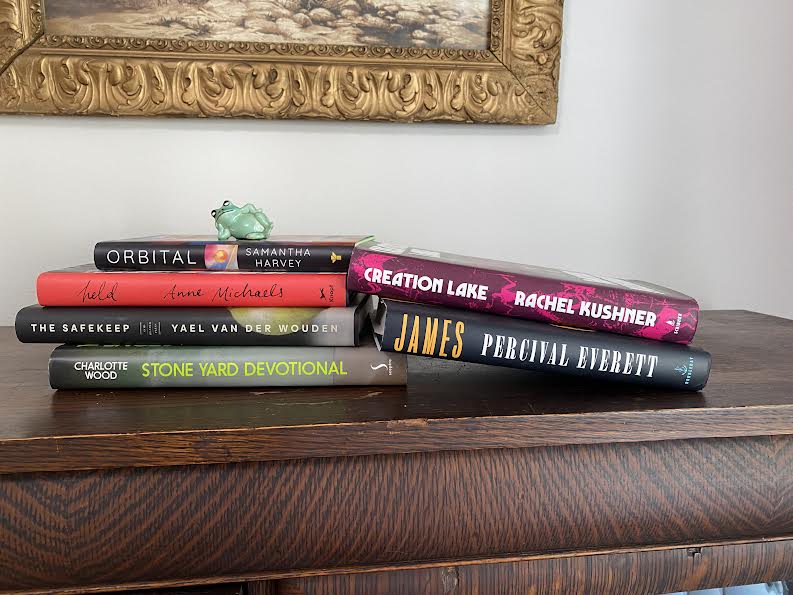

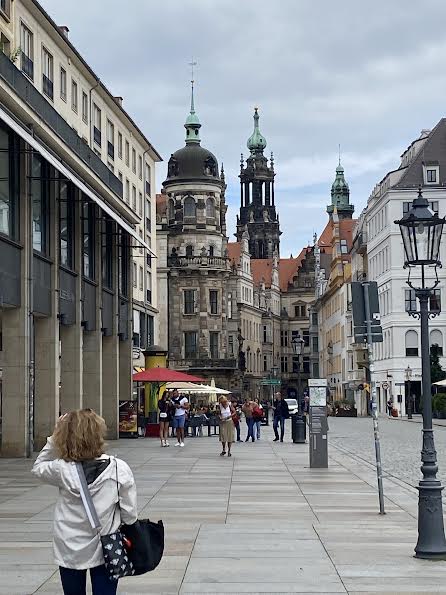
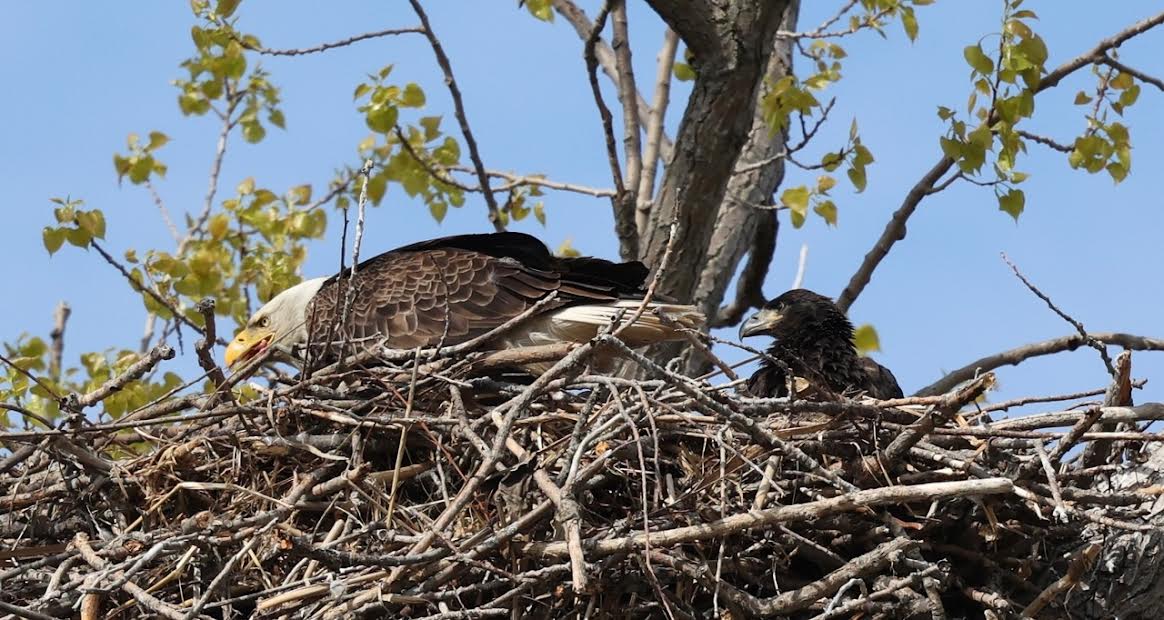
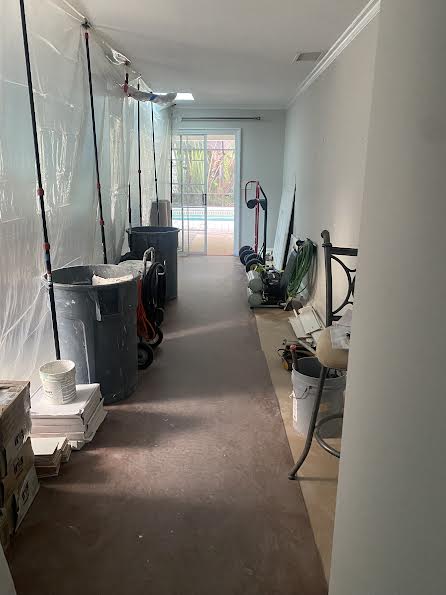
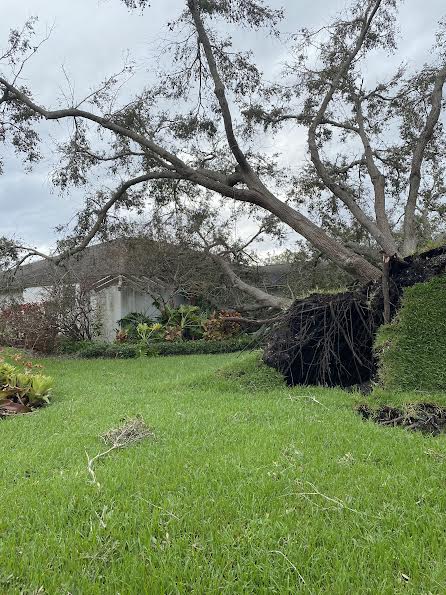


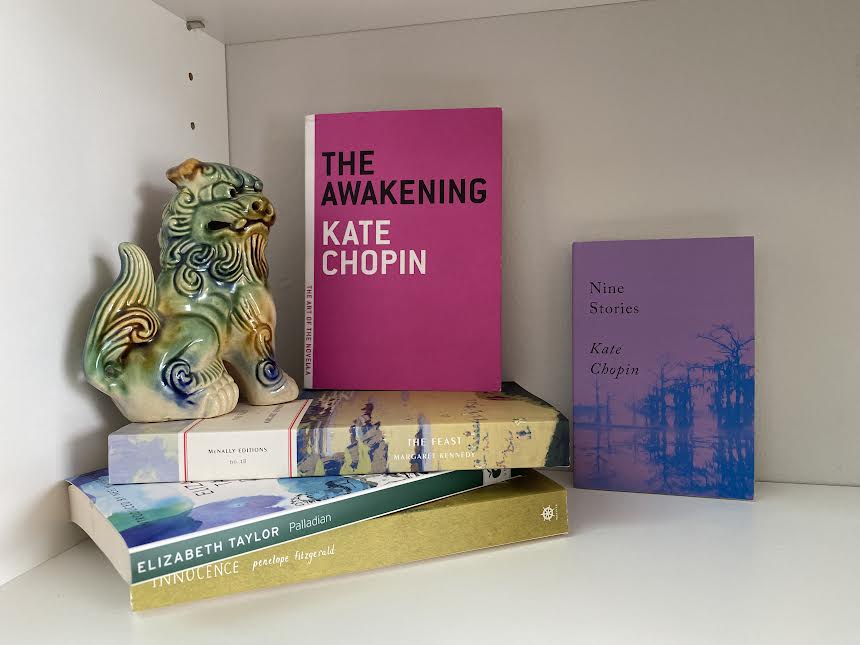


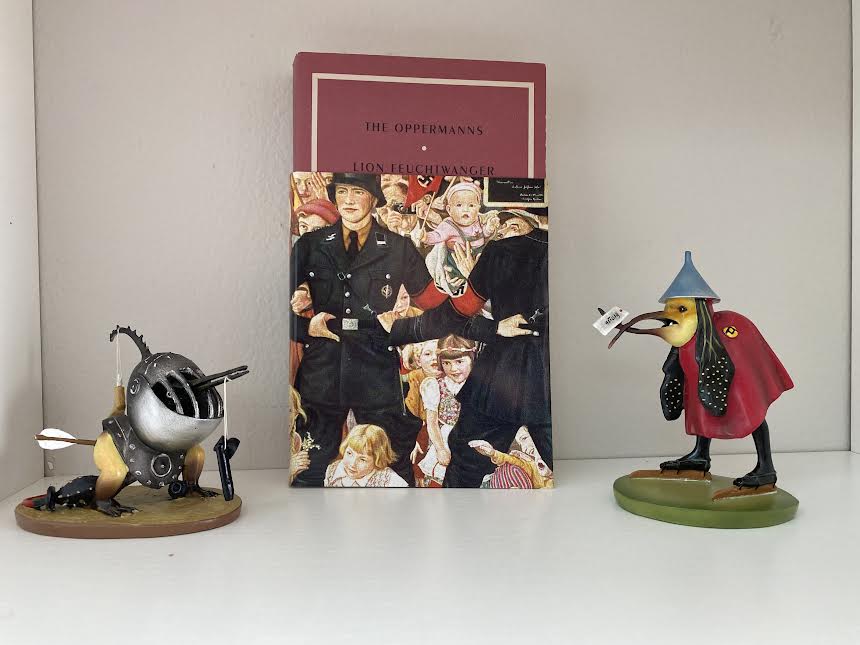

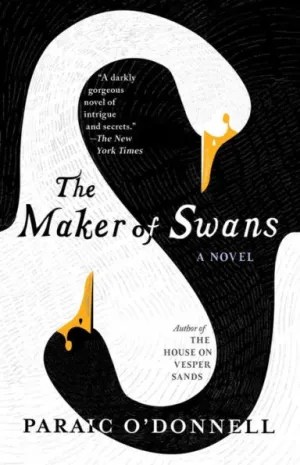
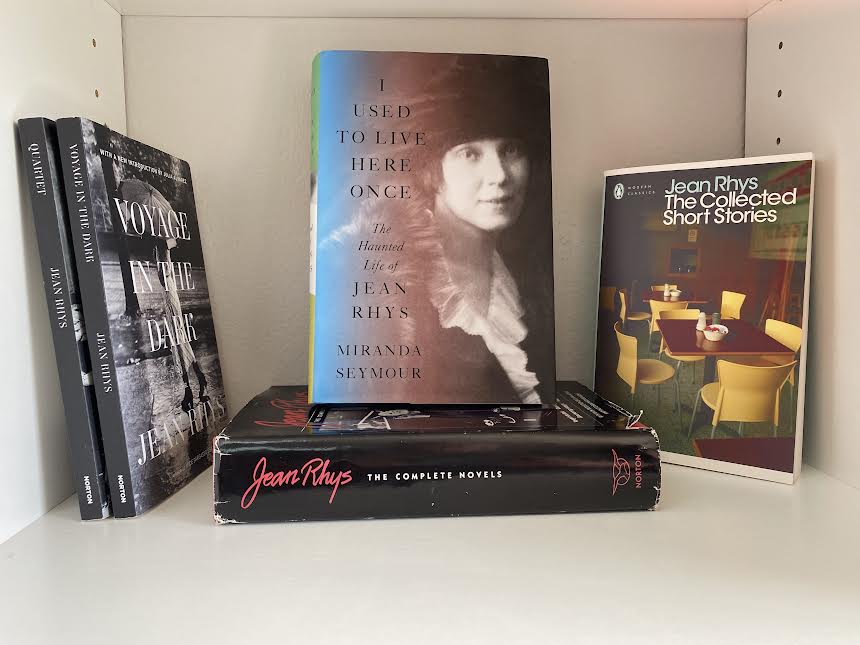
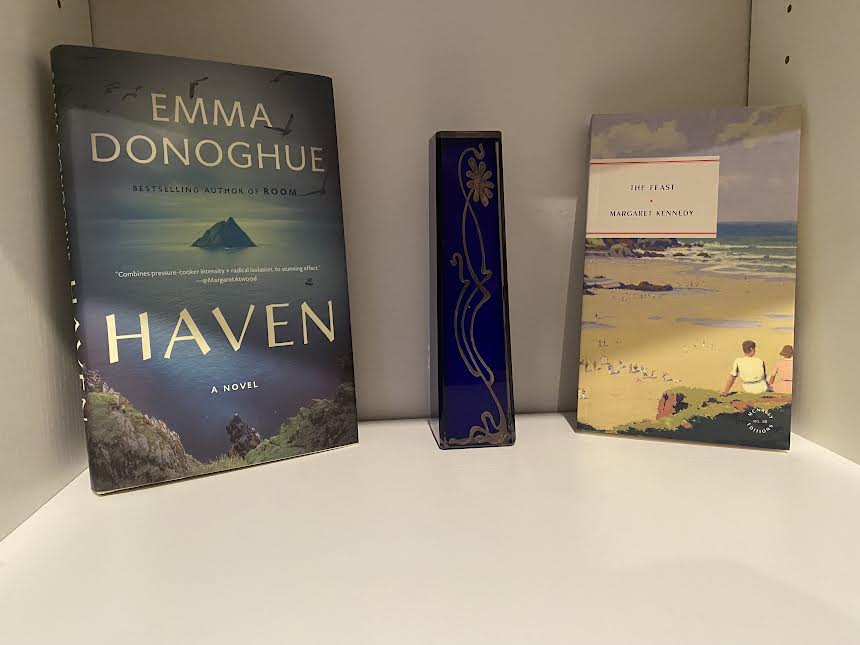
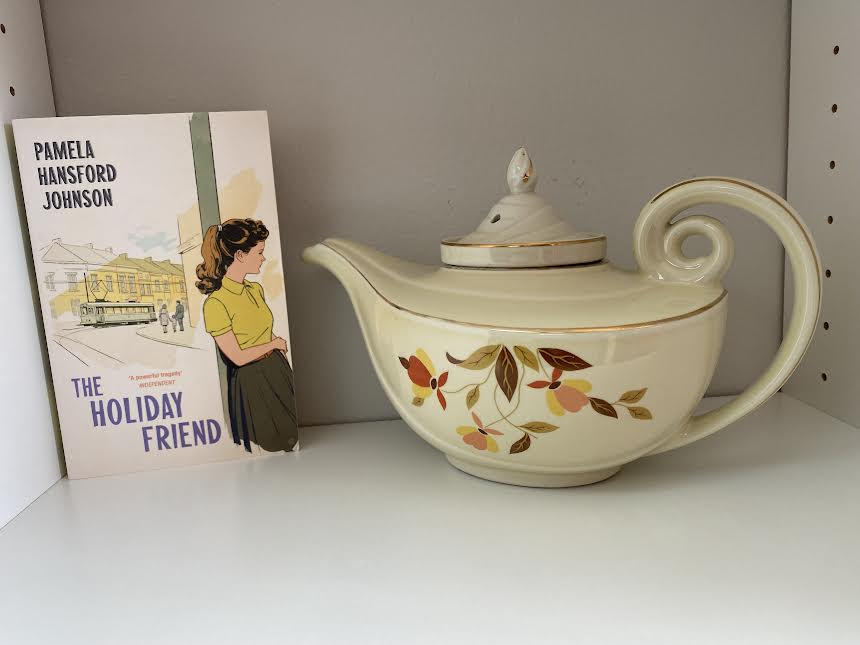

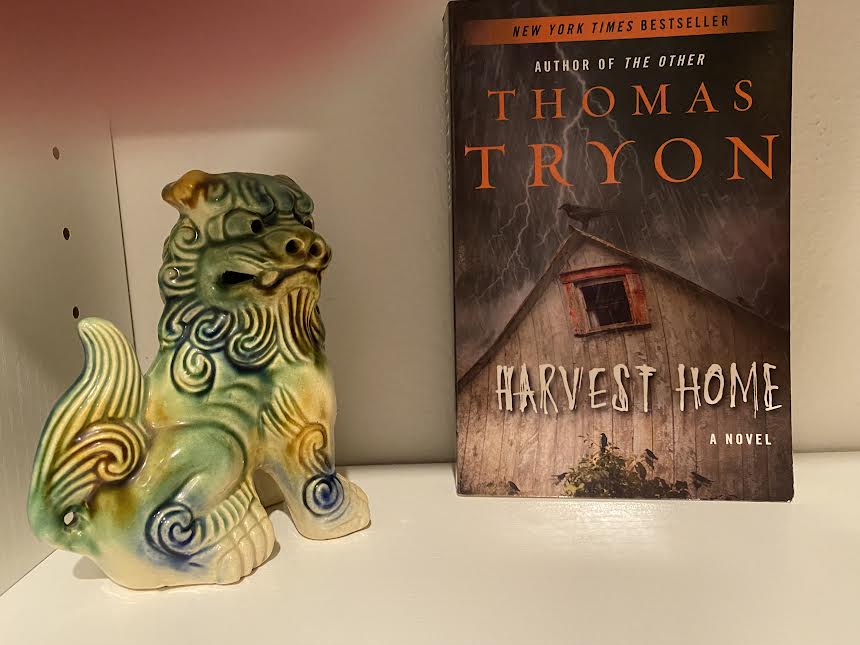




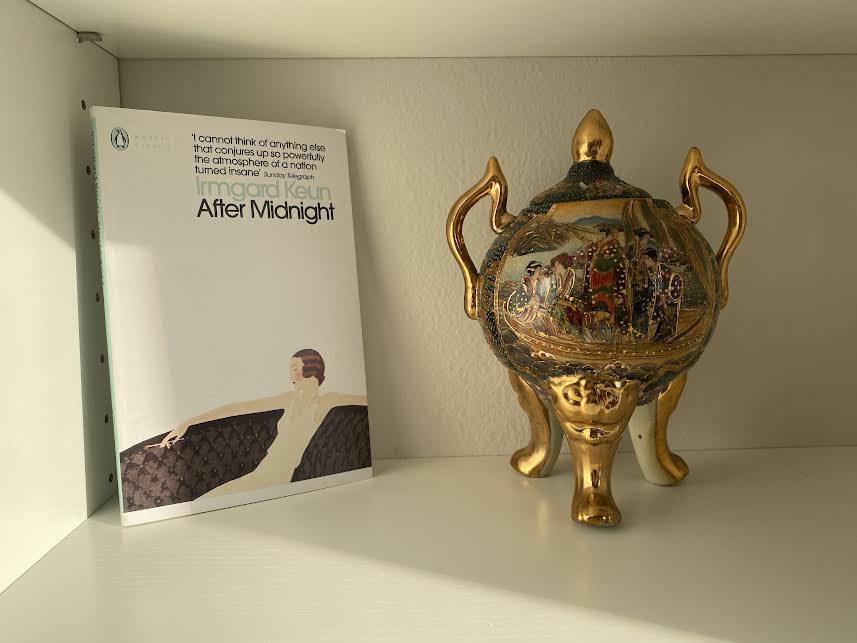


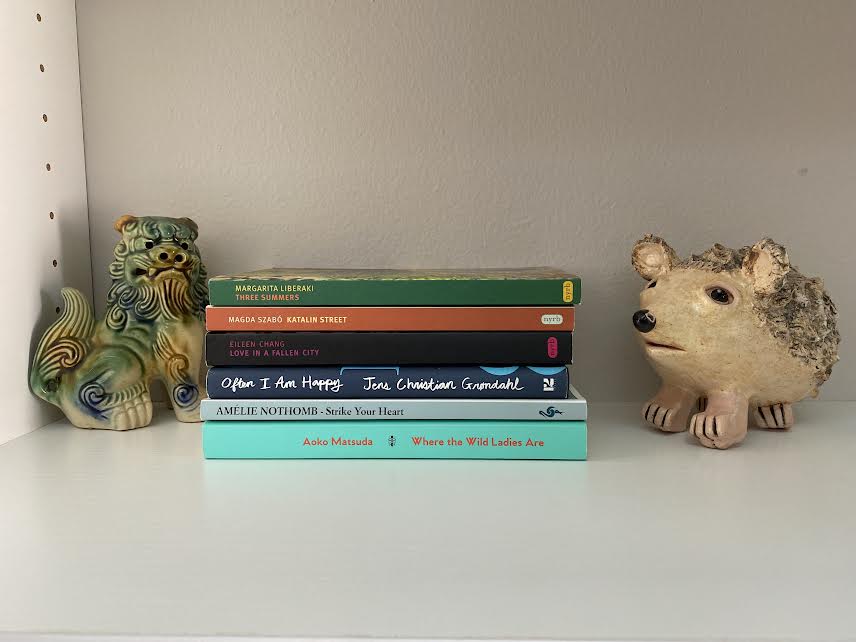
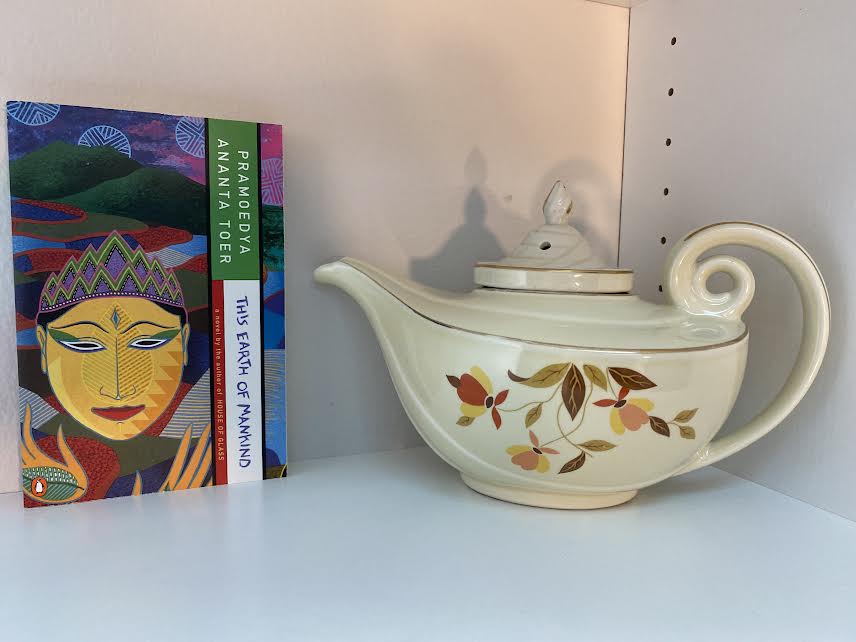

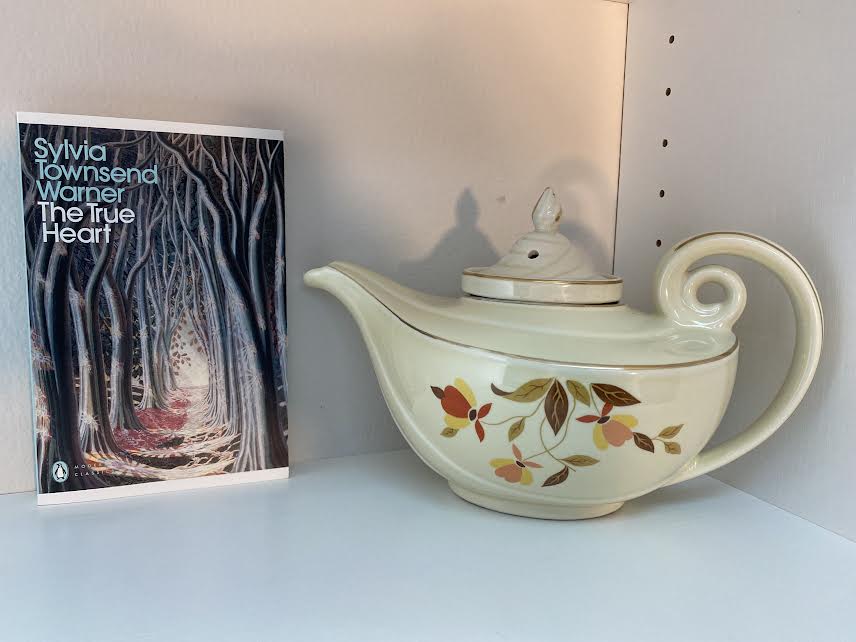
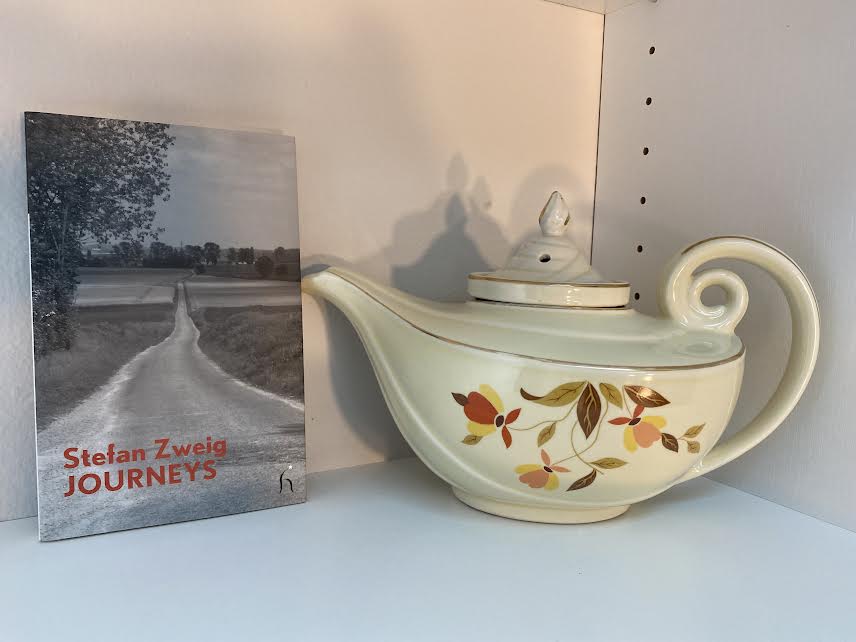

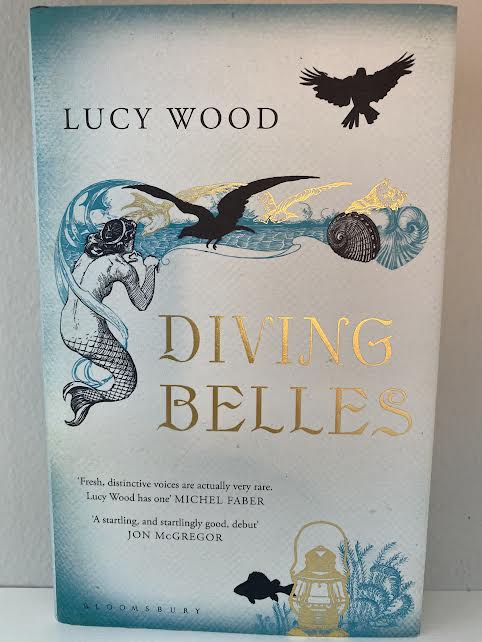
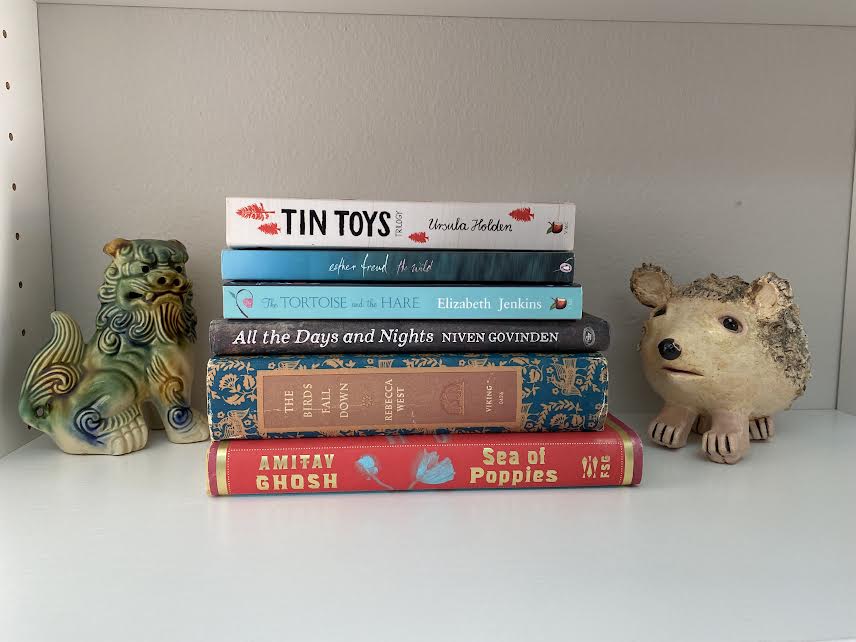
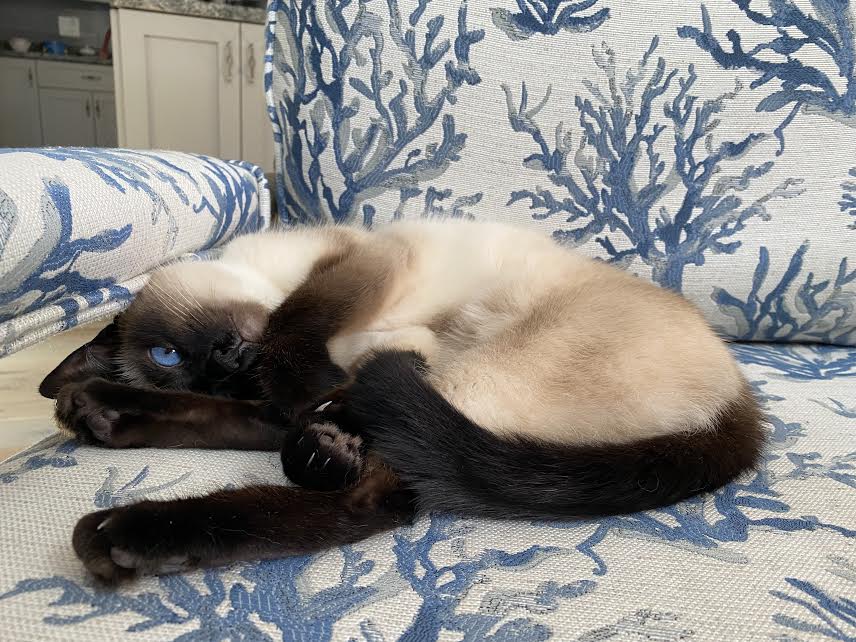
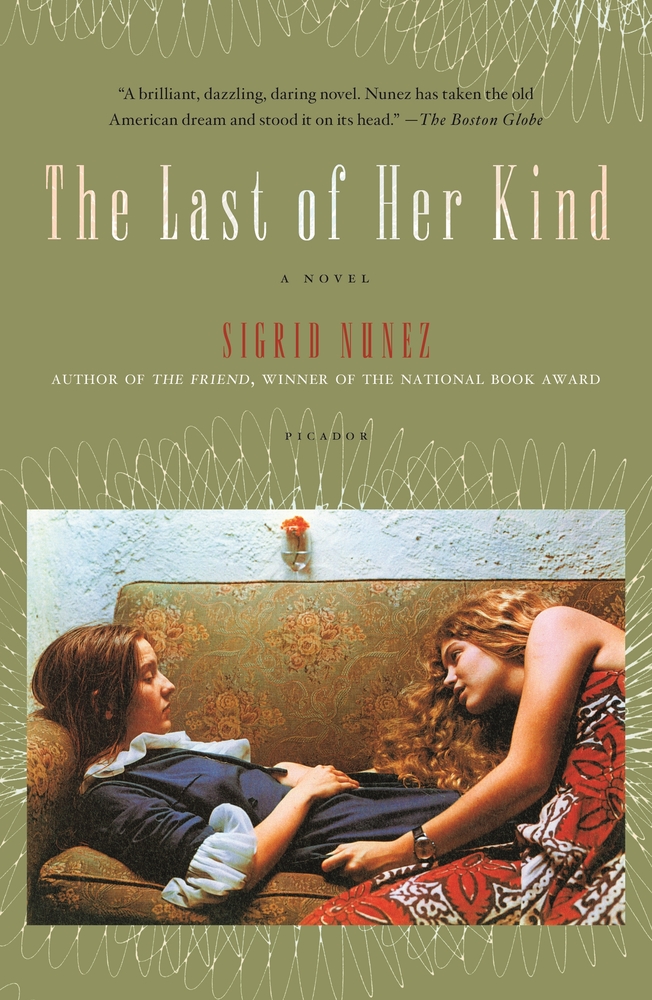


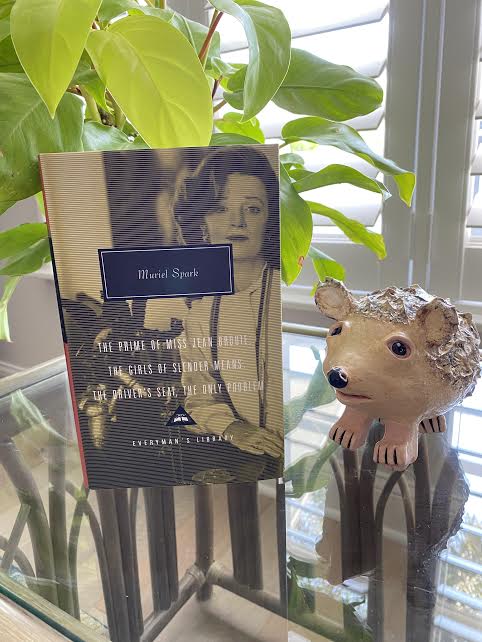
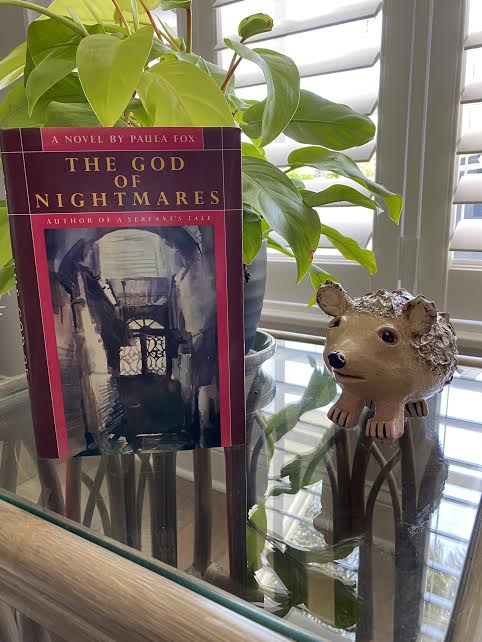
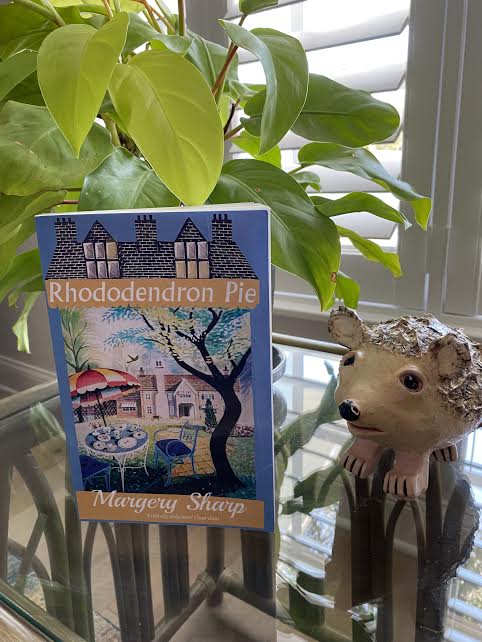





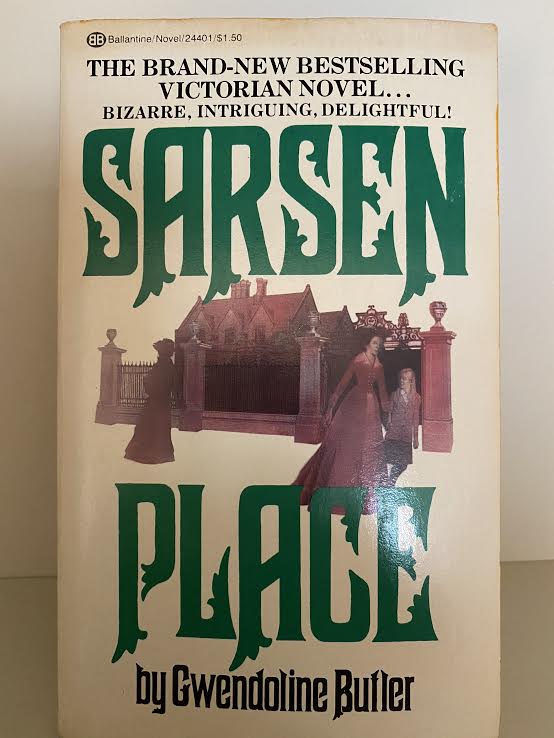


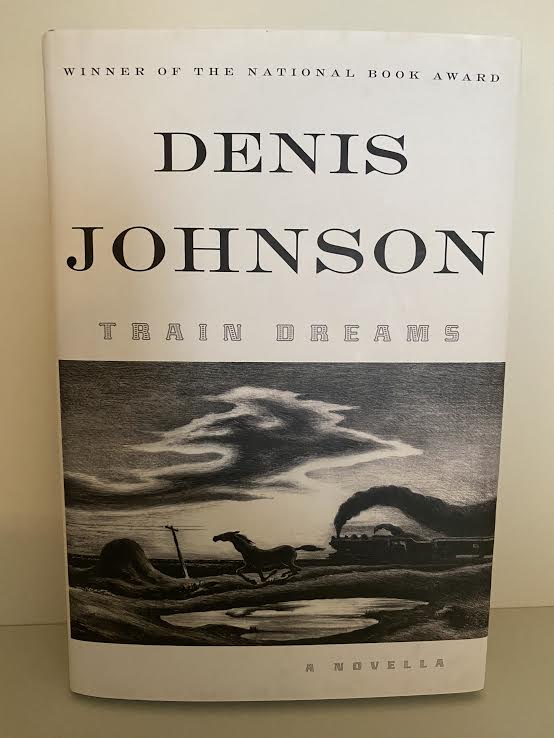

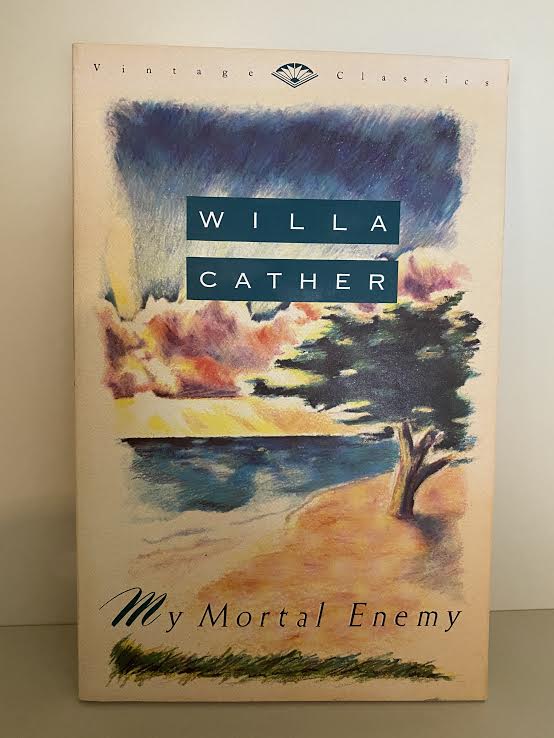


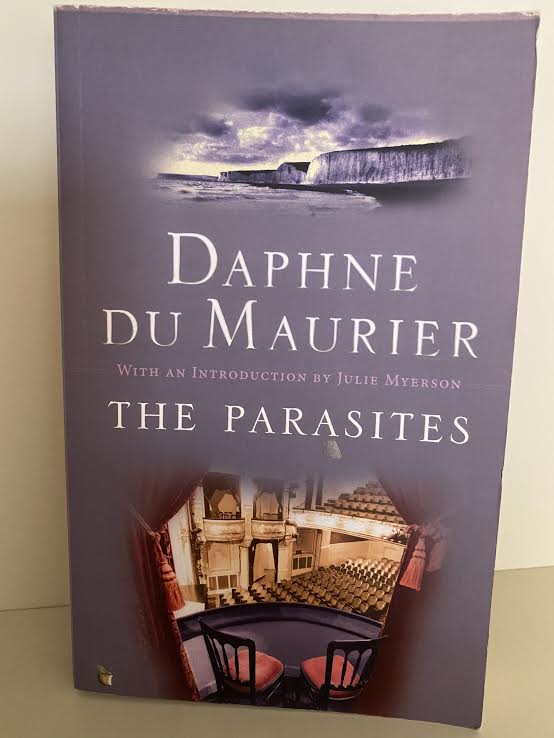







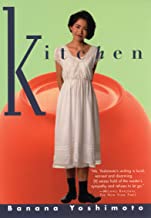

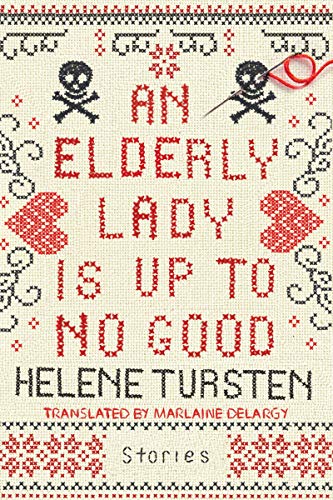


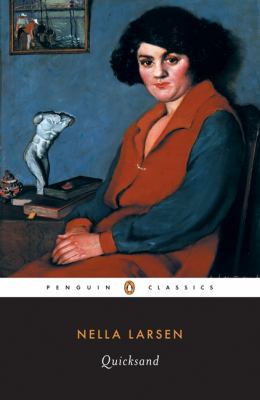

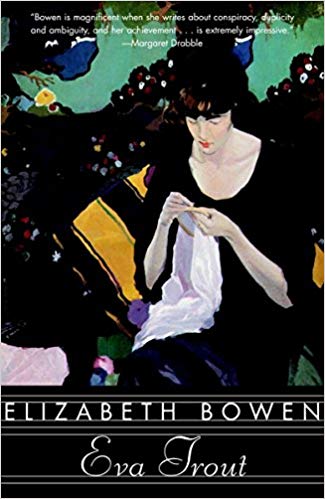


 "You Might as Well Read"