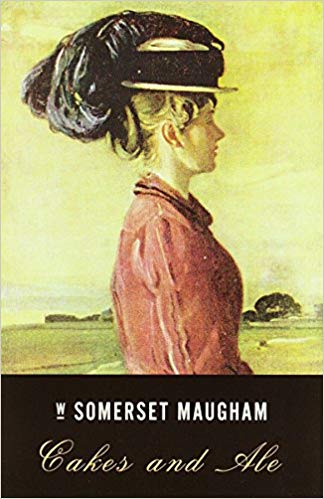
Somerset Maugham’s Cakes & Ale: What details would you exclude from YOUR biography?

51I2GJLJRtL._SX327_BO1,204,203,200_
Selina Hastings’ highly regarded biography of Somerset Maugham.
51vp-2GLq7L._SX322_BO1,204,203,200_
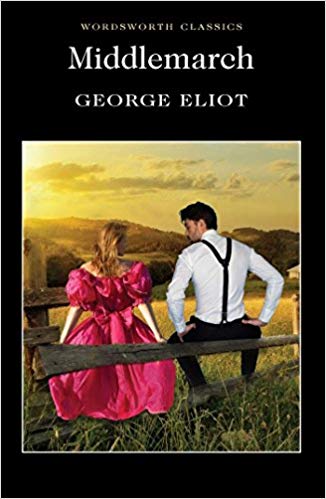
One of my choices for the 2019 TBR Challenge, which also happens to be one of Maugham’s most highly regarded novels. The cover, which I found quite appealing, actually relates only loosely to Maugham’s novel!


Have any of you cyberspace wanderers read Somerset Maugham?  If so, I’d love to know your opinion of his work.  Maugham is a writer who, to me, is full of contradictions.  Incredibly popular in the first half of the 20th century — his biographer states that during his lifetime Maugham was the most famous writer in the world  — today he is little read and many of his novels are now out of print.  Despite his enormous successes (his work was frequently adapted for TV and movies, he once had four London theater productions running at once and every novel seemed to be a best seller), Maugham himself was quite modest about his talents.  The literary critics of his day mostly shared Maugham’s opinion on this point; one flatly described his output as “second rate” and without exception the literary establishment preferred the more experimental works of Maugham’s contemporaries such as Joseph Conrad and Virginia Wolf.

And yet ….. could so many readers be that wrong?  Wolf and Conrad are fabulous artists, truly among the greats writing in English but ….. don’t you think there is (or should be) a place in the pantheon for someone with a knack for telling an interesting story really, really well, particularly if it has a well done twist or an exotic setting, as Maugham’s novels frequently do?  Nor can Maugham’s talents be totally disregarded; his masterpiece, Of Human Bondage, regularly pops up on any list of the 20th century’s greatest novels.  Even by my late teens and early twenties, however, Maugham’s literary star was fading fairly rapidly.  Nevertheless his novels were still easily available and I, being, as usual a bit behind the curve went through quite a Maugham phase.  I loved his short stories, went through several of the novels in rapid succession and did multiple re-reads of Of Human Bondage, which I regarded as one of the most moving and profound novels that had come my way (remember, I was very young and quite uncritical).  And then — well, I just drifted away to newer, trendier writers, all the while retaining fond memories of Maugham’s works.  A few years ago I noticed that at least some of the novels were being reprinted, with these really neat covers (see the beginning of my post!) and I decided I owed it to myself to re-stock my book stash with these neat new editions of my old favorite’s works.  And then — the books just sat there, catching dust, while I somehow never quite got around to reading them.  When I decided to participate in the 2019 TBR Challenge, well, a Maugham novel was a natural choice, wasn’t it?  As I explained in a previous post, participating in the Challenge just seemed a perfect time to see if the old Maugham magic still worked for me.

For my literary experiment, I selected Cakes and Ale, which I had never read, rather than Of Human Bondage, The Razor’s Age, or The Moon and Sixpence, which I had.  I wanted to read something new and that was regarded as one of Maugham’s better novels.  The story revolves around issues associated with posthumous fame, literary reputation and how survivors shape (and frequently distort) the narrative of their loved ones’ lives.  The novel opens with the death of Edward Driffield, one of the last of the great Victorian novelists.  Driffield’s very proper widow (and second wife) has devoted herself to polishing the rough edges off her working class husband and to cultivating a carefully edited version of a great man of letters.  Now that Driffield is dead, she has no intention of relinquishing her efforts and has hired a sycophantic novelist acquaintance to write a carefully crafted version of the great man’s life.  A prime area for revision, in her opinion, concerns Driffield’s early life with Rosie, the beautiful, free spirited barmaid who was his first wife and the inspiration of his greatest novels.

Maugham gives you the story in flashbacks through the recollections of his narrator, who as a young boy knew Driffield as a penniless and unrespected writer, with a habit of skipping out on his rent.  The narrator is also a great admirer (and eventual lover, among many) of the warm-hearted, shrewd and captivating Rosie; when she absconds to New York with her chosen favorite among her pack of admirers the narrator is almost as  heart-broken as Driffield himself.  Needless to say, the second Mrs. Driffield has no intention of publicizing these events and will go to considerable trouble to suppress them from her edited version of the great man’s life.  

So, the great question — after so many years away from Maugham’s work, did the magic hold?  Well, yes and no.  Maugham is quite a story-teller and knows how to throw the reader a curve ball that, while consistent with the story, adds a bit of interest and excitement.  In what is perhaps a disturbing example of my own arrested development, I also found that I enjoyed Maugham’s tone of detached, slightly ironic cynicism almost as much now as did when I was much, much younger.  And, although Maugham doesn’t offer any penetrating psychological insights into his characters, making them a tad two-dimensional, Rosie is a great creation — funny, shrewd and full of life.  Maugham’s musings on literary fame (which work would survive time, which wouldn’t) made the novel drag a bit at times; also, Maugham’s contemporaries no doubt enjoyed his thinly veiled portrayals of some of his fellow novelists much more than I did (Driffield, for example, is apparently based loosely on Thomas Hardy; Driffield’s sycophantic biographer on Horace Walpole, the details of whose career I had to gleam from Wiki).  Maugham’s treatment of an issue that interests me greatly — the biographer’s art of emphasizing certain aspects of his subject’s life, while downplaying others, and the factors dictating his/her choices — is, shall I say, pretty superficial (for a far more perceptive fictional treatment of these issues, read Penelope Lively’s fantastic novel, According to Mark).  Nevertheless, C&A was a quick, fun read that offered a fair amount of entertainment for a minimal amount of effort.  Will I continue my trip down the somewhat overgrown, semi-deserted Maugham highway?  Yes, but the journey isn’t a high priority right now.

Finally a brief word or two about Maugham’s life, which in many respects is as interesting and exotic as the best of his novels.  He had a disastrous and unloving childhood, worked in intelligence during WWII, traveled extensively (and exotically), lived lavishly and juggled a manipulative and neurotic wife with several male lovers.  He was, in short, a biographer’s dream and Selina Hastings does his life justice.  If you’re interested and don’t have time for her biography, I’d recommend the New Yorker’s very good discussion of Maugham’s life and literary reputation.

Monday Miscellany: architecture & art in unexpected places (with a little history on the side!)

0-29
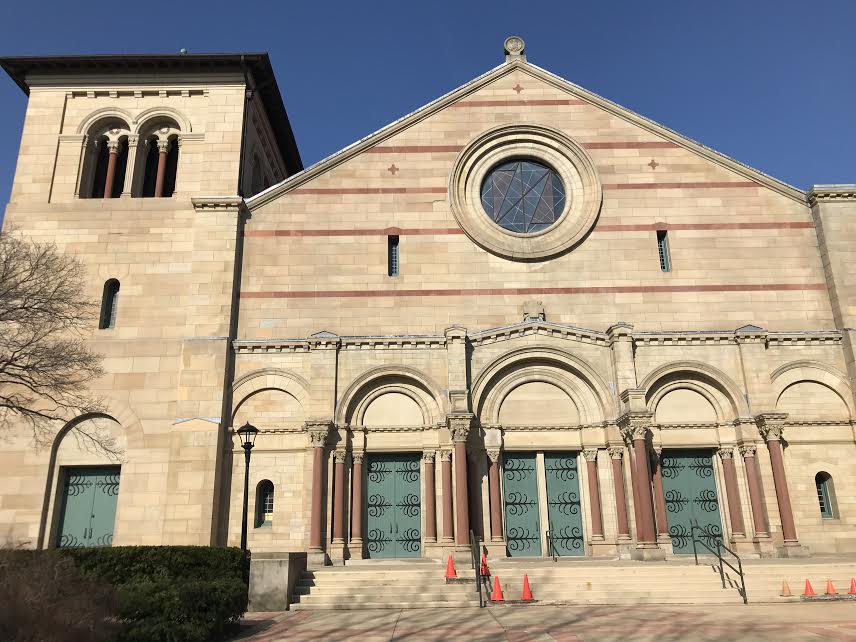
Allen Memorial Art Museum, Oberllin College, Oberlin, Ohio. Cass Gilbert, a leading American architect, designed the gorgeous Renaissance style building in 1917.

A few years ago, whenever I took even very short road trips, I began to make a point of checking out whatever art museum, historical house or major monument happened to be in my vicinity.  I can’t tell you how much fun it is to do this — it’s like a treasure hunt, with something gorgeous to look at or a fascinating bit of history to learn being the treasure.  And — it’s easy to do!  Going to see the relatives for Christmas and driving through Florida?  Don’t miss the Charles Hosmer Morse Museum at Winter Park, which has the most comprehensive collection of Tiffany glass in the WORLD! (and there’s a great Middle Eastern restaurant a block away, where you can have lunch afterwards!)  Traveling to or near Pittsburgh?  You owe it to yourself to detour for at least a few hours to the Carnegie Museum of Art, whose collection includes paintings by James Whistler, Mary Cassatt and Winslow Homer.  Did you know that the great Impressionist painter Paul Degas had family connections in New Orleans?  If you’re lucky enough to visit that charming city, take a break from the French Quarter and visit the city’s art museum, located in the middle of a vast urban park (bigger than Central Park in NYC), which includes among its holdings Degas’ portrait of his sister-in-law, painted during his 1872 visit to the city.  Do you find yourself near Montgomery, Alabama?  Don’t miss the chance to visit the Southern Poverty Law Center’s Civil Rights Center and accompanying monument, which was designed by Maya Lin (perhaps better known for her Vietnam War Memorial in Washington, D.C.) and lists the names of those murdered in the struggle for equality.

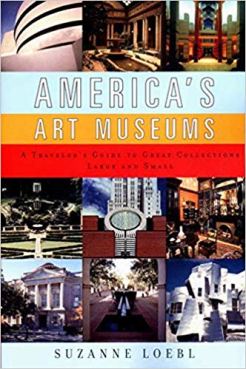
It’s easy to forget that the smaller museums often provide a wonderful experience that larger collections often do not: they allow you to view an entire collection in a reasonable amount of time without being overwhelmed by physical or mental fatigue, they frequently have overlooked gems and/or reflect their founders’ personality in interesting ways, and they are often located in wonderful buildings that are worth seeing just for themselves, regardless of the art they contain (check out, for example, the beautiful Palladian building housing St. Petersburg, Florida’s Museum of Fine Arts, located adjacent to Tampa Bay).  Google, as always, is helpful in locating these treasures or, for the more traditionally minded, guides are available; here are two good ones that I’ve used fairly often:

51PdPvdnJHL._SX403_BO1,204,203,200_.jpg

51jvbILWWjL._SX330_BO1,204,203,200_.jpg

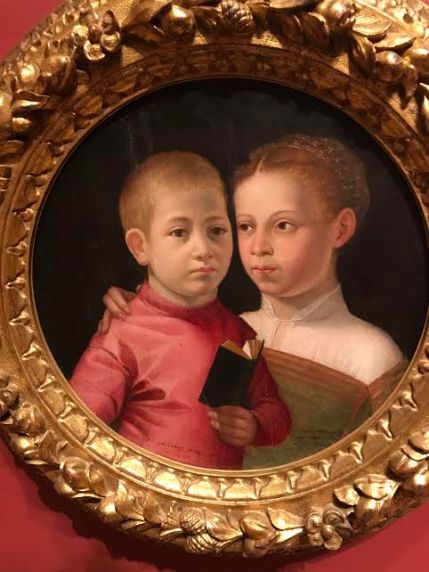
Last week I was very excited to add a new gem to “my collection” of small art museums when I visited Oberlin, Ohio.  Unlike my previous treasure hunts, in which the museum was an incidental discovery on my way to somewhere else, this time around the museum itself was a destination.  As I have no doubt mentioned at least several million times over the brief life of this blog, I’m currently spending a lot of time, not to mention energy,  in researching (and hopefully writing — that comes next!) a paper on Sofonisba Anguissola, one of those (very) rare female artists who lived and worked in 16th century Italy and Spain.  As I’ve been able to discover only a few of Sofonisba’s paintings in the United States, you can imagine my excitement in February when I discovered that Oberlin College’s Allen Memorial Art Museum has one!  Last weekend I was finally able to see it for myself and it did not disappoint:
0-4
Sofonisba Anguissola’s Double Portrait of a Boy and Girl, most probably siblings, from the wealthy Attavanti Family of Florence.  Sofonisba painted this portrait around 1580, using the relatively uncommon tondo or round format.

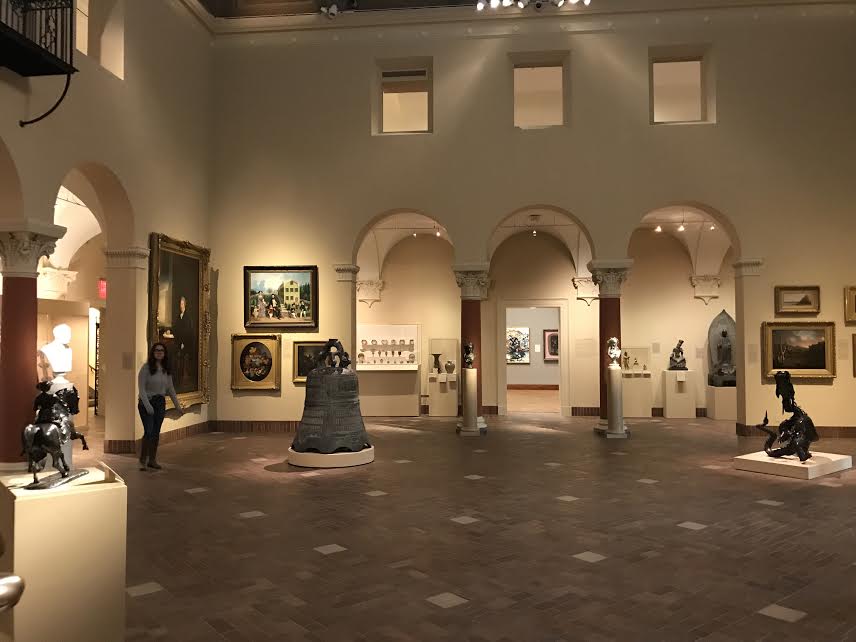
Aside from Sofonisba’s painting, the museum has a small but wonderful collection of ancient, Asian and European art.  The latter includes works by  Cezanne, Monet (two paintings), Rubens, Jan Steen, Chagall, Matisse, Modigliani, Courbet and more!  Admission is free, the staff is friendly and the interior of the building is as gorgeous as the exterior.  Moreover, although the museum is clearly well-attended, there’s space and quiet to enjoy the art even on a relatively busy Saturday afternoon.  Believe me, dear readers, it doesn’t get much better than this:

0-31
The Allen Memorial Museum’s main rotunda. The individual galleries open from this space and there’s more space for rotating exhibits upstairs (behind the square windows over the arches).
0-3
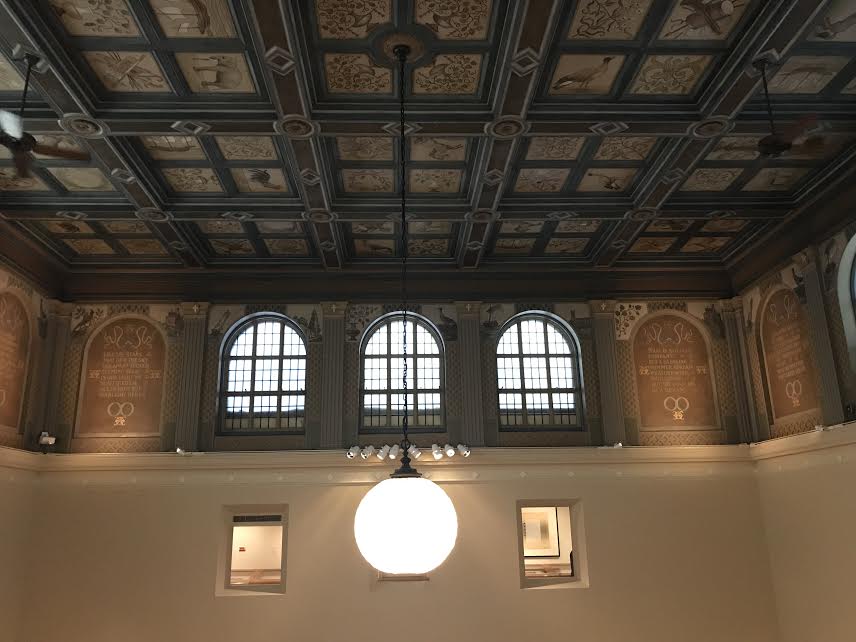
The Allen Museum’s wonderful ceiling and chandelier.  You can also catch a glimpse of the upstairs exhibitions through the square windows on either side of the circular chandelier.

When you’ve finished with the museum (or before, preferences vary!) you can spend a pleasant few hours wandering around Oberlin, which is a great little college town with some remarkable attributes.  Oberlin was founded in the 1830s by a couple of visionaries who combined spiritual aspirations and high ideals with ascetic notions about work and lifestyle (the founding “covenant” of “Oberlin Colony” expressly forbade its residents to indulge in alcohol or a rich diet!)  The idealism bore fruit in the 1850s, when Oberlin was known as a hotbed of the radical abolitionist movement.  It was also a key juncture on the underground railroad, that network of secret routes and safe houses operated by abolitionists and their allies who (at great risk to themselves) smuggled desperate fugitives escaping from the slave states to the north and freedom.  Did you know that Oberlin College (then known as the Oberlin Collegiate Institute) admitted African American students from its beginnings in the 1830s and allowed women to matriculate as “regular” students as early as 1837?


0-4.jpeg

51guC-hQCpL._SX325_BO1,204,203,200_
A popular and well written history recounting an episode in 1858, shortly before the outbreak of the Civil War, when the residents of Oberlin defied the Fugitive Slave Act, a federal law requiring them to return escapees to bondage in the slave states.
61HE7QKyt3L._SX328_BO1,204,203,200_
Colson Whitehead’s novel won both the Pulitzer and National Book Awards and was nominated for Britain’s Man Booker Prize.  Drawing on magical realism, Colson depicted the underground railroad as a literal physical structure used by escaping slaves.  Despite the fantasy aspects, Whitehead’s depiction of slavery’s horrors was, alas, all too real.

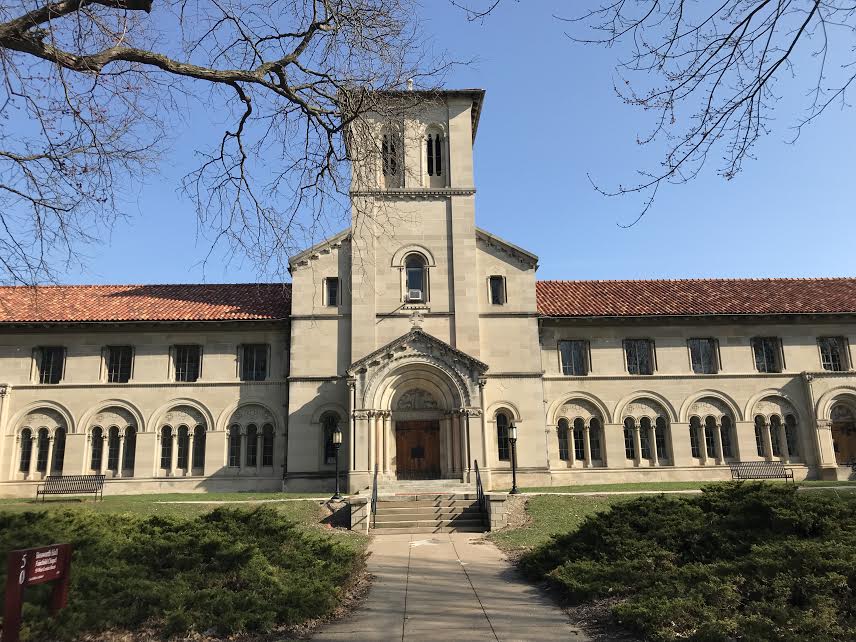
Another thing that makes a morning wandering around Oberlin so enjoyable is that the college itself is almost an outdoor architectural museum, containing as it does some remarkable examples of late 19th and early 20th century buildings designed by the leading architects of their time.

0-19
Baldwin Cottage, designed by Weary and Kramer. Probably not everybody’s idea of a “cottage” . . . .


0-16
Finney Chapel, also designed by Gilbert and located on Professor Street — a perfect address for a college campus!


0-12
Bosworth Hall, designed by Cass Gilbert

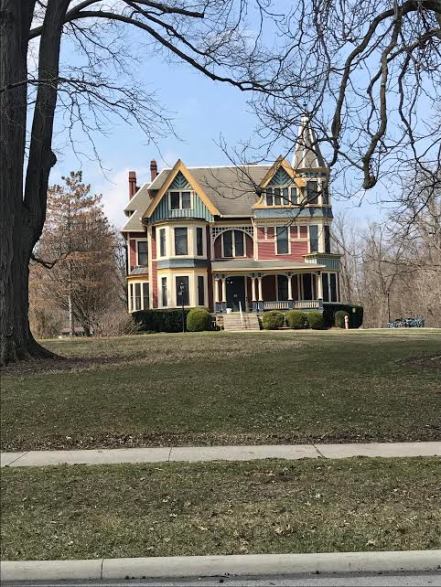
Oberlin’s architectural jewels extend from high Victorian structures to an early Frank Lloyd Wright house; the latter, at one time a private residence, is now part of the Allen Memorial Museum.

0-1.jpeg

IMG_1131
One of noted architect Frank Lloyd Wright’s rare Usonian houses, a residential design he developed in the 1930s.

Finally, Oberlin has many of the best features of a traditional college town:

A highly individual bookstore (actually, I saw two.  Oberlin Books, however, seems more oriented towards textbooks) ….

0-28
A wonderful bookstore, full of charm and character; so different from those faceless mall-type stores or online offerings.  Although mainly specializing in second-hand books of all types, it also offers prints, paintings and interesting “objects,” utilitarian and otherwise!

Some interesting (albeit limited) retail shopping ….

1014080_1081370225237360_7660118282351952004_n

photo0jpg
Bead Paradise — wonderful selection AND it has more than beads!

… and FOOD!  Oberlin has several interesting eateries; in my limited amount of time I had to limit myself to only two …..

0-23
True to its name, Aladdin serves fabulous Middle Eastern food!


0-24
I wasn’t able to hang around for dinner or lunch, but the breakfast was great! Local produce, with lots of vegetarian and vegan options.


0-25
Saturday morning BEFORE the rush. An hour later and the place was packed!

In short, if you’re ever close to northern Ohio (Cleveland is the region’s “big” city) don’t pass up a chance to visit Oberlin!


“Friends & Relations”: Are yours like Elizabeth Bowen’s?

0
Or are they like this?
a96687_a451_bellestarr
Or more like this?


Family relationships, even the best of them, can be unsettling, can’t they?  Some families go for the “let’s share everything and do a group hug approach,” while others ignore (frequently for years)  that huge emotional elephant in the middle of the room that is dominating their lives.  Still others steer a midway course between disclosure and concealment that still, inevitably, leads to disaster.  In short, isn’t it amazing how very difficult, not to say problematical, family life and friendships can become?  These observations are particularly fitting  for my review of Elizabeth Bowen’s Friends & Relations, as Bowen is a novelist with whom I’ve had a long and unsettling, not to say problematical relationship.  Since I have a weakness for subtle, skilled, mid-20th century female British novelists, Bowen has been on my radar, and heavily represented on my bookshelves, for quite some time.  And yet …. my reaction to her work is, quite frequently, “hmmm, I’m not really sure that she merits her rep (glowing assestments from Harold Bloom, no less) and I’m really not sure that I liked what I just read.”  And yet, there’s undeniably something there, as far as I’m concerned; Bowen published ten novels and this makes the seventh one that I’ve read!  Moreover, when I decided to participate in the 2019 Classics Challenge hosted by Karen K. at Books and Chocolate my only question about Bowen was “which novel will I read and what category will I put it in?”  I ultimately selected Friends & Relations, published in 1931 and one of Bowen’s very early works of fiction, to satisfy the Challenge’s 20th Century Classic category.

Bowen, who was pretty upper crust herself (being an Anglo Irish aristocrat with an inherited ancestral home in Ireland) drew the “friends and relations” of her title from four upper class English families in the decade or two before the second World War.  In a brief 160 odd pages of masterly prose Bowen shows you in some detail the orderly, elegant structure of her characters’ lives.  The novel opens (in a section titled “Edward and Rodney”) with the wedding of pretty, conventional Laurel Studdart to Edward Tilney, followed shortly afterwards by the engagement of her younger, more introverted sister Janet to Rodney Meggatt, an even better match as Rodney’s the heir to a landed estate.  “The Fine Week,” the novel’s second section, covers a brief period that occurs roughly ten years after the sisters’ weddings.  At this time both couples have settled into the easy domestic routine of their time and class — servants (mostly off stage and doing the heavy lifting), kids (one for Janet, two for Laurel), life in the country (Janet and Rodney), a London routine (Laurel and Edward, who works in a government ministry) — all amid friends and connections from two other English families much like themselves.  Included among the latter is Lady Elfrida, Edward’s slightly disreputable mother, Considine Meggatt, Rodney’s uncle and Lady Elfrida’s former lover, and Theodora Thirdman, a family “friend” who’s one of Bowen’s great comic creations.  It is Theodora’s insatiable taste for drama and her monstrous narcissism  (hopefully, none of your friends and relations include anyone like her.  If they do, you’re in trouble) that leads to the seemingly trivial act disrupting the careful structure of the others’ lives.  The resulting consequences, which occur on a single day, are covered in the novel’s third section (“Wednesday”).  The novel’s plot, setting and characters are all very “Downton Abbey with a bit of a twist” and, if you care for that sort of thing (I do, to some extent, particularly when it’s as well written as this) reason enough to read this novel.

Reading Friends for its plot and character, however, largely misses its point.  Bowen is a greatt stylist and her novel’s complexity (and, for all its brevity, this novel is very complex) lies in its style.  Very gradually and elliptically, so gradually and elliptically that I wasn’t sure at first that I was drawing the right inferences (it turns out that I was),  Bowen reveals the emotinal secret that governs her couples’ lives.  The subtlety of Bowen’s prose, her time shifts, her elliptical and sometime incomplete dialogue, place definite demands on the reader, who sometimes has to use the prose to infer key information rather than being told it directly.  To be blunt, this is not a novel to skim quickly while eating dinner and watching TV; it requires attention, care and, at times, a re-read of certain key passages.  A subplot of the novel involving Lady Elfrida bears mentioning, as her ladyship’s very public sexual escapades have reverberated in the following generation, contributing to her son Edward’s rather uptight and priggish nature and at one point threatening Janet’s marriage to Rodney.  Whether Bowen intends the reader to draw a moral from this is unclear; I didn’t myself and don’t feel I lost anything by failing to do so.

I fear I’ve made Friends & Relations sound terribly serious, haven’t I?  If so, I’ve done both Bowen and her novel a disservice.  Although it’s a bit too bittersweet to be a comedy, Bowen’s dialogue and descriptions can be very, very funny; morevoer, Lady Elfrida and especially Theodora are wonderful, comedic characters.  Although I didn’t think that Janet in particular was fully fleshed out and Rodney was never more to me than a cipher,  Bowen has moments of real emotional insight and tenderness, such as her description towards the end of the novel of Laurel and Janet’s aging parents:

They did not miss their daughters but they regretted them.  After dinner, pulling round arm-chairs to the fire, with backs to the empty room, she played patience, with the board over her knee; he finished a detective story a night.  If he died first, she would stay on here for the grandchildren; if she died first the house would be given up.  Once or twice in an evening their eyes met.

Would I recommend this novel? Definitely, with a few caveats.  Don’t be misled by its brevity and expect to read it quickly; have patience;  focus on its style and language and be tolerant of its rather pedestrian plot and the conventions of upperclass British life between the wars.  Friends & Relations is an early novel, considered by many to be unrepresentative of Bowen’s best work.  For this reason, I recommend, if you’ve never read Bowen or you only intend to read one of her ten books, that you begin with, or read, a different work, perhaps The Last September,  The Death of the Heart (my own favorite so far) or, if you want an atmospheric WWII “London in the Blitz” setting, The Heat of the Day.  Do I like Bowen’s work myself or do I merely appreciate her ability as a writer?  Do I think her glowing reputation is deserved?  So very, very difficult to decide the precise nature of my  problematical relationship with this writer ….. I think I’ll make up my mind after I read Eva Trout  …………. or perhaps The Hotel ……

Monday Miscellany — it’s Cherry Blossom Time!

unnamed-2
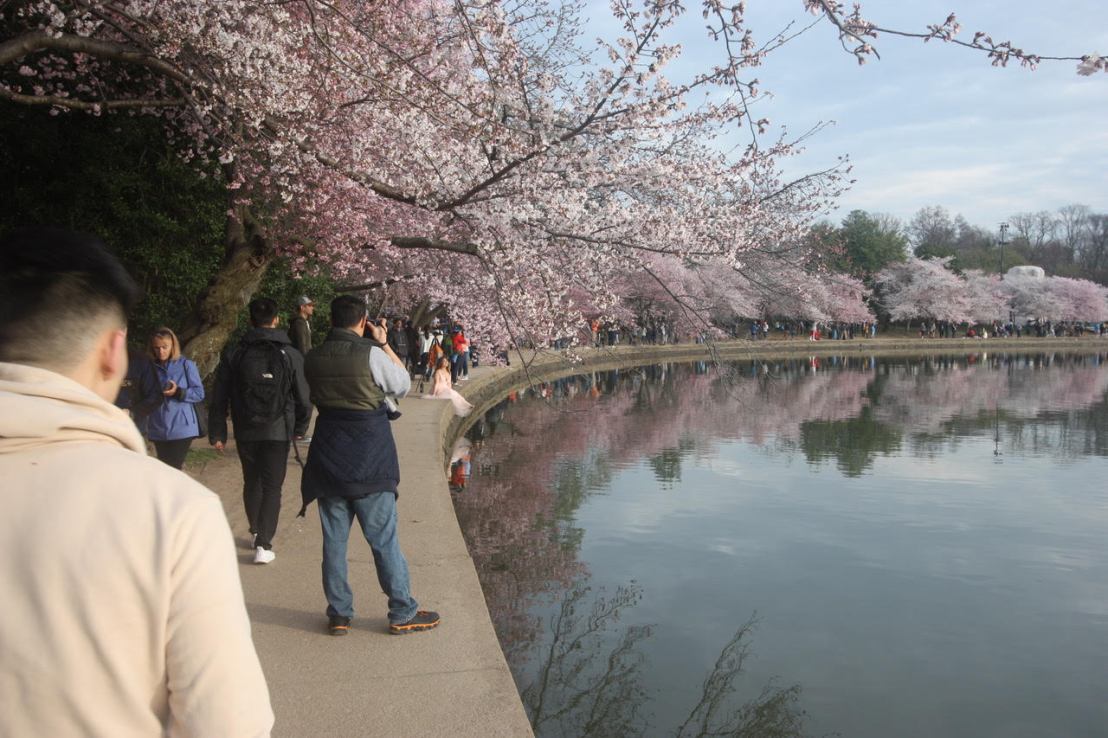
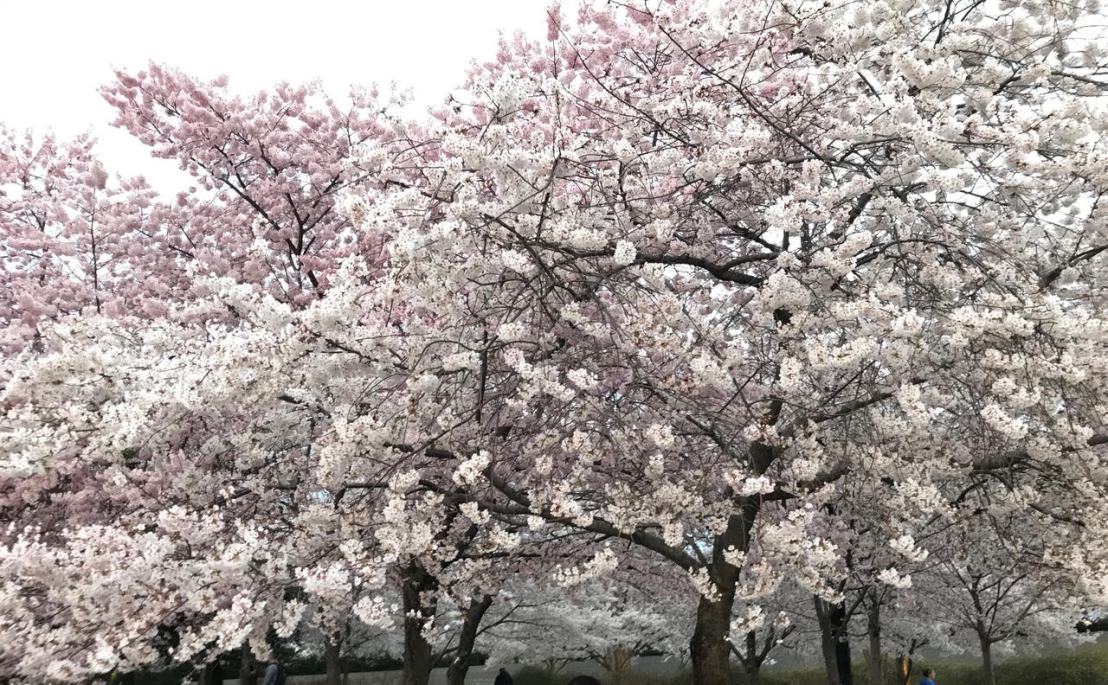
Last Saturday at the Tidal Basin, when the cherry blossoms were a little short of peak bloom. They’re still gorgeous, aren’t they?
After a bit of thought, I’ve decided to make Monday on the blog “Miscellany Day,” i.e., a time to feature whatever interests me at the moment, whether it’s a painting, photo, movie, travel experience, short story or even — a BOOK!  Since it’s spring, and, around here, that means cherry blossoms, I thought that I’d make the subject of my first “Monday Miscellany” my recent excursion to the Tidal Basin to see the cherry trees.  The blossoms don’t last very long — making them a perfect symbol of spring and of human existence — so if you want to see them you can’t delay.  This is the first time in many years that I’ve gone to the trouble — and believe me, it does involve a little planning, as cherry blossoms mean crowds, as well as spring — but worth it, don’t you think?
unnamed-10
Cherry blossoms up close and personal — the closer you get, the more spectacular they are!
unnamed-7
See the small figure in pink, sitting on the edge of the basin? Some people know how to dress to honor the occasion!
unnamed-9
Shortly after dawn, on a cloudy day, so the light wasn’t great. Still, the reflection of the Washington Monument made getting up early worthwhile, don’t you think?
unnamed-6
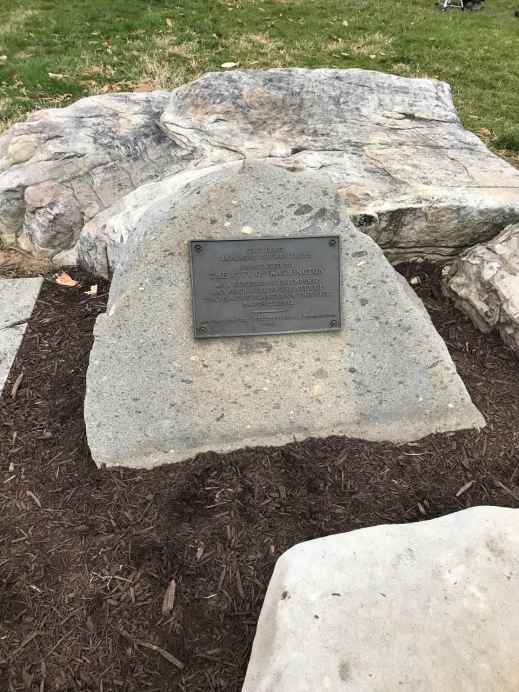
What’s a blog post without a little history? Although it’s difficult to read, this plaque commemorates the 1912 gift of the original cherry trees, made by the mayor of Tokyo to the people of the United States.   At least two of the original trees remain …
unnamed-5
Two of the many, many photographers attracted to the Japanese lantern, another gift from Japan made in the 1950s.  Lighting the lantern, which is over 300 years old, marks the official opening of the Cherry Blossom Festival.  It’s  located on the little plaza opposite the bronze memorial plaque.
unnamed-4
The educationally minded can even attend a “blossom talk,” if they are so inclined. The flowing waterfall on the poster refers to the FDR Memorial, which is right next door to the trees
unnamed-8
The Tidal Basis has at least two different species of cherry trees; as you can see, some of them are more white than pink. From a distance, the white ones create a cloud-like effect.

Although I seldom read poetry any more, cherry trees and spring always bring me back to one of my very favorite poems, from A. E. Houseman’s Shropshire Lad:

Loveliest of trees, the cherry now
Is hung with bloom along the bough,
And stands about the woodland ride
Wearing white for Eastertide.

Now, of my threescore years and ten,
Twenty will not come again,
And take from seventy springs a score,
It only leaves me fifty more.

And since to look at things in bloom
Fifty springs are little room,
About the woodlands I will go
To see the cherry hung with snow.

And, speaking of nature’s beauty, I’ll end with my last image from the Tidal Basin, which perfectly expresses my own view:
unnamed-3

A Virtual Voyage to Visionary Vienna

Yes, dear reader, I know what you’re thinking — enough already with the bad alliteration!  But you know, sometimes I just can’t help myself  — it’s like a little demon is sitting on my shoulder, urging me on!  So how could I possibly resist?  I will be the first to admit that, sometimes, I really, really need to (resist, that is), but if we were good all the time, well — we’d be pretty dull, wouldn’t we?  And, besides, I couldn’t think of anything else to call this post!

My last few posts have included, but not been centered on, books, which is odd, because I read all the time (well, most of the time.  When I was a kid, I did read all the time). Reading a book, however, is not quite the same as writing about a book; for one thing, it’s a lot more fun (although I do enjoy discussing what I’ve read).  The problem, however, is that so much of my reading these days is required, which definitely changes how I approach a book.  For instance, I absolutely adore Middlemarch, which I regard as the second greatest novel in English (the first being, with apologies to any ichthyophobes, Moby Dick!  What’s a blog for, if not to voice your opinions?) but knowing that I have to read a hundred odd pages by next Wednesday does detract a bit from the pleasure of the experience!  Also, I’m reading so much non-fiction these days for my research paper — Renaissance this, Baroque that; visions of whatever in the art of so and so — very interesting stuff, to be sure, but so serious!  Do art historians never laugh?  All this required reading was giving me the megrims, as Georgette Hyer might have said (another of my favorite writers, BTW, as much a genius in her own way as George Eliot.  If you haven’t read Heyer yet, stop immediately, right now, run out and buy one of her books) so I decided to take a much needed break from Victorian England and Renaissance Italy and head for deliciously decadent Vienna — the city of Gustav Klimt! Alma Mahler, Bride of the Wind (and of about five other guys)! Sigmund Freud! Mayerling, Crown Prince Rudolph and Maria Vetsera! Egon Schiele!

In other words, I went for a brief but very pleasurable visit to the Neue Galerie, one of the most wonderful museums in the city of New York City.  The Neue Galerie isn’t a comprehensive museum like the Metropolitan or Washington’s National Gallery; it’s focused, rather, on German and Austrian art from the early 20th century and is the brainchild of Ronald Lauder, son of Estee and heir to her great cosmetic fortune (it makes me very happy to think that all my eye shadow purchases may have inadvertently contributed just a teeny bit to the enormous amount of lolly it took to purchase this artwork!).  Have any of you visited the Neue Galerie?  If so, please share your experience; I’m such a fan of this place that it’s impossible for me to give an unbiased judgment, so I’d welcome someone else’s reflections.  Although I’d gladly visit any time (the truly great cafe with its authentic Viennese pastries is in itself quite a draw), the specific lure this time around was the Galerie’s exhibition on “The Self-Portrait, from Schiele to Beckman.” Before going there, however, the museum itself deserves some visuals, as the building itself is a work of art.

The exterior retains its original appearance of an Upper East Side brownstone dating from 1914, transformed with great skill to house a stunning collection of paintings, sculpture and decorative art from the Wiener Werkstätte (Vienna Workshop), which worked in a sort of Austrian version of art nouveau:

Neue-Galerie_Exterior_Hulya-Kolabas_02-1300x1054

I will try to limit myself to only a few images of the interior.  It’s difficult, for as you can see the space is gorgeous:

02_Neue-Galerie-New-York-615x787
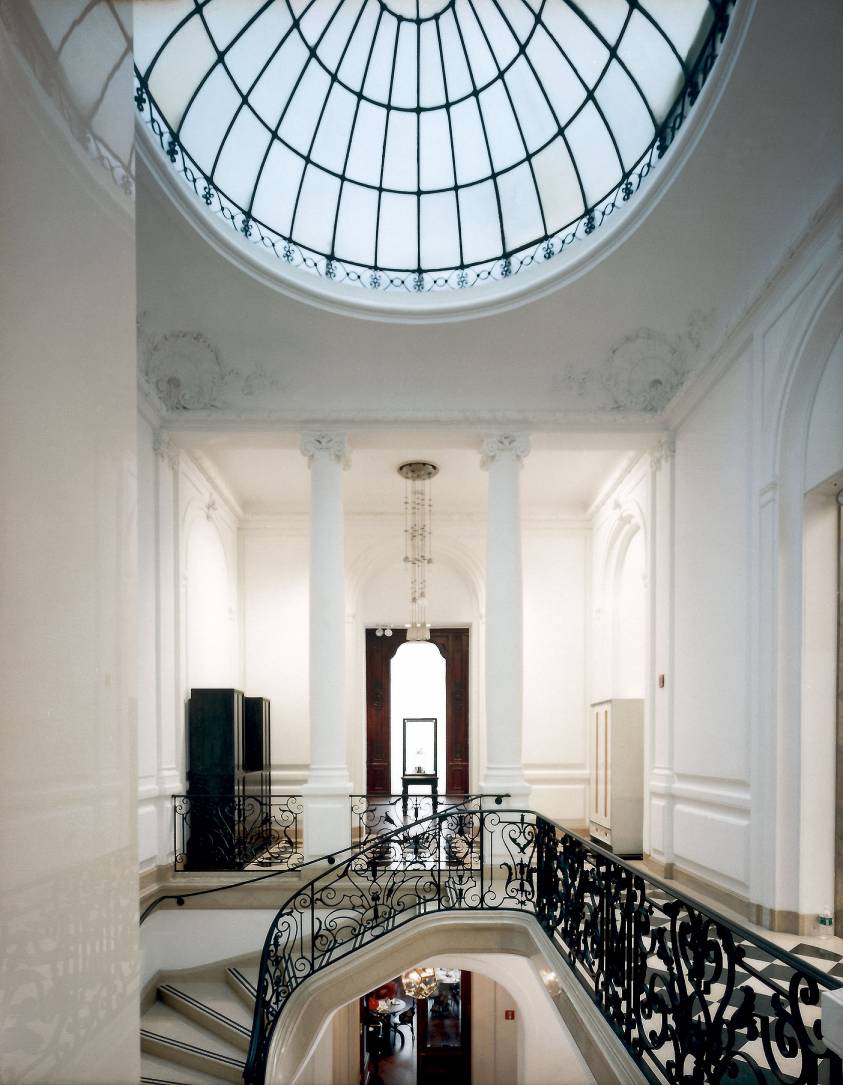
The museum’s entrance, which is usually thronged.  You can see the wonderful attention the architects paid to the historical elements of the building.


03_Neue-Galerie-New-York-843x1085
The second floor, which opens onto the rooms displaying the Klimt paintings and products of the Vienna werkstätte, including jewelry, furniture and glassware.
KlimtAndTheWomen_064-1024x683
The second floor gallery where the museum displays its collection of paintings by Gustav Klimt (mostly portraits but there’s a landscape or two).  You can see how the museum interspaces objects with the paintings, which makes for a very interesting display.

No matter what specific exhibition draws me to the museum, I always pay homage to the museum’s show stopper, Gustav Klimt’s 1907 portrait of Adele Bloch-Bauer:

woman-in-gold_custom-0d0243169ca8eef763686e144da1eda1ea27e7a9-s800-c85
This reproduction gives you a good idea of the textured quality of the painting, as well as some of the details of Adele’s costume.

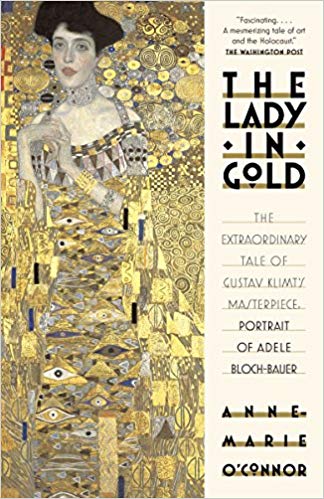
Aside from its undoubted greatness as a work of art, the painting’s history makes it even more special.  Because the Bloch-Bauer family were Jewish, their fabulous art collection (including this painting) was stolen by Nazis in the 1930s.  Did you notice Adele’s necklace?  It, too, was stolen and eventually “presented” to the Nazi general Herman Goering as a gift for his wife.  After the war, the Austrian government refused to return the Bloch-Bauers’ paintings to Adele’s surviving heirs (many of her relatives and friends perished in the camps).  The ensuing legal battle went all the way to the U.S. Supreme Court and resulted in a landmark ruling in the area of reparations for stolen art works (spoiler alert: the family won).  Anyway, if you’re interested, you can read all about it in this very good book or …..

61isVFuEBPL._SX322_BO1,204,203,200_.jpg

…what’s even more fun, watch this possibly not great but very entertaining movie (worth it, just to see Helen Mirren in top form!):

220px-Woman_in_Gold_(UK_poster).jpg

For those of an historical bent, Frederick Morton provides a thorough and very readable account of a fascinating time and place, ominously ending his history of late 19th century Vienna with the birth of Frau Klara Hitler’s son, little Adolf.

51MlR4+guRL._SX321_BO1,204,203,200_.jpg

But — I digress!  Back to the museum and its very, very good bookstore (after all, this is a bookish blog!):

Neue-Gallery__2018_6.-Neue-Galerie-Book-Store
This space is much smaller than it appears and is usually jammed with people.  The reason?  It’s a WONDERFUL bookstore. In addition to the usual tomes on painting, there’s a literature section featuring German, Austrian and eastern European writers.

Despite my best intentions, I don’t read a lot of literature in translation and many German and eastern European writers are not familiar to me.  As a result, when I browse here I usually find wonderful things that I didn’t previously know about; on a previous visit, for example, I discovered the great Joseph Roth and his Radezky March (keep this wonderful novel in mind if you need a European classic in any future reading challenges!):

51ypkGhZYML.jpg

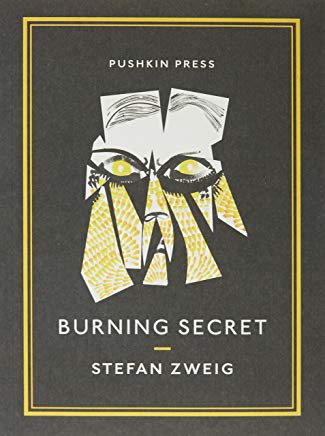
This time around, my haul consisted of two shorter works, both by Stefan Zweig and published by the Pushkin Press (Zweig by the way was only one of the many writers and artists who frequented Adele Bloch-Bauer’s literary salons):

41GXUe0HtbL._AC_UL436_.jpg


91QlfcybLTL._AC_UL436_.jpg

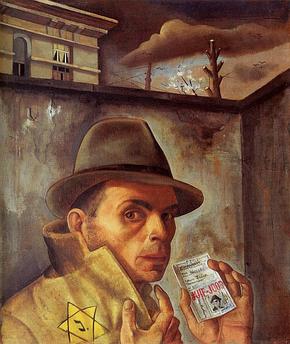
And you might ask, if you haven’t forgotten it by now, what about the exhibition itself? Although I seldom read autobiographies, I’m very interested in self-portraits, which I consider a type of visual equivalent.  I love to see how an artist chooses to represent herself (and by this time there are at least one or two “herselves”) and the elements she uses to construct the identity presented to the viewer.  This particular exhibition was both fascinating and troubling; many of these artists were Jewish, they all lived in troubled times; you know what’s coming and the art frequently makes you suspect that they did so as well.  I particularly liked the following paintings:

Self_Portrait_with_Jewish_Identity_Card_-Felix_Nussbaum_-_1943
Felix Nussbaum’s 1944 Self-Portrait with Jewish Identity Card.  Nussbaum escaped from the Nazis once, but wasn’t so lucky the second time, dying in Auschwitz in 1944.


cri_000000419863-490x1024
Paula Modersohn-Becker, a new artist for me.  Her 1907 Self-Portrait with Two Flowers in her Raised Left Hand is one of the first self-portraits in which a female artist painted herself as pregnant.  She died at age 31, shortly after the birth of her daughter.

To end on a positive note, I turn to one of my very favorite subjects — food!  The Neue Galerie’s Café Sabarsky is modeled on the Viennese cafes that were a center of the city’s intellectual life.  Beautiful period furnishings and great food — no better way to end a visit!

800px-Cafe_Sabarsky_1057
It speaks much to my character than the cafe is, perhaps, my favorite part of the museum.  More knowledgeable sources than I have proclaimed that it has “the best museum food” in NYC; the waiter “warns” you that you’ll have to “put up” with the whipped cream on the Viennese chocolate!


cafe_sabarsky_pastries
After viewing Adele’s stunning portrait upstairs, I was positively obligated to eat a slice of the “Klimt tart” (it’s one of the chocolate/hazelnut things)!


Searching for?

If you, dear reader, are even remotely like myself, you are always searching for something, whether it’s the meaning of life or the location of the laundry detergent!  These days, perhaps because of the weather (will winter never just leave and go back to the arctic where it belongs?), I’m particularly restless, with a number of moderately intense searches going on.  For instance:

I am …..desperately searching for spring!

IMG_1013
Spring is being unusually coy this year, but desperate searchers know where to look!


…. contentedly searching for completion!

51NHwfVL8fL._SX324_BO1,204,203,200_
I’ve read this novel several times over the years, but despite having no time for it right now can’t resist a re-read for my 19th century English fiction class. How can one provincial little town in 1830s England encompass the universe?

…. optmistically searching for a topic for my research project!

sc81958
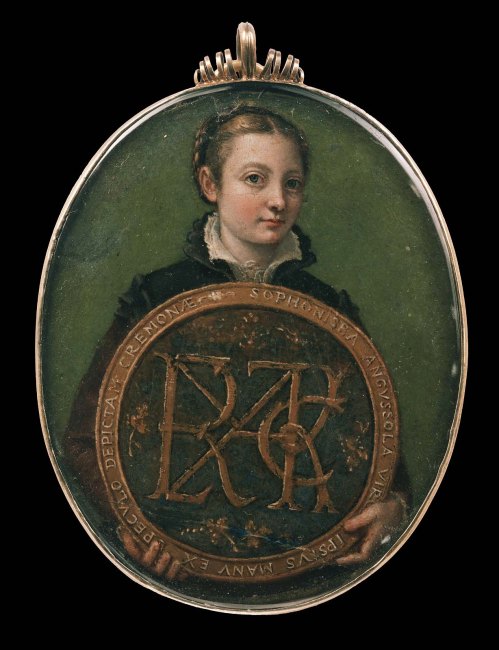
Did you know that 16th century Italy actually had (a few) female painters? Here’s a self-portrait of Sofonisba Anguissola (age 20), one of the first and best. I want to center my paper on some aspect of her work, but what, exactly?


IMG_1026
Percy and I are both convinced there’s an appropriate research topic in there somewhere!

…. relunctantly seeking domestic order!

IMG_1016
I’ve given up waiting for the household gnomes to take care of things. Time to do the laundry, wash the dishes and re-shelf the books!

…. stoically searching for closure!

IMG_1015
This major construction project has been blocking a busy street never my house for decades (well, maybe six months!)

…. delusionally searching for physical fitness!

IMG_1021
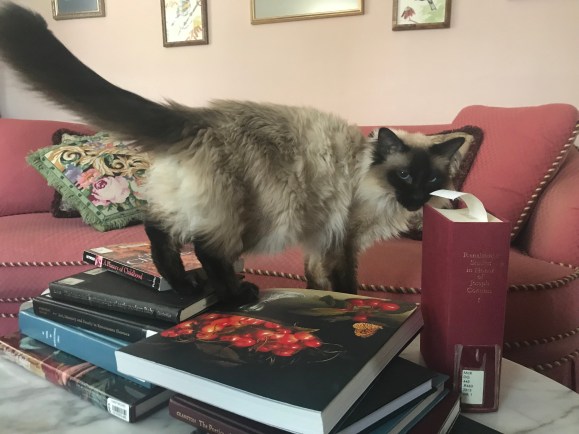
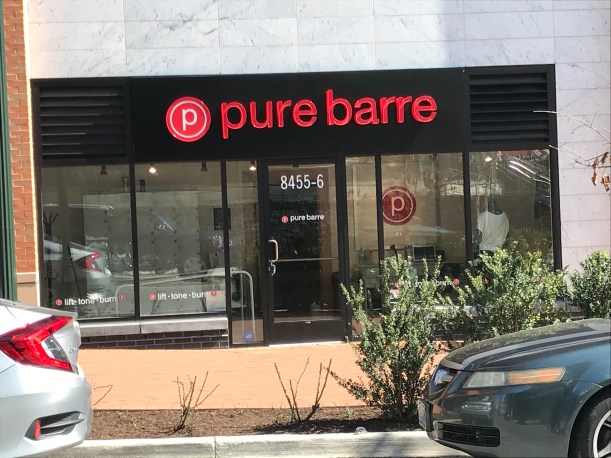
My derrière is at least three inches wider than it was last fall. Not to worry! Any day now I will (finally) attend an exercise class, where all will be lifted and toned!


…. happily seeking harmonious sounds!

IMG_1032
A little classical music (the Mozart was the very best piece) is a nice way to end the week ….

And you, dear reader — what are YOU searching for, in these days before the official arrival of spring?


Birding, not blogging ……. but still reading!

The blog has been a little, ahem, “bare” of new content this past week, primarily because I’ve gotten away for a few days pursuing one of  my secondary hobbies — looking at nature, particularly birds.  Although I’m very much a couch potato type, there are times when I just have to get outdoors and breathe air that’s been neither recyled, reheated or artificially cooled.  Aside from providing sheer relaxation, the natural world serves a number of functions for me; first and foremost, I’m very much a part of the 19th century school that views nature as a manifestation or expression of the sublime and that sees spirituality in nature’s workings.  On a different level, the inter-relationships of the natural world — the ways in which the web of life binds plants, animals, birds, and insects into a functioning ecological system — can be incredibly interesting from a purely cerebral point of view.  The more I learn about one little piece of nature (say, a new bird species or some strange plant) the more I become interested in the parts that connect to it.  Moreover, there’s the added attraction of learning, if only a little bit (there’s usually not time for learning much beyond the birds) about the history and culture of whatever place I happen to go for my nature/bird viewing.  And, last but certainly not least  — nature activities can just be plain fun!  Anyway, my “nature place” this time around was Jamaica, an island of bays, coves and mountains:

data=NNIXl5KH5pKuaOiGhIfuErFKQhrzcZo0cEKGIXUBN9V3a1Z8-n_w4jTpYt7dbXgmrbCjr3BhxDcWlZAqTyRDLAeV1r9iADR9J4H1mMUfpEqd4-DcrgFVrdZ5Q_5uqh8h1wtqn62rtibwykRmrWGR2hMtEkC0j1IjdHvTuc69UjbMovqhK2hfWl3H28jHQS2TymfQ4AuUuQlZhpbFkbtbKQ
My nature viewing was primarily around the Montego Bay area ……

Unless you share my hobby you’re probably unaware that Jamaica has over 300 different species of birds, including 28 endemics, i.e., birds that naturally occur nowhere else in the world besides Jamaica!  If you’re a birder, you go to Jamaica primarily for the endemics, such as this one:

220px-Trochilus_polytmus
One of my favorite endemics, a streamertail hummingbird

And — you take this book, which you’ve hopefully studied before hand (I hadn’t!):

51Rb3odHe6L._AC_UL436_
The “bible” for any birding trip to Jamaica!

Remember my comment about finding the sublime in nature?

0-11
The hills at sunrise — birds get up early and birders get up earlier!


0-14
More of the sublime ….

Now — for the “reading” part of my post.  Because I’m talking Jamaica, I have to mention one of my very favorite writers, the immensely talented Marlon James.  Has anyone read his Booker prize winner from a few years ago, A Brief History of Seven Killings?  I think it’s one of the most powerful novels written by anyone in at least the last decade.  A native of Kingston, James has set many of his novels on the island.

A1+zusAGruL._SY200_
Marlon James, one of Jamaica’s great authors

I can’t wait (but I’ll have to!) to read one of James’ earlier works, set in the British ruled Jamaica of the 19th century, when most of the island’s inhabitants were enslaved:

512+1EZuysL._SX330_BO1,204,203,200_

For the historically minded, there’s a fabulous nonfiction account of the history and culture of Jamaica and the other islands of the Carribbean basin.  To my shame, I”ve never read my copy (which I’ve had for years) but — it’s on my TBR list for next year!

61w8cHJMewL._SX331_BO1,204,203,200_

As for my other reading, when I wasn’t watching birds:

51id1VNNySL._SX346_BO1,204,203,200_
I finished this one ….  remember Mr. Rochester’s first wife? She was from Jamaica!


514SDISN0BL._SX329_BO1,204,203,200_
I also finished this one (an indulgent choice, but a great airport read).  I may review it later…


51so+jl3uUL._SX346_BO1,204,203,200_
….and I’m well into this one, but probably won’t have my assignments caught up for my Monday class!

Finally (because I really, really, really have to get back to Great Expectations), remember what I said at the outset, about the fun aspect of nature activities?

0-5
Jamaican food is GOOD! Particularly when consumed on a porch next to the ocean ….


If it’s Saturday …..Then it’s Museum Day (at least sometimes)

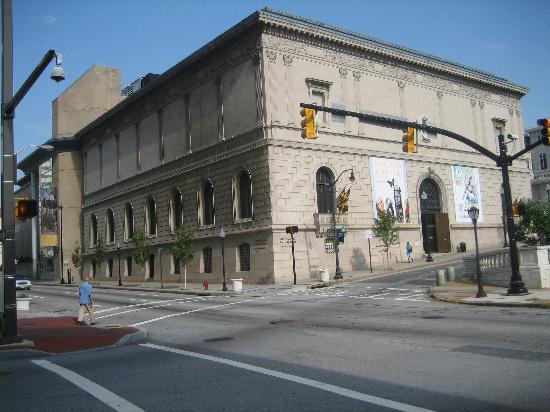
the-walters-art-museum
The Walters Art Museum, Baltimore, Maryland

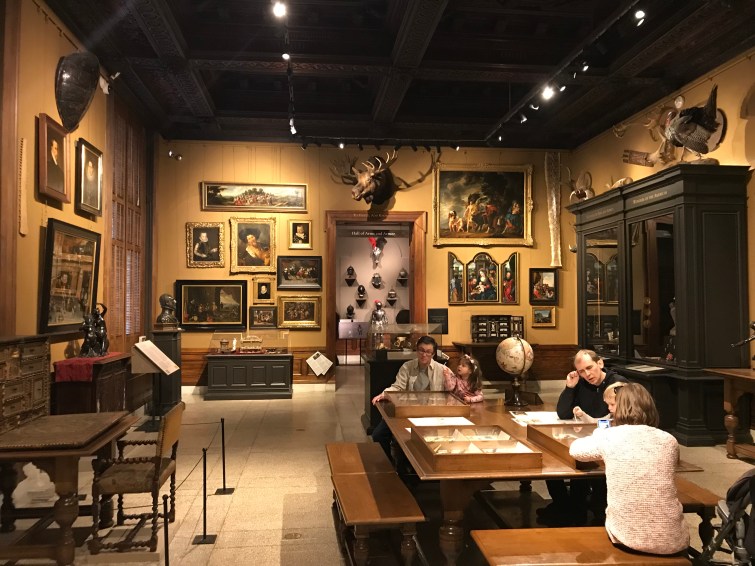
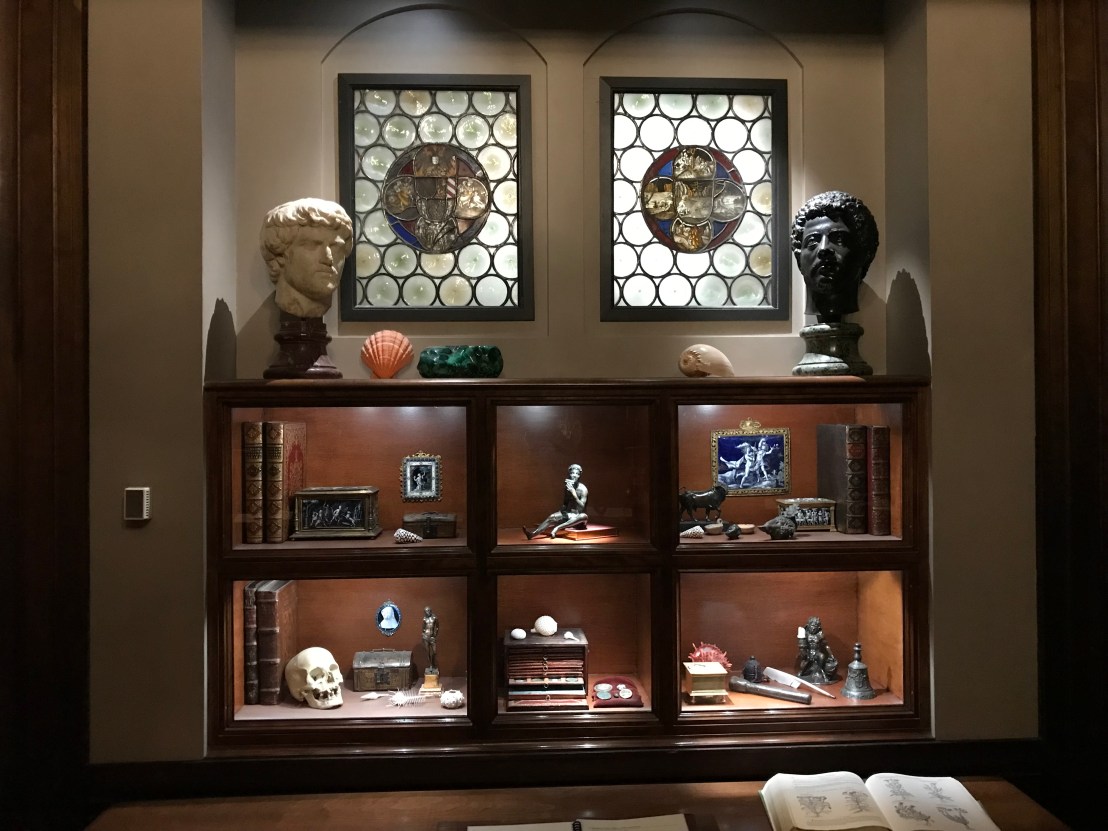
I have a question for any of you wanderers of the web who may happen by my little space — do you like museums?  I realize that the automatic answer is usually a “yes” but with fingers crossed — we think we ought to like museums, just as we think we ought to like classical music, paintings and serious books.  Meanwhile, of course, we all spend far more time with movies, pop music and those wonderful paperbacks that promise a rollicking good time, especially when consumed with a nice glass of something white & dry, or a morsel or two of something dark and gooey!  The point I’m trying to make is that, while I (and perhaps some of you) may appreciate museums, along with other indicia of high culture, my enjoyment is a bit constrained and artificial; two hours max and I’m out of there!  Well, if you, too, share this limitation (and even if you don’t), I’d really recommend a visit to the Walters.  It’s a museum and it’s FUN!  Don’t be fooled by that forbidding exterior — there are wonders within.  Paintings!  Mummies!  Sculpture!  Stuffed alligators!  Shells!  Bugs (stuffed ones)!  Jewelry!  Chinese vases!  More stuffed things!  And — the staff is really, really nice and — admission is free.  It is, in short, a Baltimore treasure and not to be missed (especially the Chamber of Wonders).  I won’t bore you with blathering about the collection — that’s what websites are for — but here’s a brief sample of what’s on view:

IMG_0911
The Chamber of Wonders (or part of it): there are marvelous things in the cabinets!


0-1
A brief glimpse of the Chamber of Wonders: to the 18th century, the alligator was an exotic beast from a mysterious new world. If you were lucky enough to have a stuffed one, well, you flaunted it!
IMG_0919
Isn’t that skull in the lower left wonderful? Memento Mori, y’all!


IMG_0923
This is a rare depiction of an what an actual 17th century Chamber of Wonders in the Spanish Netherlands would have looked like.  Note the sunflower in the bouquet on the left; a recent arrival from the New World, it was incredibly exotic!


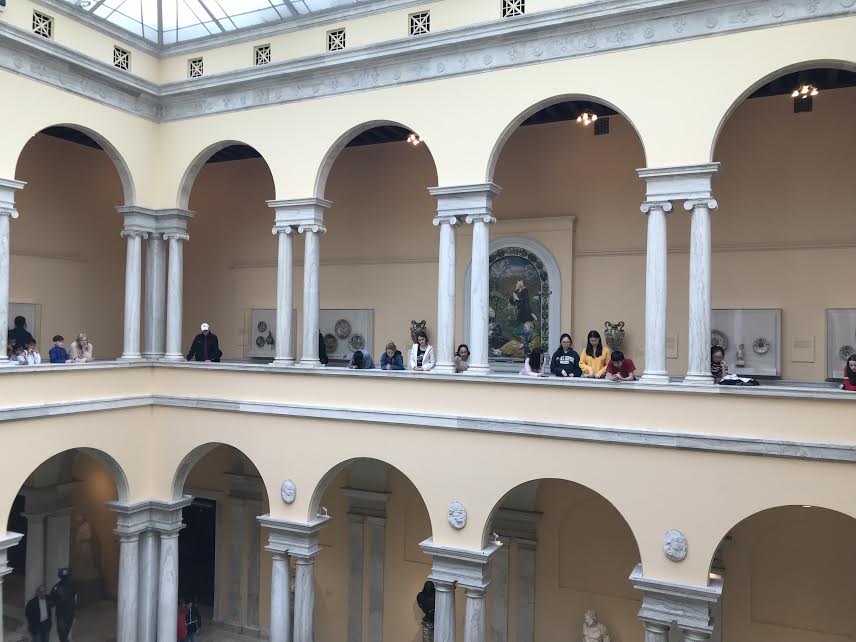
0
A portion of the Walters’ interior courtyard. If you’re really lucky, there could be a concert on the ground level during your visit!


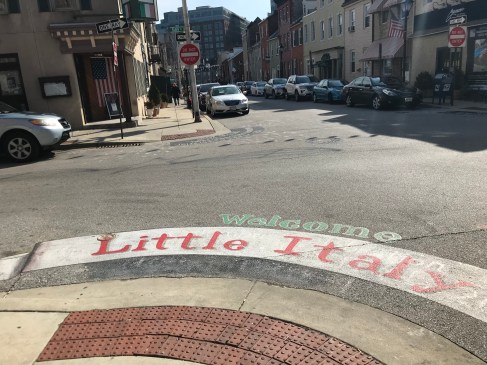
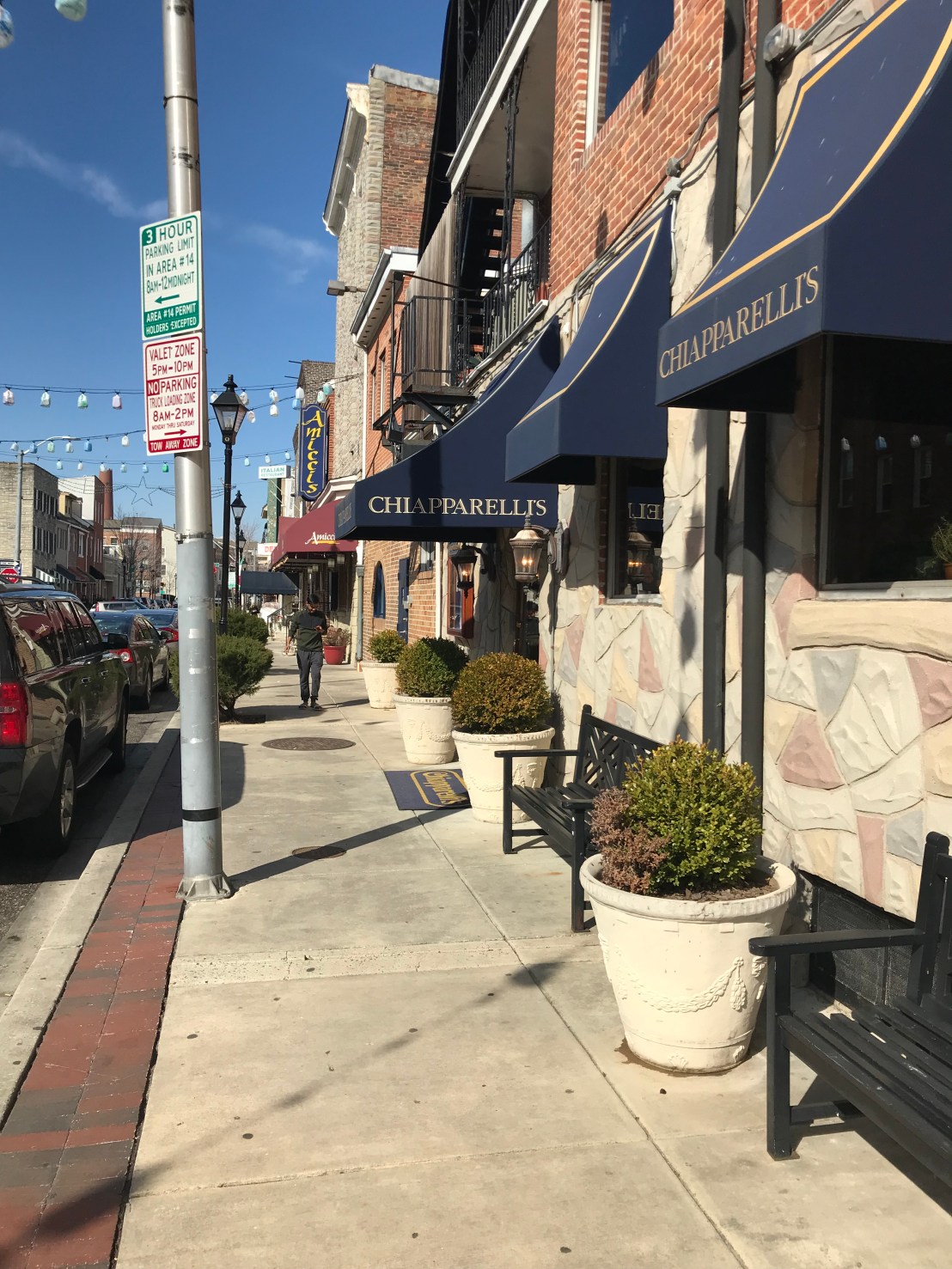
My one criticism of the Walters is its lack of a cafe (there is a very nice snack bar, when art becomes too much, but sometimes you just want more).  But — Little Italy is reasonably close!  And there’s nothing like ending a day of culture with a nice plate of pasta ……………………..

IMG_0932


IMG_0930

Bookish Thoughts for the Valentine Season ….Novels that go together!

gettyimages-57260559-612x612.jpg

Hey, I know — Valentine’s Day was ages ago (well, yesterday!) but I sort of forgot about it because I became all engrossed in thinking about a notion that I, at least, found interesting.  So much so that I actually didn’t get around to writing anything in time for the big day itself.  But since “better late than never” is part of my credo (I’d be dead by now, if it weren’t, or at least homeless), along with “you might as well” do whatever it is you were going to do, I decided to persevere with my thought, which is simply that certain books, written by different authors, from very different eras, go together.  Or, to put it in fancier language, they engage in a dialogue, they ask and answer each other’s questions, one calls and the other responds.

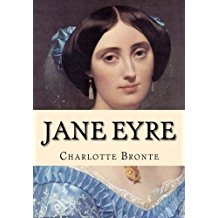
This thought popped up (and whenever a thought does so, I cherish it) during my class on the 19th century novel, where we’re currently following the adventures of Jane and the brooding, Byronic Rochester.  [Do I need a “spoiler alert” here?  If you haven’t read Jane Eyre and you value suspense, well, proceed at your own risk!]  We’re at the point in the novel where horrible, bestial, degenerate Bertha Mason, the “madwoman in the attic,” is about to appear and rain on Jane’s parade.  Because Bertha, despite her importance to the novel, never speaks, she’s defined largely through the words of Jane and Rochester, who are hardly disinterested parties.

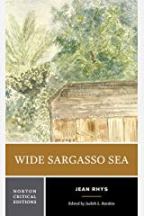
In pondering Monday’s assignment to find a key passage reflecting Bertha’s importance to the novel (I should actually be doing that right now, rather than this, but this is more fun!) I found myself asking, “how fair is it that Bertha is voiceless?”  This question led me to remember Jean Rhys’ Wide Sargasso Sea, a wonderful book I read many years ago.  Rhys was, like the unfortunate Bertha, of European descent; born on a Carribbean Island, she, like Bertha, only came to England as an young woman.  Taking umbrage at Bronte’s depiction of Bertha as “mad, bad and embruted” Rhys wrote a novel narrating Bertha’s side of the story, from her childhood as Antoinette Cosway, to her arranged marriage to Edward Rochester, who re-christens her “Bertha” and appropriates her money, and, ultimately, to her imprisonment by him in the attic of Thornfield Hall.  Bronte’s Bertha is voiceless because Rochester has stripped her first of her name and then of her identity; she is mad because she lives in a culture that literally drives women insane.  Because Bronte’s novel is such a great classic of the 19th century, it elicited Rhys’ equally great (in my opinion) counter narrative/response in the 20th.  After Sargasso Sea, Jane Eyre could never be read the same way again.  For a far better discussion than mine of both novels, click on this great short piece from the BBC, published on the 50th anniversary of Rhys’ work.

51id1VNNySL._AC_US218_
This?
71q1ozbJvvL.SR160,240_BG243,243,243
Or this?


Or Both? My choice!

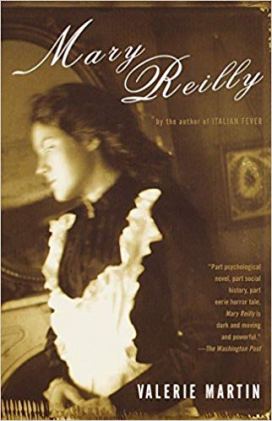
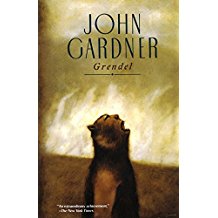
Well, every writer can’t be as effective as Jean Rhys, can she?  But this whole line of thought did give me an excuse to continue evading Monday’s homework (and Tuesday’s for that matter) by attempting to come up with other, similar “pairings.”  The idea of companion works seems particularly appropriate, doesn’t it, in this Valentine season of double happiness, or happiness doubled or paired or whatever?  To be clear, I’m not referring to a novel which simply uses the same characters as a prior novel, or merely expands in an unoriginal way on situations or themes that were previously explored without offering any new insights (I would, for example, exclude the many variations on Austen’s novels that are currently flooding Amazon).  Rather, I’m thinking of works that essentially spin the original story around by requiring us to visualize a familiar story in a new way.   After much (painful) thought, I came up with Valerie Martin’s Mary Reilly, in which the eponymous heroine is a young maid who experiences in her own way the transformation of R. L. Stevenson’s Dr Jekyl into Mr. Hyde, and Grendel, where John Gardner re-casts the epic Beowulf from the point of view of the lonely, savage, ruthless heart-breaking monster.  While neither has quite the impact of Wide Sargasso Sea, which is in a league of its own, they are both wonderful novels that will alter the way you experience the previous works to which they respond.

514lFJ0WGNL._SX320_BO1,204,203,200_.jpg51aRDmVG60L._AC_US218_

Pop quiz time (I’m thinking in student mode these days) — name some more pairings!  Since I’ve had the benefit of reading the BBC piece I linked to above, I’ll make it easy by listing a few pairs, with the disclaimer that I’ve not read these particular “re-inventions:”

519F4OStrqL._SX322_BO1,204,203,200_.jpg
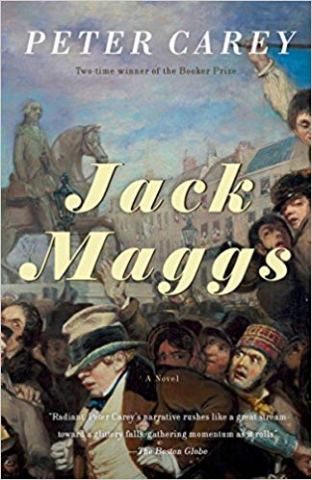
Peter Carey, Jack Maggs, in which the convict Magwitch gives his version of  the events in Charles Dickens’ Great Expectations.
51Pa14K0GxL._SX325_BO1,204,203,200_.jpg
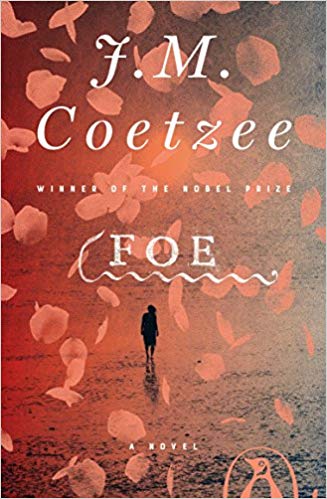
J.M. Coetzee, Foe, in which the tale of Robinson Crusoe is reinvented/reimagined through the story of a female castaway.
41F61oi--GL._SX327_BO1,204,203,200_.jpg
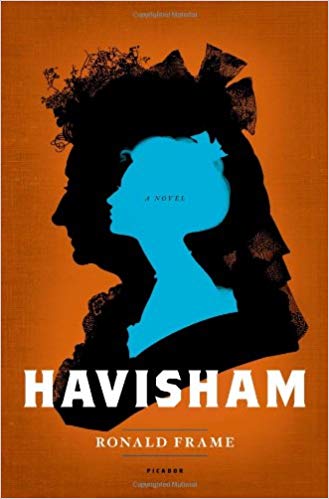
Ronald Frame, Havisham.  Dicken’s Great Expectations again but focusing on the psychological background of Miss Havisham.
51eZv9GMBtL._SX330_BO1,204,203,200_.jpg
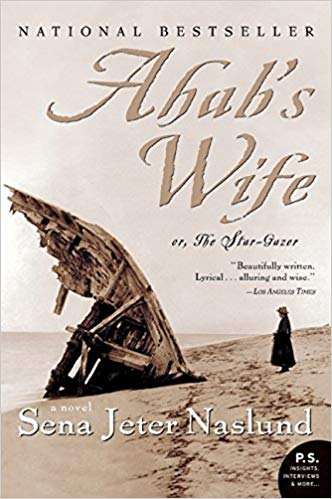
Sena Jeter Naslund, Ahab’s Wife, in which the author builds on a brief passage from Moby Dick to create her own saga.
51vGEmv-sFL._SX325_BO1,204,203,200_.jpg
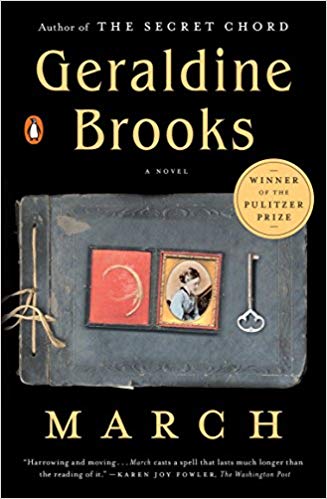
Geraldine Brooks, March; Little Woman re-envisioned from the point of view of the absent father.

Well, this is my list!  Did I miss anyone’s favorite, or, if you happen by and have any additions, please share!

Kate O’Brien’s The Last of Summer

JG-878_grande.jpg

Is anyone out there in the mood for a period piece?  Want some star-crossed romance and 1930s Irish country life, combined with a frisson of menace from the imminent outbreak of war?  If so, head straight for Kate O’Brien’s The Last of Summer.  If this novel ultimately left me a little unsatisfied, I can honestly recommend it as a good read; it also contained sections that offered a bit more than a merely pleasant way to pass an afternoon.

The novel opens in the summer of 1939, literally days before Germany’s invasion of Poland and declarations of war by Britain and France.  Angèle Maury, a young French actress touring Ireland with some theater friends, impulsively decides to ditch the tour in order to pay an unannounced visit to her father’s family.  Angéle, you see, despite her Parisian upbringing and French mother, is also the daughter of Tom Kernahan, the black sheep son of a family of Irish Catholic landowners (slightly more on this below).  As we come to learn in bits and pieces, Tom was the middle of three Kernahan brothers, all of whom in their youth simultaneously fell in love with the beautiful Hannah O’Reilly, “a draper’s daughter from over her father’s bit of a shop.”  Tom initially won the romantic prize, to the chagrin of his older sibling.  The marriage didn’t come off,  however, and Tom permanently decamped to France, where he met and married Angéle’s actress mother.  According to a legend carefully cultivated by Hannah in subsequent years, it was she who broke the engagement, along with Tom’s heart; a few village residents, however, remember that it was Tom who did the jilting and left Hannah to his older brother with the words to walk away himself from a woman as lovely and as cold as “hollow ground steel.”  Needless to say, older brother ignored this very good advice and, when the story begins many years later with Angéle’s impulsive visit, the now-widowed Hannah is the mistress of Waterpark House, the Kernahan family home.  There she reigns absolutely over her small kingdom, fawned over by the local clergy, adored to the point of idolatry by her elder and favorite son Tom (named for his uncle), loved a bit more skeptically by daughter Jo and younger son Martin, and obeyed and feared by a small miscellany of poor relations and servants.  Hannah is not pleased to see Angéle, whose existence she has concealed from the rest of the family.  Her two sons do not share her opinion and the old love triangle repeats itself with minor variations.  Over the course of the next week (!!!) both Tom and Martin fall madly in love with Angéle (variously described as a “water nymph” or Gothic angel); Tom proposes marriage; Angéle accepts; Hannah moves to break up the love affair and protect her reign over Waterpark; and WWII begins.

My honest reaction to the first half of the novel was a big yawn, combined with the thought that this might be the wrong book for me at this particular time.  Keep in mind, however, that I’m not receptive to 1930s nostalgia and I have the kind of professional training that makes me ask uncomfortable questions, such as “would you really propose marriage to someone you met the day before yesterday?” and “why wouldn’t you run, absolutely just sprint, for the nearest train when you heard that proposal, instead of leaving your native country, renouncing your theatrical career and embracing a lifetime of Hannah as a mother-in-law?”  But then, as I said at the beginning of this post, The Last of Summer is a period piece, written in the early 1940s, and I am somewhat unfairly subjecting it to a viewpoint formed by a far different time and place.  Still, despite O’Brien’s considerable skill as a writer and her ability to create a convincing sense of atmosphere, I was seriously considering abandoning the novel for something just a bit more — cynical (Ivy Compton-Burnett, anyone?).

So what changed my opinion, after that big yawn around page 107?  What countered my inability to suspend belief and go with the narrative flow of eternal love at a moment’s notice?  Quite simply, O’Brien gave an absolutely penetrating psychological profile of a minor character that riveted my attention, followed by an equally acute and insightful analysis of Hannah.  It was also around the halfway point, after Tom announces his engagement, that O’Brien ratcheted up the conflict between Hannah and Angéle, which provides the dramatic focus of the novel.  The novel’s introduction, written by Eavan Boland, points out that Hannah provides the “glint of the scalpel” in this otherwise lush, romantic story (remember her lover’s description of Hannah as “hollow ground steel?); unlike Boland, I don’t ascribe any great symbolism to Hannah’s role in the story, but she does give it tension and strength.  In addition to her psychological insight, O’Brien provides an unsentimental view of  puritanical, small town Ireland, where a child derides Angéle for wearing lipstick and the powers of the small community silently unite to impede what they regard as an unsuitable match.  Many of the minor characters were quite skillfully drawn and in Jo, the Kernahan daughter, O’Brien gives an unusually positive view of a highly intelligent woman with a strong and unsentimental religious vocation.  Lastly, I was attracted by the fact that O’Brien’s characters are from a reasonably  affluent, Irish Catholic landowning class rather than the Anglo-Irish Protestant gentry who are the subjects of other novels I have read from this period, such as those by Molly Keane.

I’ve had this novel for years and, finally, read it as part of my 2019 TBR Pile Challenge.  In her introduction to the novel (which was published as a Virago Modern Classic), Boland delicately intimates that, while The Last of Summer is not among O’Brien’s best work (that honor belongs, apparently, to Mary Lavalle and The Land of Spices), it was written in the “best phase of her work.”  For a very good review of the novel, I’d recommend you click over to Danielle’s more positive assessment at A Work in Progress.  While I obviously had some reservations about the novel, for the right reader in the right mood it could be a wonderful treat; even for grouchy old me in a bad mood it was a pleasant diversion.  And to that key question, “would you read another book by Kate O’Brien?” I’d answer “yes.”  Just not any time soon.
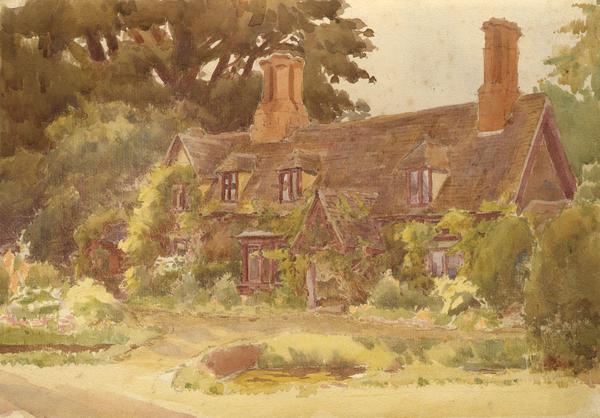
In the brief life of my blog I’ve had a lot of fun selecting the visuals to accompany my postings.  This one, however, was problematical — nothing quite popped into my mind with respect to this novel, until I thought “Irish country house.”  How do you like what I came up with?  But — I cheated!  While I love the image, which I think embodies the mood of the novel, it bears no relationship whatsoever to the Waterpark described by O’Brien:

It was a plain, large house, washed with cream paint that was dilapidated.  Its face was late Georgian “squireen,” smooth and blank.  Five big windows across the first floor; four similar windows and a wide doorway below ….

In other words, the Kernahan family manse looked more like this:

The-Salutation-1030x803.jpg

So, what do you say?  Do you prefer the accuracy of the “late Georgian squireen” or the poetic license of my ivy covered manor house?