
I must say at the outset that I never intended to read, much less review, this book, at least not anytime soon. There I was, dear readers, working diligently (well, sort of) on a review of Arnold Bennett’s The Old Wives Tale, when I became consumed with restlessness. After all, I hadn’t started a new book in almost two days! Oh, the horrors of withdrawal from my favorite drug! Writing a post was simply no substitute for the rush of a new reading selection, particularly when one has been mainlining for decades! Perhaps I could work on my Bennett post while making do with a slow read of an Edith Wharton novella, at least until I finished with Old Wives Tale and I was free to choose a longer work. Work before play, that’s always been my motto (except when it hasn’t). Just a click or two on the internet, then back to Mr. Bennett . . . but . . . what’s this enticing new novel, a bestseller yet in France? I don’t normally read bestsellers but this one is translated (by the well-known British translator Adriana Hunter) and doesn’t that elevate it a bit over usual entries on the New York Times’ bestseller list (I’m thinking here of an All American Christmas, a self-described heart warming collection of holiday memories from the Fox News staff, selling like hotcakes for five weeks now)? I’ll download a sample and read only a few pages, just to get some idea of the thing and then it’s back to Bennett’s tale of Constance and Sophie . . . . Well, dear readers, I think you can see where this is going. The Anomaly is so engaging, I’m afraid poor Arnold B. never had a chance (but I will get to him! Spoiler alert for my upcoming post: The Old Wives Tale is a fabulous novel).
Perhaps if I were more familiar with contemporary French culture, and better read in French literature, I would have been less surprised by this wonderful novel. For those who (like me) need to — ahem — brush up on the basics (all others may skip to the next paragraph), Le Tellier is a major figure in contemporary French intellectual life. He’s one of those amazing individuals who are supremely good at many things, including writing, journalism and mathematics. Offhand, I can’t think of any public figure comparable to Le Tellier in my own country (U.S.A.), particular when you throw in the fact that he’s also a food critic! Le Tellier has written several novels; The Anomaly, which is his fourth, won France’s prestigious Prix Goncourt in 2020 and has sold over a million copies world-wide. Have you ever, dear readers, come across a completely unfamiliar term, only to have it pop up again very soon afterwards? The word I’m thinking of, in the context of my review, is “Oulipian,” which I first encountered quite recently in one of Kaggsy’s reviews. Sparing you the click to Wiki, the adjective refers to a loose association of (mostly male) francophone writers and mathematicians who use constrained techniques to create their works, the idea being that the very rigidity of their chosen structure triggers ideas and inspirations. Italo Calvino was a member of the group and Le Tellier is, among his other accomplishments, its fourth president. Given this link, will it hardly surprise you to learn that Le Tellier ends The Anomaly with a calligram (that is also IMO a lipogram)! If you need an explanation of these terms, dear readers, you must click for yourself; while I am indulgent, I’ll only coddle so much, as any more “background” will confirm that I’m hopelessly pedantic.
Has my background paragraph given you an impression of a drily witty, erudite work, full of Gallic “in” jokes incomprehensible to a less refined anglophone audience? If so, I’ve done you a vast disservice. The Anomaly was one of the most entertaining, thought provoking and funniest novels I’ve read in quite some time. With a light touch and great psychological insight, Le Tellier welds a wild mix of genres (science fiction, thriller, love story, social satire, mystery) into a seamless whole, while dealing convincingly (and entertainingly) with subjects as diverse as a professional assassin’s business methods, a doomed love affair, probability analysis, and a child’s intense love for her pet frog. All this, combined with a masterly ability to maintain suspense, to make me care about a surprisingly large number of his many characters and to leave me pondering, long after I’d finished, the issues he raised concerning the nature of reality, the existence (or not) of free will and the ability of individuals to adapt to a drastically changed reality. C’est Magnifique!
If you’re still with me at this point, I can imagine your growing impatience. “O.k., so you liked it,” I imagine you saying, “but cut the adjectives and just tell me something concrete about the story!” Because Anomaly operates on so many levels, this is both an easy and impossible task. At its simplest, it concerns a seemingly random group of very disparate characters and how they cope, or don’t, with a situation straight out of The Twilight Zone. Le Tellier immediately plunges the reader into the very different stories of (among others) a merciless hired killer with a double life (when he’s not murdering people he runs a chain of vegetarian restaurants in Paris), a critically acclaimed but commercially unsuccessful writer (quotes from his unexpected best seller, The anomaly, provide the novel’s epigraph and chapter headings), a closeted young singer from Nigeria who’s forced to conceal his homosexuality, and the six year old daughter of an American military family who’s blocking the memory of terrible events. Le Tellier develops these narrative arcs bit by bit, switching both style (the assassin’s sections are noirish, for example, while the arc devoted to an unhappy love affair is far more meditative and philosophical) and points of view. It’s a technique very reminiscent of David Mitchell’s Cloud Atlas or Italo Calvino’s If on a winter’s night a traveler (as I noted above, Calvino was also a member of the Oulipian group). As the stories develop, so does the suspense. In short order I was totally hooked on the mystery of what bound this seemingly random group together and why, as the novel progressed, they were being surveilled and/or apprehended by shadowy government agents. All I will say of the plot is that the reader eventually learns these flawed but engaging (well, maybe not the hitman) characters were passengers on a Paris to New York flight that underwent one of those terrible, near-fatal episodes that provide nightmares for every nervous traveler.
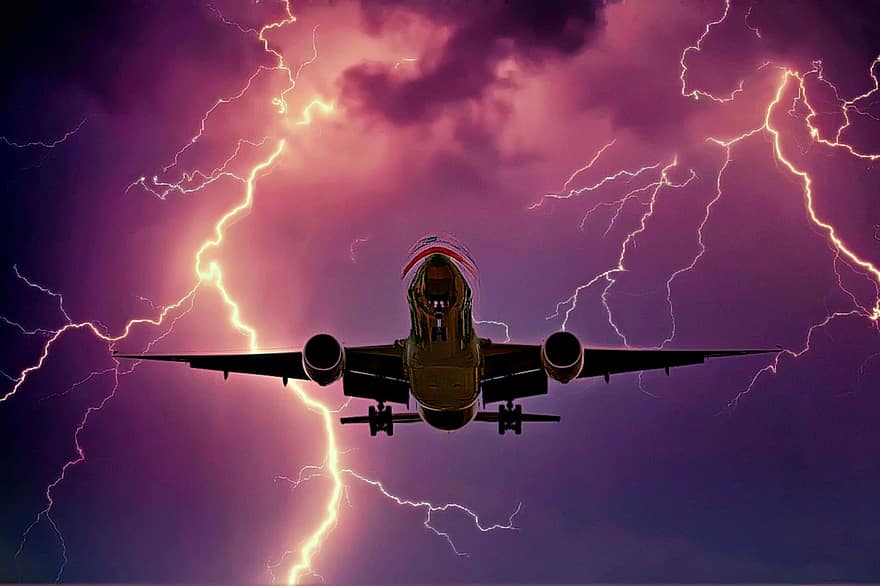
The explanation of what happened occurs about halfway through the novel (and I, at least, was in suspense all the way there). After this, Le Tellier deals with the implications of this cataclysmic event for both his characters and society as a whole. I had expected to be a little bored at this point but found that Anomaly’s “how” was every bit as interesting as its “what,” so to speak. Not only does Le Tellier offer some fascinating philosophical as well as scientific explanations, he also never loses sight of the very personal way in which his characters attempt to cope with a drastically altered reality.
Le Tellier’s genre salad includes, as I previously mentioned, a bit of social satire. This mainly manifests itself in his treatment of U.S. popular culture as well as the differences in how the French and U.S. governments deal with events. At least one professional (U.S.) reviewer found this aspect of the novel condescending. Although I did not (Le Tellier aimed his arrows at legitimate targets IMO), I did think this novel’s satire wasn’t quite as strong as its more psychological and philosophical aspects.
A few other odds and ends deserve mention before I end this overly long post. Adriana Hunter’s translation is so lively and idiomatic it was difficult to believe that the novel wasn’t originally written in English. Hunter is British and it seemed to me that she found that almost impossible spot between British and American English, but I’d be interested to discover whether any readers of the novel from the U.K. would share my opinion. One particularly attractive aspect of Anomaly for us blogger types is its use of literary allusions, which add to its depth without detracting from the pace and flow of its narrative (because I haven’t studied French and am poorly versed in French literature, I fear I missed many of these but even so I have an exciting list of references to track down). Lastly, I kept my discussion of the novel’s plot to a minimum because I think that, especially with this novel, the less one knows in advance the better. If you plan on reading Anomaly, I strongly advise caution in checking out its reviews in advance (the Washington Post reviewer, for example, gave away practically every plot twist in his otherwise insightful review. I am deliberately not including a link).
It’s impossible to close this post without mentioning the novel’s literal ending. Le Tellier finishes his work with a calligram shaped like a funnel into which words and letters disappear, leaving only “e nd.”

Le Tellier has declined to explain or supply the missing text, thereby compelling each reader to supply her own interpretation. His is a very elegant — and Oulipian — suggestion that there is no one answer to the questions raised by his novel.
Continue reading “Buckle Your Seat Belts For Hervé Le Tellier’s The Anomaly”


 "You Might as Well Read"