Category: reading recommendations

Monday Miscellany: Back to School, Movies, Books & History (not in that order)

Those of you who check out my blog now and again may have noticed that it’s been quite some time since my last post.  Three weeks!  How can that be?  Where has all that time gone?  My fall semester classes officially begin tomorrow, but I’ve actually been at it for most of August, frantically working on the second part of a two semester project that I began last spring, on 16th century Italian portraits of children.  I’ve spent several months doing research and I’m now at the point where I simply MUST begin writing!  I’ve made outlines, collated notes, requested ten more books from the interlibrary loan department, read many interesting art history articles (some even tangentially related to my topic), went to the movies, went shopping for novels on Amazon, made banana bread, went to more movies, bought more novels, made cranberry bread, started this post  . . . . . wait! wait! Something’s wrong!  I simply must begin writing about Italian Renaissance portraits!  Oh well, I think I’ll do this post instead (then check out the movie schedule and catch up on some book blogs).

1231946_o2
Well, maybe my class rooms don’t look quite like this, but the idea’s the same . . .

MISCELLANY PART  I: BACK TO SCHOOL READING

Since this is Monday, my post will be a miscellany that’s more of a “mess–allany” than usual!  It’s in several parts, so if you get bored (now, honestly, how could that be? Please do realize I am being sarcastic here!) you won’t lose content by scrolling through the dull parts.

Since this is a book blog, I’ll begin with – – – reading!  Although I’ve done a tremendous amount of it this month, most of my reading has been very narrowly focused —- of the “I simply must begin writing my paper but first I’ll skim another article” type  — which is not to say it’s been dull (if I weren’t the type to find Renaissance Italy interesting, I wouldn’t have used August to read about it!)  I am stuffed, positively stuffed, with interesting factoids about the Italian Renaissance!  Did you know, for example, that families in 16th century Florence recorded their sons’ births in the family account books but often didn’t bother recording the daughters’?  That children of both genders were farmed out to wet nurses almost immediately after birth and only rejoined their biological families around the age of three or so (some even stayed with the nurse until age seven)?  That couples who wanted to conceive a son were advised to tie the guy’s left testicle with string and to eat lots of hot food (I’ll spare you the theory behind this)?  Did you know that some scholars estimate that half of the children born during this period died before their first birthday, and that half of these survivors died before age thirteen?  Although scholars only begin studying the history of “childhood” around 1960 or so,  they’ve produced some incredibly interesting and very accessible work since that time on families, marriage, childhood and women’s roles in Renaissance Italy.  If you’re up for non-fiction, some of these are definitely worth reading, such as  . . .

51UHNVELDDL._SX331_BO1,204,203,200_
Described (accurately) by one reviewer as an “elegant and accessible” survey of ideas about childhood in western culture … but … illustrations are in black and white!
51r0eMnXH8L._SX378_BO1,204,203,200_
Gorgeous, gorgeous, gorgeous! Painting, furniture, clothing, interiors, sculpture, musical instruments! And, oh yeah, a highly readable text by one of the English-speaking world’s great Renaissance scholars . . .

As for my own particular Renaissance woman and her depictions of certain Renaissance kids (the topic of my paper and my excuse for all that reading about childhood and family life):

anguissolaselfportraittondo
Sofonisba Anguissola, the first generally acknowledged female artist of the Italian Renaissance (there have always been woman artists, they just haven’t been acknowledged).  Sofonisba painted this self-portrait when she was about twenty years old.

And — here’s the kids!

l_pl1_371016_fnt_tr_t87iiia-2
Little Massimiliano Stampa, aged twelve or so and already the ruler of a small town in northern Italy.  I just discovered a few days ago that Massimiliano grew up to have ten children himself and ultimately renounced his title to become a monk!  His portrait was one of Sofonisba’s first commissions.


1961.84.jpg
Not a great deal is known about this painting, including the identity of the sitters.  Most likely they’re siblings from a rich Florentine family whom Sofonisba painted in the 1580s, towards the end of her career.


Portrait_of_a_Boy_at_the_Spanish_Court_by_Sofonisba_Anguissola,_San_Diego_Museum_of_Art.JPG
San Diego’s Museum of Art, where this painting is now located, calls it  “Portrait of a Prince at the Spanish Court.”  Isn’t he adorable, in his little miniature hunting costume?  This was painted around 1562, when Sofonisba was a lady-in-waiting at the court of Philip II of Spain.  Again, lots of unknowns; the child’s identity is disputed and at least one major scholar thinks the painting is by someone other than Sofonisba.


MISCELLANY PART II: AUGUST MOVIES

Does anyone besides me like movies?  Although I’m really not addicted (honestly, I can go weeks and weeks without a hit), in times of stress they’re my go-to drug of choice, especially when combined with potato chips!  Like most sane people, I generally watch movies at home, but when piles and piles of (unread) Renaissance art books are staring at me, I resort to a conveniently located local theater, which specializes in current art house, repertory and foreign films (fortunately, it also has a great bonus program, which has come in really useful this month).  In August I hit the jackpot, so to speak — my local guys were celebrating the 1970s, one of my favorite periods for “old” American movies.

I did go current, however, at least at the beginning, by kicking off August with Quentin Tarantino’s latest, “Once Upon A Time in Hollywood.”  Has anyone else seen it? If so, I’d like to hear your thoughts, particularly as I’m not a Tarantino fan (I generally think he’s a bit over-rated, and his movies normally are far too bloody for me).  In a sense, I liked this one despite myself, but it was good! (although it is pretty violent).  Anyway, August movie month had what I considered an auspicious beginning:


images-1.jpeg

I followed this current release with lots and lots of repertory, seeing, in no particular order:

“You Only Live Twice” (1975):  Didn’t date well and don’t bother, unless you really, really want to see Sean Connery masquerading as a Japanese fisherman, complete with skin makeup (don’t ask).  I didn’t and left halfway through, as life is short.

“The French Connection” (1971):  I wasn’t a fan when I first saw this, oh so many years past, but it’s held up surprisingly well.

“The Thomas Crown Affair” (1968):  A heist movie totally devoid of suspense; even Steve McQueen couldn’t save it.  High point was Faye Dunaway in a lavender hat (she was lovely).

“Chinatown” (1975):  One of the all time greats; saw this one twice!  Who could forget that closing scene?

“Nashville” (1975):  I love Altman’s movies and this is one of his best.  Surprisingly (and depressingly) still relevant to our sad political times.

“McCabe and Mrs. Miller” (1971):  another Altman (told you I love his movies).  Saw it twice this month, once solo and once with Mr. Janakay (it was necessary for his cultural development!).

“Diary of a Mad Housewife” (1970):  Carrie Snodgress won a Golden Globe (and was nominated for an Oscar) for her work in this comedy-drama.  She is good (makes you wonder what her career might have been had she never met Neil Young) and, despite being a bit of a period piece, the movie still works.

“The Last Picture Show” (1971):  How could I have forgotten how great this was?  Cloris Leachman deserved three oscars!

Does my list include anyone else’s favorites?  Or not-favorites, as the case may be?  Any recommendations?  (I still have lots of Renaissance art to get through, so movie going in the near future is a distinct possibility.)  Has anyone seen “The Farewell”?  If so, please share your opinion, as I’m dying to see whether Awkwafina lives up to her reviews!

MISCELLANY PART III: FUN READ

Humanity has perished, victim of a zombie plague; all that’s left are the animals.  The tale is (mostly) narrated by S.T., a formerly domesticated crow who’s spent his life with his beloved Big Jim, a junk-food eating, beer-drinking redneck, and Dennis, a slobbery but good natured bloodhound.  Aside from being hysterically funny (yes, it is!), there’s a lot going on in this deceptively simple little story.  Take my word for it, this is NOT just another post-apocalypse zombie novel (and if you don’t believe me, check it out on NPR).

51yagNHv-1L._SX329_BO1,204,203,200_.jpg

MISCELLANY PART IV:  THE 1619 PROJECT

You may or may be aware that in August 1619 a ship carrying more than 20 enslaved Africans landed in the British colony of Virginia.  The unfortunates aboard were sold to the colonists and “American” history (at least, of the United States variety) was off and running.  To mark the 400th anniversary of this momentous event the New York Times compiled its 1619 Project, which explores the history of slavery (a history that was certainly never taught in any school I attended) and the way in which it’s affected every aspect of life in these sort-of-United States.  The Project uses historical objects from the National Museum of African American History and Culture as a starting point for its scholarly essays and journalistic pieces, and interspaces its factual material with poems and short stories by noted black artists.  Not to be missed; here’s the link to get started.

18mag-justice-e-03-master675-v4.jpg
A photo from the 1619 Project, showing prisoners from the Ferguson prison (for young men ages 17 to 21) in Huntsville, Texas.  This is 1968 and they’re still picking cotton.

MISCELLANY PART V: CONCLUSION

Did I mention that I have a paper to write on “Changing Concepts of Renaissance Childhood: Three Portraits by Sofonisba Anguissola”?  (note: title is subject to change)  Clearly, it’s time to call in someone who’ll keep me focused  . . .

0-6.jpeg
He-who-must-be-Obeyed says “follow my example and get back to work!”


P.S.  The old-timey school room shown at the beginning of my post is an 1871 painting by Winslow Homer, called, appropriately, “The Old School Room.”  You can see it at the St. Louis Art Museum in St. Louis, Missouri.


Book Prizes and Baltimore Reading

0-7
Just kidding — I’m sure the winner of the Man Booker prize receives something far less glittery (i.e., literary glory and a cash award roughly equivalent to $62,000)

Do any of you out there “do” book prizes, i.e., follow the various competitions, note the winners, and even sometimes (gasp!) read the nominees?  If so, yesterday was a significant one on your calendar, as the long list for 2019’s Man Booker prize (self-described as “fiction at its finest”) was announced.  As you may know from previous posts of mine, my reading choices tilt mildly toward British authors, mainly because I get so many of my recommendations from The Guardian’s excellent book section.  In line with this slight preference, I tend to follow the nominees for, and the ultimate winner of, the Booker; more so than, say, the Pulitzer Prize or the National Book Award, which are the big literary events in the U.S. or even the Women’s Prize for Fiction, which honors “fiction written by women.  For everyone” (my bad! The  2019 winner was Tayari Jones’ An American Marriage, now a fresh entry on my TBR list).    The extent of my “involvement” varies by year; a few times I’ve read all thirteen nominees before the prize was awarded in October; I usually read at least the short list of six finalists (announced in September); in a really bad year I may read just two or three of the nominated books.

Following the Booker process has become one of my beloved summer rituals, from the July announcement of the long list (all thirteen nominees), to September’s short list of six, to October’s big enchilada, when the winner is announced.  It’s a fun little activity that ties in nicely with my love of lists and reading projects, as well as a very pleasant way of staying somewhat current with contemporary literary fiction, particularly that of non-U.S. writers (by reading the Booker nominees I’ve discovered some great writers I wouldn’t have otherwise encountered).  Do you have any literary contests or rituals to which you are similarly attached?  Or do you just generally ignore the whole literary contest thing, feeling that artistic competition is inappropriate or that the nominated books generally don’t interest you very much?

As much as I’ve enjoyed my pleasant little summer ritual, however, in the last year or so it has taken a back seat to other activities.  Dominating everything else for the past two years has been my course work for an undergraduate degree in art history (I refer to it alternatively as my “vanity” degree or “my second childhood folly” as I have no sane reason for being an undergraduate at this point in my life); this has required, oh, ever so much non-fiction reading which has soaked up my spare time like a sponge.  In addition to this limitation, my reading choices this past year have returned somewhat to the classics, leaving me a bit less interested in contemporary writers.  Last year I read only three of the nominated books (in addition to getting about half-way through two others) and never quite got around to reading the actual winner (Anna Burns’ The Milkman).  This year —- gasp! — I even forgot that yesterday was the big day for announcing the long list (in some years, I’ve been online at the big moment because I want to see the list as quickly as possible, get a jump on obtaining copies of the more obscure works and draw up my rough reading schedule.  Janakay, dear readers, can be obsessive about her hobbies!)

Before I roll out the list, do keep two things in mind if you’re not familiar with the Booker rules (if you’re British and/or know the rules, please forgive me if I get something wrong).  For much of its history,  the competition was open only to writers from Britain, Ireland and Commonwealth countries (plus South Africa and Zimbabwe); a rules change in 2014, however, opened the contest to writers from the U.S. (this change has been quite controversial in the British literary world).  Additionally, a book may be eligible for consideration provided that it is published by September 30 of the relevant year; the judges have read all the novels included in the July long list because they get advance copies, but ordinary folk have to wait  (also, if you don’t live in the U.K. you may have to wait for your country’s publication date unless you’re willing to do an international order).  This can at times be very frustrating if you’re obsessive about completeness (believe me, I know).   Keeping this in mind, along with an imaginary drum roll, here’s the long list:

3119.jpg

Margaret Atwood:  The Testaments (the eagerly awaited sequel to The Handmaid’s Tale; set 15 years afterwards and follows the lives of three women of Gilead.  It will be “out” on September 10.  Remember what I said about the judges’ advance copies?)

Salman Rushdie:  Quichotte (inspired by Don Quixote; a tale of an aging salesman who falls in love with a TV star and travels across America to win her hand; U.K. publication in August; remember! Judges get advance copies)

Elif Shafak:  10 Minutes 38 Seconds in This Strange World (dark tale of sexual violence set in Istanbul; told through eyes of dying prostitue; in “real life” the author herself is currently under attack by the Turkish goverment)

John Lanchester:  The Wall (a dystopian novel set on an unnamed island isolated from the rest of the world by a concrete barrier; the New York Times liked it and thought few readers would “stop until they reach the final page”)

Valeria Luiselli:  Lost Children Archive (a re-telling of the American road novel; compares a family journey south from New York to a journey north undertaken by child migrants)

Oyinkan Braithwaite:  My Sister, the Serial Killer (about two siblings in Lagos, one a nurse and the other with an unusual way of dealing with her boyfriends; described by the NYT as a “bombshell of a book” dealing with sibling bonds and female survival)

Lucy Ellmann:  Ducks, Newburyport (tale of an angst-ridden Ohio homemaker; described by The Guardian as “Anne Tyler meets Gertrude Stein”)

Kevin Barry:  Night Boat to Tangier (two aging Irish gangsters exchange banter as they keep vigil at the Algeciras ferry terminal in Spain; The Guardian loved it).

Deborah Levy:  The Man Who Saw Everything (U.K. publication is in August; remember! Booker judges get advance copies).

Bernardine Evaristo:  Girl, Woman, Other (a verse novel raising questions of race and gender through interconnected stories of a group of British women of color)

Chigozie Obioma: An Orchestra of Minorities (based partly on a true story and partly on Homer’s Odyssey; it’s set in modern Nigeria & uses a love story to examine issues of class, male rage and static social mobility )

Max Porter:  Lanny (described as a “rich, twisted, gloriously cacophonous novel of village life;” plot involves a missing five year old and a sinister character rooted in English folklore)

Jeanette Winterson:  Frankisstein (described by The Guardian as a “playful reanimation” of Mary Shelley’s classic)

Do you have any thoughts on the books and writers up for the prize?  If so, please share! Although I’m somewhat familiar with a few of the writers (I’ve read previous novels by Lanchester, Levy, Barry, Rushdie & Obioma), this is the first time in many years that I haven’t read a single one of the nominated works.  I love Atwood (and anything associated with her) but despite this I hadn’t included even Testaments on my own little list of books I’d like to read in 2019 (check it out if you’re interested!  The only criterion for inclusion was — I just wanted to read it! If you really, really enjoy lists you may want to check a Goodreads list of the books that readers thought merited the award or nominate your own favorite novel for The Guardian’s 2019 “Not The Booker Award” (grand prize is a coffee mug rather than $62,000)).  Quite honestly, I was a bit unenthused about this year’s long list, but perhaps that’s due to its including so many novels dealing with current world crises, as I’m in a bit of an escape mode right now (also, I have some distressing and potentially tragic academic deadlines to meet in the next couple of months, so can’t get too engrossed with new novels!).  Do you feel differently right now about socially relevant books or do you think that now more than ever it’s critical for fiction and literation to focus on social, environmental and economic issues?

Because I do tend to natter on, as certain characters in my beloved old novels say, I’ll keep the Baltimore portion of my post brief.  The Guardian has a wonderful reoccurring feature (honestly, I don’t work for The Guardian, I just read its book section on a daily basis) called “The Top Ten Books” about a variety of topics (past lists have ranged from “top ten queer rural books,” to works about Burma, the river Thames, cults and houseguests.  Utterly addictive!)  This week’s “Top Ten” is about Baltimore, a wonderful old east coast (U.S.) city that has a rich history, great art and fabulous writers.  I’m very fond of Baltimore, which I visit pretty frequently and feel somewhat protective about, as I don’t think many people realize how much the city has to offer.  Laura Lipman, one of the best thriller writers around, has strong ties to Baltimore and compiled this week’s list, which includes works by Frederick Douglass (an enslaved child in rural Maryland, he learned to read and write only after he was sent to Baltimore); Ta-Nehisi Coates (who grew up there);  Madison Smart Bell (a Baltimore resident who formerly ran the creative writing program at a local college); film maker John Waters (another Baltimore resident); and Anne Tyler (whose Accidental Tourist is a “classic Baltimore novel”).  And, of course, you can read Lipman herself, who gives many of her superb novels a Baltimore setting.

Monday Miscellany: One Barrier Island, Eight Books and Exciting News for Austen Lovers

If  you’re a visitor to my blog, you may have noticed that my postings have been a little, ahem, erratic in the last month or so.  What I have posted has perhaps been more visual and nature oriented than literary or bookish, which isn’t to say that my interests have shifted.  As much as I love my nature viewing and museum visiting (I’ve at least two very nice regional museums to share with you, so watch out!) my life remains centered on books and the printed word, as it has been since I learned to read around the usual age of six or so.  While I’ve been nature viewing, I’ve also been reading as much as ever (perhaps even more so) but — I hide nothing from you, dear reader — Janakay is just a teensy-weensy bit lazy!  And it’s so much easier to read the wonderful books than to organize my thoughts and string them together in coherent sentences!  Although I’m actually on track as far as the reading goes to meet my two challenges (Roofbeam Reader’s TBR, and Books and Chocolate’s Back to the Classics), I’m woefully behind in writing and posting the reviews of all that I’ve read.  Monday is “Miscellany Day,” however, so I’m doing a hodgepodge of related topics; because the relationship is a rather loose one, feel free to skip around!

My first Miscellany is —  Anna Maria, a barrier island off Florida’s Gulf Coast, and its nearby areas (I’m just back from a visit and sorting through photos).

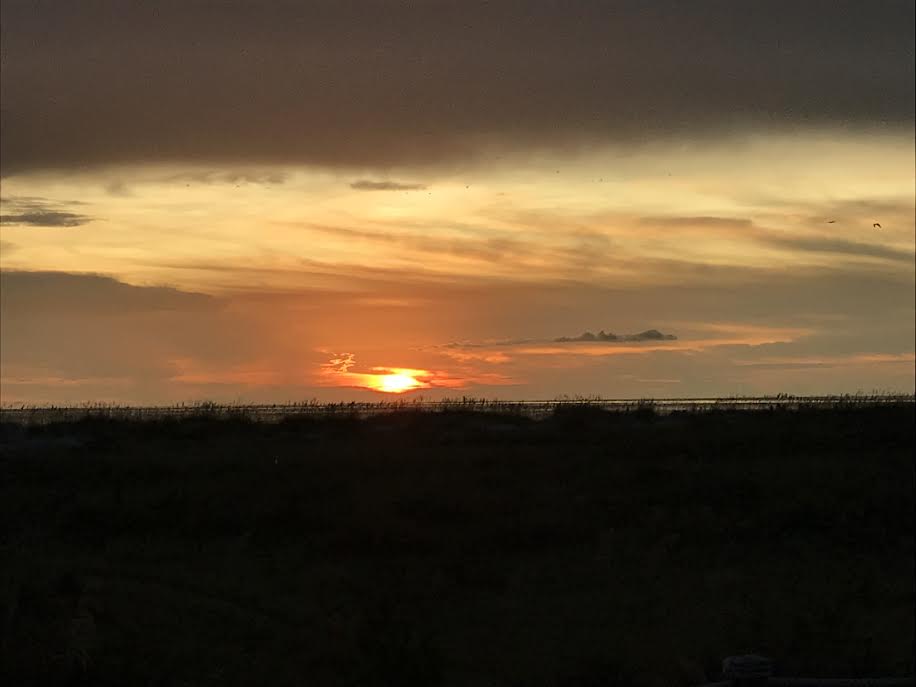
0-6
This certainly isn’t the tourist board’s presentation of Florida, is it?  I love summer visits to the Gulf Coast, partially for the opportunity to see drama such as this.
0-2
A favorite activity for many visitors is simply watching the sunset, which can be truly spectacular.
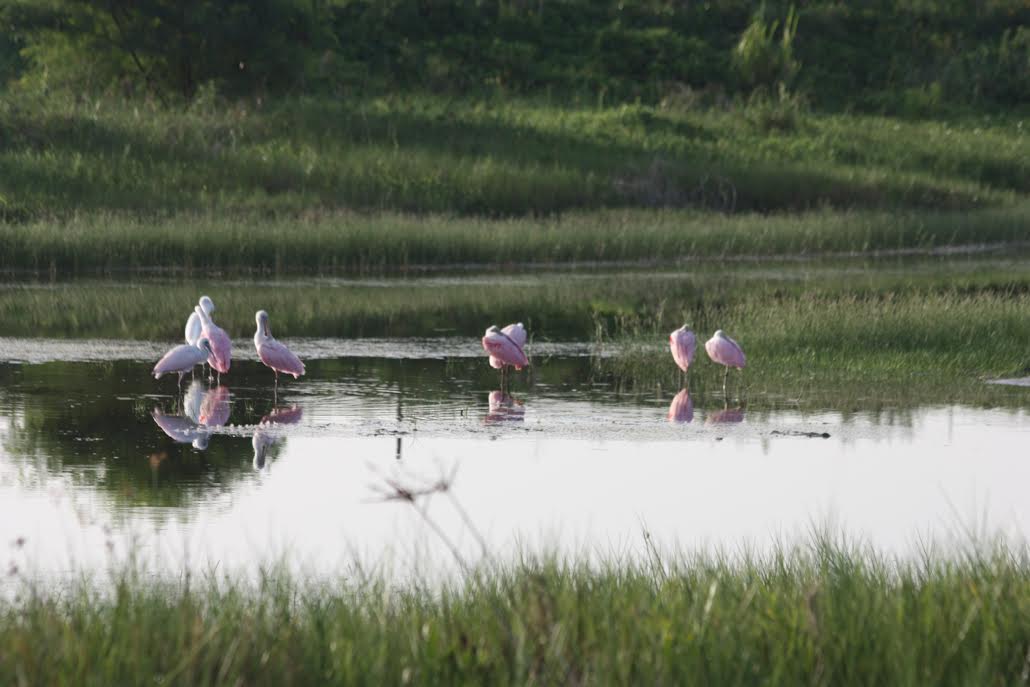
0-3
These large pink birds are Roseate Spoonbills, which are generally not seen in large numbers. Finding this little flock on an early morning walk at a nearby nature preserve was quite a treat; catching the reflections made the view even better.
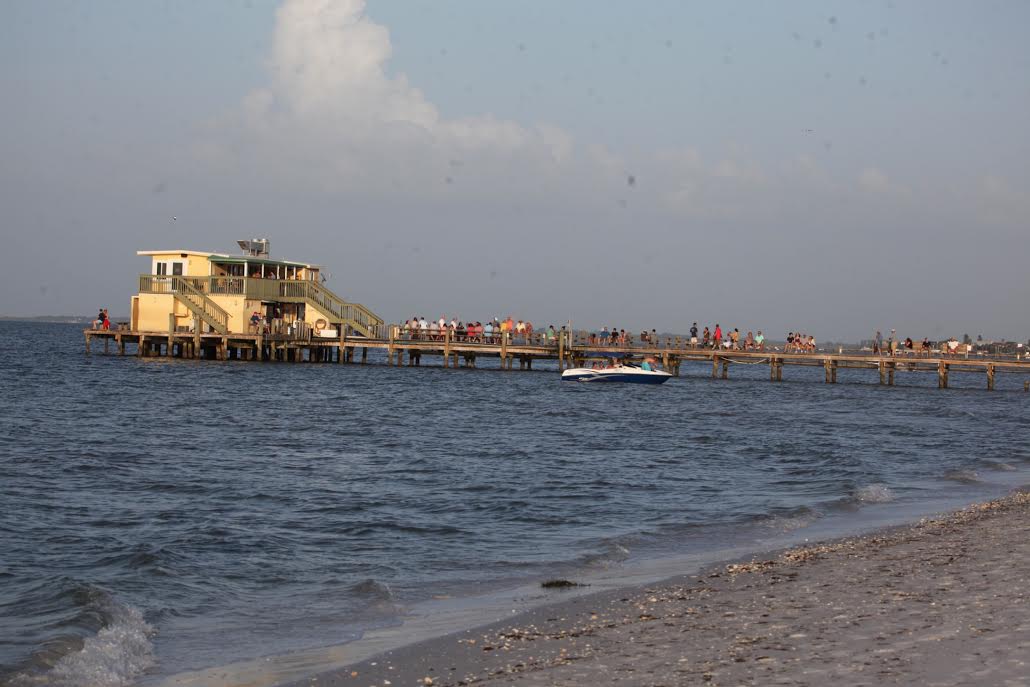
0-1
Anna Maria’s Rod & Reel Pier, a community gathering spot.  Do you see the line waiting to get into the yellow building, which is a restaurant?  If you look closely, you can see everyone is facing in the same direction because they’re watching a couple of dolphins hunt fish.  EVERYONE goes to dinner at the Rod & Reel Pier!
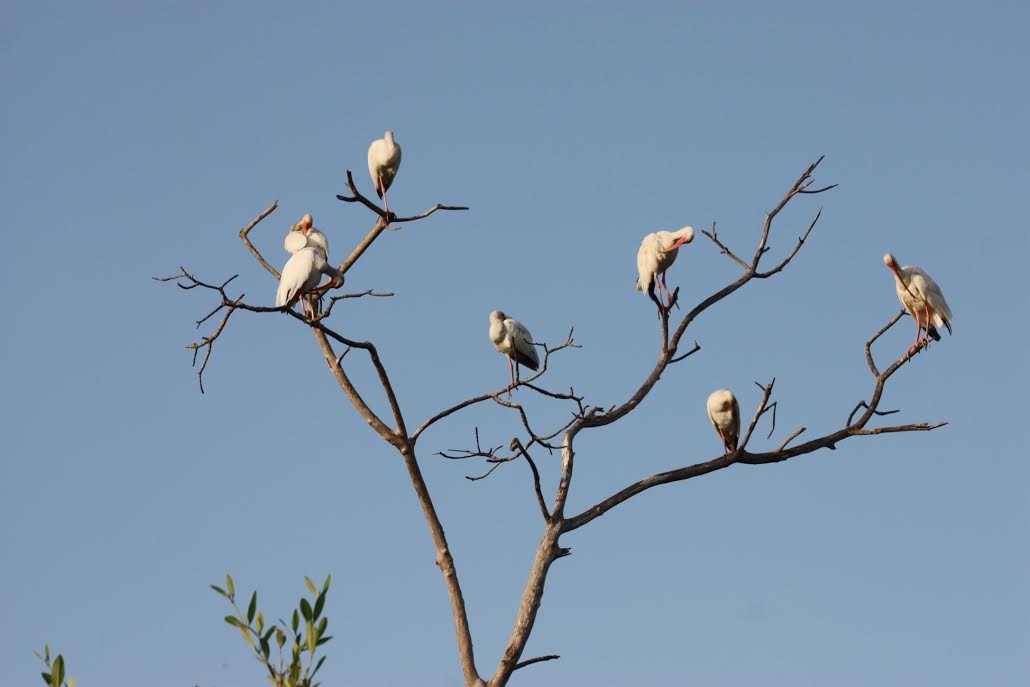
0-4
A roosting tree, loaded with White Ibises waking up for the day . . . . .
0-14
In keeping with my interest in food, I couldn’t resist a shot of Minnie’s Beach Cafe!  You’d never guess it was in a small shopping center would you?  Anna Maria frequently throws visitors this kind of curve ball!

While I was visiting Anna Maria, I did lots and lots of reading, which brings me to my second Miscellany:  books that I started, stopped or finished during my time there:

51mDsC+ePSL._SX315_BO1,204,203,200_
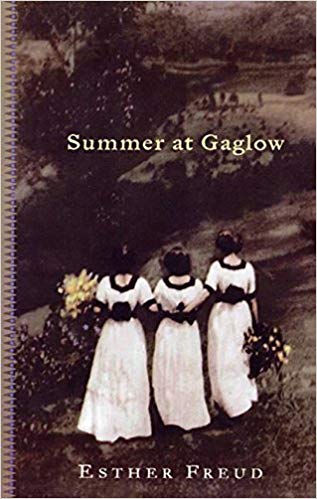
One of my TBR Challenge books, which I FINALLY finished!  An absolutely stunning read by Esther Freud, a British novelist I like very much.  I honestly can’t understand why it took me EIGHT years to get around to this book.
41B+yH6Dl7L._SX321_BO1,204,203,200_
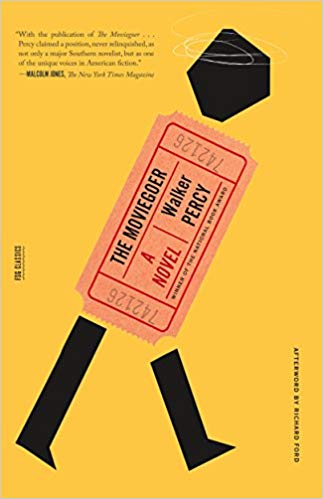
One of my Back to Classics selections (category: novel from a place where you’ve lived) and my first novel by Walker Percy. I’m still mulling over my rather complicated reaction . . . .
51YILxR10cL._SX324_BO1,204,203,200_
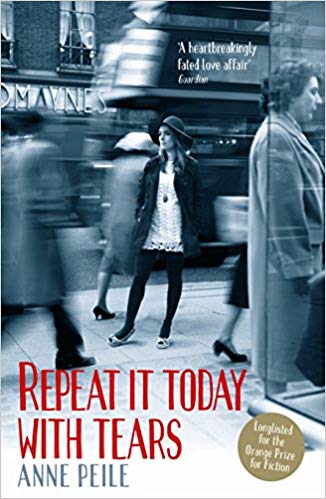
A debut novel, sitting on my shelf since 2012.  Can you guess it’s part of my TBR Challenge?  A truly searing tale of a transgressive relationship, not for the faint of heart.
41qhMU7UMdL._SX322_BO1,204,203,200_
Harrison’s beautifully written but intensely troubling memoir; a non-fictional treatment of a relationship similar to that depicted in Peile’s novel.
71u+V+fclqL._AC_UL436_
Although I love science fiction and fantasy novels, I’m not reading many these days.  This tale of operatives Red and Blue, locked in a centuries old struggle through time, is a wild mix of genres rendered in beautifully poetic language.
51RAeBxbZ5L._SX311_BO1,204,203,200_
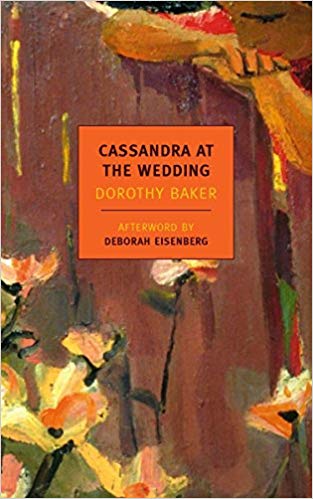
One of my TBR challenge books, reprinted in a beautiful new edition as part of the NYRB Classics series.  A blackly funny look at Cassandra’s descent to chaos at her twin sister’s wedding, with some serious thoughts about sibling bonds and “unconventional” life styles (my review will come, eventually!)
51oPtjXvANL._SX307_BO1,204,203,200_
Bánffy’s “They Were Counted” was my “very long classic” Challenge read.  One chapter in and I know I’m in trouble — I need Plan B!  I will not be reading this book in 2019!
61GTQkGLH+L
Some times (and a stressful travel day is one) NO ONE but Georgette Heyer will do! This one isn’t my favorite of her regency romances (that honor probably goes to “These Old Shades”) but it’s still wonderful!

And since I’m doing books, make sure your visit to Anna Maria includes a side excursion to nearby St. Petersburg (the drive is lovely) and the wonderful:

0-6.jpeg

Are you surprised to learn that I’ve added to my TBR pile?

My third and final miscellany: Jane Austen’s Sanditon, the novel left unfinished at her death.  Has anyone read this?  Or, unlike myself, realized the importance in Austen’s fiction of seaside resorts and beach villages?  Today’s Guardian has a wonderful article discussing Austen’s use of seaside resorts — a key scene in Persuasion occurs in Lime Regis; Lydia Bennet elopes from Brighton and Austen herself may have enjoyed a seaside romance.  The article suggests that in Sanditon, Austen may have written the first seaside novel; at any rate, she certainly anticipated “what the seaside has come to represent in later modern fiction,” such as Chopin’s The Awakening, Woolf’s To the Lighthouse or Banville’s The Sea.   

The exciting news?  Sanditon is being adapted for an eight part series on ITV, which will air this autumn! Thoughts anyone, about Anna Maria Island, Sanditon or any of my other reads?

Summer Reading: The Beauty of Lists

Do you ever have nights when the internet is calling your name, in a voice not to be denied?  When you just can’t stop clicking, going from website to website?  When it happens to me, it’s a bit akin to Odysseus and the sirens, except that I don’t have the magic ear plugs or whatever to protect me, so I just keep clicking away.  I can’t explain the phenomenon but I’ve noticed (oddly enough) that it always seems to occur when I’m facing a day filled with tasks I don’t want to do or appointments I don’t want to keep!

Today my clicking compulsion centered on summer reading lists, which abound this time of year.  I adore lists of summer reading recommendations!  Although I don’t really change my reading selections by the season, it’s always fun to see what other people are reading, or what they think you should be reading; I’m a bit lazy and checking out lists of reading recommendations is also an easy way for me to stay somewhat current with new books, as many summer reading lists heavily feature newly published work.  Since I’d hate to keep the fruit of my “labor” to myself, I’m listing the lists my clicking has uncovered!

Tibout_Regters_-_De_belastinginner_-_2252_-_Rijksmuseum_Twenthe
This 18th century fellow is, I believe, actually doing a tax tally. I like to think, however, that he’s doing a booklist!

I rely pretty heavily for my reading recommendations on the book section contained in The Guardian.  Although it can be a little frustrating when there’s a lag in the U.S. edition (I’ve sometimes waited for months before a particular title becamse available in the U.S.), the Guardian covers numerous U.S. as well as U.K. authors and its reviews are truly excellent.  For 2019 it’s published an excellent “Summer Reading Guide,” with a hundred recommended fiction and non-fiction titles.  The guide lists relatively recent books, covers a wide variety of genres (such as “Modern Life” and “Page Turners,”which are thoughtfully listed with the title) and encompasses non-fiction as well as fiction.  I found some interesting fiction recommendations here, of books I had either forgotten (Tom Rachman’s The Italian Teacher) or didn’t know about, such as Halle Butler’s The New Me.  The Guardian doesn’t have a pay wall (an increasingly rare occurrence), so no problem with access.  I really love The Guardian’s book section.

The New York Times has also compiled a Summer List of seventy-five titles from a similarly wide variety of genres such as “Thrillers,” “Travel,” “Crime,” Horror,” “Outdoors” and so on.  Unlike The Guardian’s more traditional format, the Times’ list is more of an interactive affair, so more clicking is required.  Also unlike The Guardian, the Times has a paywall, so if you’ve exceeded your monthly quota of free clicks, you may have to wait until next month to see the list.

The Washington Post has given a slightly different twist to its summer recommendations, coming up with “100 Books for the Ages.”   Want to know what to read when you’re 43 years old?  Why, Claire Messud’s The Woman Upstairs, of course!  Dodie Smith’s I Capture the Castle is for the 24 year olds, while Alex Comfort’s The Joy of Sex is recommended for the age 30 set.  O.k., o.k., I know it’s gimmicky but it is kind of fun!  And it’s quite encouraging to see Herman Wouk’s Reflections of a 100-Year-Old Author recommended for the centenarians among us.  The Post has also a more conventional “20 Books to Read This Summer,” which is a bit heavy (for my taste) on non-fiction, such as Steven Gillon’s biography of John F. Kennedy Jr. (The Reluctant Prince) and Evan Thomas’ bio of Sandra Day O’Connor (First).  Although pretty conventional, the fiction choices are of all the latest & trendiest, so you’ll be well able to impress the other lawyers when you’re standing around the water cooler.  And there is one piece of exciting news:  Colson Whitehead has a new novel, The Nickel Boys, which will be available on July 16th.   The Washington Post, like the NY Times, has a paywall; if you’ve only one free click left I’d go for “100 Books for the Ages.”

Bustle’s “30 New Books Coming Out in June 2019 To Look Forward To Reading This Summer” is worth a glance.  Each title has a brief descriptive paragraph, which is a nice feature.  The article also contains internal links to additional recommendations for different genres such as graphic novels and rom-coms.

Just as a reminder that tastes differ, and that mine differ quite a bit from the terminally esoteric, I usually check out the seasonal reading recommendations from contributors to the Times Literary Supplement.  Each contributor offers a chatty little paragraph discussing his or her reading choices, which can be particularly interesting if you have a thing for a particular contributor, such as the great classicist Mary Beard.  On a somewhat less elevated level, the New Yorker’s writers have compiled a “What We’re Reading This Summer” feature, which, as you might expect, covers a select but quite broad range of fiction, memoir, and non-fiction.  Both publications are picky about subscriptions so your access ability may be limited if you’re a non-subscriber who browses them on a frequent basis.

To find some recommendations that offer different perspectives on race and gender, NPR’s Code Switch Book Club has some interesting selections drawn from its listeners’ recommendations.   These include Kwame Appiah’s The Lies That Bind: Rethinking Identity and Uzma Jalaluddin’s Ayesha at Last, a modern take on Austen’s Pride and Prejudice set in Toronto’s Muslim community.

Well, I could keep going but I’m sure you’ll agree that enough is enough, at least from me!  Do you have any great lists or recommendations you’d like to share?  If so, I’d love to see them.

Oh — before I forget — the painting at the beginning of this post is called The Tax Collector and is by Tibout Regters, an 18th century Dutch artist.