Category: female authors

Toni Morrison: 1931-2019


GMCLSXVYJYI6TIERNKLOM7M4ZY.jpg

As I’m sure everyone is aware by now, the great Toni Morrison died yesterday at the age of 88.  She was the first (and only) African American woman to win the Nobel Prize in Literature and the first American to do so since John Steinbeck.  More than the prizes, she was an utterly transforming voice in contemporary literature.

I’m not going to pretend to recap her incredible accomplishments, as the media is already doing so.  If you’re interested in getting the details of her extraordinary career, check out these pieces in The New York Times and Washington Post.  I’m writing this little piece because I feel I owe it to a writer who transformed my view of the world.

I grew up as a white Southerner under a system that is best described as apartheid: “Whites only” drinking fountains; “White” and “Colored” restrooms; and restaurants and diners that legally refused to serve Black Americans simply because they were Black, to mention only a few things.  I attended public schools that Black children could not attend.  I did not sit in a classroom with an African American student until I was sixteen, when one incredibly brave kid exercised her legal right to attend an all White school and dared, actually dared, to enroll in a Latin class intended to prepare my home town’s elite White kids for admission to the local, and still segregated, state university (our governor, a soul mate and harbinger of the current occupant of the White House, was busily fomenting racial hatred and division by blocking the admission of Black students to its hallowed halls)  The American history I had been taught was that the Civil War was a tragic misunderstanding over states’ rights; that slavery, while “regrettable,” wasn’t really that bad; that the Ku Klux Klan’s tactics may have been a little extreme, but its violence was an understandable response of Confederate veterans deprived of their citizenship; and that Reconstruction’s insistence on Black participation in the political process was an unmitigated evil.

Although I grew up in a system that privileged all Whites over all African Americans, unlike many White southerners I never deluded myself that all Whites were equal; I could see for myself that kids descended from the landed gentry and former plantation owners were  treated with much more respect and consideration than kids from poor backgrounds.  My South wasn’t the Tara Plantation or cotillion balls of Gone With the Wind; it was the hardscrabble south of Norma Rae, of generations of coal miners and sharecroppers and “poor White trash,” of people who died young from malnutrition and overwork, of incredibly bright men and women who could barely read and write because the South they lived in saw no need for them to be educated.  My own mother picked cotton when she was a child (from “can’t see to can’t see”  —  daylight to dusk, for you non-Southerners) and I grew up hearing tales of how frightened she was of the overseer who would ride his horse around the fields and how often she and the others were cheated when the cotton was weighed at the end of the day.  I also knew that for a portion of her adult life my mother was “legally” barred from voting because she was unable to pay the poll tax that kept so many poor Whites, as well as African Americans, from participating in elections.

My family were survivors against the odds — we weren’t intended to flourish, or to survive beyond a subsidence level, but we did.  My blind spot (one of many, I’m afraid) was that I equated my own family’s experience with that of African Americans.  We were both poor, both denied education (poor white kids couldn’t afford to buy the textbooks they needed to learn, faced ridicule from their classmates and were expected to leave school young) and both were cheated economically and politically.  I thought the South’s poor Whites and Blacks were essentially in the same boat. Toni Morrison and her books about the Black experience in America made me realize how foolish was my belief, that White people, even very poor White people,  always had it better simply because they were white.  This truth came home to me when, many years ago (but not soon enough) I read Morrison’s Beloved, her story of Sethe, the slave woman, who kills her own child because being dead is better than being a slave.

Reading Beloved was one of those experiences that don’t come very often in a lifetime, when you’re one person before you read a book and just a little bit different afterwards, that what you have read has shifted your view of your world in a significant way.   My family picked cotton and so did Morrison’s characters, but my mother and grandmother weren’t deprived of knowing each other and they weren’t sold on an auction block; they (or more realistically me) could move into the world of privilege simply because of the color of their skin in a way that African Americans of their (and my) generation could not.  Although it was painful to realize that I was a part of the system that created these horrors, just as much as the arrogant rich kid sitting next to me in that high school Latin class, I wouldn’t trade that insight for my master’s degree, or my law degree or for anything else I have.  Thank you Toni Morrison.

Monday Miscellany: One Barrier Island, Eight Books and Exciting News for Austen Lovers

If  you’re a visitor to my blog, you may have noticed that my postings have been a little, ahem, erratic in the last month or so.  What I have posted has perhaps been more visual and nature oriented than literary or bookish, which isn’t to say that my interests have shifted.  As much as I love my nature viewing and museum visiting (I’ve at least two very nice regional museums to share with you, so watch out!) my life remains centered on books and the printed word, as it has been since I learned to read around the usual age of six or so.  While I’ve been nature viewing, I’ve also been reading as much as ever (perhaps even more so) but — I hide nothing from you, dear reader — Janakay is just a teensy-weensy bit lazy!  And it’s so much easier to read the wonderful books than to organize my thoughts and string them together in coherent sentences!  Although I’m actually on track as far as the reading goes to meet my two challenges (Roofbeam Reader’s TBR, and Books and Chocolate’s Back to the Classics), I’m woefully behind in writing and posting the reviews of all that I’ve read.  Monday is “Miscellany Day,” however, so I’m doing a hodgepodge of related topics; because the relationship is a rather loose one, feel free to skip around!

My first Miscellany is —  Anna Maria, a barrier island off Florida’s Gulf Coast, and its nearby areas (I’m just back from a visit and sorting through photos).

0-6
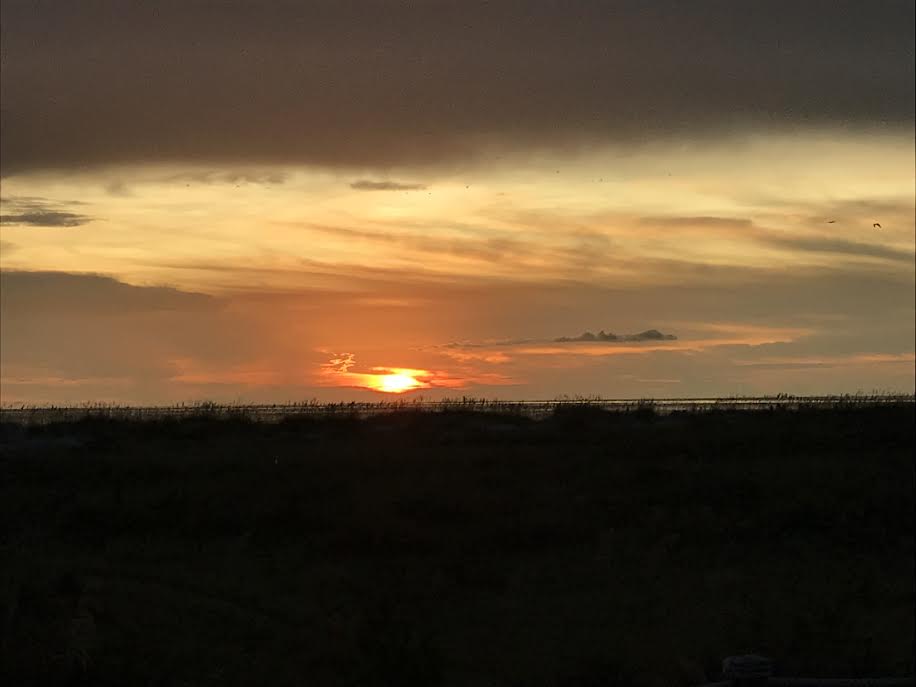
This certainly isn’t the tourist board’s presentation of Florida, is it?  I love summer visits to the Gulf Coast, partially for the opportunity to see drama such as this.
0-2
A favorite activity for many visitors is simply watching the sunset, which can be truly spectacular.
0-3
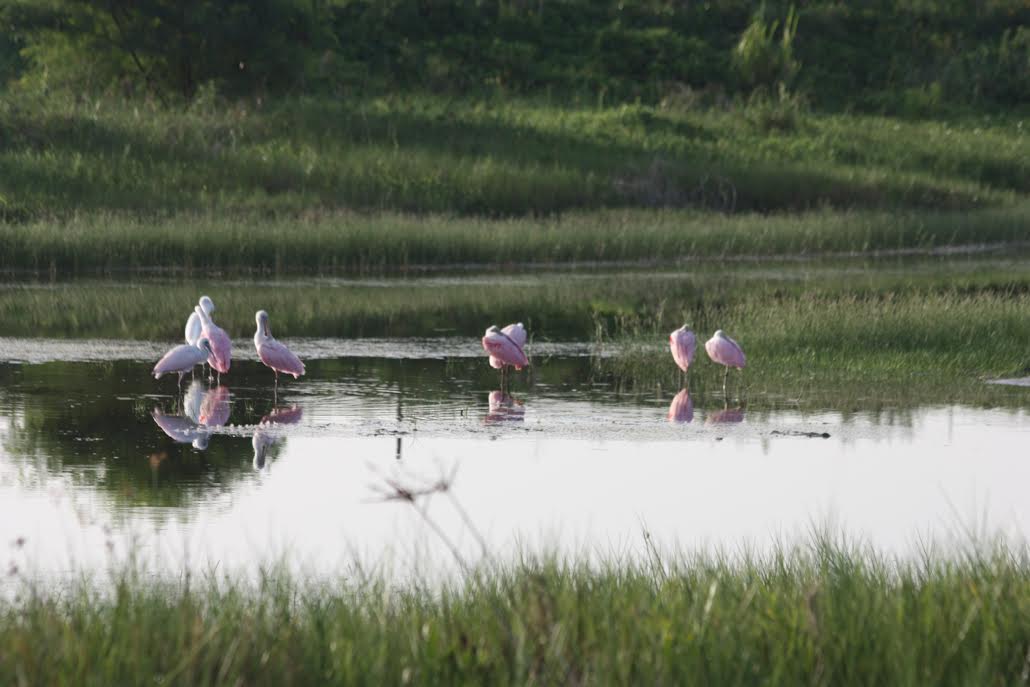
These large pink birds are Roseate Spoonbills, which are generally not seen in large numbers. Finding this little flock on an early morning walk at a nearby nature preserve was quite a treat; catching the reflections made the view even better.
0-1
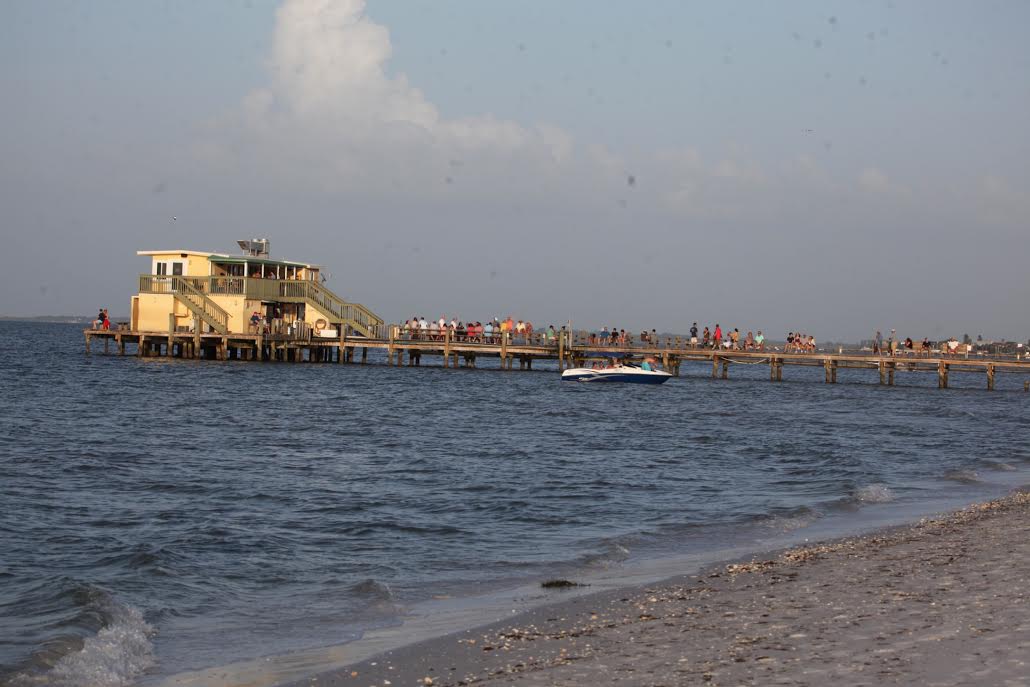
Anna Maria’s Rod & Reel Pier, a community gathering spot.  Do you see the line waiting to get into the yellow building, which is a restaurant?  If you look closely, you can see everyone is facing in the same direction because they’re watching a couple of dolphins hunt fish.  EVERYONE goes to dinner at the Rod & Reel Pier!
0-4
A roosting tree, loaded with White Ibises waking up for the day . . . . .
0-14
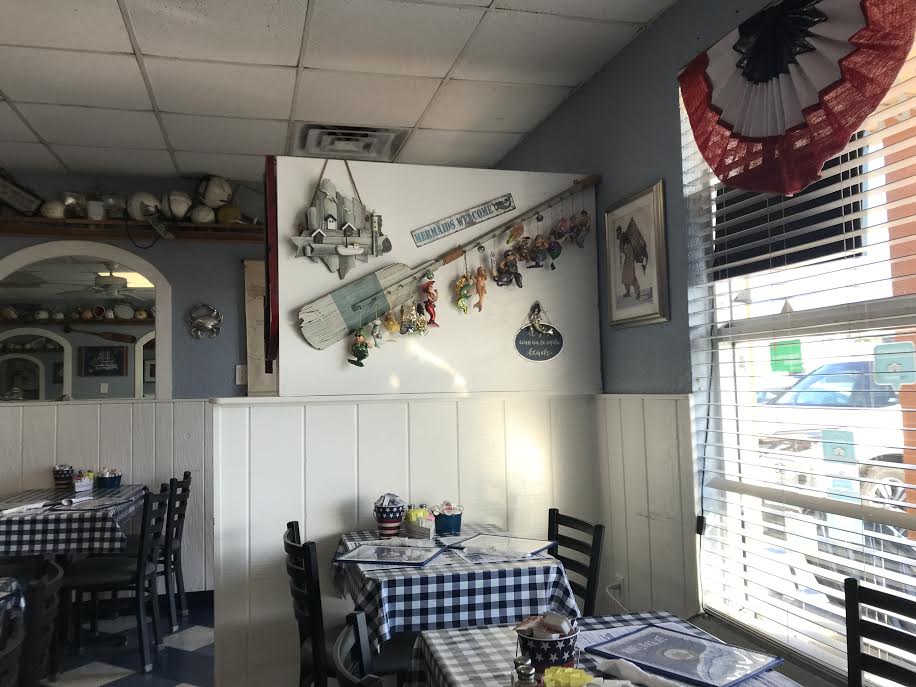
In keeping with my interest in food, I couldn’t resist a shot of Minnie’s Beach Cafe!  You’d never guess it was in a small shopping center would you?  Anna Maria frequently throws visitors this kind of curve ball!

While I was visiting Anna Maria, I did lots and lots of reading, which brings me to my second Miscellany:  books that I started, stopped or finished during my time there:

51mDsC+ePSL._SX315_BO1,204,203,200_
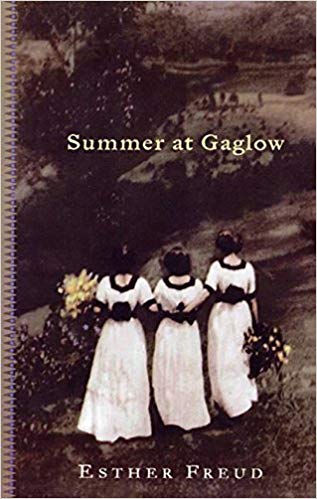
One of my TBR Challenge books, which I FINALLY finished!  An absolutely stunning read by Esther Freud, a British novelist I like very much.  I honestly can’t understand why it took me EIGHT years to get around to this book.
41B+yH6Dl7L._SX321_BO1,204,203,200_
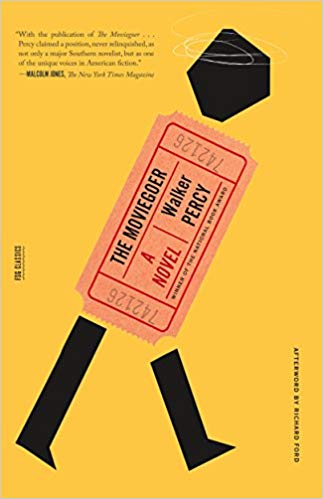
One of my Back to Classics selections (category: novel from a place where you’ve lived) and my first novel by Walker Percy. I’m still mulling over my rather complicated reaction . . . .
51YILxR10cL._SX324_BO1,204,203,200_
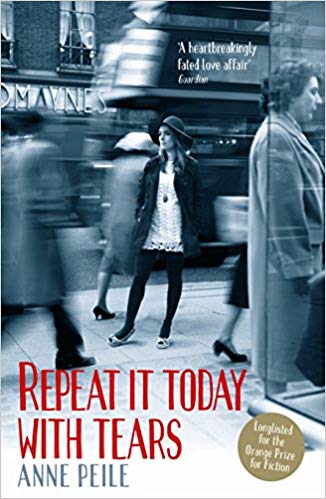
A debut novel, sitting on my shelf since 2012.  Can you guess it’s part of my TBR Challenge?  A truly searing tale of a transgressive relationship, not for the faint of heart.
41qhMU7UMdL._SX322_BO1,204,203,200_
Harrison’s beautifully written but intensely troubling memoir; a non-fictional treatment of a relationship similar to that depicted in Peile’s novel.
71u+V+fclqL._AC_UL436_
Although I love science fiction and fantasy novels, I’m not reading many these days.  This tale of operatives Red and Blue, locked in a centuries old struggle through time, is a wild mix of genres rendered in beautifully poetic language.
51RAeBxbZ5L._SX311_BO1,204,203,200_
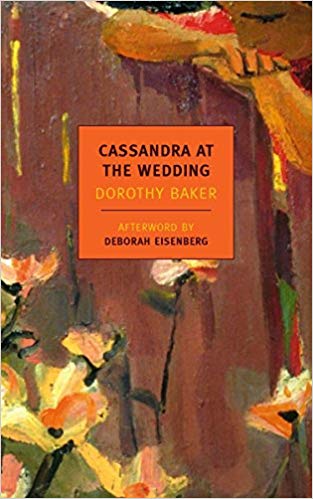
One of my TBR challenge books, reprinted in a beautiful new edition as part of the NYRB Classics series.  A blackly funny look at Cassandra’s descent to chaos at her twin sister’s wedding, with some serious thoughts about sibling bonds and “unconventional” life styles (my review will come, eventually!)
51oPtjXvANL._SX307_BO1,204,203,200_
Bánffy’s “They Were Counted” was my “very long classic” Challenge read.  One chapter in and I know I’m in trouble — I need Plan B!  I will not be reading this book in 2019!
61GTQkGLH+L
Some times (and a stressful travel day is one) NO ONE but Georgette Heyer will do! This one isn’t my favorite of her regency romances (that honor probably goes to “These Old Shades”) but it’s still wonderful!

And since I’m doing books, make sure your visit to Anna Maria includes a side excursion to nearby St. Petersburg (the drive is lovely) and the wonderful:

0-6.jpeg

Are you surprised to learn that I’ve added to my TBR pile?

My third and final miscellany: Jane Austen’s Sanditon, the novel left unfinished at her death.  Has anyone read this?  Or, unlike myself, realized the importance in Austen’s fiction of seaside resorts and beach villages?  Today’s Guardian has a wonderful article discussing Austen’s use of seaside resorts — a key scene in Persuasion occurs in Lime Regis; Lydia Bennet elopes from Brighton and Austen herself may have enjoyed a seaside romance.  The article suggests that in Sanditon, Austen may have written the first seaside novel; at any rate, she certainly anticipated “what the seaside has come to represent in later modern fiction,” such as Chopin’s The Awakening, Woolf’s To the Lighthouse or Banville’s The Sea.   

The exciting news?  Sanditon is being adapted for an eight part series on ITV, which will air this autumn! Thoughts anyone, about Anna Maria Island, Sanditon or any of my other reads?

Isabel Colegate’s “The Blackmailer:” What would YOU pay to have YOUR secrets kept?

250px-BlackmailUSWindowCardOndra

Has anyone out there read Isabel Colegate?  I don’t intend my question to be either cruel or facetious — I adore Isobel Colgate and think (I hope incorrectly — after all, I’m not a professional literary type and I base my opinion on absolutely nothing objective) that her work deserves more readers than it gets.  I’ve been a big Colegate fan since I first read her novel Winter’s Journey a number of years ago; I liked it so much I immediately bought copies of several of her other books with the idea that I’d work my way through the eight remaining novels that I hadn’t yet read.  These books have rested, peacefully, undisturbed and unread, on my shelves for quite some time now!  What can I say, except that life and more current writers intervened?

The 2019 Back To The Classics Challenge hosted by Books and Chocolate provided me with a dual incentive — I could not only discover whether I continued to regard Colegate’s writing so highly but I’d also dust off at least one pretty grungy bookshelf and the novels it contained.  After a great deal of thought (I love going through all my unread books) I decided to read Colegate’s debut nove, The Blackmailer (published in 1958), as my selection for the “Classics by a Woman Author” category.  I think I chose it over Colegate’s far better known novel, The Shooting Party, because I was intrigued by its title (I confess that I’ve also purchased books on the basis of their cover art!  I love book covers and have been known to purchase a second copy of a book simply because I liked the cover of a different edition!).  I also passed over, with some reluctance, Colegate’s A Pelican in the Wilderness, a well regarded non-fiction work in which she examines the value of solitude and the lives of certain individuals, ancient and modern, St. Anthony to Howard Hughes, who have chosen to live apart from others.  In other words, I took a gamble on choosing a much less well known and very early work.  You’ll have to read my post to the end (or skip to the last two paragraphs) to see whether I think my gamble paid off!

The Blackmailer is set in 1950s London and revolves around the relationship between Judith, the young widow of Anthony Lane, and Baldwin Reeves, an up-by-his bootstraps barrister who aspires to a political career, financial success and social acceptance by the landed gentry.  Judith’s deceased husband Anthony was not only handsome, intelligent and charming, but also endowed with fortune and birth, being the heir to an large estate and the son of a prominent family.  To top it off, Anthony was a renowned war hero, taken prisoner and executed by the enemy during the Korean War.  Could any mortal man possess more virtues?

Ah, but there’s a secret, you see!  In the parlance of a bygone era, Anthony was actually a bit of a bounder — or is it a rotter or maybe pigeon-hearted?  (It’s so difficult for us Americans to get the slang right; I’d welcome a correction if anyone from the U.K. ventures by!)  It seems that while commanding his company in Korea, Anthony bungled a retreat order; thinking it was a command to advance, which he didn’t want to do because he might get wounded or killed, he kept it to himself.  By the time his mistake was discovered, Anthony and his men were in a hopeless position and were taken prisoner by the North Koreans.  As if that wasn’t enough, in the prisoner of war camp Anthony collaborated to the extent of betraying his men’s escape plan, getting one of them shot.  This being too much for even the famed stoicism of the British soldier, Anthony’s justly exasperated subordinates executed him by hanging after holding an informal trial among themselves (during the Vietnam war, American soldiers used the term “fragging” to describe their own version of this activity vis à vis their officers).  None of this is ever disclosed, however, and after the war Anthony Lane is regarded by the British public as a national hero (one of Colegate’s nice touches is her brief allusion, towards the end of her novel, to an “upcoming film project” about Anthony’s heroic life).  For anyone ready to attack me for spoilers, hold your fire — Colegate tells you all about Anthony and his disreputable military career in the first page or two.  Rather than being about Anthony, Colgate is interested in the effect of his “secret” on his survivors and how they handle the truth.  For Baldwin Reeves, you see, was Anthony’s second in command; and although he has remained silent he knows all about the bungled order, the betrayal and Anthony’s trial and execution by his men.

The novel begins a few years after Anthony’s death, when Judith has established herself as a partner in a (very) small publishing house; she’s successful, maintains close ties with her deceased husband’s mother and grandfather and is reasonably content with her life.  While ignorant of the true facts of Anthony’s death, Judith is an intelligent and pragmatic woman who is well aware that Anthony was not what others perceived him to be; although she loved him, her marriage (unbeknowst to others) was less than happy.  Reeves by contrast is scrambling to make ends meet; although he’s justly confident of his ultimate success, he’s in the early stages of getting there and he needs money.  He also has a lingering resentment of Anthony Lane, war hero and golden boy, who had everything — money, family, social position — that Reeves is struggling so hard to get for himself.  So far, so predictable, right?  Reeves approaches Judith, threatens to tell all and begins extorting money from her.  What isn’t predictable is where Colegate takes the story, setting up an intricate game of cat and mouse, where Judith and Reeves exchange roles as victim and each gets off on the power he or she has over the other.

I’ve made The Blackmailer sound terribly grim and serious but it isn’t at all — the dialogue is crisp and witty, it has some incredibly funny passages and Colegate has a wonderful knack for creating marvelous supporting characters (if you like dogs, the novel’s worth reading just for Bertie, Judith’s pet spaniel, whose personality is depicted as vividly as that of the human actors.  If you don’t, read it to enjoy Anthony’s hilarious old nightmare of a Nanny, or Feliks, Judith’s very funny friend, publishing partner and social climber extraordinaire).  As I hope I’ve made clear, The Blackmailer is primarily a book for those who enjoy dialogue and relationships; readers who demand a lot of action in their novels will most probably find it a bit dull.  Keep in mind, as well, that The Blackmailer is a debut effort and, although I was satisfied with Colegate’s depiction of Reeves and Judith, I did wish she’d given a bit more space to their inner psychology.  I have a few other quibbles not worth mentioning, none of which detracted from my enjoyment of the book.

Because I don’t have a lot of time right now, I’m sticking mostly to Challenge books for my pleasure reading, so I’ve gone through a lot of mid-century British fiction in my recent postings (Maugham’s Cakes and Ale, Bowen’s Friends and Relations and Kate O’Brien’s The Last of Summer; when you add to these my reading for my class in the 19th century English novel I really feel it’s time to return to my native land for a book or two.  Perhaps a gangster novel set in New Jersey?)  Of these, I believe The Blackmailer has aged the best, perhaps because the “secret” that propels the action — the falsity of a “war hero’s” glorious reputation — is one that a person of our own era might still wish to conceal.  There’s also something very modern about the psychological struggle between Reeves and Judith; she, as much as he, is intent on exerting power in their relationship. Add in the fact that the novel is extremely well written and contains a very rare portrayal of an independent woman, in the 1950s, who works at a real job and actually enjoys doing so and, well, I’d say you have a gem.

Several years after it was originally published, Penguin reissued The Blackmailer in an omnibus volume with two other of Colgate’s early novels, A Man of Power and The Great Occasion (you can pick up a used copy on Amazon for $2 or less; although it’s delightful to get such a bargain, it’s sad that work of such quality appears to be so little read or valued).  Although it will have to wait for a month of two, I look forward eagerly to reading them both.  Who knows, maybe I’ll continue to keep the dust off the shelf holding my Colgate novels . . . . . .


“Friends & Relations”: Are yours like Elizabeth Bowen’s?

0
Or are they like this?
a96687_a451_bellestarr
Or more like this?


Family relationships, even the best of them, can be unsettling, can’t they?  Some families go for the “let’s share everything and do a group hug approach,” while others ignore (frequently for years)  that huge emotional elephant in the middle of the room that is dominating their lives.  Still others steer a midway course between disclosure and concealment that still, inevitably, leads to disaster.  In short, isn’t it amazing how very difficult, not to say problematical, family life and friendships can become?  These observations are particularly fitting  for my review of Elizabeth Bowen’s Friends & Relations, as Bowen is a novelist with whom I’ve had a long and unsettling, not to say problematical relationship.  Since I have a weakness for subtle, skilled, mid-20th century female British novelists, Bowen has been on my radar, and heavily represented on my bookshelves, for quite some time.  And yet …. my reaction to her work is, quite frequently, “hmmm, I’m not really sure that she merits her rep (glowing assestments from Harold Bloom, no less) and I’m really not sure that I liked what I just read.”  And yet, there’s undeniably something there, as far as I’m concerned; Bowen published ten novels and this makes the seventh one that I’ve read!  Moreover, when I decided to participate in the 2019 Classics Challenge hosted by Karen K. at Books and Chocolate my only question about Bowen was “which novel will I read and what category will I put it in?”  I ultimately selected Friends & Relations, published in 1931 and one of Bowen’s very early works of fiction, to satisfy the Challenge’s 20th Century Classic category.

Bowen, who was pretty upper crust herself (being an Anglo Irish aristocrat with an inherited ancestral home in Ireland) drew the “friends and relations” of her title from four upper class English families in the decade or two before the second World War.  In a brief 160 odd pages of masterly prose Bowen shows you in some detail the orderly, elegant structure of her characters’ lives.  The novel opens (in a section titled “Edward and Rodney”) with the wedding of pretty, conventional Laurel Studdart to Edward Tilney, followed shortly afterwards by the engagement of her younger, more introverted sister Janet to Rodney Meggatt, an even better match as Rodney’s the heir to a landed estate.  “The Fine Week,” the novel’s second section, covers a brief period that occurs roughly ten years after the sisters’ weddings.  At this time both couples have settled into the easy domestic routine of their time and class — servants (mostly off stage and doing the heavy lifting), kids (one for Janet, two for Laurel), life in the country (Janet and Rodney), a London routine (Laurel and Edward, who works in a government ministry) — all amid friends and connections from two other English families much like themselves.  Included among the latter is Lady Elfrida, Edward’s slightly disreputable mother, Considine Meggatt, Rodney’s uncle and Lady Elfrida’s former lover, and Theodora Thirdman, a family “friend” who’s one of Bowen’s great comic creations.  It is Theodora’s insatiable taste for drama and her monstrous narcissism  (hopefully, none of your friends and relations include anyone like her.  If they do, you’re in trouble) that leads to the seemingly trivial act disrupting the careful structure of the others’ lives.  The resulting consequences, which occur on a single day, are covered in the novel’s third section (“Wednesday”).  The novel’s plot, setting and characters are all very “Downton Abbey with a bit of a twist” and, if you care for that sort of thing (I do, to some extent, particularly when it’s as well written as this) reason enough to read this novel.

Reading Friends for its plot and character, however, largely misses its point.  Bowen is a greatt stylist and her novel’s complexity (and, for all its brevity, this novel is very complex) lies in its style.  Very gradually and elliptically, so gradually and elliptically that I wasn’t sure at first that I was drawing the right inferences (it turns out that I was),  Bowen reveals the emotinal secret that governs her couples’ lives.  The subtlety of Bowen’s prose, her time shifts, her elliptical and sometime incomplete dialogue, place definite demands on the reader, who sometimes has to use the prose to infer key information rather than being told it directly.  To be blunt, this is not a novel to skim quickly while eating dinner and watching TV; it requires attention, care and, at times, a re-read of certain key passages.  A subplot of the novel involving Lady Elfrida bears mentioning, as her ladyship’s very public sexual escapades have reverberated in the following generation, contributing to her son Edward’s rather uptight and priggish nature and at one point threatening Janet’s marriage to Rodney.  Whether Bowen intends the reader to draw a moral from this is unclear; I didn’t myself and don’t feel I lost anything by failing to do so.

I fear I’ve made Friends & Relations sound terribly serious, haven’t I?  If so, I’ve done both Bowen and her novel a disservice.  Although it’s a bit too bittersweet to be a comedy, Bowen’s dialogue and descriptions can be very, very funny; morevoer, Lady Elfrida and especially Theodora are wonderful, comedic characters.  Although I didn’t think that Janet in particular was fully fleshed out and Rodney was never more to me than a cipher,  Bowen has moments of real emotional insight and tenderness, such as her description towards the end of the novel of Laurel and Janet’s aging parents:

They did not miss their daughters but they regretted them.  After dinner, pulling round arm-chairs to the fire, with backs to the empty room, she played patience, with the board over her knee; he finished a detective story a night.  If he died first, she would stay on here for the grandchildren; if she died first the house would be given up.  Once or twice in an evening their eyes met.

Would I recommend this novel? Definitely, with a few caveats.  Don’t be misled by its brevity and expect to read it quickly; have patience;  focus on its style and language and be tolerant of its rather pedestrian plot and the conventions of upperclass British life between the wars.  Friends & Relations is an early novel, considered by many to be unrepresentative of Bowen’s best work.  For this reason, I recommend, if you’ve never read Bowen or you only intend to read one of her ten books, that you begin with, or read, a different work, perhaps The Last September,  The Death of the Heart (my own favorite so far) or, if you want an atmospheric WWII “London in the Blitz” setting, The Heat of the Day.  Do I like Bowen’s work myself or do I merely appreciate her ability as a writer?  Do I think her glowing reputation is deserved?  So very, very difficult to decide the precise nature of my  problematical relationship with this writer ….. I think I’ll make up my mind after I read Eva Trout  …………. or perhaps The Hotel ……