Category: art

Delicious Decadence in Belle Epoch Paris: Guy du Maupassant’s “Like Death”

default
Gustave Cailebotte’s “Paris Street: Rainy Day” (1877)

Are there any Guy du Maupassant fans out there?  If so, I’d certainly welcome your thoughts on his work.  I’ve just finished one of his novels, Like Death, and don’t know quite what to think.  I, dear reader, also have a confession to make that does not speak well for myself, namely that despite du Maupassant’s international reputation as a master of the short stoy, I was barely acquainted with his work.  And, my heavens, there’s certainly a lot of it to meet!

Although dying at age 42, Maupassant was an incredibly prolific writer who produced over 300 short stories, six novels, several travel books and lots of journalism in his brief writing career.  Of all that treasure trove I had read, prior to this time, one short story — “The Necklace” — and that only because I was required to do so in a literature class I was taking oh, so many, many years ago.  Despite enjoying the story (more than many of the others I was required to read), I had no interest at the time in further exploring Maupassant’s work.  Well, dear reader, a few years ago I purchased a copy of Maupassant’s Like Death (reissued by NYRB Classics in one of those gorgeous paperbacks that it does so well, i.e., acid free paper, tasteful cover art and introductions written by well-known folks), with the idea that his time for me had finally come at last!  And yet, and yet — the book has sat on my shelves, gathering dust for, oh, at least a couple of years.  All I can say is “thank heavens for reading challenges,” particularly ones that require me to stretch myself a bit.  Because I needed a selection for the “Classic in Translation” category for the 2019 Back to the Classics Challenge hosted by Books and Chocolate, I’ve actually, finally gotten around to reading a second work, and a novel, no less, by Guy du Maupassant.

Like Death revolves around a simple but piquant situation.  Olivier Bertin is a wildly successful society painter, acclaimed by the critics and beloved by the haute monde of late 19th century Paris.  As though to prove that life never seems to distribute its gifts fairly, Bertin is also good-looking, witty, athletic and, on the whole, not a bad guy.  The novel implies, without telling us his precise age, that Bertin is somewhat past the midpoint of life; although he is beginning to feel his age, Bertin is still vigorous  and eager to enjoy all the good things that life has to offer.

Included among the good things is Bertin’s long-standing relationship with Anne, Countess de Gilleroy, who has been Bertin’s mistress for over twelve years; the two began their passionate affair when Anne’s politician husband retained Bertin to paint his wife’s portrait.  Anne, a beautiful and intelligent woman, is quite adept at maintaining a delicate equilibrium between husband and lover; when as a young woman Anne was first presented with her husband-to-be, she quickly realized that “one cannot have everything” but must seek a balance between the good and the bad aspects present in every situation.  The countess is a successful society hostess, a devoted wife who listens with apparent interest to her husband’s accounts of his legislative triumphs (monsieur le comte particularly enjoys discussing agricultural issues) and a tender mother to her only child, her daughter Annette.  The chatelaine of  an elegant establishment (designed principally to appeal to her lover Bertin), the countess has structured her entire emotional life around her relationship with Bertin.  She is, in short, as passionately in love with the artist as she was as a young girl while Bertin, on the hand, regards their long-standing affair as more of an amitié amoureuse — a loving and irreplaceable friendship that is, nevertheless, lacking the magic and intensity of its earliest days.

The lovers’ delicate equilibrium is upset by the entry onto the scene of Annette, who has returned to Paris after a country upbringing to make her debut and to marry the excellent young aristocrat whom her father has selected for her.  Annette, whom the painter has not seen since she was a child, is the very image of her beautiful mother minus twenty years or so.  The aging Bertin is immediately and inevitably attracted; with great psychological acuity Maupassant charts Bertin’s emotions as he transfers his love from the aging countess to her young and unsophisticated daughter on the cusp of marriage and adulthood.  Bertin initially justifies his feelings for Annette by conflating his love for the two woman; his attraction for Annette, he (falsely) tells himself, is due simply to the fact that she is in some ways a reincarnation of her mother; his love for one inevitably includes his love for the other.  Ultimately, however, Bertin realizes that his passion for the countess has been totally subsumed by his love for her daughter.  The countess, of course, realizes far sooner than Bertin what is happening; while the novel focuses on Bertin it also presents a masterful and sympathetic portrayal of a strong and intelligent woman who is facing her emotional death and physical mortality with both dignity and courage.

Plot-wise, that’s it!  The “action” in this novel — the countess gives a dinner; she and Bertin meet their friends at the opera; Annette and Bertin walk through the park and so on — is a dull affair to us barbaric 21st century types.  There is, nevertheless, a great deal going on in this novel, albeit on an emotional and psychological level.  Although I did not find Like Death to be an altogether successful novel (more below), I have nothing but admiration for Maupassant’s grasp of psychology.  Based on the vast knowledge obtained from reading a single short story (please understand, I’m being sarcastic here) I had expected a well drawn, realistic description of late 19th century life among the well to do, as well as a twisty ending.  I was totally unprepared, however, for the subtlety of Maupassant’s psychological insight and the skill with which it was presented.  To give just one example, Maupassant sets a key scene in which Bertin realizes both his mortality and the hopelessness of his passion for the young Annette at the opera, where Bertin is listening to Faust, a story in which an aging scholar sells his soul for eternal youth and the love of a much younger woman.  Time and again Maupassant uses a small but convincing detail to expose a character’s state of mind, or sketches a scene of utterly convincing psychological realism.

So what’s my overall assessment of the novel, both positive and negative?  In addition to the positive points that I’ve already discussed it’s worth noting that various critics (who, unlike myself, can actually read French) have found the NYRB translation to be extremely well done and lively (apparently stiff and artificial translations have in the past hampered Maupassant’s popularity with anglophones).  On the negative side, however, I thought the interior nature of the story was perhaps better suited to a short story than a novel and that certain melodramatic plot devices rather undercut the subtle psychology that was elsewhere so evident.

There are a number of equally successful ways for a modern reader to approach this novel.  The easiest, and the most fun, is to regard it simply as a wonderful period piece.   If you choose this approach, pretend that a maid has just dusted your reading space (this requires a lively imagination if you’re reading in my living room), imagine that those wilting flowers from the farmer’s market are a fresh bouquet of ivory-colored roses in a crystal vase, pour yourself a glass of champagne (make this part real, not imaginary), put some Debussy on the stereo (or, better, Fauré) and settle in to enjoy the wealthy and well-connected life of 19th century Paris.  If you’re a bit more of a literary scholar, read the introduction by the novel’s talented translator, who makes a very cogent argument that Maupassant’s techniques influenced the latter work of Marcel Proust.  If you’re attracted to issues of gender, well, focus on the countess, the societal constraints dictating her choices and how a strong and determined personality can nevertheless fashion her own life.  Finally, the novel’s treatment of aging and mortality, and of how we all face both, give it a universal appeal.

Although I’ve already gone on for far too long, I simply must ask whether anyone else loves the painting I used at the beginning of this post?  Although a good deal of 19th century art leaves me cold, Cailebotte’s Rainy Day is one of my favorite paintings in the entire universe (and just think — we’re lucky enough to have it in the U.S., in Chicago!).  I cheated a bit to use it here, as Bertin, an academic painter, would have been horrified by Cailebotte’s new-fangled Impressionist style, with its cropped figures and unusual geometry.

Monday Miscellany: Museum Musings (plus photos!)

Despite my inability to concentrate on any one object for more than ten minutes, or to spend more than a couple of hours, max, on an art stroll, I adore museums.  Perhaps it’s because of their variety:  there’s a museum for everyone and for every mood and personality type.  Interested in the history of fire alarms?  The next time you’re on the Baltimore Beltway, take a detour to The Fire Museum of Maryland, which has one of the world’s greatest displays of working fire alarms.  Want to see some interesting stuff without getting out of your car?  Well, the Museum of Wonder in Seale Alabama (which claims to be the world’s only drive-through museum) is where you need to be!

ALSEAwonder_prov01_620x300
The Museum of Wonder (drive-through) in Seale, Alabama. Note the sports trophies glued onto the 1992 Cadilac.
ALSEAwonder_prov02
Butch Anthony, founder of the drive-through Museum of Wonder. As Butch puts it, “I let people self-serve.”


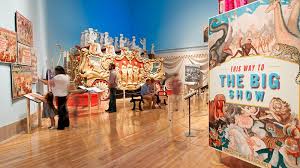
Are you an aficionado of the circus?  Then go immediately to Sarasota, Florida!  It was formerly the winter home of the Ringling Brothers Circus (many circus performers settled there, not to mention John and Mabel Ringling themselves) and has a really great circus museum, founded in the late 1940s.

images-1
Ringling Brothers Circus Museum, Sarasota, Florida
Unknown
Ringling Brothers Circus Museum, Sarasota Florida (interior)


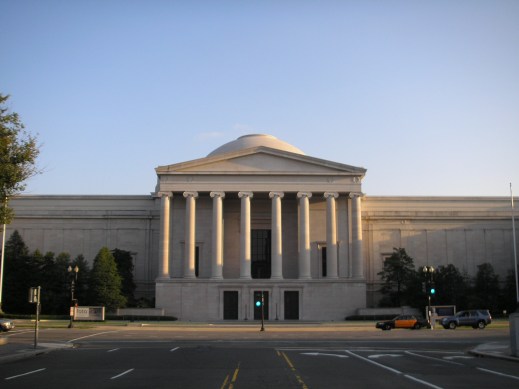
And, of course, there are the big boys of the U.S. museum world — the Metropolitan, the Art Institute of Chicago, the Frick, Boston’s Museum of Fine Arts, to name only a few — those places you go when you’re in need of a serious dose of heavy culture, or a nice cafe to relax in on a hot day in the city or a browse in a great store full of art books and prints.  My favorite of these — the place where I head when I’m not in the mood for one of our quirkier little cultural hors d’oeuvres — is Washington, D.C.’s National Gallery of Art.  It’s a fabulous museum to visit especially when, as now, there’s a major exhibition or two going on.

A reasonably good street view of the West (old) building of the National Gallery of Art.  Notice the dome, over the columns?  Just scroll down, to see it from the inside!
Unknown
A street view of the NGA’s East Building, designed by I.M. Pei. The two buildings are connected by an underground complex, containing a cafeteria, bookstore and people mover; the triangular glass thingeys you see in the photo provide natural light to the underground museum space.

Although I love the East Building, which houses a wonderful collection of 20th century art, my focus today is on the older part of the Museum.  So — back to the dome!  We all have our little rituals and one of mine is to always stop here for a moment or two to admire and to contemplate.

A partial view of the dome, which was modeled on that of the Pantheon in ancient Rome.
More dome, from a slightly different angle. Those indented square things above the columns producing a honey-comb effect  are called “coffers.”
0-9
Looking straight up, here’s my last dome picture (I promise!).  The opening at the top is an oculus, or “eye.” In ancient times, it would be open to the sky (and rain).  Modern museum folks, however, take a dim view of the elements, so the NGA has sealed its dome with glass.

The NGA usually has some sort of special show or exhibition going on.  The current attraction is a fabulous show on 16th century Venetian art, featuring the paintings of Tintoretto, a contemporary and rival of the great Titian (the two artists, by the way, loathed each other).  Since many of Tintoretto’s paintings are really, really large and seldom travel, this is a great opportunity to see something of his best work without a trip to Italy!

0-2
Anyone out there like 16th century Italian art?  If so, the NGA’s current “big” exhibition should be right up your alley!
0-10
The first room of the Tintoretto exhibition.  See the serious looking young guy in the small center portrait?  It’s the artist’s self portrait, done when he was in his 20s.  The last thing you see upon leaving the exhibition is another self-portrait, which he painted shortly before his death over fifty years later.  It’s surprisingly moving & a wonderful touch to a wonderful exhibition.
0-11
One of my favorite Tintoretto’s. I love the fact that the princess is running away like hell, leaving her rescuer and the dragon to battle it out.  Sensible girl!

Besides the special Tintoretto exhibition (around for the next month or so), there’s always something to see or enjoy at the NGA.  If you’re not in the mood for paintings, or food, or books — well, the building itself is worth a visit!

0-1
The photo is deceptive: this is a moving wall of water, visible from the underground cafeteria between the old (West) and new (East) buildings.  It provides natural light and visual interest while one is munching one’s potato chips and slurping one’s diet coke.
0-6
The people mover in the underground passage connecting the West and East Buildings.  The light display, “Multiverse,” was created by the American artist Leo Villarreal.  The constant shifting and changing lights make little kids (and me) cry out in awe and wonder!  I NEVER get tired of this part of the museum!
0-5
A sideways view of the NGA’s sizable main bookstore, also located in the underground concourse.  It’s much larger than it appears in this photo and has a fantastic selection of art books.  If it’s tchotchkes you’re after, there’s another large shop in the West Building dedicated to prints, cards, toys & museum related items.

And when the weary museum visitor needs a physical and mental time-out, he or she can always head for one of the garden courts in the old West Building, which are thoughtfully provided with very comfortable seating around the edges ……

0-1
You can’t see ’em, but the chairs are there (and usually fully occupied!) in the space behind the columns  ….


Monday Miscellany: A Bouquet for You!


N-0796-00-000031-wpu
Jan van Huysum’s Flowers in a Terracotta Vase, 1736-37

Doesn’t this look like the artist painted a “real” bouquet? Surprise!  He didn’t, at least not in the strict sense of the word.  I love Dutch art from 16th-17th centuries because it’s so sneaky — the reality portrayed in the paintings is illusory (also, the paintings are just fun!) Even a very wealthy person, much less an artist (even a successful one like van Huysum) couldn’t afford a bouquet like this — the flowers would simply be too expensive.  So artists painted imaginary bouquets, juxtaposing flowers that bloom at different times of the year, flowers the artists had never seen (these guys sometimes worked from prints or other paintings) or flowers that were so rare they could only be seen by visitng a specialized botanical garden, as van Huysum did on occasion (there was one in Haarlem).

It’s hard to see all the details (if you want to really zoom in on the digital image, go to the website of London’s National Gallery.  It’s worth the time), but do notice the butterflies flitting about among the blossoms, the droop in a few of the flowers and, oh yes the fly! (it’s the little brown speck on the left side of the ledge supporting the vase, above the bird’s nest and below the blue flowers; find the grapes and look slightly above and to their right).  A century before, these items would have been intended as a reminder that we, like the flowers and the butterflies, are emphemeral beings, and, like them, will soon disappear.  Van Huysum, however, was the last of the great Dutch flower painters and by his time these floral masterpieces were largely cherished for their sheer visual beauty rather than their moral message.  For any gardners wandering by my blog — how many different species of flowers can you count? (hint — there are at least twelve!)  And, while you’re enjoying the blossoms, notice those adorable little cupids in the relief on the terracotta vase!  And the fruit!  And the bird’s nest and ……………….


Monday Miscellany: Did you notice that April is …. National Poetry Month?

767px-Carl_Spitzweg_-_Der_arme_Poet_(Neue_Pinakothek)
“The Poor Poet” (1839), an amusing look at the poet’s life by the German artist Carl Spitzweg. Surrounded by books, wrapped in a blanket for warmth and with an umbrella to ward off leaks, the poet in his hovel pursues his art ……notice that he’s using his fingers to count the meter!

I know, I know — theoretically, we all love, love, love poetry!  We love it so much, in fact, that we never read it!  Or am I judging everyone by myself (I think psychologists call this phenomenon  “projection”!).  I pretty much skip reviews of modern poetry collections and become positively indignant when the NY Times Book Review devotes an entire issue (once a year, I believe) to poetry; I immediately click away to something else if my internet journey takes me, by mistake, to a poetry site, and yet ….. it wasn’t always so.  When I was a kid, I loved poetry, read tons of it and can still recite bits and pieces of my favorites by heart.  I even composed quite a bit of bad poetry myself, teenagey angst-filled stuff handwritten in a grubby little notebook, which was thankfully lost in one of my many moves (there were some advantages to living in a pre-computer age — no backup files!).  Admittedly, my taste (not to mention my work product) was pretty pedestrian but it was heartfelt; poetry meant something to me and I thought it should matter to everyone else.  But then, in my mid-twenties, I just stopped reading and (thankfully) writing the stuff.

I think several factors led me away from poetry.  Foremost, as it usually is, was “life itself” — things got busy, there were jobs and husbands to get and lose, journeys to take and places to visit, degrees to earn — well, I’m sure you get the picture.  As I got older, I took to reading different kinds of literature, switching from non-fiction and poetry to a heavy diet of contemporary and classical fiction.  Then, most poetry is hard; it needs to be read with care and attention (no skimming!), with the meaning slowly teased out over time and from repeated readings; quite simply, I think I just didn’t have the intellectual energy to deal with it.  Last, but far from least, when I tried venturing back into poetry at various points over the years, it seemed as though poetry had moved on and that contemporary poets were writing in a language I literally didn’t understand and didn’t much like.

So — where do I stand now vis à vis this oldest of all the arts?  In the last few years, I have begun to realize how much poorer my reading life is without at least a little poetry in it.  Very, very tentatively I’ve returned to reading a few old favorites and I’ve actually dipped a toe into modern waters and tried the work of a few new poets (Jane Hirshfield is a favorite.  If things aren’t going quite your way, try her “Three-Legged Blues.”  If that doesn’t give you a little perspective on the doldrums, you probably need some serious professional help).  I pay at least token homage to poetry:  every April, I buy a book of poetry; I still give shelf space to the remnants of my poetry collection and I keep a skinny little file of poems that catch my eye now and again.  And, this year, I’m writing this blog post!  For ideas far more creative than mine on how to make your life a little more poetic, check out these suggestions from the Academy of American Poets.

Are there any other former poetry addicts out there who’ve gone cold turkey, in a way similar to me?  Or better yet, or there any avid poetry readers who’d share their thoughts on what poetry means to you or how you’ve incorporated poetry into your life?

71fsT7H5n+L._AC_UL436_
I try to get one of these every year; I seldom read them (and never manage to do so daily) but I have found a few things I like in them ….
51JhpW+k68L._SX331_BO1,204,203,200_
Another excellent, albeit seldom read, resident on my poetry shelf!


81UlU8t94eL._AC_UL436_
I love anthologies — their contents are like delicious little hors d’oeuvres for the mind!


Monday Miscellany: architecture & art in unexpected places (with a little history on the side!)

0-29
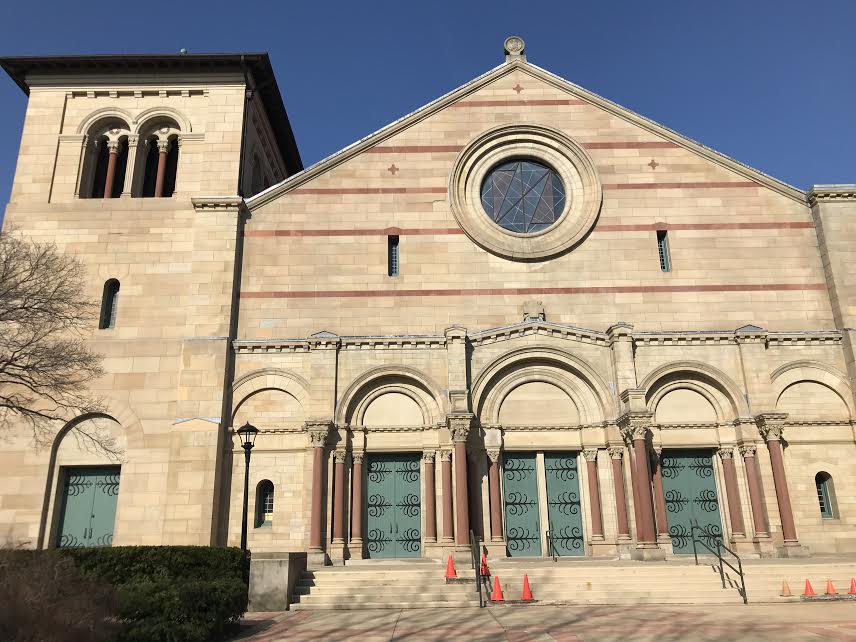
Allen Memorial Art Museum, Oberllin College, Oberlin, Ohio. Cass Gilbert, a leading American architect, designed the gorgeous Renaissance style building in 1917.

A few years ago, whenever I took even very short road trips, I began to make a point of checking out whatever art museum, historical house or major monument happened to be in my vicinity.  I can’t tell you how much fun it is to do this — it’s like a treasure hunt, with something gorgeous to look at or a fascinating bit of history to learn being the treasure.  And — it’s easy to do!  Going to see the relatives for Christmas and driving through Florida?  Don’t miss the Charles Hosmer Morse Museum at Winter Park, which has the most comprehensive collection of Tiffany glass in the WORLD! (and there’s a great Middle Eastern restaurant a block away, where you can have lunch afterwards!)  Traveling to or near Pittsburgh?  You owe it to yourself to detour for at least a few hours to the Carnegie Museum of Art, whose collection includes paintings by James Whistler, Mary Cassatt and Winslow Homer.  Did you know that the great Impressionist painter Paul Degas had family connections in New Orleans?  If you’re lucky enough to visit that charming city, take a break from the French Quarter and visit the city’s art museum, located in the middle of a vast urban park (bigger than Central Park in NYC), which includes among its holdings Degas’ portrait of his sister-in-law, painted during his 1872 visit to the city.  Do you find yourself near Montgomery, Alabama?  Don’t miss the chance to visit the Southern Poverty Law Center’s Civil Rights Center and accompanying monument, which was designed by Maya Lin (perhaps better known for her Vietnam War Memorial in Washington, D.C.) and lists the names of those murdered in the struggle for equality.

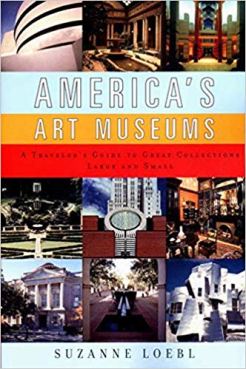
It’s easy to forget that the smaller museums often provide a wonderful experience that larger collections often do not: they allow you to view an entire collection in a reasonable amount of time without being overwhelmed by physical or mental fatigue, they frequently have overlooked gems and/or reflect their founders’ personality in interesting ways, and they are often located in wonderful buildings that are worth seeing just for themselves, regardless of the art they contain (check out, for example, the beautiful Palladian building housing St. Petersburg, Florida’s Museum of Fine Arts, located adjacent to Tampa Bay).  Google, as always, is helpful in locating these treasures or, for the more traditionally minded, guides are available; here are two good ones that I’ve used fairly often:

51PdPvdnJHL._SX403_BO1,204,203,200_.jpg

51jvbILWWjL._SX330_BO1,204,203,200_.jpg

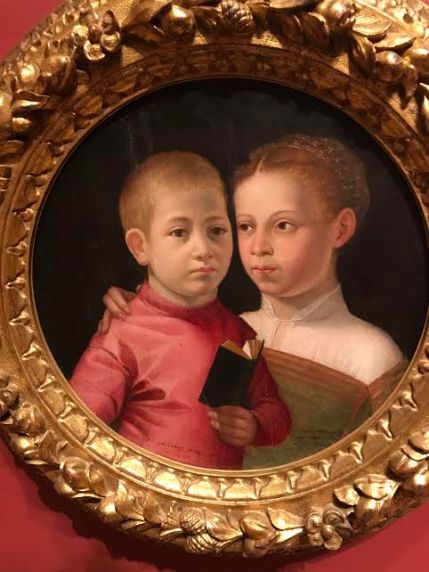
Last week I was very excited to add a new gem to “my collection” of small art museums when I visited Oberlin, Ohio.  Unlike my previous treasure hunts, in which the museum was an incidental discovery on my way to somewhere else, this time around the museum itself was a destination.  As I have no doubt mentioned at least several million times over the brief life of this blog, I’m currently spending a lot of time, not to mention energy,  in researching (and hopefully writing — that comes next!) a paper on Sofonisba Anguissola, one of those (very) rare female artists who lived and worked in 16th century Italy and Spain.  As I’ve been able to discover only a few of Sofonisba’s paintings in the United States, you can imagine my excitement in February when I discovered that Oberlin College’s Allen Memorial Art Museum has one!  Last weekend I was finally able to see it for myself and it did not disappoint:

0-4
Sofonisba Anguissola’s Double Portrait of a Boy and Girl, most probably siblings, from the wealthy Attavanti Family of Florence.  Sofonisba painted this portrait around 1580, using the relatively uncommon tondo or round format.

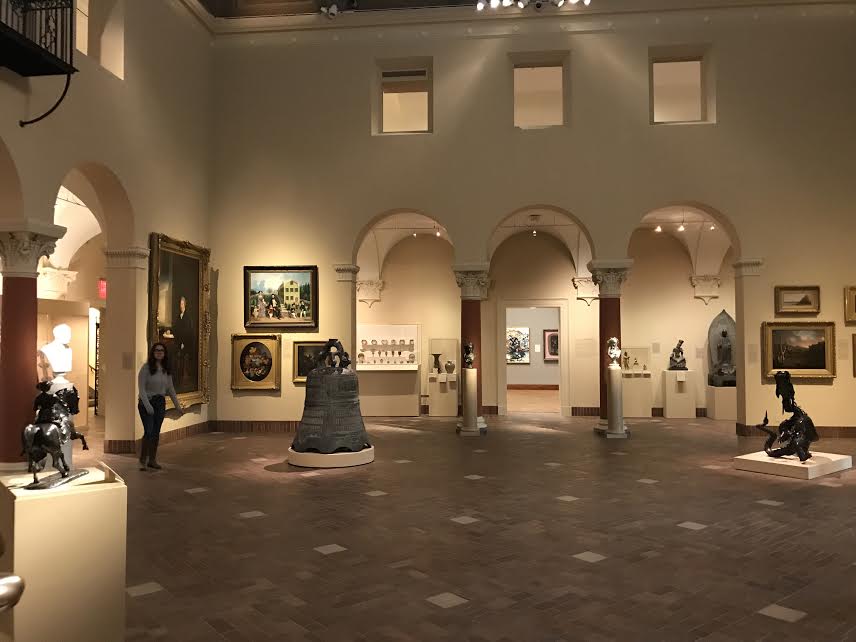
Aside from Sofonisba’s painting, the museum has a small but wonderful collection of ancient, Asian and European art.  The latter includes works by  Cezanne, Monet (two paintings), Rubens, Jan Steen, Chagall, Matisse, Modigliani, Courbet and more!  Admission is free, the staff is friendly and the interior of the building is as gorgeous as the exterior.  Moreover, although the museum is clearly well-attended, there’s space and quiet to enjoy the art even on a relatively busy Saturday afternoon.  Believe me, dear readers, it doesn’t get much better than this:

0-31
The Allen Memorial Museum’s main rotunda. The individual galleries open from this space and there’s more space for rotating exhibits upstairs (behind the square windows over the arches).
0-3
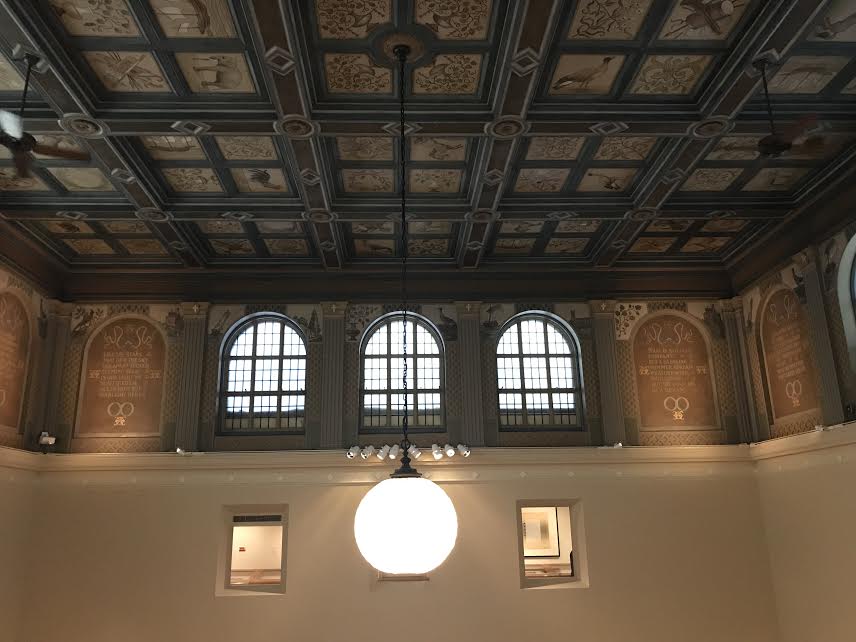
The Allen Museum’s wonderful ceiling and chandelier.  You can also catch a glimpse of the upstairs exhibitions through the square windows on either side of the circular chandelier.

When you’ve finished with the museum (or before, preferences vary!) you can spend a pleasant few hours wandering around Oberlin, which is a great little college town with some remarkable attributes.  Oberlin was founded in the 1830s by a couple of visionaries who combined spiritual aspirations and high ideals with ascetic notions about work and lifestyle (the founding “covenant” of “Oberlin Colony” expressly forbade its residents to indulge in alcohol or a rich diet!)  The idealism bore fruit in the 1850s, when Oberlin was known as a hotbed of the radical abolitionist movement.  It was also a key juncture on the underground railroad, that network of secret routes and safe houses operated by abolitionists and their allies who (at great risk to themselves) smuggled desperate fugitives escaping from the slave states to the north and freedom.  Did you know that Oberlin College (then known as the Oberlin Collegiate Institute) admitted African American students from its beginnings in the 1830s and allowed women to matriculate as “regular” students as early as 1837?


0-4.jpeg

51guC-hQCpL._SX325_BO1,204,203,200_
A popular and well written history recounting an episode in 1858, shortly before the outbreak of the Civil War, when the residents of Oberlin defied the Fugitive Slave Act, a federal law requiring them to return escapees to bondage in the slave states.
61HE7QKyt3L._SX328_BO1,204,203,200_
Colson Whitehead’s novel won both the Pulitzer and National Book Awards and was nominated for Britain’s Man Booker Prize.  Drawing on magical realism, Colson depicted the underground railroad as a literal physical structure used by escaping slaves.  Despite the fantasy aspects, Whitehead’s depiction of slavery’s horrors was, alas, all too real.

Another thing that makes a morning wandering around Oberlin so enjoyable is that the college itself is almost an outdoor architectural museum, containing as it does some remarkable examples of late 19th and early 20th century buildings designed by the leading architects of their time.

0-19
Baldwin Cottage, designed by Weary and Kramer. Probably not everybody’s idea of a “cottage” . . . .


0-16
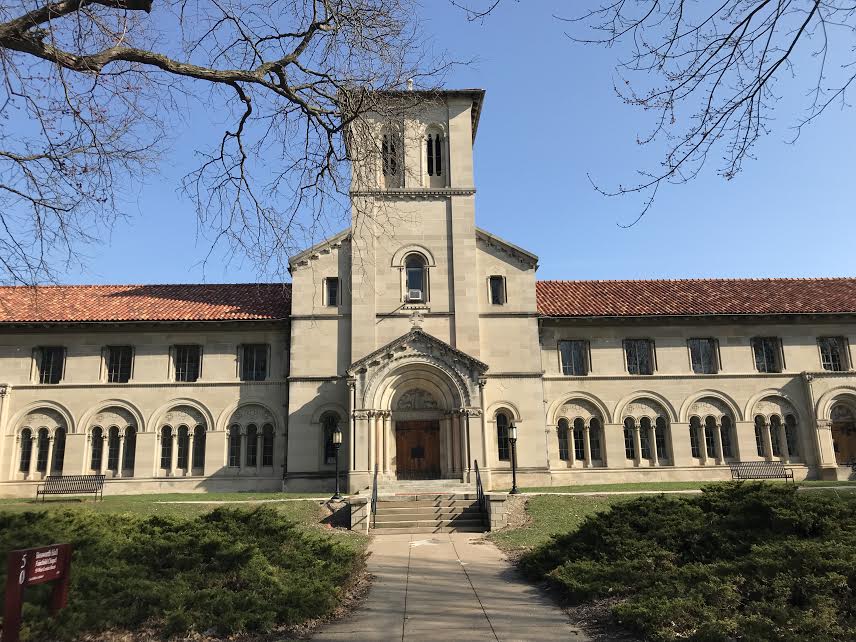
Finney Chapel, also designed by Gilbert and located on Professor Street — a perfect address for a college campus!


0-12
Bosworth Hall, designed by Cass Gilbert

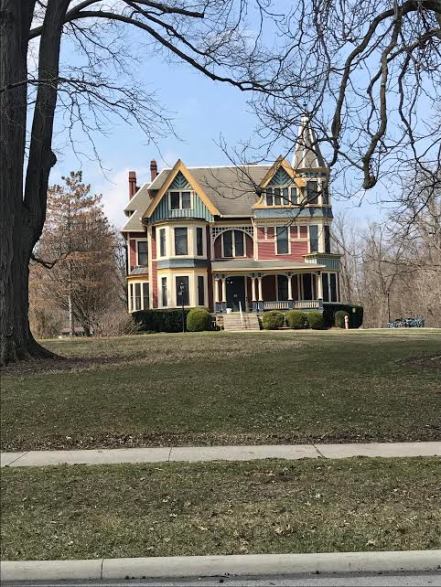
Oberlin’s architectural jewels extend from high Victorian structures to an early Frank Lloyd Wright house; the latter, at one time a private residence, is now part of the Allen Memorial Museum.

0-1.jpeg

IMG_1131
One of noted architect Frank Lloyd Wright’s rare Usonian houses, a residential design he developed in the 1930s.

Finally, Oberlin has many of the best features of a traditional college town:

A highly individual bookstore (actually, I saw two.  Oberlin Books, however, seems more oriented towards textbooks) ….

0-28
A wonderful bookstore, full of charm and character; so different from those faceless mall-type stores or online offerings.  Although mainly specializing in second-hand books of all types, it also offers prints, paintings and interesting “objects,” utilitarian and otherwise!

Some interesting (albeit limited) retail shopping ….

1014080_1081370225237360_7660118282351952004_n

photo0jpg
Bead Paradise — wonderful selection AND it has more than beads!

… and FOOD!  Oberlin has several interesting eateries; in my limited amount of time I had to limit myself to only two …..

0-23
True to its name, Aladdin serves fabulous Middle Eastern food!


0-24
I wasn’t able to hang around for dinner or lunch, but the breakfast was great! Local produce, with lots of vegetarian and vegan options.


0-25
Saturday morning BEFORE the rush. An hour later and the place was packed!

In short, if you’re ever close to northern Ohio (Cleveland is the region’s “big” city) don’t pass up a chance to visit Oberlin!


A Virtual Voyage to Visionary Vienna

Yes, dear reader, I know what you’re thinking — enough already with the bad alliteration!  But you know, sometimes I just can’t help myself  — it’s like a little demon is sitting on my shoulder, urging me on!  So how could I possibly resist?  I will be the first to admit that, sometimes, I really, really need to (resist, that is), but if we were good all the time, well — we’d be pretty dull, wouldn’t we?  And, besides, I couldn’t think of anything else to call this post!

My last few posts have included, but not been centered on, books, which is odd, because I read all the time (well, most of the time.  When I was a kid, I did read all the time). Reading a book, however, is not quite the same as writing about a book; for one thing, it’s a lot more fun (although I do enjoy discussing what I’ve read).  The problem, however, is that so much of my reading these days is required, which definitely changes how I approach a book.  For instance, I absolutely adore Middlemarch, which I regard as the second greatest novel in English (the first being, with apologies to any ichthyophobes, Moby Dick!  What’s a blog for, if not to voice your opinions?) but knowing that I have to read a hundred odd pages by next Wednesday does detract a bit from the pleasure of the experience!  Also, I’m reading so much non-fiction these days for my research paper — Renaissance this, Baroque that; visions of whatever in the art of so and so — very interesting stuff, to be sure, but so serious!  Do art historians never laugh?  All this required reading was giving me the megrims, as Georgette Hyer might have said (another of my favorite writers, BTW, as much a genius in her own way as George Eliot.  If you haven’t read Heyer yet, stop immediately, right now, run out and buy one of her books) so I decided to take a much needed break from Victorian England and Renaissance Italy and head for deliciously decadent Vienna — the city of Gustav Klimt! Alma Mahler, Bride of the Wind (and of about five other guys)! Sigmund Freud! Mayerling, Crown Prince Rudolph and Maria Vetsera! Egon Schiele!

In other words, I went for a brief but very pleasurable visit to the Neue Galerie, one of the most wonderful museums in the city of New York City.  The Neue Galerie isn’t a comprehensive museum like the Metropolitan or Washington’s National Gallery; it’s focused, rather, on German and Austrian art from the early 20th century and is the brainchild of Ronald Lauder, son of Estee and heir to her great cosmetic fortune (it makes me very happy to think that all my eye shadow purchases may have inadvertently contributed just a teeny bit to the enormous amount of lolly it took to purchase this artwork!).  Have any of you visited the Neue Galerie?  If so, please share your experience; I’m such a fan of this place that it’s impossible for me to give an unbiased judgment, so I’d welcome someone else’s reflections.  Although I’d gladly visit any time (the truly great cafe with its authentic Viennese pastries is in itself quite a draw), the specific lure this time around was the Galerie’s exhibition on “The Self-Portrait, from Schiele to Beckman.” Before going there, however, the museum itself deserves some visuals, as the building itself is a work of art.

The exterior retains its original appearance of an Upper East Side brownstone dating from 1914, transformed with great skill to house a stunning collection of paintings, sculpture and decorative art from the Wiener Werkstätte (Vienna Workshop), which worked in a sort of Austrian version of art nouveau:

Neue-Galerie_Exterior_Hulya-Kolabas_02-1300x1054

I will try to limit myself to only a few images of the interior.  It’s difficult, for as you can see the space is gorgeous:

02_Neue-Galerie-New-York-615x787
The museum’s entrance, which is usually thronged.  You can see the wonderful attention the architects paid to the historical elements of the building.


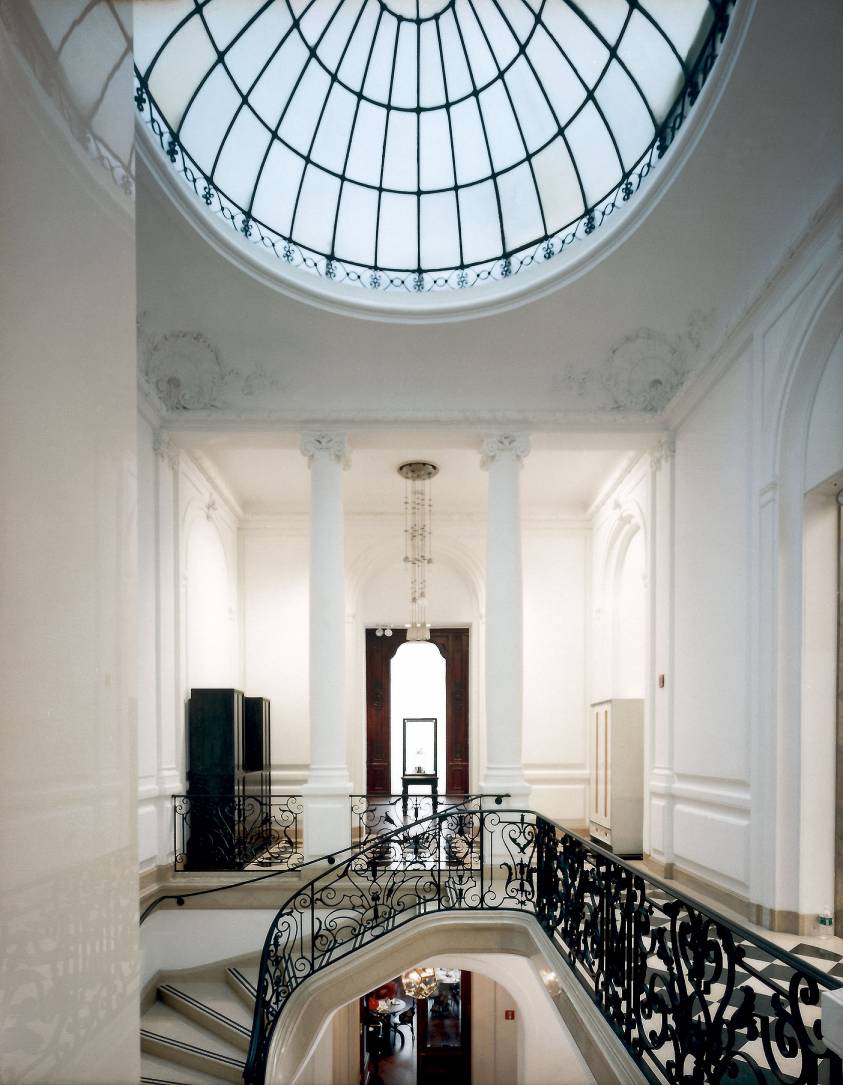
03_Neue-Galerie-New-York-843x1085
The second floor, which opens onto the rooms displaying the Klimt paintings and products of the Vienna werkstätte, including jewelry, furniture and glassware.
KlimtAndTheWomen_064-1024x683
The second floor gallery where the museum displays its collection of paintings by Gustav Klimt (mostly portraits but there’s a landscape or two).  You can see how the museum interspaces objects with the paintings, which makes for a very interesting display.

No matter what specific exhibition draws me to the museum, I always pay homage to the museum’s show stopper, Gustav Klimt’s 1907 portrait of Adele Bloch-Bauer:

woman-in-gold_custom-0d0243169ca8eef763686e144da1eda1ea27e7a9-s800-c85
This reproduction gives you a good idea of the textured quality of the painting, as well as some of the details of Adele’s costume.

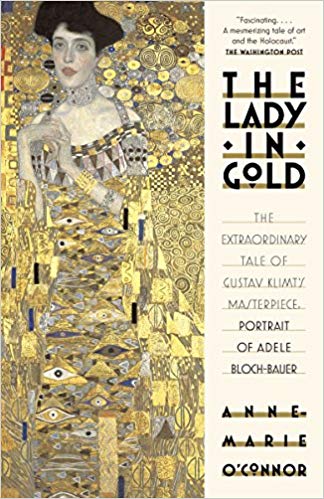
Aside from its undoubted greatness as a work of art, the painting’s history makes it even more special.  Because the Bloch-Bauer family were Jewish, their fabulous art collection (including this painting) was stolen by Nazis in the 1930s.  Did you notice Adele’s necklace?  It, too, was stolen and eventually “presented” to the Nazi general Herman Goering as a gift for his wife.  After the war, the Austrian government refused to return the Bloch-Bauers’ paintings to Adele’s surviving heirs (many of her relatives and friends perished in the camps).  The ensuing legal battle went all the way to the U.S. Supreme Court and resulted in a landmark ruling in the area of reparations for stolen art works (spoiler alert: the family won).  Anyway, if you’re interested, you can read all about it in this very good book or …..

61isVFuEBPL._SX322_BO1,204,203,200_.jpg

…what’s even more fun, watch this possibly not great but very entertaining movie (worth it, just to see Helen Mirren in top form!):

220px-Woman_in_Gold_(UK_poster).jpg

For those of an historical bent, Frederick Morton provides a thorough and very readable account of a fascinating time and place, ominously ending his history of late 19th century Vienna with the birth of Frau Klara Hitler’s son, little Adolf.

51MlR4+guRL._SX321_BO1,204,203,200_.jpg

But — I digress!  Back to the museum and its very, very good bookstore (after all, this is a bookish blog!):

Neue-Gallery__2018_6.-Neue-Galerie-Book-Store
This space is much smaller than it appears and is usually jammed with people.  The reason?  It’s a WONDERFUL bookstore. In addition to the usual tomes on painting, there’s a literature section featuring German, Austrian and eastern European writers.

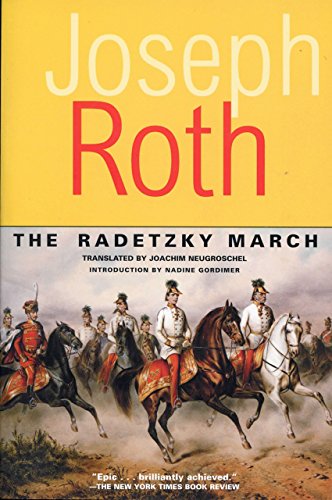
Despite my best intentions, I don’t read a lot of literature in translation and many German and eastern European writers are not familiar to me.  As a result, when I browse here I usually find wonderful things that I didn’t previously know about; on a previous visit, for example, I discovered the great Joseph Roth and his Radezky March (keep this wonderful novel in mind if you need a European classic in any future reading challenges!):

51ypkGhZYML.jpg

This time around, my haul consisted of two shorter works, both by Stefan Zweig and published by the Pushkin Press (Zweig by the way was only one of the many writers and artists who frequented Adele Bloch-Bauer’s literary salons):

41GXUe0HtbL._AC_UL436_.jpg


91QlfcybLTL._AC_UL436_.jpg

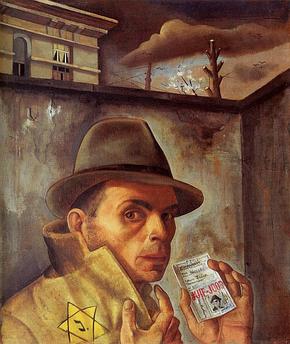
And you might ask, if you haven’t forgotten it by now, what about the exhibition itself? Although I seldom read autobiographies, I’m very interested in self-portraits, which I consider a type of visual equivalent.  I love to see how an artist chooses to represent herself (and by this time there are at least one or two “herselves”) and the elements she uses to construct the identity presented to the viewer.  This particular exhibition was both fascinating and troubling; many of these artists were Jewish, they all lived in troubled times; you know what’s coming and the art frequently makes you suspect that they did so as well.  I particularly liked the following paintings:

Self_Portrait_with_Jewish_Identity_Card_-Felix_Nussbaum_-_1943
Felix Nussbaum’s 1944 Self-Portrait with Jewish Identity Card.  Nussbaum escaped from the Nazis once, but wasn’t so lucky the second time, dying in Auschwitz in 1944.


cri_000000419863-490x1024
Paula Modersohn-Becker, a new artist for me.  Her 1907 Self-Portrait with Two Flowers in her Raised Left Hand is one of the first self-portraits in which a female artist painted herself as pregnant.  She died at age 31, shortly after the birth of her daughter.

To end on a positive note, I turn to one of my very favorite subjects — food!  The Neue Galerie’s Café Sabarsky is modeled on the Viennese cafes that were a center of the city’s intellectual life.  Beautiful period furnishings and great food — no better way to end a visit!

800px-Cafe_Sabarsky_1057
It speaks much to my character than the cafe is, perhaps, my favorite part of the museum.  More knowledgeable sources than I have proclaimed that it has “the best museum food” in NYC; the waiter “warns” you that you’ll have to “put up” with the whipped cream on the Viennese chocolate!


cafe_sabarsky_pastries
After viewing Adele’s stunning portrait upstairs, I was positively obligated to eat a slice of the “Klimt tart” (it’s one of the chocolate/hazelnut things)!


Searching for?

If you, dear reader, are even remotely like myself, you are always searching for something, whether it’s the meaning of life or the location of the laundry detergent!  These days, perhaps because of the weather (will winter never just leave and go back to the arctic where it belongs?), I’m particularly restless, with a number of moderately intense searches going on.  For instance:

I am …..desperately searching for spring!

IMG_1013
Spring is being unusually coy this year, but desperate searchers know where to look!


…. contentedly searching for completion!

51NHwfVL8fL._SX324_BO1,204,203,200_
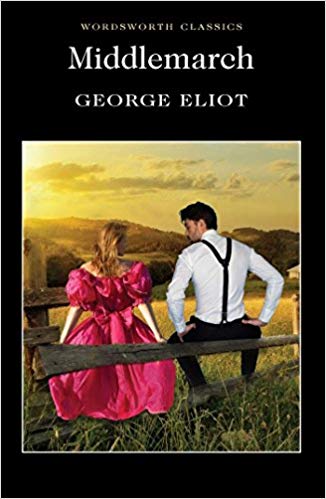
I’ve read this novel several times over the years, but despite having no time for it right now can’t resist a re-read for my 19th century English fiction class. How can one provincial little town in 1830s England encompass the universe?

…. optmistically searching for a topic for my research project!

sc81958
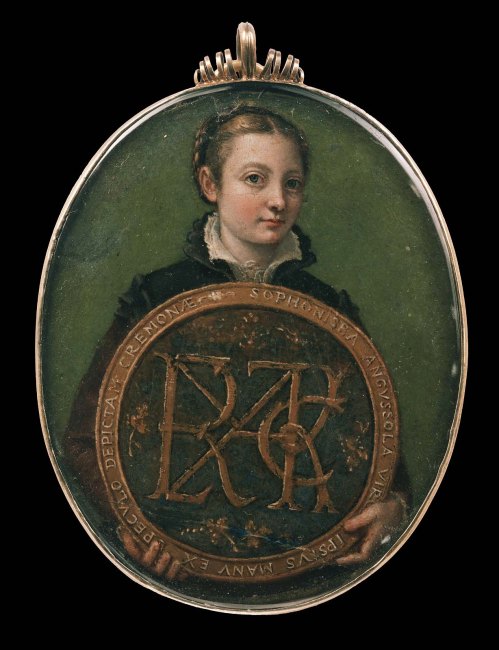
Did you know that 16th century Italy actually had (a few) female painters? Here’s a self-portrait of Sofonisba Anguissola (age 20), one of the first and best. I want to center my paper on some aspect of her work, but what, exactly?


IMG_1026
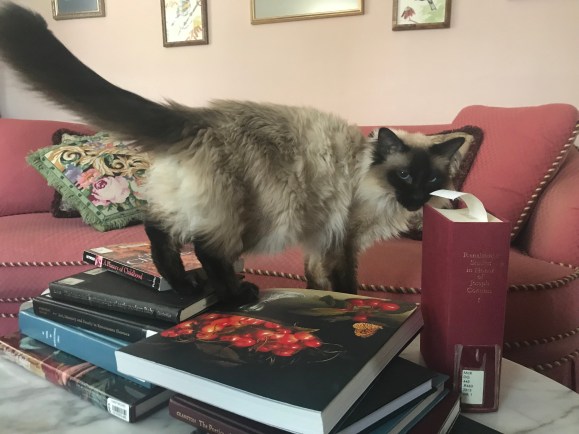
Percy and I are both convinced there’s an appropriate research topic in there somewhere!

…. relunctantly seeking domestic order!

IMG_1016
I’ve given up waiting for the household gnomes to take care of things. Time to do the laundry, wash the dishes and re-shelf the books!

…. stoically searching for closure!

IMG_1015
This major construction project has been blocking a busy street never my house for decades (well, maybe six months!)

…. delusionally searching for physical fitness!

IMG_1021
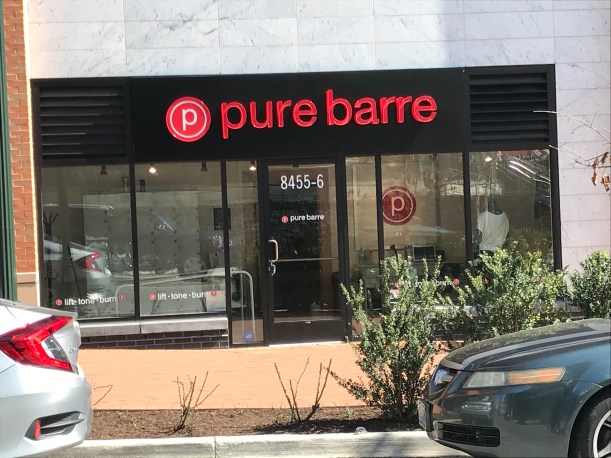
My derrière is at least three inches wider than it was last fall. Not to worry! Any day now I will (finally) attend an exercise class, where all will be lifted and toned!


…. happily seeking harmonious sounds!

IMG_1032
A little classical music (the Mozart was the very best piece) is a nice way to end the week ….

And you, dear reader — what are YOU searching for, in these days before the official arrival of spring?