
I. Preliminary Remarks: What’s Not Been Happening With the Blog
I’ve been so inactive with my blog last year, and so very disinclined to write posts, that I’ve seriously considered giving the enterprise a merciful death. After all, it’s sooooo much easier to leave comments on other bloggers’ well thought out opinions than to write my own posts! Although I’m all about the easy solution, however, I do find that I’ve been a little dissatisfied since I’ve stopped posting, particularly when I’ve just finished a marvelous book (I read several last year), or I read one of your posts on a book I’ve previously read and loved, or read and hated, or even merely thought about reading. I have the strong but supremely irrational feeling that, if I’ve even thought about it, it’s my book! At such times, my adrenaline flows, ideas rush in and I find myself thinking, “I really should have written about that!” It’s not that I think my insights are particularly insightful; I simply have more fun when I share my opinions on what I’ve read. After all, the excitement of discovering new books and the joy of sharing our discoveries is really why most of us blog, innit? I’ve also found that writing, and the organizing and analysis that it demands, always helps me to understand better whatever I’ve just read and, equally important, to appreciate what a particular writer is (or is not) trying to accomplish. Posting also serves a very practical domestic function in the Janakay household, as it gives a welcome break to poor Mr. J., who’d otherwise have to listen to my yammering about books that he, a committed reader of serious non-fiction, has absolutely no interest in reading! All in all, I do think I’ll pay a bit more attention to the blog in 2026 (my first New Year’s resolution perhaps?), although I doubt that I’ll ever be one of your methodical “post on a schedule” types.
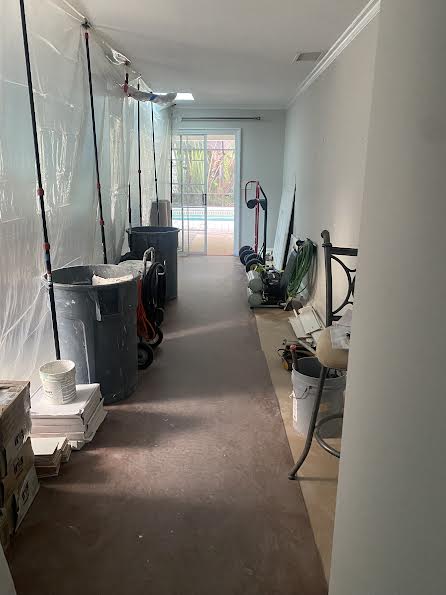
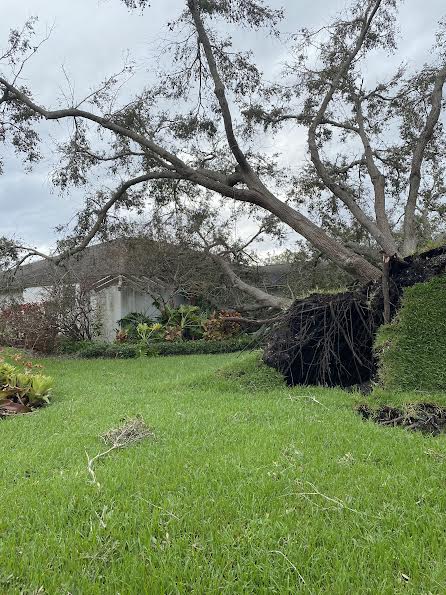
And what better time to start than now? My last post occurred in January, 2025; a nice piece of symmetry, don’t you think, for my next one to occur almost precisely a year later? A pair of symbolic bookends, so to speak, with absolutely nothing blog-wise occurring in-between. Last year was a mixed year for my reading, which began quite slowly (hard to concentrate given the dreadful political events in the U.S. and with a mild case of PTSD brought on by surviving two major hurricanes in one month). After the first few months of 2025, however, I eventually recovered my bookish mojo and went on to have a fairly satisfying year. Along with some bookless spaces here and there and a few duds over the months (I had a higher percentage than usual of abandoned books last year) my 2025 list eventually included several memorable novels, ranging from very good (e.g. Pamela Hansford Johnson’s Helena Trilogy); to wonderful (Desai’s Sonya and Sunny & Ęca de Queirós’ The Maias) to really, really fabulous (Leopoldo Alas’ La Regenta — thanks again, Silvia, for suggesting this project!). As with the past, I also read several things for sheer distraction and fun. I didn’t alas, make it to Lottie Hazell’s Piglet but I’d definitely recommend Harriet Lane’s Other People’s Problems, a wonderfully nasty tale of envy & revenge and a most welcome distraction during that dreary afternoon in Chicago’s Midway when my plane was late.
II. A Fan and a Pan: How I Fell In and Out of Love
So why go now with McEwan, a writer I’ve actively avoided for two decades or more, when I’ve read so many other wonderful books this year? Practicality, as always, carries considerable weight in these types of decisions. Because What We Can Know (WWCK) is my most recent “big” book, its impact is fresher than that of the complex novels I read earlier in the year, making it easier (remember — I’m all about the short cuts) to yammer on about. Equally important, I wanted to test my reaction at returning to an old love. For you see, Gentle Readers, back in the early days of “Ian Macabre” I was one of this writer’s biggest fans. Although my memory of The Cement Garden (1978) is now a bit hazy, I still retain fond recollections of The Comfort of Strangers (1981), and, to a lesser extent, of Black Dogs (1992); Enduring Love (1997); and Amsterdam (1998).
But then, towering above even these very interesting gems, came Atonement (2001), my very, very favorite McEwan novel and one of my most memorable books from that era of my life. What a transcendent few days I spent, reading that masterpiece! However did it not win the Booker that year? Atonement was one of my early experiences with meta fiction, which was exhilarating in itself. This, combined with lyrical writing, a clever plot and great characters (I still haven’t forgiven that nasty little Briony) made it one of those transcendent reading experiences that so seldom comes one’s way (I am not embarrassed to say, dear Readers, that one of Atonement’s plot twists reduced me literally to tears). In addition to all this surface shine, Atonement raised some very provoking questions regarding time, memory and artistic morality: when an artist transmutes his/her great sin into a beautiful work of art, has s/he atoned for their transgression or merely rationalized their moral failure? (Readers, this is a question I’m still pondering in the odd moment or two, particularly when I’m listening to Wagner.) I was already a confirmed admirer prior to Atonement; with its publication I became a worshiper at the Shrine of McEwan!
My adulation lasted until 2005 and the publication of Saturday, when I concluded that my literary god had feet of clay. With advance apologies to any fan of the novel, I really, really hated Saturday. I was baffled by its glowing reviews from critics and prize committees (it made the Booker short list & won the James Tait Black Memorial Prize for fiction, etc), as I wholeheartedly agreed with John Banville’s opinion that Saturday was “ill-conceived,” smug and “a dismayingly bad book.” (If its website is in a generous mood, you may read the entirety of Banville’s entertaining & highly critical review in the May 26, 2005 edition of the New York Times Book Review.) Perhaps it was class consciousness (although we both favor the same recording of the Goldberg Variations, Saturday’s privileged protagonist & I occupy opposite ends of the social spectrum) or perhaps an almost laughable plot twist (reciting “Dover Beach” repelled the thugs invading your home? Really?). Perhaps it was simply the wrong book for me at the wrong time, but Saturday parted the ways for me and my hitherto beloved Ian Mc. In the following years, I barely glanced at reviews of McEwan’s subsequent novels and wasn’t at all tempted to read any of them.
So what made me risk fifteen U.S. dollars (the current sales price on that platform we all love to hate) and two days of my time on WWCK? True, the novel has received glowing reviews but then, so did Saturday. WWCK’s plot, centering on a search for a lost literary work, seemed intriguing; almost enough to overshadow my cringing memory of Saturday’s smugly rarefied & privileged world. WWCK’s futuristic setting was also a strong draw; I love sci-fi, especially when it nods towards dystopia. Timing, as always, certainly helped, as I’d just finished a marvelous book right before Christmas (Margaret Kennedy’s Troy Chimneys, if you’re curious) and found myself in one of those awkward “whatever do I read now” holes that urgently demanded a new book. At this crucial point, I stumbled upon yet another laudatory review (this one in the New York Times, where WWCK apparently gave the reviewer “so much pleasure” he “laughed with delight” etc etc). Reading this effusion with some skepticism, my eye caught the sentence that tipped the scales, i.e., WWCK is “the best thing McEwan has written in ages.” Gentle Readers, it had been over twenty years since my disillusionment. I decided to risk all (well, fifteen bucks and an afternoon) to give my former love another chance.
III. Back Again: So What About The Novel Itself?
WWCK is a chameleon of a novel, deceptively simple in structure and surprisingly complex in content. Opening in the 22nd century and extending back into our own times, at its simplest level WWCK is a literary mystery centered on the fate of the only extant copy of a legendary poem, “Corona for Vivien.” Composed in 2014 by the great (fictional) poet Francis Blundy as a birthday present for his wife, the poem was subsequently lost in the climate disasters and political upheaval that destroyed the world as we know it. In pursuing the mystery of the poem’s fate, McEwan’s protagonists encounter some very melodramatic events (murder! insanity! attempted kidnapping! betrayal! revenge!) and the reader gets to enjoy some very nicely done satire as McEwan skewers (among other things) academia, the literary world and current pop culture. Lurking beneath the brio of the literary treasure hunt, however, are some very serious questions regarding the nature of history (as well as who gets to tell the story); the relationship between biographer and subject and the detritus (both physical & metaphorical) we of the present day are leaving for future generations.
I hope I’m not making WWCK sound overwhelming and pompous, because it’s nothing of the sort. Although serious themes are definitely present, they are treated very lightly and can be happily ignored by readers who prefer focusing on a treasure hunt and a sci-fi setting rather than pondering the big questions. Regardless of a reader’s chosen approach, WWCK is equally enjoyable; it’s tightly plotted, with complex and well-drawn characters and the prose is among McEwan’s best. What can I say, Readers, except the obvious — I absolutely adored this novel!
I particularly enjoyed McEwan’s depiction of life in the 22nd century setting. Like Margaret Atwood, McEwan has an definite knack for world building and is equally skillful in extrapolating from current trends to construct an all too plausible future. While both writers concern themselves with environmental issues, Atwood IMO focuses more on scientific and social aspects (e.g., the MaddAddam Trilogy’s genetic engineering or The Handmaid’s Tale & Testament’s female repression) while McEwan concentrates more on the geopolitical. WWCK’s world is a product in part of the Derangement, a late 20th century phenomenon in which society collectively acknowledged, but refused to address, the catastrophic effects of climate change. In 2042, amidst rising sea levels and conflicts over dwindling resources (the mid-21st century is marked by several “climate wars” for instance), came the Inundation, a global flooding event triggered when a Russian hydrogen bomb aimed at the U.S. misfired over the Atlantic Ocean. The resulting seventy meter waves (combined with record high sea levels) obliterated three-quarters of the Atlantic-facing population of North America, Europe and West Africa:
There were only a few hours of warning. The survivors were those who trusted their governments sufficiently to act, had transport and were not trapped in traffic jams and knew the routes to higher ground. * * * Lagos, London, Rotterdam, Hamburg and most of Paris did not emerge from under the counter-surges that raced up estuaries or from the savage storms that followed. In revenge assaults, Russia lost St. Petersburg * * * More than 200 million died. Britain became an archipelago, its population halved (pages 105-106).
The world portrayed in WWCK, however, is far from the blood soaked, cannibalistic scenarios so common in today’s dystopian fiction (think Cormac McCarthy’s novel The Road or a movie like The Day). Despite its best efforts to self-destruct, humanity not only survived but managed to preserve a sizable chunk of its cultural past. The survivors and their descendants adapted surprisingly well to a world that was now without heavy metals, fossil fuels or much dry land. Life is peaceful, with stable communities existing on the small archipelago islands that survived the Inundation and nature (albeit much diminished in species diversity) has begun to recover. New technologies (such as retrieving metal from wrecked & drowned vehicles and making “protein bars” from bacteria & atmospheric carbon dioxide) have developed to replace those of our own time. Major libraries and museums have been relocated to the highest of elevations and are relatively safe & reasonably accessible to those willing to travel by boat. Take comfort in this fictional future, dear Readers with academic inclinations! Universities and literature departments very much remain a feature of life, along with their associated & perennial problems of bureaucracy, inadequate funding and students who’d rather be elsewhere.
Just as quotidian life has changed, so also has geopolitical hegemony. Global power has shifted from the West to Nigeria (Britain has been reduced to a string of small, isolated islands while the United States has devolved into warring territories ruled by rival warlords, much like its current situation). A controlled and regulated AI plays an important role in ordinary life and, in a point that’s very important for plot purposes, the pre-Inundation internet with all its contents has been preserved and maintained by Nigerian scientists. As Tom Metcalf, the novel’s protagonist who leads the quest to recover the lost “Corona for Vivien,” explains (p 58):
Everything that has ever flowed through the internet is now held centrally in New Lagos and has been well-catalogued. Advances in quantum computing and mathematics have cracked open all that was once encrypted. I’d like to shout down through a hole in the ceiling of time and advise the people of a hundred years ago: if you want your secrets kept, whisper them into the ears of your dearest, most trusted friend. Do not trust the keyboard and screen. If you do, we’ll know everything.
The idea of “robb[ing] the past of its privacy” (page 17) plays an important role in WWCK. Aside from being a clever twist on the omniscient narrator (it’s the data bank that now knows everything and makes it available to a diligent researcher), it underscores one of the novel’s main themes, so amply demonstrated in Tom’s all-consuming quest to discover the fate of the lost poem, i.e., that one may possess a massive amount of data about an object (including a poem!) or person, without really knowing anything at all about either it or her. Echoing McEwan’s previous great novel Atonement, WWCK is very much concerned with that liminal space between reality and fiction, between the objective “truth” the artist/writer observes and that which s/he invents.
WWCK begins in 2119 with Tom Metcalf, a literature professor at the University of the South Downs, traveling by boat to the Bodleian library, now located on a mountain peak in Wales. Specializing in fiction from the 1990-2030 period, Tom is obsessed with the poet Francis Blundy, one of the major poets of his era (eclipsed only by Seamus Heaney) and his lost masterpiece “Corona for Vivien.” (I’ll spare you the wiki click dear Readers, as well as most of the technical details. It’s enough to know that a “corona” is a complex sequence of sonnets linked by their internal structure and exploring different aspects of the same theme.) The poem, which exalted the beauty of nature and the mutual love between Blundy and his wife, was handwritten by Blundy on vellum and presented to Vivien at a dinner party in honor of her birthday in October 2014. To mark the unique value of Vivien’s gift, Blundy made no copies; the fate of the poem, in other words, lay entirely (and literally) in Vivien’s hands. Although Blundy read the poem for the couple’s dinner guests, his reading was not recorded nor, surprisingly given the poet’s fame, was the work subsequently ever published. As a result, “Corona for Vivien” is known to the 22nd century only through the imperfect memories of the Blundys’ dinner guests, whose emails, social media posts and memoirs suggest that the poem was the culminating masterpiece of Blundy’s career. With the passing of the years, the dinner party (known as “the Second Immortal Dinner,” the first being an 1817 event attended by Wordsworth, Lamb & Keats) became legendary and the mystery and allure of the missing poem grew. Because it so lovingly catalogued the glories of the natural world, it even became an anthem of the environmental movement, with many believing that the oil industry had bribed Blundy to suppress the poem’s publication. “Like the play of light and shadow on Plato’s cave,” “Corona for Vivien” became for posterity the ideal for all poetry, “all the more beautiful for not being known.” (page 107)
Aside from the dinner party itself, the first and longer portion of WWCK concerns Tom’s obsessive search for the poem, which, he is convinced, has been hidden by Vivien in some now inaccessible spot. I won’t repeat the details of either Tom’s detective work or physical quest, conducted with the aid of Rose, his colleague and on-again, off-again lover. I’m afraid you’ll have to read those for yourself, although I will say that both were quite entertaining. Equally so, IMO, were the glimpses into the pair’s teaching grind (“In the two weeks allotted, almost half the kids had done some of the reading, well above the norm, though none had managed the full ninety-six pages” (page 154)). Because it would be impossible to avoid spoilers, I’ve also decided not to discuss Part Two of the novel except to say that McEwan uses it to switch both narrator and time period. This tricksy maneuver gives a whole different perspective on the Corona’s creation and meaning; equally important, it heightens many of the serious themes the novel evokes.
Given how much I enjoyed WWCC, do I regret my long boycott of McEwan’s work? Not really, although I’m open to suggestions if any McEwan fan cares to offer a recommendation regarding the novels I’ve skipped. While I’m not terribly eager to make up lost ground, I am actually considering a 2026 re-read of The Comfort of Strangers!
IV. If You’ve Made It This Far, Here’s Your Visual Reward




 "You Might as Well Read"