Tag: booker prize

My (Very) Impressionistic Take on 2024’s Booker

Although it was touch and go to finish those last two novels (Wandering Stars & Headshot,  respectively twelfth and thirteenth on my list), for the first time in many years I actually read all the Booker nominees.  My thoughts on the novels?  Well . . . .

My heavens, dear Readers, can it really have been eighteen months or so since I last posted anything?  I can’t imagine that anyone’s still checking the blog, after so prolonged an absence, but if I’m wrong many thanks for your patience/optimism!  Despite intending otherwise, my teeny little break from blogging somehow morphed into a very prolonged absence.  There were many reasons, positive and not, for this shift in plans.  On the plus side, I had an interesting trip or two; on the minus, I suffered through a prolonged & rather aggravating home construction project, followed by the angst & dislocation of three (!!!) hurricanes in little over a year (admittedly, one of these was mostly a bad rain storm by the time it reached my little town; two, unfortunately, were much more).  And then, of course, there’s the anxiety and anger that comes from reading the current political news and surviving an election that was something of a nightmare, even by U.S. standards.  

And books do help us survive, don’t they?  Along with the arts in general, combined, perhaps, with a judicious limitation on internet usage.  I recently stumbled upon a very interesting NYRB essay on a phenomenon Russians term “vnutrennaya emigratsia,” defined as “internal immigration” or “internal exile.”  (You can read a far more sophisticated explanation at https://www.nybooks.com/online/2019/02/11/a-refuge-from-reality-a-la-russe/ as I believe the paywall allows a free click or two.)  This self-exile involves the creation of an internal space facilitating observation and thought; the concept has morphed from describing what was literally a  geographic exile into the idea that one mentally relocates by forging an internal space apart from the prevailing cultural norms.  The internal exile’s mental relocation facilitates survival and sanity by focusing on the arts & avoiding anything connected to politics or public life.  Although cultural self-exile may become nihilistic or counter-productive (too much disengagement may permit real evil to thrive–think Hitler), what other choice is available in times such as these, dominated as they are by political and cultural ideas that one regards as sheer anathema?  Rather than tuning in to the latest “bro” podcast or having hateful political screeds raise my blood pressure to dangerous heights, I’ll self-exile to my shelves of fiction, or to the haven of the nearest art museum (well, maybe not the nearest!  I find its paintings to be a little dull and I’m willing to travel to see some more interesting stuff).  As I’m sure you can surmise, the 2024 Booker long list has also provided a welcome distraction from the current political cycle. 

This was particularly true as I found this year’s long list much more interesting than I have for some time. Aside from being a welcome distraction, it solved my paralysis about how to fill my reading schedule and was a handy way to re-acquaint myself with contemporary fiction, which I’ve been somewhat neglecting this year.  To be candid (and I’m nothing, if not candid, dear Readers, it’s a professional survival from my legal career) it helped that the list included Harvey’s Orbital, which I’d just finished reading and that several of the nominees looked reasonably short.  I quickly discovered, however, that several were actually what my British friends call chunksters (my own term is “doorstops”), at which point I gave myself permission to take breaks at will or to abandon the project altogether if I felt like it.  Despite some temptation to stop, I did finally stumble through all thirteen novels, having finished Headshot and Wandering Stars about a week ago.  As my title indicates, the remainder of this post is a mosaic of the impressions I gained from my reading. Please do remember that these are impressions rather than reviews; by their nature they’re a bit shallow, quickly formed and highly subjective.  Your own judgments may well differ from mine; in fact, I hope they do so and that you’ll share your reaction!  I’ve followed my bookish talk with a brief account (accompanied by a few photos) of some of my activities since my last post.  Not to worry, however, as I separated it with bold-face type, making it easy for you to skip if you so desire! 

My Overall Impression of the List:

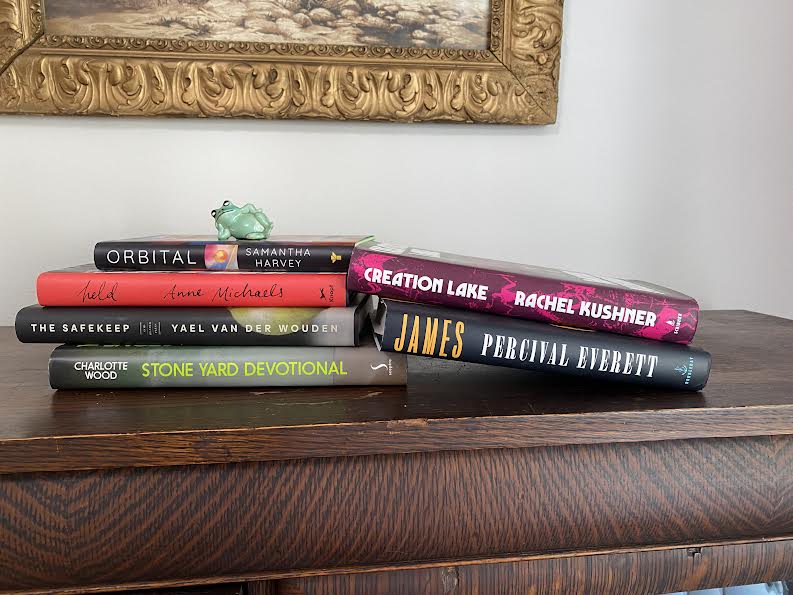
I thought on the whole it was a pretty good, if not overwhelming, assortment of novels.  (I won’t speak to the mix of gender, ethnicity and nationality, or the number of debut vs. well-established authors, as there’s already been plenty of comment on these subjects.)  Necessarily I liked some of the nominees much more than others, but I didn’t regret the time I spent reading any of them.  Only one novel, Charlotte Wood’s Stone Yard Devotional, blew me away but, on the other hand, none aroused my active dislike.  (This hasn’t always been true in the past.  I detested Richard Flanagan’s Narrow Road to the Deep North as well as George Saunders’ Lincoln in the Bardo, winners, respectively, in 2014 &  2017.)  Although I don’t go so far as to claim this year’s nominees demonstrated any particular linkages or themes, it did seem to me at least that several of them revolved around characters who were cultural outliers, either by birth (Everette’s enslaved James & Orange’s disinherited indigenous Americans in Wandering Stars); by circumstance (the Libyan exiles of Matar’s My Friends or the prickly doyenne of van der Wouden’s Safekeep) or choice (check out the female rogue intelligence agent in Kushner’s Creation Lake).  Sarah Perry’s two protagonists lead fairly mainstream lives but are spiritually estranged from the religious community which has shaped their values (one is a single and very independent woman while the other is a closeted homosexual).  Given the number of women authors who made the short list, it’s hardly surprising that so many of the novels contain strong female characters who make unusual or unconventional life choices, such as Bullwinkel’s girl boxers (Headshot); Harvey’s female astronauts (Orbital) or Wood’s contemplative solitaire (Stone Yard Devotion).  Respecting stylistic approaches, the list seemed mildly tilted towards experimental or at least non-traditional narration, most notably in Orbital and Anne Michael’s Held.  

My Personal Short List (doesn’t coincide with the judges):

I know, I know — I only list five novels (and four of them already rejected!), while the real list has six, all of which are of course still in the running.  Fantasy lists, however, are meant to be self indulgent!  Besides, this way you get to supply your own nominee!  I almost limited my personal short list to four, as Playground survived my scrutiny only by a whisker.  I’m not a big Powers’ fan, as I usually find his work a little too cerebral, an opinion that still stood after reading his latest.  Playground was also burdened IMO by being a bit too baggy in its plot and a little too prone to preachy information dumps about ecology and artificial intelligence.  But Powers’ ideas are fascinating and his descriptions of undersea life sheer magic.  Since Matar, like Powers, isn’t one of my favorite novelists, I was surprised to discover how much I liked and respected My Friends.  It opened my eyes both to a history that’s been largely ignored and to the practical difficulties of living as a political exile, which has also been largely ignored (my observations in these regards, dear Readers, pertain only to what we in the southern U.S. refer to as “our neck of the woods”).  I usually have somewhat mixed feelings regarding Messud’s novels (I’ve read about half of them), but found her saga of lives disrupted by historical forces her best work yet.  I almost skipped Rita Bullwinkel’s Headshot, the story of eight teenage girl boxers who are each determined to prove she’s the best, but am so glad I didn’t.  It’s funny, it’s compassionate and it’s very, very realistic in depicting a gritty, physical and ruthless competition that isn’t usually associated with teenage girls.  Bullwinkel’s innovative technique (a narration structured on the tournament’s rounds, with the girls’ past & future told in brief chronological shifts) serves her unusual subject well.  As for her next novel — sign me up already!

My Personal Winner:

This was an absolutely fabulous novel, one of the best I’ve read in a very long time.  It’s about forgiveness, both of one’s self and of others; about facing the dreadful consequences of how humankind has treated the earth; and about living a life that’s both unknown and unknowable to others.  “Midway in life’s journey” Wood’s unnamed protagonist found herself “in a dark wood;” the story of how she searched for the path out of it will stay with me for a very long time.  Who cares if the plot is unconventional (unlike many, I actually think quite a bit happens, but it occurs mostly on an interior plane)?  Or that much of the novel’s middle section is dominated by the physical necessity of dealing with a huge mouse infestation?  Disgusting though it is, the mouse plague reinforces Wood’s theme of how human depredations have destroyed the earth’s natural balance (the protagonist is an environmental activist who has given up her work in despair, while the mice are trying to escape bad weather & dwindling food supplies).  It occurred to me that the mouse plague also serves a symbolic function of providing the protagonist, a modern day hermit, with a desert trial comparable to those faced by the the early eremites.  This is a short novel, but its reverberations are huge.

The Novel I’d Least Like to Win (from the real short list):

A tie, for opposite reasons, between Yael van der Wouden’s The Safekeep & Anne Michael’s Held.  Although I found Safekeep’s historical background compelling, and its depiction of the prickly and unconventional Isabelle skillfully done (at least in the earlier portions), I thought the novel as a whole became something of a potboiler, with an easy and unconvincing resolution of the central dilemma.  If Safekeep struck me as an airport type read, Michaels’ Held was at the opposite end of the spectrum.  Admittedly, my preference for traditional narrative structures may have unfairly prejudiced me against Held’s highly fragmented style, which at times I found quite distracting.  The author obviously has loads of talent, the writing is poetic and beautiful and some of the individual sections are very moving.  But those constant time shifts, combined with extremely tenuous (and sometimes extremely artificial) connections among the characters became too frustrating for me by the end.  Perhaps I’d have coped better if Michaels had simply labeled her work a short story collection.

The Novels I’d Be o.k. with Winning (assuming, of course, that Stone Yard doesn’t):

James was my first novel by Percy Everett (about time, wouldn’t you say?).  It’s extremely well written and quite tender in spots; it also says things that desperately need to be said.  Despite all this good stuff, I didn’t quite warm to James.  I’ve always detested the Huckleberry Finn strain in American writing, even when it’s been as cleverly subverted as it’s been done here.  Orbital was very beautifully written, an icon of words designed to invite contemplation but . . . although I’m not unduly demanding in this regard, I just needed something in the way of a plot.  As for Creation Lake, it was quirky and interesting, and I’m sure I’ll understand what Kushner was doing with it as soon as I finish reading The New Yorker’s very clever review.   https://www.newyorker.com/magazine/2024/10/14/creation-lake-rachel-kushner-book-review

My Own Prediction About the Winner:

Who knows? Certainly not the Booker Frog.

Non-Sequiturs & Stray Observations:

Two of these novels (History & Friends) made my own, if not the judges’, short list!

To begin with a total non-sequitur, I found it interesting that both Messud’s Strange History & Matar’s My Friends dealt with the post-colonial effects of European expansion, but from entirely different perspectives.  Messud’s Cassar family (strongly modeled on her own grandparents) are French-Algerian settlers who lose their home and cultural identity after that country’s bloody war of independence.  Scorned and rejected as Pied-Noirs by their French countrymen, they are forced to forge new lives in cultures whose language & customs are alien to them.  Matar’s protagonist Khaled, by contrast, is a Muslim native of a Libya that has ejected its colonial overlords; after doing so, however, it forces its dissidents into an exile that requires them to build lives that are largely the opposite of those they would otherwise have experienced.  Different perspectives in the two novels — European colonizers and native colonized — but the lives of both equally twisted and bent by the force of European expansion from the shapes they would otherwise have possessed. 

In closing I’d like to offer a few observations on three other novels that didn’t make the short list.  From the positive side of the street, I’d like to put in a brief word of praise for Colin Barrett.  I wasn’t surprised that his Wild Houses didn’t make the short list, but its believable characters, great dialogue and unsuspected depths put Barrett on my “novelists to watch out for” list.  On a negative note, I was a little disappointed by both Orange’s Wandering Stars as well as Perry’s Enlightenment.  I love Tommy Orange’s work (I went to a great deal of trouble to get an autographed copy of his debut novel, There, There) but somehow I didn’t connect nearly as well with Stars.  I think it covered so much historical ground, along with so very many of the problems created by the historical injustices inflicted on its characters, that I began seeing them less as individuals and more as avatars of various societal ills to be checked off the author’s historical list.  That being said, Stars remains a very good novel, with a spot on and touching portrayal of how a family deals with generational trauma, whether it be caused by alcohol, drugs or an unexpected stray bullet.  As for Perry, she’s less of a favorite of mine than Orange, although I did enjoy Melmoth, her shivery gothic from a few years back.  Enlightenment had some really good stuff, most notably its misfit main characters and its depiction of the outlier religious community that shaped their lives (I believe a few reviewers have hinted that Perry was drawing on her own background for this aspect of her novel).  Despite these strengths, however, a number of reasons prevented me from really connecting with the novel.  I found the unrequited love to be just a bit too unrequited; the friendship between the main characters a little too unlikely and the reappearing ghost far too prone to provide helpful hints at key points in the plot.  

PART II: WHAT I’VE BEEN DOING FOR THE LAST YEAR (See — It’s Easy to Skip This Part)
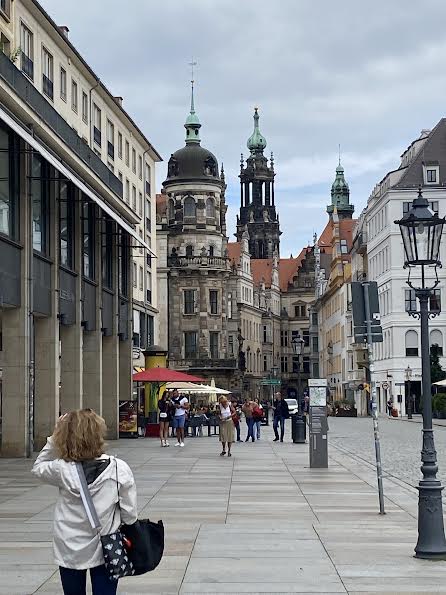
. . .  a little bit (never enough) of interesting travel. I finally made it to Berlin & Dresden, where I spent a lot of time in their fabulous art museums.


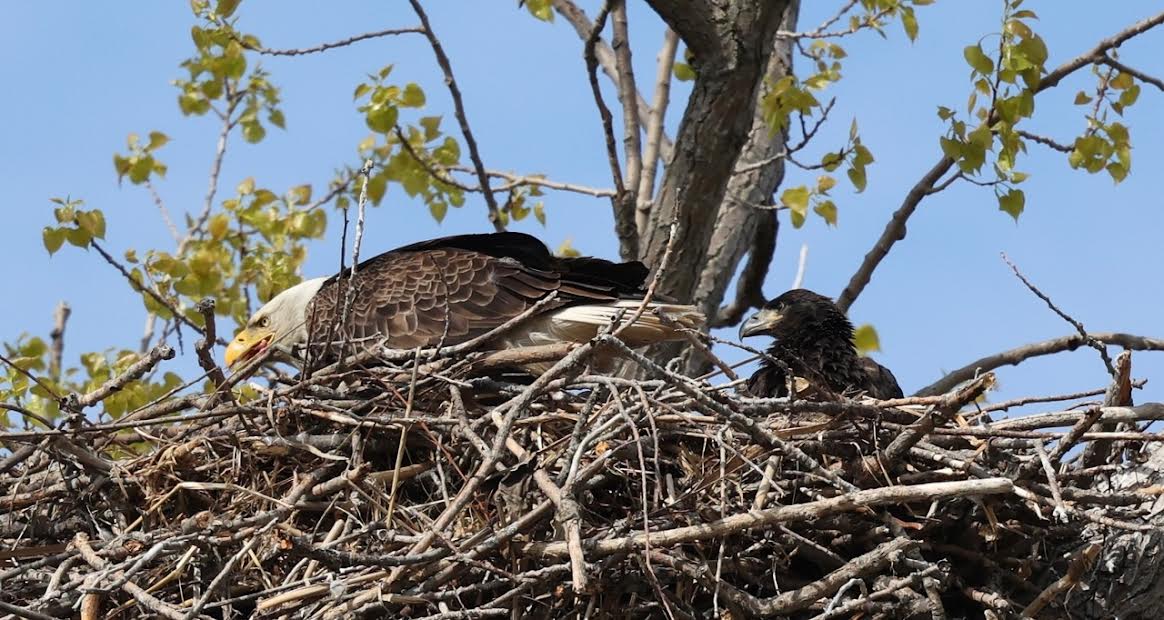
. . .  a little bit of wildlife viewing, including this bald eagle with its chick (thanks to Mr. J., his camera & a spring birding trip to western Ohio)


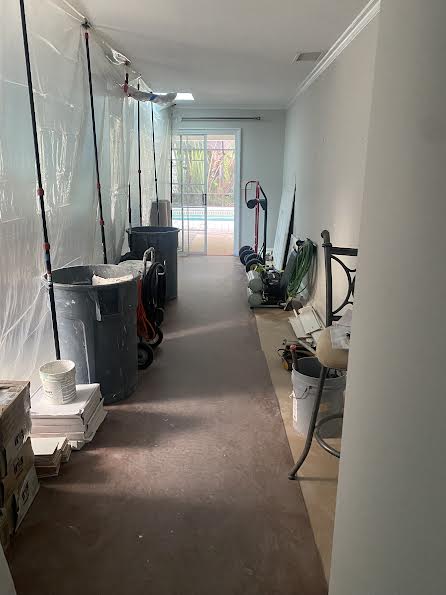
. . .  a little bit of home remodeling (this is a photo of my once and future bedroom, temporarily converted into a construction site).  Fortunately, I could camp out elsewhere in the house.


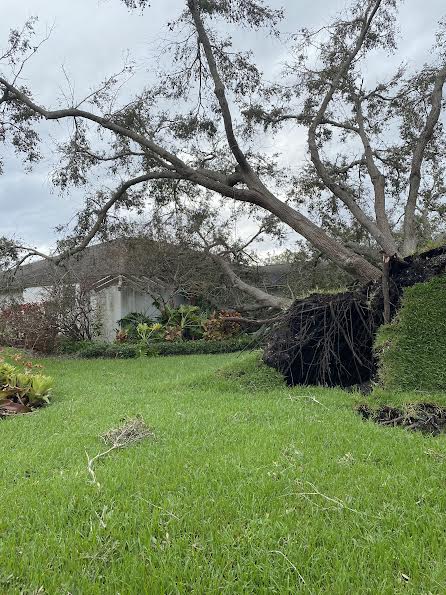
. . . surviving hurricanes (one last year and two this fall). This tree belongs to my next door neighbor. Although Mr. J & I, along with house and cats, escaped untouched, my area suffered a great deal of damage, particularly on the barrier islands.


. . .  staying off Percy’s favorite rug.  Despite a truly frightening set of fangs, I wasn’t deceived!  Percy was simply yawning after a nice morning nap!

That’s it for 2024’s Booker list and various assorted matters! (and aren’t you glad?)  I’m not going to embarrass myself again by predicting the timing of my next post, but I have been reading some very interesting things lately  . . .  
 

Book Prizes and Baltimore Reading

0-7
Just kidding — I’m sure the winner of the Man Booker prize receives something far less glittery (i.e., literary glory and a cash award roughly equivalent to $62,000)

Do any of you out there “do” book prizes, i.e., follow the various competitions, note the winners, and even sometimes (gasp!) read the nominees?  If so, yesterday was a significant one on your calendar, as the long list for 2019’s Man Booker prize (self-described as “fiction at its finest”) was announced.  As you may know from previous posts of mine, my reading choices tilt mildly toward British authors, mainly because I get so many of my recommendations from The Guardian’s excellent book section.  In line with this slight preference, I tend to follow the nominees for, and the ultimate winner of, the Booker; more so than, say, the Pulitzer Prize or the National Book Award, which are the big literary events in the U.S. or even the Women’s Prize for Fiction, which honors “fiction written by women.  For everyone” (my bad! The  2019 winner was Tayari Jones’ An American Marriage, now a fresh entry on my TBR list).    The extent of my “involvement” varies by year; a few times I’ve read all thirteen nominees before the prize was awarded in October; I usually read at least the short list of six finalists (announced in September); in a really bad year I may read just two or three of the nominated books.

Following the Booker process has become one of my beloved summer rituals, from the July announcement of the long list (all thirteen nominees), to September’s short list of six, to October’s big enchilada, when the winner is announced.  It’s a fun little activity that ties in nicely with my love of lists and reading projects, as well as a very pleasant way of staying somewhat current with contemporary literary fiction, particularly that of non-U.S. writers (by reading the Booker nominees I’ve discovered some great writers I wouldn’t have otherwise encountered).  Do you have any literary contests or rituals to which you are similarly attached?  Or do you just generally ignore the whole literary contest thing, feeling that artistic competition is inappropriate or that the nominated books generally don’t interest you very much?

As much as I’ve enjoyed my pleasant little summer ritual, however, in the last year or so it has taken a back seat to other activities.  Dominating everything else for the past two years has been my course work for an undergraduate degree in art history (I refer to it alternatively as my “vanity” degree or “my second childhood folly” as I have no sane reason for being an undergraduate at this point in my life); this has required, oh, ever so much non-fiction reading which has soaked up my spare time like a sponge.  In addition to this limitation, my reading choices this past year have returned somewhat to the classics, leaving me a bit less interested in contemporary writers.  Last year I read only three of the nominated books (in addition to getting about half-way through two others) and never quite got around to reading the actual winner (Anna Burns’ The Milkman).  This year —- gasp! — I even forgot that yesterday was the big day for announcing the long list (in some years, I’ve been online at the big moment because I want to see the list as quickly as possible, get a jump on obtaining copies of the more obscure works and draw up my rough reading schedule.  Janakay, dear readers, can be obsessive about her hobbies!)

Before I roll out the list, do keep two things in mind if you’re not familiar with the Booker rules (if you’re British and/or know the rules, please forgive me if I get something wrong).  For much of its history,  the competition was open only to writers from Britain, Ireland and Commonwealth countries (plus South Africa and Zimbabwe); a rules change in 2014, however, opened the contest to writers from the U.S. (this change has been quite controversial in the British literary world).  Additionally, a book may be eligible for consideration provided that it is published by September 30 of the relevant year; the judges have read all the novels included in the July long list because they get advance copies, but ordinary folk have to wait  (also, if you don’t live in the U.K. you may have to wait for your country’s publication date unless you’re willing to do an international order).  This can at times be very frustrating if you’re obsessive about completeness (believe me, I know).   Keeping this in mind, along with an imaginary drum roll, here’s the long list:

3119.jpg

Margaret Atwood:  The Testaments (the eagerly awaited sequel to The Handmaid’s Tale; set 15 years afterwards and follows the lives of three women of Gilead.  It will be “out” on September 10.  Remember what I said about the judges’ advance copies?)

Salman Rushdie:  Quichotte (inspired by Don Quixote; a tale of an aging salesman who falls in love with a TV star and travels across America to win her hand; U.K. publication in August; remember! Judges get advance copies)

Elif Shafak:  10 Minutes 38 Seconds in This Strange World (dark tale of sexual violence set in Istanbul; told through eyes of dying prostitue; in “real life” the author herself is currently under attack by the Turkish goverment)

John Lanchester:  The Wall (a dystopian novel set on an unnamed island isolated from the rest of the world by a concrete barrier; the New York Times liked it and thought few readers would “stop until they reach the final page”)

Valeria Luiselli:  Lost Children Archive (a re-telling of the American road novel; compares a family journey south from New York to a journey north undertaken by child migrants)

Oyinkan Braithwaite:  My Sister, the Serial Killer (about two siblings in Lagos, one a nurse and the other with an unusual way of dealing with her boyfriends; described by the NYT as a “bombshell of a book” dealing with sibling bonds and female survival)

Lucy Ellmann:  Ducks, Newburyport (tale of an angst-ridden Ohio homemaker; described by The Guardian as “Anne Tyler meets Gertrude Stein”)

Kevin Barry:  Night Boat to Tangier (two aging Irish gangsters exchange banter as they keep vigil at the Algeciras ferry terminal in Spain; The Guardian loved it).

Deborah Levy:  The Man Who Saw Everything (U.K. publication is in August; remember! Booker judges get advance copies).

Bernardine Evaristo:  Girl, Woman, Other (a verse novel raising questions of race and gender through interconnected stories of a group of British women of color)

Chigozie Obioma: An Orchestra of Minorities (based partly on a true story and partly on Homer’s Odyssey; it’s set in modern Nigeria & uses a love story to examine issues of class, male rage and static social mobility )

Max Porter:  Lanny (described as a “rich, twisted, gloriously cacophonous novel of village life;” plot involves a missing five year old and a sinister character rooted in English folklore)

Jeanette Winterson:  Frankisstein (described by The Guardian as a “playful reanimation” of Mary Shelley’s classic)

Do you have any thoughts on the books and writers up for the prize?  If so, please share! Although I’m somewhat familiar with a few of the writers (I’ve read previous novels by Lanchester, Levy, Barry, Rushdie & Obioma), this is the first time in many years that I haven’t read a single one of the nominated works.  I love Atwood (and anything associated with her) but despite this I hadn’t included even Testaments on my own little list of books I’d like to read in 2019 (check it out if you’re interested!  The only criterion for inclusion was — I just wanted to read it! If you really, really enjoy lists you may want to check a Goodreads list of the books that readers thought merited the award or nominate your own favorite novel for The Guardian’s 2019 “Not The Booker Award” (grand prize is a coffee mug rather than $62,000)).  Quite honestly, I was a bit unenthused about this year’s long list, but perhaps that’s due to its including so many novels dealing with current world crises, as I’m in a bit of an escape mode right now (also, I have some distressing and potentially tragic academic deadlines to meet in the next couple of months, so can’t get too engrossed with new novels!).  Do you feel differently right now about socially relevant books or do you think that now more than ever it’s critical for fiction and literation to focus on social, environmental and economic issues?

Because I do tend to natter on, as certain characters in my beloved old novels say, I’ll keep the Baltimore portion of my post brief.  The Guardian has a wonderful reoccurring feature (honestly, I don’t work for The Guardian, I just read its book section on a daily basis) called “The Top Ten Books” about a variety of topics (past lists have ranged from “top ten queer rural books,” to works about Burma, the river Thames, cults and houseguests.  Utterly addictive!)  This week’s “Top Ten” is about Baltimore, a wonderful old east coast (U.S.) city that has a rich history, great art and fabulous writers.  I’m very fond of Baltimore, which I visit pretty frequently and feel somewhat protective about, as I don’t think many people realize how much the city has to offer.  Laura Lipman, one of the best thriller writers around, has strong ties to Baltimore and compiled this week’s list, which includes works by Frederick Douglass (an enslaved child in rural Maryland, he learned to read and write only after he was sent to Baltimore); Ta-Nehisi Coates (who grew up there);  Madison Smart Bell (a Baltimore resident who formerly ran the creative writing program at a local college); film maker John Waters (another Baltimore resident); and Anne Tyler (whose Accidental Tourist is a “classic Baltimore novel”).  And, of course, you can read Lipman herself, who gives many of her superb novels a Baltimore setting.