
I. Preliminary Remarks: What’s Not Been Happening With the Blog
I’ve been so inactive with my blog last year, and so very disinclined to write posts, that I’ve seriously considered giving the enterprise a merciful death. After all, it’s sooooo much easier to leave comments on other bloggers’ well thought out opinions than to write my own posts! Although I’m all about the easy solution, however, I do find that I’ve been a little dissatisfied since I’ve stopped posting, particularly when I’ve just finished a marvelous book (I read several last year), or I read one of your posts on a book I’ve previously read and loved, or read and hated, or even merely thought about reading. I have the strong but supremely irrational feeling that, if I’ve even thought about it, it’s my book! At such times, my adrenaline flows, ideas rush in and I find myself thinking, “I really should have written about that!” It’s not that I think my insights are particularly insightful; I simply have more fun when I share my opinions on what I’ve read. After all, the excitement of discovering new books and the joy of sharing our discoveries is really why most of us blog, innit? I’ve also found that writing, and the organizing and analysis that it demands, always helps me to understand better whatever I’ve just read and, equally important, to appreciate what a particular writer is (or is not) trying to accomplish. Posting also serves a very practical domestic function in the Janakay household, as it gives a welcome break to poor Mr. J., who’d otherwise have to listen to my yammering about books that he, a committed reader of serious non-fiction, has absolutely no interest in reading! All in all, I do think I’ll pay a bit more attention to the blog in 2026 (my first New Year’s resolution perhaps?), although I doubt that I’ll ever be one of your methodical “post on a schedule” types.
And what better time to start than now? My last post occurred in January, 2025; a nice piece of symmetry, don’t you think, for my next one to occur almost precisely a year later? A pair of symbolic bookends, so to speak, with absolutely nothing blog-wise occurring in-between. Last year was a mixed year for my reading, which began quite slowly (hard to concentrate given the dreadful political events in the U.S. and with a mild case of PTSD brought on by surviving two major hurricanes in one month). After the first few months of 2025, however, I eventually recovered my bookish mojo and went on to have a fairly satisfying year. Along with some bookless spaces here and there and a few duds over the months (I had a higher percentage than usual of abandoned books last year) my 2025 list eventually included several memorable novels, ranging from very good (e.g. Pamela Hansford Johnson’s Helena Trilogy); to wonderful (Desai’s Sonya and Sunny & Ęca de Queirós’ The Maias) to really, really fabulous (Leopoldo Alas’ La Regenta — thanks again, Silvia, for suggesting this project!). As with the past, I also read several things for sheer distraction and fun. I didn’t alas, make it to Lottie Hazell’s Piglet but I’d definitely recommend Harriet Lane’s Other People’s Problems, a wonderfully nasty tale of envy & revenge and a most welcome distraction during that dreary afternoon in Chicago’s Midway when my plane was late.
II. A Fan and a Pan: How I Fell In and Out of Love
So why go now with McEwan, a writer I’ve actively avoided for two decades or more, when I’ve read so many other wonderful books this year? Practicality, as always, carries considerable weight in these types of decisions. Because What We Can Know (WWCK) is my most recent “big” book, its impact is fresher than that of the complex novels I read earlier in the year, making it easier (remember — I’m all about the short cuts) to yammer on about. Equally important, I wanted to test my reaction at returning to an old love. For you see, Gentle Readers, back in the early days of “Ian Macabre” I was one of this writer’s biggest fans. Although my memory of The Cement Garden (1978) is now a bit hazy, I still retain fond recollections of The Comfort of Strangers (1981), and, to a lesser extent, of Black Dogs (1992); Enduring Love (1997); and Amsterdam (1998).
But then, towering above even these very interesting gems, came Atonement (2001), my very, very favorite McEwan novel and one of my most memorable books from that era of my life. What a transcendent few days I spent, reading that masterpiece! However did it not win the Booker that year? Atonement was one of my early experiences with meta fiction, which was exhilarating in itself. This, combined with lyrical writing, a clever plot and great characters (I still haven’t forgiven that nasty little Briony) made it one of those transcendent reading experiences that so seldom comes one’s way (I am not embarrassed to say, dear Readers, that one of Atonement’s plot twists reduced me literally to tears). In addition to all this surface shine, Atonement raised some very provoking questions regarding time, memory and artistic morality: when an artist transmutes his/her great sin into a beautiful work of art, has s/he atoned for their transgression or merely rationalized their moral failure? (Readers, this is a question I’m still pondering in the odd moment or two, particularly when I’m listening to Wagner.) I was already a confirmed admirer prior to Atonement; with its publication I became a worshiper at the Shrine of McEwan!
My adulation lasted until 2005 and the publication of Saturday, when I concluded that my literary god had feet of clay. With advance apologies to any fan of the novel, I really, really hated Saturday. I was baffled by its glowing reviews from critics and prize committees (it made the Booker short list & won the James Tait Black Memorial Prize for fiction, etc), as I wholeheartedly agreed with John Banville’s opinion that Saturday was “ill-conceived,” smug and “a dismayingly bad book.” (If its website is in a generous mood, you may read the entirety of Banville’s entertaining & highly critical review in the May 26, 2005 edition of the New York Times Book Review.) Perhaps it was class consciousness (although we both favor the same recording of the Goldberg Variations, Saturday’s privileged protagonist & I occupy opposite ends of the social spectrum) or perhaps an almost laughable plot twist (reciting “Dover Beach” repelled the thugs invading your home? Really?). Perhaps it was simply the wrong book for me at the wrong time, but Saturday parted the ways for me and my hitherto beloved Ian Mc. In the following years, I barely glanced at reviews of McEwan’s subsequent novels and wasn’t at all tempted to read any of them.
So what made me risk fifteen U.S. dollars (the current sales price on that platform we all love to hate) and two days of my time on WWCK? True, the novel has received glowing reviews but then, so did Saturday. WWCK’s plot, centering on a search for a lost literary work, seemed intriguing; almost enough to overshadow my cringing memory of Saturday’s smugly rarefied & privileged world. WWCK’s futuristic setting was also a strong draw; I love sci-fi, especially when it nods towards dystopia. Timing, as always, certainly helped, as I’d just finished a marvelous book right before Christmas (Margaret Kennedy’s Troy Chimneys, if you’re curious) and found myself in one of those awkward “whatever do I read now” holes that urgently demanded a new book. At this crucial point, I stumbled upon yet another laudatory review (this one in the New York Times, where WWCK apparently gave the reviewer “so much pleasure” he “laughed with delight” etc etc). Reading this effusion with some skepticism, my eye caught the sentence that tipped the scales, i.e., WWCK is “the best thing McEwan has written in ages.” Gentle Readers, it had been over twenty years since my disillusionment. I decided to risk all (well, fifteen bucks and an afternoon) to give my former love another chance.
III. Back Again: So What About The Novel Itself?
WWCK is a chameleon of a novel, deceptively simple in structure and surprisingly complex in content. Opening in the 22nd century and extending back into our own times, at its simplest level WWCK is a literary mystery centered on the fate of the only extant copy of a legendary poem, “Corona for Vivien.” Composed in 2014 by the great (fictional) poet Francis Blundy as a birthday present for his wife, the poem was subsequently lost in the climate disasters and political upheaval that destroyed the world as we know it. In pursuing the mystery of the poem’s fate, McEwan’s protagonists encounter some very melodramatic events (murder! insanity! attempted kidnapping! betrayal! revenge!) and the reader gets to enjoy some very nicely done satire as McEwan skewers (among other things) academia, the literary world and current pop culture. Lurking beneath the brio of the literary treasure hunt, however, are some very serious questions regarding the nature of history (as well as who gets to tell the story); the relationship between biographer and subject and the detritus (both physical & metaphorical) we of the present day are leaving for future generations.
I hope I’m not making WWCK sound overwhelming and pompous, because it’s nothing of the sort. Although serious themes are definitely present, they are treated very lightly and can be happily ignored by readers who prefer focusing on a treasure hunt and a sci-fi setting rather than pondering the big questions. Regardless of a reader’s chosen approach, WWCK is equally enjoyable; it’s tightly plotted, with complex and well-drawn characters and the prose is among McEwan’s best. What can I say, Readers, except the obvious — I absolutely adored this novel!
I particularly enjoyed McEwan’s depiction of life in the 22nd century setting. Like Margaret Atwood, McEwan has an definite knack for world building and is equally skillful in extrapolating from current trends to construct an all too plausible future. While both writers concern themselves with environmental issues, Atwood IMO focuses more on scientific and social aspects (e.g., the MaddAddam Trilogy’s genetic engineering or The Handmaid’s Tale & Testament’s female repression) while McEwan concentrates more on the geopolitical. WWCK’s world is a product in part of the Derangement, a late 20th century phenomenon in which society collectively acknowledged, but refused to address, the catastrophic effects of climate change. In 2042, amidst rising sea levels and conflicts over dwindling resources (the mid-21st century is marked by several “climate wars” for instance), came the Inundation, a global flooding event triggered when a Russian hydrogen bomb aimed at the U.S. misfired over the Atlantic Ocean. The resulting seventy meter waves (combined with record high sea levels) obliterated three-quarters of the Atlantic-facing population of North America, Europe and West Africa:
There were only a few hours of warning. The survivors were those who trusted their governments sufficiently to act, had transport and were not trapped in traffic jams and knew the routes to higher ground. * * * Lagos, London, Rotterdam, Hamburg and most of Paris did not emerge from under the counter-surges that raced up estuaries or from the savage storms that followed. In revenge assaults, Russia lost St. Petersburg * * * More than 200 million died. Britain became an archipelago, its population halved (pages 105-106).
The world portrayed in WWCK, however, is far from the blood soaked, cannibalistic scenarios so common in today’s dystopian fiction (think Cormac McCarthy’s novel The Road or a movie like The Day). Despite its best efforts to self-destruct, humanity not only survived but managed to preserve a sizable chunk of its cultural past. The survivors and their descendants adapted surprisingly well to a world that was now without heavy metals, fossil fuels or much dry land. Life is peaceful, with stable communities existing on the small archipelago islands that survived the Inundation and nature (albeit much diminished in species diversity) has begun to recover. New technologies (such as retrieving metal from wrecked & drowned vehicles and making “protein bars” from bacteria & atmospheric carbon dioxide) have developed to replace those of our own time. Major libraries and museums have been relocated to the highest of elevations and are relatively safe & reasonably accessible to those willing to travel by boat. Take comfort in this fictional future, dear Readers with academic inclinations! Universities and literature departments very much remain a feature of life, along with their associated & perennial problems of bureaucracy, inadequate funding and students who’d rather be elsewhere.
Just as quotidian life has changed, so also has geopolitical hegemony. Global power has shifted from the West to Nigeria (Britain has been reduced to a string of small, isolated islands while the United States has devolved into warring territories ruled by rival warlords, much like its current situation). A controlled and regulated AI plays an important role in ordinary life and, in a point that’s very important for plot purposes, the pre-Inundation internet with all its contents has been preserved and maintained by Nigerian scientists. As Tom Metcalf, the novel’s protagonist who leads the quest to recover the lost “Corona for Vivien,” explains (p 58):
Everything that has ever flowed through the internet is now held centrally in New Lagos and has been well-catalogued. Advances in quantum computing and mathematics have cracked open all that was once encrypted. I’d like to shout down through a hole in the ceiling of time and advise the people of a hundred years ago: if you want your secrets kept, whisper them into the ears of your dearest, most trusted friend. Do not trust the keyboard and screen. If you do, we’ll know everything.
The idea of “robb[ing] the past of its privacy” (page 17) plays an important role in WWCK. Aside from being a clever twist on the omniscient narrator (it’s the data bank that now knows everything and makes it available to a diligent researcher), it underscores one of the novel’s main themes, so amply demonstrated in Tom’s all-consuming quest to discover the fate of the lost poem, i.e., that one may possess a massive amount of data about an object (including a poem!) or person, without really knowing anything at all about either it or her. Echoing McEwan’s previous great novel Atonement, WWCK is very much concerned with that liminal space between reality and fiction, between the objective “truth” the artist/writer observes and that which s/he invents.
WWCK begins in 2119 with Tom Metcalf, a literature professor at the University of the South Downs, traveling by boat to the Bodleian library, now located on a mountain peak in Wales. Specializing in fiction from the 1990-2030 period, Tom is obsessed with the poet Francis Blundy, one of the major poets of his era (eclipsed only by Seamus Heaney) and his lost masterpiece “Corona for Vivien.” (I’ll spare you the wiki click dear Readers, as well as most of the technical details. It’s enough to know that a “corona” is a complex sequence of sonnets linked by their internal structure and exploring different aspects of the same theme.) The poem, which exalted the beauty of nature and the mutual love between Blundy and his wife, was handwritten by Blundy on vellum and presented to Vivien at a dinner party in honor of her birthday in October 2014. To mark the unique value of Vivien’s gift, Blundy made no copies; the fate of the poem, in other words, lay entirely (and literally) in Vivien’s hands. Although Blundy read the poem for the couple’s dinner guests, his reading was not recorded nor, surprisingly given the poet’s fame, was the work subsequently ever published. As a result, “Corona for Vivien” is known to the 22nd century only through the imperfect memories of the Blundys’ dinner guests, whose emails, social media posts and memoirs suggest that the poem was the culminating masterpiece of Blundy’s career. With the passing of the years, the dinner party (known as “the Second Immortal Dinner,” the first being an 1817 event attended by Wordsworth, Lamb & Keats) became legendary and the mystery and allure of the missing poem grew. Because it so lovingly catalogued the glories of the natural world, it even became an anthem of the environmental movement, with many believing that the oil industry had bribed Blundy to suppress the poem’s publication. “Like the play of light and shadow on Plato’s cave,” “Corona for Vivien” became for posterity the ideal for all poetry, “all the more beautiful for not being known.” (page 107)
Aside from the dinner party itself, the first and longer portion of WWCK concerns Tom’s obsessive search for the poem, which, he is convinced, has been hidden by Vivien in some now inaccessible spot. I won’t repeat the details of either Tom’s detective work or physical quest, conducted with the aid of Rose, his colleague and on-again, off-again lover. I’m afraid you’ll have to read those for yourself, although I will say that both were quite entertaining. Equally so, IMO, were the glimpses into the pair’s teaching grind (“In the two weeks allotted, almost half the kids had done some of the reading, well above the norm, though none had managed the full ninety-six pages” (page 154)). Because it would be impossible to avoid spoilers, I’ve also decided not to discuss Part Two of the novel except to say that McEwan uses it to switch both narrator and time period. This tricksy maneuver gives a whole different perspective on the Corona’s creation and meaning; equally important, it heightens many of the serious themes the novel evokes.
Given how much I enjoyed WWCC, do I regret my long boycott of McEwan’s work? Not really, although I’m open to suggestions if any McEwan fan cares to offer a recommendation regarding the novels I’ve skipped. While I’m not terribly eager to make up lost ground, I am actually considering a 2026 re-read of The Comfort of Strangers!
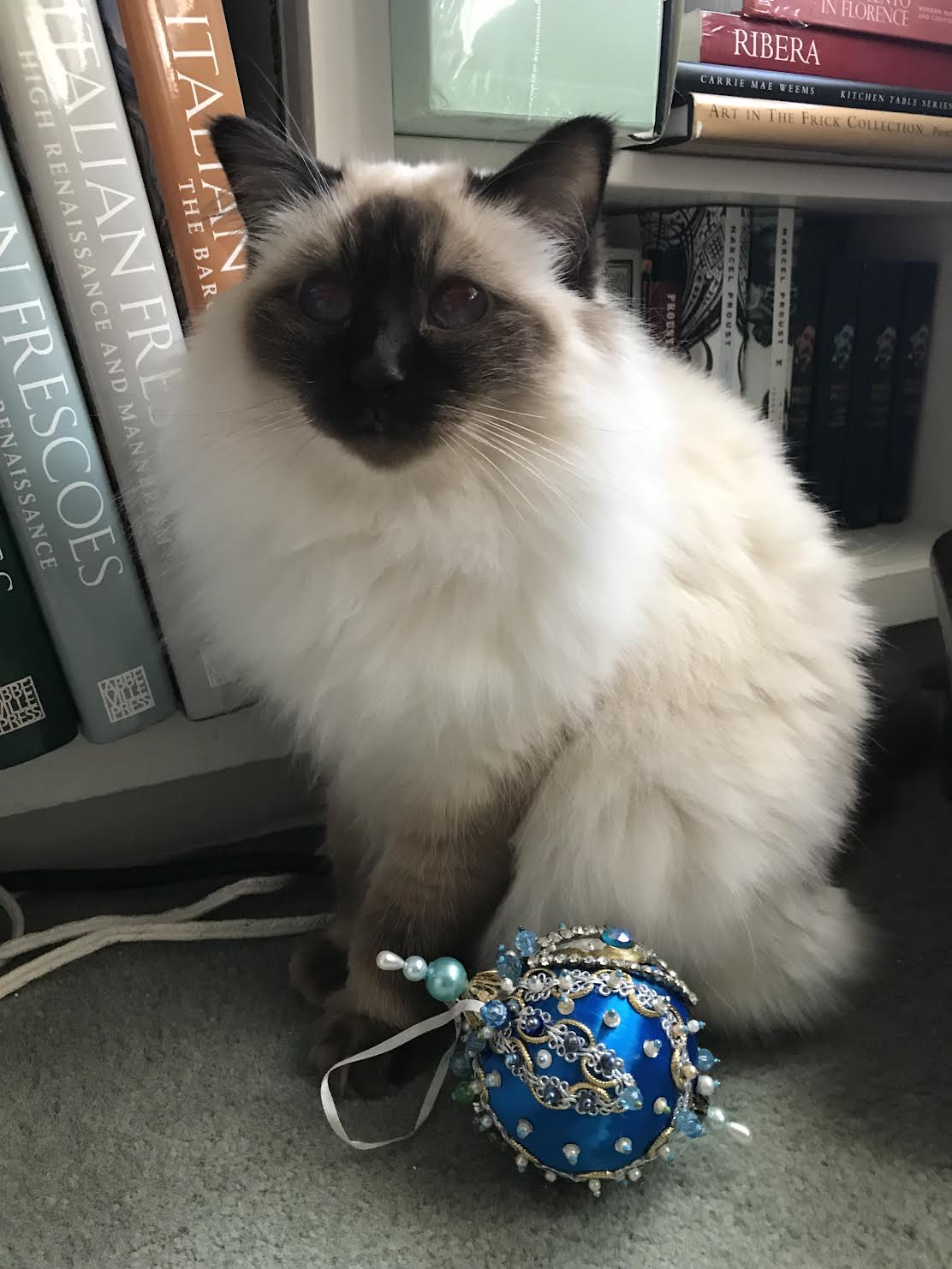
IV. If You’ve Made It This Far, Here’s Your Visual Reward


 "You Might as Well Read"
It’s good to see you blogging, and if annually works for you, that’s better than nothing for your readers.
Glad you loved WWCK. I’m yet to read Atonement, despite your recommendation, but will in future. Will eventually read WWCK, too.
LikeLiked by 1 person
Hello Rose! So glad you dropped by after all this time in which I went silent! I did enjoy WWCC, very much to my surprise, as I’d really consigned McEwan to my “will not read” list. It just goes to show that, sometimes, it’s really worth while for me to push myself! (another example is Desai’s The Loneliness of Sonia & Sunny, which I was quite reluctant to read. Guess what? totally loved it!) If you do get to Atonement, I’d be most interested to learn your response, as I’m curious as to whether it would have the same impact on me now. Certain books are so bound up with certain times in our lives, don’t you think? I read Atonement many years ago, its themes concerned issues that I was grappling with myself at the time and — McEwan was very good with keeping the plot twisty! I’m not sure it would have quite the same impact on me now (in an ideal world, I’d re-read but — so many books, etc)
LikeLiked by 1 person
What a marvellous post!
I loved your thoughts on McEwan and why you abandoned him for so long. I was a fan of Saturday (sorry…) because I was in that protest march that is depicted in the book, and while I loved and adored two-thirds of Atonement, I didn’t appreciate the manipulative ending where he played tricks on the reader. I have enjoyed a handful of other McEwans, my favourite being Amsterdam which really skewered the print media of the time. But I haven’t read any of his recent work (recent being the past 10 years).
Also, I loved this quote from your post, as you have articulated exactly why I blog too: “I’ve also found that writing, and the organizing and analysis that it demands, always helps me to understand better whatever I’ve just read and, equally important, to appreciate what a particular writer is (or is not) trying to accomplish.”
Happy New Year to you — hope many wonderful reads come your way in 2026.
LikeLike
Kim — what a lovely compliment! Many thanks! And — it’s perfectly o.k. that you liked Saturday (LOL); so interesting that you were in that march!
I’ve found for myself that when I have a strong reaction to a novel, whether positive or negative, it’s worth examining what about that particular work set me off; why didn’t I just yawn and dismiss the book with a “that one’s wasn’t for me”? (in an ideal world, I’d probably re-read Saturday to gauge my reaction to it twenty-five years later. In an ideal world!) With Saturday TBH I think I had a “class chip” on my shoulder; the characters were just so very privileged and their world was just so, so very comfortable. I totally discounted the fact that, as McEwan showed, their comfortable world wasn’t at all immune from some pretty dark things. The novel’s suggestion that art is what has value in the dark times, perhaps indeed all that has value, was lovely. But — the book just didn’t work for me! Isn’t it odd, how that happens? And so unpredictably! As for Atonement — totally agree about the trick on the reader! McEwan is very skillful with plots, which is good, but I do think it lends a certain coldness to his work at times. Regarding Amsterdam, we are as one — although it wasn’t my favorite (that goes to the very dark Comfort of Strangers), I did think it was very good.
I hope that you, too, have a very Happy New Year, with lots of wonderful books coming your way (and lots of interesting posts for me to read!)
LikeLike
Welcome back! I’ve missed you.
LikeLiked by 1 person
Lisa — thanks for the kind words & so glad you stopped by after my long silence. The past year has been a bit difficult in some ways (it’s not always easy living in Trump’s America (or should I spell it “Amerika”?) and there have been a couple of teeny health issues (tedious but not serious) as well.
I was glad to see you liked Choi’s Flashlight — I thought it excellent — and I’m in awe that you’re doing Dante! Hopefully I’ll get up to date on my blog reading soon.
P.S. I notice Australia is having those terrible wild fires and hope they’re not near you. I’m afraid WWCK’s climate change issues struck pretty close to home for me. Last year’s fall hurricane season was thankfully very, very quiet but that of 2024 was grueling (Inundation seemed very, very possible for my part of Florida!)
LikeLike
Climate change is upon us all, alas, and as was predicted the weather definitely getting nastier. I don’t think I’m brave enough to live anywhere near hurricanes, I see footage of the flooding in other parts of the country and the devastation is just terrible. I live in the middle of a big city so I’m safe enough, but The Offspring is on the urban fringe and there are always fires near him, so it’s a worrying time.
LikeLike
How very worrying about Offspring; I find the reports of wild fires terrifying and can’t imagine living with it (sort of like you with hurricanes!). Although fires are one risk that isn’t a threat in my immediate location (near water & semi-urban setting) the rainfall here is definitely less than it was even a few years ago; semi-drought conditions have occurred off & on for the last few years and further inland there are sometimes warnings about fire risk. In Florida, which is essentially a swamp! It’s amazing to me, but I honestly think most people here are still in denial about climate change; it’s almost like a collective societal decision that it doesn’t exist. Or, as McEwan puts it, we’re living in the time of the “great Derangement.” I only hope I’m not around when the Inundation occurs! One point about WWCK that I found particularly sympathetic was the anger and contempt of the young students of the future towards our own era, that allowed climate change to proceed unchecked.
LikeLiked by 1 person
Good to hear from you again. Handsome cats!
LikeLiked by 1 person
Simon — I was in the middle of replying to you when all went blank! (hopefully this has disappeared into cyber space & you won’t be deluged with multiple replies) Your review of WWCK helped tip the scales for my choosing McEwan as the topic for my post. I’d read the glowing reviews in both the NYT and Guardian but didn’t quite trust them (I really didn’t like Saturday, which most of the critics slobbered over!); your very positive post, however, reinforced all that praise. I just clicked over to re-read your review (wish I’d thought of describing McEwan’s “edgy originality” as it captures his best work perfectly). I totally agree with you that the plot is contrived and some of the characters are a bit thinly drawn. Riffing off your desert metaphor, however, I think that I found the book a bit more nutritionally filling than you did. We’re in total agreement, however, that McEwan knows how to tell a really, really good story and is the complete master of his material. A very impressive feat, at this late point in his career!
LikeLike
Lovely to hear from you again! I finished reading WWCK yesterday and am delighted to say I absolutely agree. You’ve already given me some nice insights into the novel. Lovely pics of the cat by the way, mine is on my lap as we speak 😉
LikeLiked by 1 person
Hi Liliane! So glad you dropped in and so very nice to find a fellow WWCK fan. I’ll be very interested to read your review of the novel if you decide to post about it.
Glad you liked the cat photos — if you’ve seen their photos, you’ve seen them at their best! (at times, all is not kitty tranquility at Casa Janakay!) I envy you your lap cat, by the way. One of my cats (Pooh-Bear, a/k/a “Katy”; the one with the Christmas ornament) is definitely NOT people oriented; she’s gotten more outgoing over the years but essentially limits her people contact in favor of sleeping under the coffee table or in a closet. Maxi/Maxine (the third photo, doing yoga) hangs around but is too high strung to relax in a lap. The third cat (Percy, sitting on the floor in the second photo) is a ham (loves to have his photo taken) and demands affection, but on his own terms, i.e., in chosen spots which aren’t always convenient! Funny isn’t it, about cats? How different their personalities can be?
LikeLike
I’ve got two cats, Sophie and Daar. They have totally different characters. One is a dare-devil who loves company, the other one jumps into the cupboard when she hears the bell. They both love to cuddle against me and have their bellies stroked. As you can understand I love them to bits.
LikeLike
They sound really lovable; the belly thing is hard to resist! (one of my cats is really into belly rubs & all three like head and face scratching). It really is amazing, how they become part of your life and what different personalities they frequently have.
LikeLike
Nice to see you posting again! I LOVE Banville’s review of Saturday, such a satisfying takedown, and often re-read it 🙂 As for the interim McEwans, I’ve read a few of them (to my surprise as I’m not a huge fan). The only one I’d recommend is Solar, which I thought was a fun satire and has a great set piece involving a bag of crisps. I was planning to avoid WWCK because I thought McEwan’s last venture into SF (Machines Like Me) was so half-baked, so it’s good to know that you were impressed.
LikeLiked by 1 person
Hi Laura — thanks for the kind words! Hopefully I’ll manage to pull another post together in less than a year or two. I looked at Machines Like Me and wasn’t the slightest bit tempted. I like literary sci-fi but — when it’s bad, it’s really, really bad. The sci-fi elements are definitely present in WWCK; after all, most of it does take place after the collapse of civilization! But in an odd kind of way, it isn’t overwhelming, as much of the plot at that point follows the activities of Tom & Rose, who are literature professors trying to teach, publish and get ahead in their department (at one brief stint of my checkered career, I was a graduate teaching assistant, so I enjoyed the satire!). The threads in the novel really get woven together in Part II, which is set in our own era (I didn’t discuss it because of spoilers).
Banville’s review of Saturday was great, wasn’t it? Like you, I thoroughly enjoyed it (and thought it right on point). Not sure I believed him, however, when he said it “gave him no pleasure” to trash McEwan’s novel!
LikeLiked by 1 person
Oh, I also enjoy an academic satire, so that sounds promising! Banville definitely enjoyed writing that review and I don’t blame him 🙂
LikeLiked by 1 person
What a joy to see you posting your adventure with this author I have not read. I enjoyed your story, I love reading this type of stories of how our admiration for an author starts and evolves through our own reading journey. Your impression of Saturday was valid and it seems this other title you just read has the quality of the first book by him you read. Now I have two more books for my indefinite TBR! It’s a hopeful TBR but I’m definitely keeping an eye on this author (I too love sci-fi and particularly dystopias)
What a fascinating book La Regenta, right? Maybe we should try Galdos at the start of February?
I do love seeing your book posts, but if you ever quit the blog, it is understandable, and I always receive your emails and thoughts on life and books. But as they said, even once a year it’s worth IMO.
LikeLike
Silvia: I’ll always be grateful for your suggesting La Regenta! It’s such a great novel and deserves to be so much better known to the anglophone world. I took notes as I read and haven’t totally given up the idea of doing a post about it, but it really would take me a very long time to write about it. Aside from fading memories, the emotional impact has lessened as well. Ideally I’d like to read it again but — life is short and there are so very, very many books to explore! Like you, I do love literary sci-fi, at least some of it. Have you read any of Margaret Atwood’s? I was very impressed by her MaddAddam trilogy (it’s on my re-read list).
As for Galdós — definitely February at the latest!
that
LikeLiked by 1 person
Thanks for acknowledgment. That moment in time produced so good literature that La Regenta is not as well known as Ana Karenina and Madame Bovary, probably being super long doesn’t help.
I have not read Atwood’s sifi, honestly, I want to read more of this genre this year (Solenoid is a bit sifi imo, but completely sifi books) and I have A Perfect Vacuum by Stanislaw Lem waiting!
LikeLiked by 1 person
Oh, and Pooh Bear and her cat siblings are very handsome indeed.
LikeLike
Silvia: the cats’ relationships, genetically & psychologically, are quite complicated. None of them are siblings. Pooh-Bear (aka “Katy;” the one with the Christmas ornament) & Maxine/Maxi (the one in the third photo, doing yoga) are cousins of some sort (probably double first or something!) and were born days apart. Percy, who’s sitting on the floor in the second photo, is about a year younger and is a great grand nephew or something. A friend from way back, who didn’t much like cats, described the species as being “intellectually simple but emotionally complex.” I agree with “the emotionally complex part” but not sure if I do about the “intellectually simple” part: my cats can be pretty sharp when they’re interested enough to make an effort!
LikeLiked by 1 person
I hear you! I have 3 non related female cats and they are emotionally complex for sure, and very canning when it comes to what they want as you said!
LikeLiked by 1 person
I completely understand your falling out of sync with blogging but it’s great to see you back and I will put Atonement on my tbr list!
LikeLike
Jane — thanks so much! Hopefully I’ll get my act together enough to post again before 2027 arrives! If you do get to Atonement let me know what you think about it.
LikeLiked by 1 person
So glad to have you posting again, and I am totally in agreement with what you say about writing blog reviews helping you to clarify your thoughts about the books you read. I find I think more deeply about them now that I write about them, so it has been a good thing for me. Hoping to see you here more in the coming months!
As for McEwan I’ve read virtually nothing by him, but I’m glad you had such a wonderful time with the new book.
As for your cats – glorious!!
LikeLike
Kaggsy! So nice that you’ve dropped by and thanks so much for the kind wishes. Hopefully I’ll get myself to post again before 2027! I totally agree that writing about books requires clarity, which is probably why I’m such a slow writer — my thoughts are usually so muddled that it takes me forever to straighten them out! At the worst, however, I can always pop over to your blog, read something interesting and get more ideas for my Mount TBR! (you added enormously to the pile of books on the floor of the second photo, you bad girl!)
I personally find McEwan a problematical writer. I like dark, so I enjoyed the early books but (it’s been a long time) as I recall, I admired their skill without being drawn emotionally into the stories. Atonement was the exception; I was pretty devastated by one of the plot twists that I didn’t see coming. WWCK’s impact didn’t come close to that, by any means, but it seemed much more humane and generous than the other novels of his that I’ve read. A late career development, perhaps!
I’ll pass your compliment along to the cats! Just between us, if you’ve seen their photos, you’ve seen them at their best (feeding time at Casa Janakay can be pretty brutal!)
LikeLike
LOL, I’ll avoid visiting at feeding time then! And I’m sorry (not sorry) to have added to your TBR – that’s one of the risks of reading other people’s blogs isn’t it? Hope to hear more from you this year!
LikeLiked by 1 person
I’m glad you liked The Maias, one of my favourite books ever! I also sometimes struggle with McEwan. I loved Atonement and enjoyed other of his books (I recall liking Saturday, though I don’t remember much about it anymore), while others I fiercely disliked. Of his most recent releases, I enjoyed Nutshell, which was inspired by Hamlet.
LikeLike
Susana: I absolutely adored The Maias; it’s amazing to me why it doesn’t seem to be as widely read as something by Stendhal or Flaubert. It was so good it almost got me posting again, but I couldn’t quite work up the energy! I’d had a copy for years & years but was too intimidated to actually try reading it. Once I got up my nerve to do so last spring, however, I was hooked from the first paragraph. Have you read anything else by de Queirós? I have a copy of The Yellow Sofa, which I haven’t gotten to yet. I’m not sure how many of his other novels have been translated into English; hopefully at least one or two, as I’d like to explore his work further.
I think your reaction to McEwan’s work is quite similar to my own. Like you, I loved Atonement, enjoyed several of the other novels and really disliked the rest. Thanks for the tip about Nutshell BTW; I’ll keep it in mind!
LikeLiked by 1 person
By Eça de Queirós I also recommend The Crime of Father Amaro and Cousin Bazilio (I read them in Portuguese but I think both have been translated into English). I don’t think I’ve heard of The Yellow Sofa, maybe it has a completely different title in Portuguese.
LikeLike
Susana — I’m very envious, in the nicest of ways, that you can read these marvelous books in their original language. One of my criticisms of my own education is that, despite studying a language or two in college, I never became proficient in any of them.
Thanks so much for the info about Eça de Queirós’ other novels, which are now on my list!
My edition of The Yellow Sofa was translated by John Vetch and published by New Directions. It’s novella length and was apparently found in the author’s papers after his death. Never published during his lifetime, there seems to be some thought that he may have intended it to be part of a larger work.
LikeLiked by 1 person
So glad someone mentioned Nutshell. I thought it was brilliant. Look forward to your review if and when you get around to it.
Other Gert
LikeLiked by 1 person
So glad you enjoyed What We Can Know. I have had a similar history with McEwan but I thought this was masterful. Such skill in handling the various threads of personal history and the really big issues of our times. I was intrigued too by his picture of a future in which humans can still have some sort of a life that seems OK to them even after the double catastrophes of climate change and nuclear accident.
LikeLike
Gerts! It’s been too long since we exchanged views, totally my fault as I’ve been semi-struggling this last year (so difficult, living in MAGA America these days & there’s been a tiny health issue or two in addition).
Regarding WWCK, we are as one! It’s amazing that at this point in his career (and after a decade of books that IMO were nothing special) McEwan could produce a semi-masterpiece like WWCK. As you say, he’s incredibly skillful at meshing the big themes with an entertaining story. I also found his world building, as was evident from my post, pretty impressive. Like you, I was particularly struck by McEwan’s decision not to make the future a totally dystopian nightmare — yes, the terrible, terrible things we feared have occurred, millions have died, but humanity survived & has even managed to fashion a reasonably OK existence. Far from ideal (hey — who wants to eat “protein bars” all the time?) but tolerable.
I noticed from your blog that you’re doing a year of zoological reading! Can’t wait to read your thoughts!
LikeLike
By the way, your cat pics are a bit painful to me because I have just had to put down my dear 20-year-old beauty.
LikeLike
Oh, I’m so sorry. There’s very, very few things as painful. My first cat, a Siamese, made it to slightly over twenty and left me devastated after she was gone. We were born in the same little town in the deep (U.S.) South; lived pretty hand to mouth in student days and survived four moves together (after the fourth, she went into a closet and wouldn’t speak to me for a couple of days). She was also remarkably gracious to Mr. J after he came along! When you have a great cat, s/he really becomes part of your life; it can take a long time to get over their absence.
LikeLike
So true. We miss her terribly but we miss her as she was for the 16 years we had her, not as she became in the last couple of weeks of her life, not in pain but just quietly miserable. We’ve decided we with get another cat because we were so fond of her and she was such part of our lives
LikeLike
slight error in my previous reply! We WONT get another cat.
LikeLiked by 1 person
Oh, that is a wrench. Companion animals are so precious and they are part of the family.
LikeLiked by 1 person
It’s so lovely to see you posting again as I’m always interested to hear what you’ve been reading, along with your thoughts on other books!
Like you, I’ve had mixed experiences with Ian McEwan’s work in the past. Saturday wasn’t my favourite either, but the one that really turned me off was Solar, which I found intensely annoying. Still, I’m very glad you got so much out of What We Can Know! A couple of other friends have also been impressed with this latest novel (and his previous one, Lessons), so he seems to be back in the groove, so to speak. It’s also encouraging to see him tackling some big, ambitious themes.
As for your cats, they’re adorable. More please!
LikeLike
Jacquiwine! So delighted you dropped by and many thanks for the nice compliment. I enjoy our exchange of views immensely, although, you naughty girl, your posts have ALWAYS added to my TBR mountain! (in going through my books earlier today, I moved Ann Schlee’s Rhine Journey, which I acquired after your post, very close to the head of the”read soon” queue. After another of your reviews, I became hooked on Foundry Editions! What can I say, except that your blog has so enriched the scope of my reading!)
I did a quick peek at Solar & Lessons. Solar is a definite non-starter. As for Lessons, well — I MIGHT give it a go at some point but — it’s almost 500 pages! That’s an awful lot of McEwan! Barring re-reads, WWCC may be my final McEwan novel, unless he comes up with yet another late career semi-masterpiece. I did indeed get a great deal out of WWCC, which made it difficult to write about. I ended up focusing on the setting, because I found it so interesting, avoiding the characters (too hard to write about without spoilers) and largely ignoring the plot (I usually find plots a little tedious, unless there’s a twist. Then — spoilers again!)
I’m glad you liked the cats. The cats themselves are mildly pleased, if unsurprised, when they’re adored. Did you ever see Ben Stiller in “Zoolander” doing his “Blue Steel” signature look? Percy, the largest (male) of the three has it down pat!
LikeLike
Haha! I did see Zoolander, back in the dim and distant past, so I know the look you mean. Glad to hear Percy has it down to a fine art. A very noble pastime for a cat!
In the meantime, I hope you enjoy Rhine Journey!
LikeLiked by 1 person
I am so far behind in keeping up with other bloggers and what they have read, that I personally love your once a year posts 😀
I also love the lighting you have on your bookshelves. I thought about doing something like that when we had our built-in, wall-to-wall shelves made but the cost had already blown out enough!
Back in 2012 I wrote a ‘best and worst’ of Ian McEwan post because like you Saturday had me teetering on the edge, but it was Solar that pushed me over. However I have heard and read enough positive stuff about WWCK that I think I will be tempted to try it (I also love climate fiction books).
Welcome back.
LikeLike
Thanks for the kind wishes, Brona! At the rate I’m going, it may well be January 2027 before I get around to posting again! Most of my January reading this year has been just a bit blah, nothing to inspire any blogging effort; this combined with a short but intense art/museum trip (I’m pretty much open to all art periods, but have a particular fondness for the old dead white guy stuff) and a very bad cold — well, we know what that road to hell is paved with, don’t we?
I’m glad you liked the bookshelf lighting! It WAS quite an indulgence (like you, I did wall-to-wall built ins); it was part of Mr. J’s heroic but ultimately unsuccessful attempt to get all my books off the floor, table, bed and kitchen counters & into one space. Since my book room doesn’t have overhead lighting, the in-shelf thing has really worked out well.
I popped over to your blog to read the McEwan post you referred to. He’s an odd novelist, isn’t he? Like you, I responded enormously (in a positive way) to a couple of his books and then, for the others — well, I wasn’t exaggerating when I said that Saturday put me off his work for over two decades. Atonement, though — ah, what a novel! And that plot twist, which left me reeling. I wonder how it would all hold up on a re-read? Aside from the time involved, I’m afraid to find out. If you do get around to WWCK, I’ll be most interested to read your reaction.
LikeLiked by 1 person